

📌 Key Takeaways
A septic system running past capacity doesn’t announce itself with alarms—it whispers through slow drains, faint odors, and gurgling toilets before escalating into a weekend-ruining emergency.
- The “Home Health Reset” Restores Biological Balance: Routine septic tank cleaning physically removes accumulated sludge and scum, allowing the system’s natural bacteria to properly separate solids from wastewater and maintain normal flow to the drain field.
- Two to Three Years Is the Standard Cadence, Not a Universal Rule: Most Houston-area households benefit from pumping every two to three years, though families of five in smaller tanks need more frequent service than couples with larger systems.
- Early Warning Signs Prevent Emergency Calls: Slow drainage across multiple fixtures, faint sewage odors near drains or in the yard, toilet gurgling, and soggy or over-green grass patches above the tank all signal capacity issues that worsen without intervention.
- A Standard Cleanout Takes Under an Hour: The process—locating access points, safety checks, pumping, baffle inspection, and flow verification—typically completes in 45 minutes to an hour, with minimal disruption to the property.
- Professional Service Includes Compliance and Planning: Responsible providers handle waste according to Texas environmental standards, dispose of it at approved facilities, and help homeowners establish simple maintenance schedules that prevent future panic.
Act before the gurgle becomes a backup—routine care beats emergency response every time.
Houston-area homeowners with septic systems will find a clear framework here, preparing them for the detailed service overview and local guidance that follows.
It was 4:30 on a Friday afternoon in southwest Houston when Sarah first noticed the smell. Nothing dramatic—just a faint, unpleasant odor drifting up from the hallway bathroom. She dismissed it, focusing instead on the weekend ahead: her daughter’s birthday party on Saturday, family coming in from out of town, and a house that needed to look perfect.
By dinner time, the kitchen sink was draining slower than usual. Her husband tried the plunger. No change. Then came the sound no homeowner wants to hear—a low, unsettling gurgle from the toilet down the hall.
That gurgle was their septic system sending a clear message: we’re running out of capacity, and you’re running out of time.
What a “Home Health Reset” Actually Means for Your System
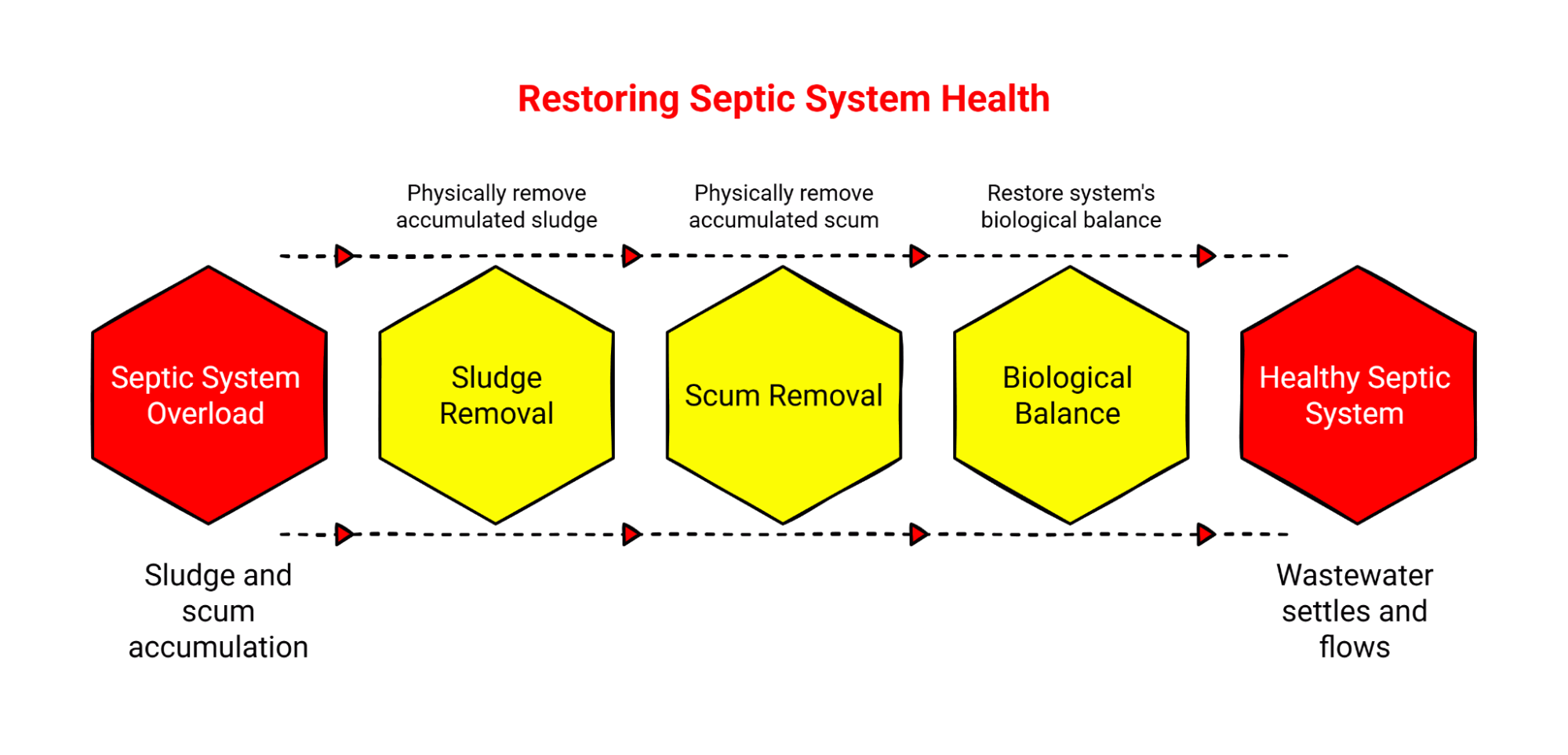
A residential septic tank cleaning—what we call the “Home Health Reset”—is the physical removal of accumulated sludge and scum that builds up in your tank over time. Think of it as your home’s plumbing getting a complete refresh, similar to how an oil change keeps your car’s engine running smoothly.
Here’s what actually happens inside your tank: as wastewater flows in from your home, solids settle to the bottom forming sludge, while oils and grease float to the top as scum. The relatively clear water in the middle flows out to your drain field. When sludge levels rise too high, that separation breaks down. The biological balance your system depends on gets disrupted, preventing wastewater from settling and flowing as intended. Solids start flowing where they shouldn’t, your drain field gets clogged, and you end up with the exact problems Sarah’s family faced that Friday evening.
The typical Houston-area household benefits from this reset every two to three years, though your specific timing depends on household size, tank capacity, and water usage patterns. A family of five in a 1,000-gallon tank will need service more frequently than a couple with a 1,500-gallon system. The U.S. Environmental Protection Agency provides comprehensive guidance on maintaining septic systems to prevent costly failures.
The Friday Evening That Changed Everything
Sarah called us at 6:15 PM, describing the symptoms. Our technician asked three quick questions: How long since your last pumping? Any soggy spots in the yard above the tank? Has the gurgling been getting worse or staying the same?
The answers told him what he needed to know. Sarah couldn’t remember the last service—they’d bought the house three years ago and assumed the previous owners had handled it. There was a patch of grass near the back fence that stayed greener than the rest of the lawn, even during dry weeks. And yes, the gurgling had progressed from occasional to constant over the past month.
We scheduled her for first thing Saturday morning. The birthday party was at 2 PM. She had roughly nine hours to get her system working again.
The 45-Minute Process That Saved Their Weekend
Our truck arrived at 7:30 AM. The technician located the tank access covers, performed a safety check for toxic gases, and measured the sludge levels. Sarah’s tank was at 40% capacity—well past the point where problems start.
The pump-out itself is straightforward but thorough. A powerful vacuum hose removes all liquid and solid waste from the tank, including the stubborn sludge that’s compacted at the bottom. The technician then inspected the baffles (the components that prevent solids from flowing to the drain field) and verified that the outlet pipe was clear.
The entire process emphasizes responsible handling and clear communication at every step. We operate in full compliance with Texas environmental standards, ensuring proper containment and disposal at approved facilities.
By 8:15 AM, the tank was empty, clean, and ready to resume its job. The technician walked Sarah through what he’d found, explained the warning signs to watch for in the future, and helped her set up a simple maintenance schedule. No more guessing. No more Friday evening panic.
The morning’s total time investment: 45 minutes. The peace of mind: immeasurable.
Before and After: What Really Changes
| Before the Reset | After the Reset |
| Persistent worry about strange smells | Fresh air throughout the house |
| Slow drains creating daily frustration | Normal drainage speed restored |
| Constant monitoring of every flush | Confidence in the system’s function |
| Weekend plans feeling uncertain | Weekend proceeding as planned |
| Stress about potential emergency costs | Simple calendar reminder for future service |
“My experience with Drane Ranger was a very organized, professional and on time experience. I was kept informed of what was happening and a suggested time of cleaning again. I will use them again and will definitely recommend them to anyone I speak with.” — Harold R.
This isn’t just about fixing a plumbing problem. It’s about reclaiming the assumption that your home’s basic systems will work when you need them to.
The Warning Signs You Shouldn’t Ignore
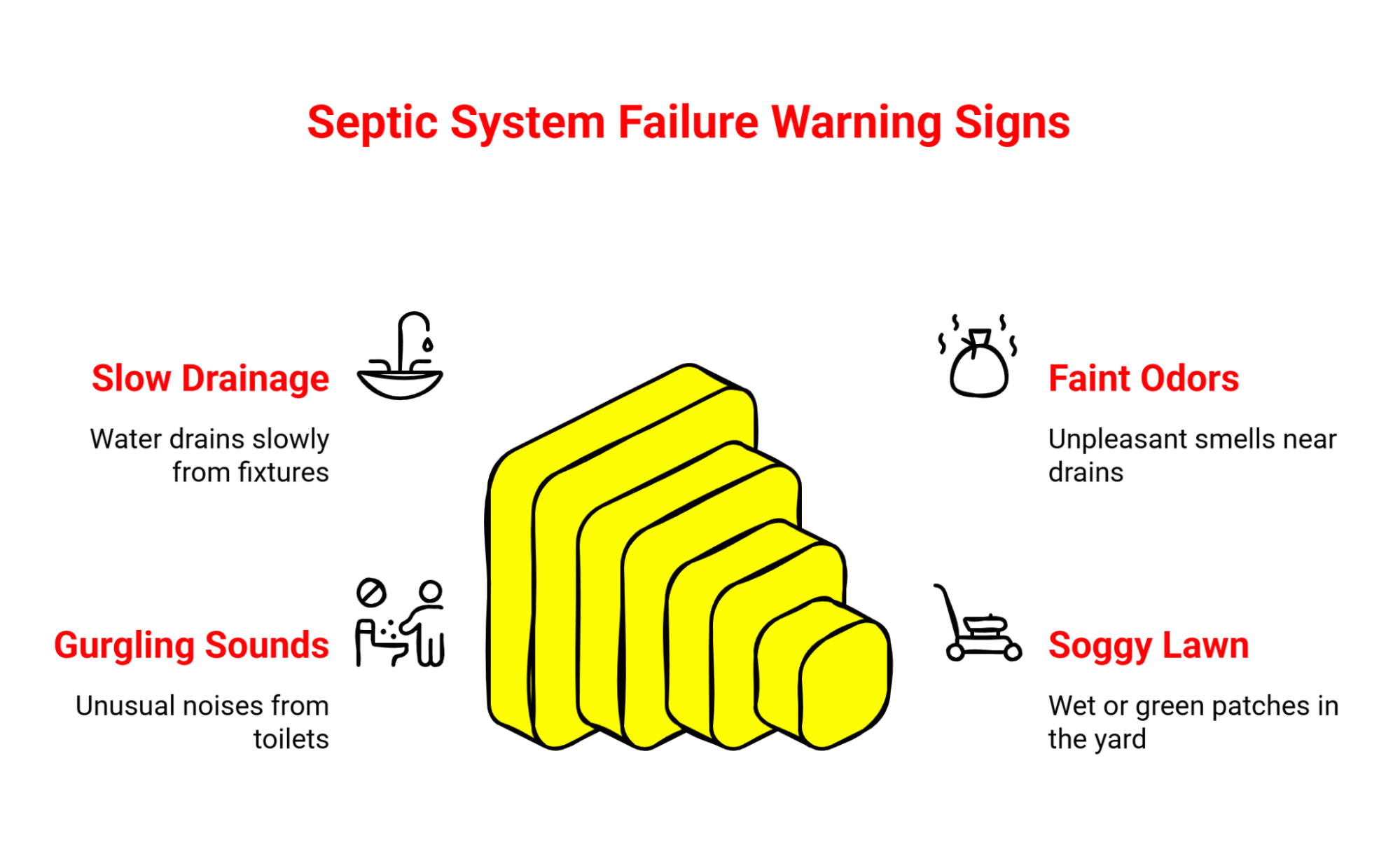
Sarah’s situation didn’t develop overnight. Her septic system had been sending signals for weeks, maybe months. Most homeowners miss these early warnings because they start subtle and escalate gradually.
Watch for these red flags:
Slow drainage from sinks, tubs, or showers, especially if multiple fixtures are affected at once. When your washing machine drains and your shower backs up, that’s not a coincidence—it’s a capacity issue.
Faint odors near drains or in the yard above your septic system. Fresh sewage has a distinct smell that shouldn’t be present in a properly functioning system. The Centers for Disease Control and Prevention notes that exposure to untreated wastewater poses health risks that proper system maintenance helps prevent.
Gurgling sounds from toilets or drains when other fixtures are in use. This happens when air can’t escape normally because the system is too full.
Patches of lawn that stay soggy or unusually green, particularly above where your tank and drain field are located. This suggests wastewater is surfacing instead of being absorbed properly.
The Environmental Protection Agency emphasizes that addressing these signs promptly prevents the more serious problems that lead to complete system failure. The difference between a routine service call and an emergency replacement can be thousands of dollars.
If you’re seeing any combination of these symptoms, don’t wait for them to worsen. A quick inspection can confirm whether you need service now or if you have a few months before your next scheduled cleaning.
Why Houston-Area Systems Need Consistent Attention
The Greater Houston climate creates specific challenges for septic systems. High water tables, clay-heavy soils in many areas, and our region’s intense rain events all affect how efficiently your drain field processes wastewater.
Since 1985, we’ve served homeowners throughout Houston, Alvin, Pearland, Sugar Land, and Texas City—essentially a 100-mile radius from our location on India Street. That three-decade perspective has taught us that systems in our area perform best with regular attention rather than reactive emergency calls.
We handle every aspect of the process according to local and state regulations, including those set by the Texas Commission on Environmental Quality, from proper waste removal to environmentally responsible disposal at approved facilities. Your home’s wastewater doesn’t just disappear—it goes through a careful treatment process that protects our local water sources and ecosystems.
“He has done all my septic work and is the best!” — John S.
Your Simple Next Steps
If you’re experiencing any of the warning signs we’ve described, your best move is a quick phone consultation. Call us at 281-489-1765 to describe what you’re noticing. We can often tell you over the phone whether you need immediate service or if you have time to schedule at your convenience.
For homes that haven’t had service in the past two to three years, now is the time to get ahead of potential problems. You don’t want to discover a capacity issue on a holiday weekend or right before houseguests arrive.
Ready to schedule your Home Health Reset? Contact us today or call 281-489-1765. We’ll get you on the calendar, explain exactly what to expect, and give you back the confidence that your home’s most essential system is working the way it should.
For more detailed information about septic tank services and maintenance schedules specific to our area, explore our Houston septic tank cleaning guide or learn about our comprehensive approach to septic system care in Alvin and surrounding areas.
Frequently Asked Questions
How often should I schedule a Home Health Reset?
Most Houston-area homes benefit from service every two to three years. The exact timing depends on your household size, tank capacity, and water usage. A family of five will need more frequent service than a retired couple. We’ll help you determine the right schedule for your specific situation.
What are the first signs I shouldn’t ignore?
Slow drains, faint sewage odors, gurgling sounds from toilets, and soggy or unusually green patches of grass above your septic system. Any combination of these symptoms means your system needs attention soon.
How long does a service visit take?
Most residential cleanouts take 45 minutes to an hour, depending on tank size, access conditions, and how much accumulated material needs removal. We’ll give you a time estimate when you schedule.
Do you serve my neighborhood?
We cover Houston and the surrounding areas within roughly 100 miles, including Alvin, Pearland, Sugar Land, Texas City, League City, Manvel, Rosharon, Angleton, and Friendswood. If you’re unsure whether we serve your location, just give us a call.
Additional Resources
For homeowners seeking more information about septic system care and maintenance:
- EPA: How to Care for Your Septic System
- EPA: Septic Systems Overview
- TCEQ: Texas Environmental Quality Information
Our Editorial Process
All content undergoes multi-stage review including technical accuracy verification against TCEQ model standards, local regulation compliance checking, and practical application testing. We distinguish between verified regulatory requirements and generally accepted industry practices to help operators understand certainty levels.
About the Drane Ranger Insights Team
The Drane Ranger Insights Team is our dedicated engine for synthesizing complex topics into clear, helpful guides. While our content is thoroughly reviewed for clarity and accuracy, it is for informational purposes and should not replace professional advice.
Disclaimer: This guide is intended as a comprehensive starting point. For decisions specific to your unique situation, we always recommend consulting a qualified professional.