
📌 Key Takeaways
Your septic system signals trouble long before it creates a crisis—recognizing these warnings early keeps your home safe and your wallet intact.
- Odors Are Your First Alert: Faint sewage smells near drains or your yard indicate your tank is approaching capacity or developing a leak—schedule inspection before the problem escalates.
- Multiple Slow Drains Mean System-Wide Issues: When several fixtures drain sluggishly together, accumulated sludge is restricting flow throughout your entire plumbing system, not just one pipe.
- Gurgling Toilets Signal Urgent Action Needed: That bubbling sound represents air displacement from a full tank or blockage—this warning appears just before backups occur.
- Unusually Green Grass Reveals Hidden Problems: A vibrant strip of grass over your tank or drain field during dry weather means nutrient-rich wastewater is reaching the surface due to overfill or system failure.
- Soggy Yards Demand Immediate Response: Spongy ground or standing water without rain indicates drain field saturation—rope off the area and schedule same-week service to prevent health risks and property damage.
Early detection prevents expensive drain field replacement and protects your family from wastewater exposure.
Houston and Alvin homeowners managing residential septic systems will find actionable warning signs here, preparing them for the detailed maintenance guidance that follows.
A faint odor near your outdoor drain. A toilet that gurgles when you flush. These quiet signals mean your septic system needs attention—and catching them early prevents the messy, expensive problems that come when a tank reaches capacity.
Your septic system works quietly in the background, protecting your property value and family health every day. Think of routine maintenance the same way you think about changing your car’s oil—it’s the simple step that prevents major breakdowns. Miss that maintenance window, and small issues escalate quickly into backups, saturated drain fields, and emergency service calls.
A routine tank cleanout removes the accumulated solids and liquids that naturally build up over time, restoring your system to full capacity. For Houston and Alvin homeowners, recognizing the early warning signs means you can schedule service at your convenience instead of dealing with a crisis.
Here are five concrete indicators that signal it’s time to contact a professional for service.
Don’t wait for a smell—odors mean it’s already late.
The Fast Checklist: Are You Seeing Any of These 5 Signs?
| Sign | What It Means | Urgency Level | Your Next Step |
| Faint sewage odors indoors or near tank area | Tank approaching capacity or small leak present | Medium | Schedule inspection within 2 weeks |
| Multiple fixtures draining slowly | Sludge restricting wastewater flow | Medium | Book cleanout to restore capacity |
| Gurgling sounds from toilet | Air displacement indicating blockage or full tank | High | Call for prompt service |
| Unusually lush grass over tank or drain field | Nutrient-rich effluent reaching surface | Medium-High | Request professional evaluation |
| Soggy yard without recent rain | Drain field saturation or system overflow | Urgent | Limit access; schedule same-week service |
Time-based indicator: If your last pump-out was more than three years ago, schedule proactive service regardless of symptoms. Most residential systems benefit from professional service every two to three years, though the exact interval can vary based on tank size, household usage, and your specific system design.
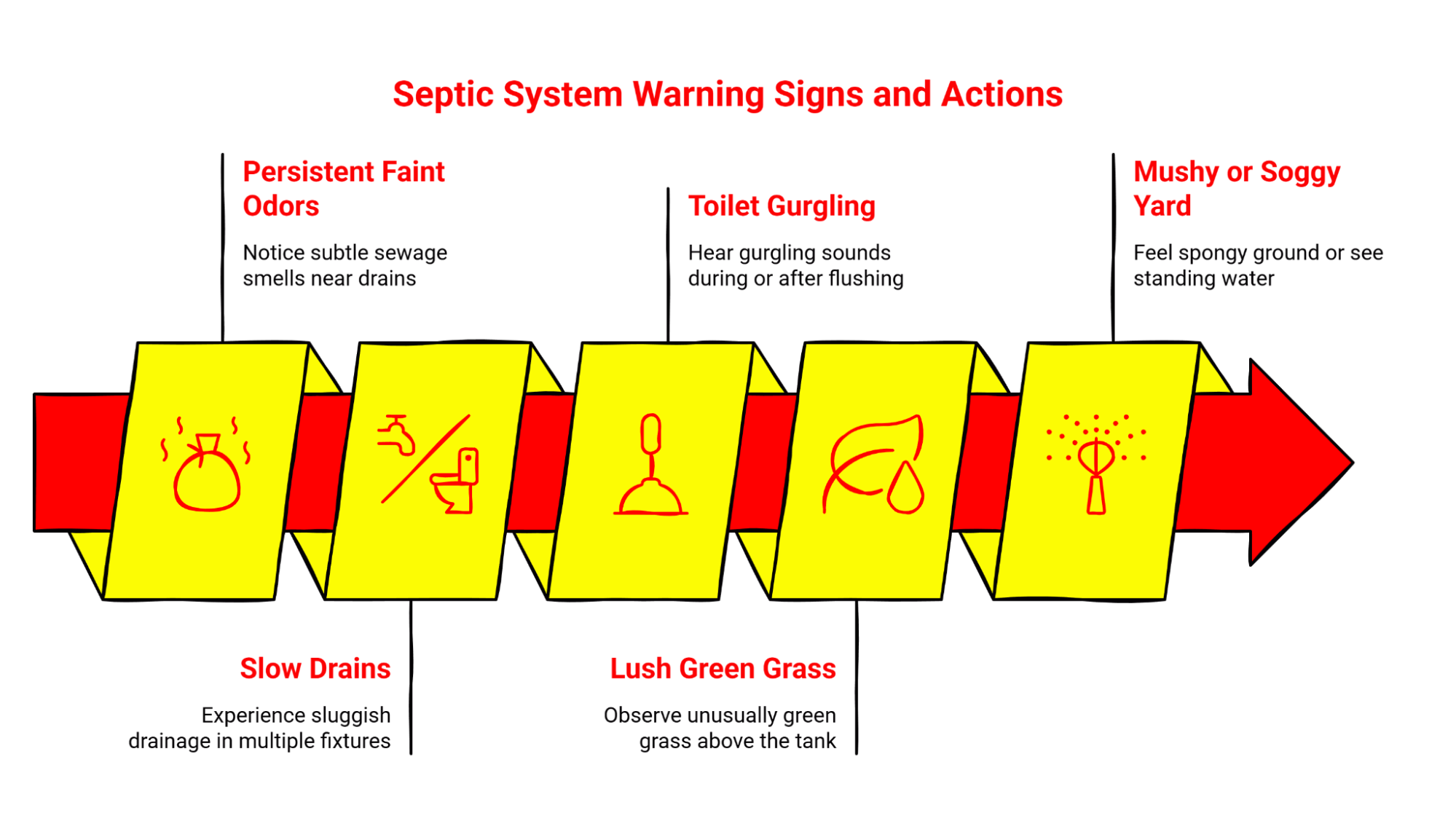
Sign #1: Persistent Faint Odors Near Drains or the Tank Area
That subtle sewage smell you catch occasionally near your outdoor drains or over the area where your tank sits underground is your system’s earliest alarm. When odors become noticeable, the tank may be approaching capacity or a component may be leaking.
Many homeowners dismiss these faint smells, assuming they’ll dissipate. They don’t—they intensify. What starts as an occasional whiff becomes a persistent problem that affects your yard and eventually your home’s interior.
What you should do: Don’t wait for odors to strengthen or spread. Contact Drane Ranger for septic tank service while the issue remains manageable. Early intervention prevents sewage smells from permeating your property.
Sign #2: Slow Drains Across Multiple Fixtures
A single slow-draining sink often indicates a localized clog in that fixture’s trap or drain line. But when your kitchen sink, bathroom shower, and washing machine all drain sluggishly at the same time, you’re looking at a system-wide issue. As sludge accumulates in your septic tank, it reduces the available volume for wastewater.
This symptom tends to worsen gradually. You might not notice it day to day, but compare how quickly water drains now versus six months ago. The difference reveals how much your tank’s capacity has diminished.
What you should do: Schedule a professional cleanout in Houston to remove accumulated solids. Once the tank is pumped, drainage speed typically returns to normal. This isn’t a problem that resolves on its own—it only worsens until the tank is serviced.
Sign #3: Toilet Gurgling During or After Flushes
That distinctive gurgling sound when you flush represents air being displaced by restricted wastewater flow. It signals that your system can’t move water freely anymore, either because the tank is too full or because a blockage has formed. This is more concerning than slow drains because it indicates your system is under stress.
What you should do: Treat gurgling as a high-priority warning. This symptom can lead to sewage backing up into your home. Call for inspection and pump-out service promptly. At Drane Ranger, we understand the urgency of this symptom and prioritize these appointments.
Sign #4: Unusually Lush, Over-Green Grass Above the Tank or Drain Field
If you notice a distinctly greener, more vigorous strip of grass directly over your septic tank or drain field—especially during dry periods—that’s a warning sign worth investigating.
Nutrient-rich effluent may be reaching the surface, essentially fertilizing that specific area. This happens when your tank is overfull and can’t properly contain wastewater, or when your drain field isn’t processing effluent correctly.
What you should do: Request a professional evaluation. This visible symptom indicates your system needs attention before the situation progresses to actual pooling water or soggy ground. Early assessment can determine whether you need pumping, drain field maintenance, or both.
Sign #5: Mushy or Soggy Yard When It Hasn’t Rained
This is the most urgent warning on the list. When your yard feels spongy underfoot or shows standing water near your tank or drain field without recent rainfall, your system is either saturated or actively overflowing. This creates immediate health risks for your family and pets and can damage your landscaping.
The soggy area may appear suddenly after a period of heavy household water use, or it might develop gradually over several days. Either way, it indicates that wastewater isn’t being properly absorbed and processed by your drain field.
What you should do: Rope off the affected area to prevent children and pets from contact with contaminated soil. Then schedule service immediately—ideally within the same week. This situation won’t improve on its own and typically worsens rapidly. At Drane Ranger, we prioritize urgent calls to prevent property damage and protect public health.
Why Early Detection Saves Money and Protects Your Property
Ignoring these warning signs doesn’t make them disappear—it allows problems to worsen. When sludge fills beyond the tank’s effective capacity, wastewater can’t separate properly. Material that should remain in the tank can enter your drain field and affect its function.
A failed drain field requires excavation and replacement—a significant expense compared to routine maintenance. Early pumping helps maintain your drain field’s function and can prevent backups into your home.
For comprehensive information on how septic systems work and maintenance best practices, the U.S. Environmental Protection Agency provides detailed homeowner guidance. Texas residents can also consult the Texas Commission on Environmental Quality for state-specific standards and requirements.
Wastewater issues in your yard pose risks to anyone who comes in contact with the affected area, and backups inside your house may require professional cleanup. These concerns intensify the longer you delay service.
What Happens During a Professional Cleanout
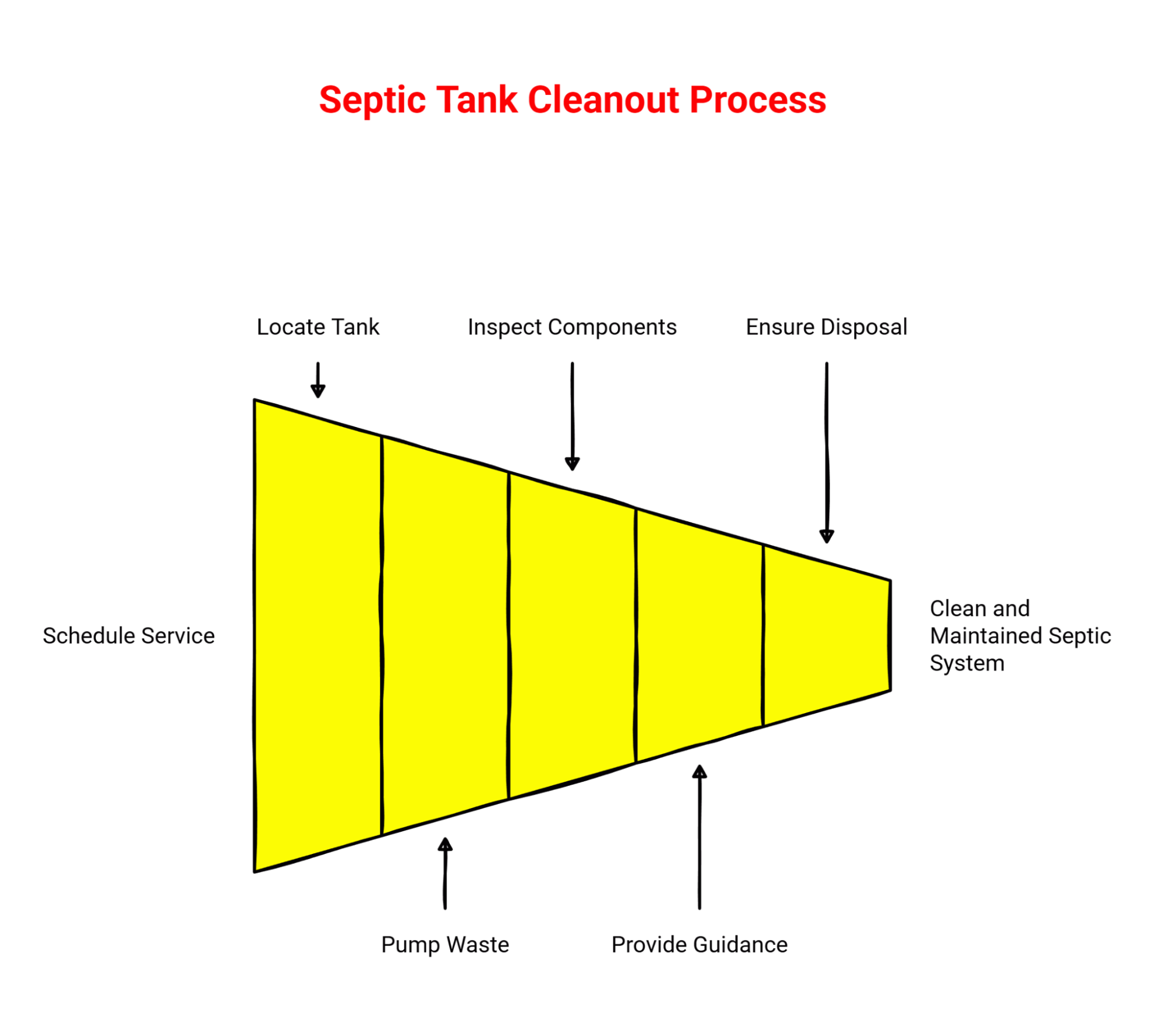
Understanding the service process helps explain why professional equipment and expertise matter for this maintenance task.
When you schedule service with Drane Ranger in Alvin or the surrounding area, the process includes several key stages:
Locating and accessing the tank. The technician identifies your tank’s location and uncovers the access port. This initial inspection reveals the tank’s condition and confirms its position relative to your home’s plumbing.
Pumping liquids and removing sludge. Using vacuum truck equipment, we remove both the liquid wastewater and the accumulated solid material from the tank. This empties the chamber, resetting it to full capacity.
Inspecting critical components. While the tank is empty, we check baffles, inlet and outlet pipes, and the tank’s structural integrity. This inspection catches small problems before they become serious failures. We look for cracks, corrosion, or component damage that might need repair.
Providing maintenance guidance. Based on your household size, water usage patterns, and what we observed during service, we recommend when you should schedule your next cleanout. This helps you stay ahead of problems rather than reacting to them. Keep in mind that exact service intervals vary by system design and individual usage patterns.
Ensuring proper disposal. All removed waste is transported to approved treatment facilities according to local regulations. This responsible handling protects public health and environmental quality.
Professional service providers have the training, equipment, and disposal permits required to handle septic waste safely.
What Homeowners Are Saying
Houston-area residents who’ve worked with Drane Ranger consistently mention the organization, professionalism, and clear communication they experienced:
“My experience with Drane Ranger was a very organized, professional and on time experience. I was kept informed of what was happening and a suggested time of cleaning again. I will use them again and will definitely recommend them to anyone I speak with.”
— Harold R.
“He has done all my septic work and is the best!”
— John S.
“Drain Ranger is very professional and reliable. Basically they can take care of all your grease drain needs.”
— Shelley M.
These homeowners recognized warning signs early, scheduled proactive service, and maintained their systems in good working order.
Your Next Step
If you’ve noticed any of these five indicators—or if you’ve simply reached the three-year mark since your last service—now is the time to schedule a cleanout. Drane Ranger serves Houston, Alvin, Pearland, Sugar Land, and surrounding communities throughout the Greater Houston area with reliable general wastewater services.
Your septic system protects your home quietly and continuously. Timely maintenance keeps everything functioning properly, helps prevent system failures, and maintains your property’s value and your family’s comfort.
Ready to Schedule Service?
Call 281-489-1765 to start your service today, or use these convenient options:
Helpful Resources
- Septic Tank Service Overview
- Houston Septic Tank Cleaning
- Septic Tank Cleaning in Alvin, TX
- General Wastewater Services
Our Editorial Process
All content undergoes multi-stage review including technical accuracy verification against TCEQ model standards, local regulation compliance checking, and practical application testing. We distinguish between verified regulatory requirements and generally accepted industry practices to help operators understand certainty levels.
About the Drane Ranger Insights Team
The Drane Ranger Insights Team synthesizes complex topics into clear, helpful guides for homeowners. While our content is thoroughly reviewed for clarity and accuracy, it serves informational purposes and should not replace professional advice specific to your property and circumstances.
Disclaimer: This guide provides general information about septic system maintenance. For decisions specific to your property and circumstances, we recommend consulting a qualified septic professional who can assess your individual system.