📌 Key Takeaways
A backup doesn’t announce itself with an invoice—it arrives with closed doors, idle staff, and guests walking out.
- The Real Bill Hides in Downtime: A four-hour shutdown during peak service can cost $2,600 in lost margin before you factor in the emergency pumping premium, overtime, or spoiled inventory.
- Contracts Cost Less Than Crises: One emergency event—combining service premiums, downtime, refunds, and potential fines—typically exceeds the annual cost of a scheduled maintenance contract designed around your actual kitchen volume.
- The 25% Threshold Protects Your Operation: When fats, oils, and grease reach a quarter of your trap’s capacity, cleaning becomes necessary to maintain proper function and avoid system failure, regardless of your quarterly baseline.
- Documentation Keeps Inspectors Satisfied: Manifests, service logs, and waste disposal records produced through scheduled maintenance create the compliance trail that health inspectors expect during unannounced visits.
- Frequency Should Match Your Reality: High-volume kitchens running fryers all day need more frequent service than the quarterly minimum, with intervals tuned to actual FOG output rather than calendar convenience.
Maintenance is an investment; emergencies are an expense.
Restaurant owners, general managers, and facilities teams overseeing commercial kitchens in Greater Houston will find the operational details here, preparing them for the comprehensive cost analysis and contract evaluation framework that follows.
A grease trap backup happens when your trap exceeds its capacity—fats, oils, and grease accumulate beyond safe levels, causing slow drains, overflows, or complete line blockages. In Houston, city regulations require commercial kitchens to empty traps quarterly at minimum, and cleaning becomes necessary when accumulation reaches 25% of the trap’s total capacity. The EPA has documented how FOG buildup contributes to sewer blockages and system failures. But those thresholds aren’t just regulatory checkboxes. They’re your early warning system.
Think of grease trap maintenance like oil changes for your vehicle. Skip a few, and you might get away with it for a while. Then one day, your engine seizes on the highway. Now you’re paying for a tow truck, a rental car, and a complete engine rebuild—all because a $40 oil change seemed easy to postpone.
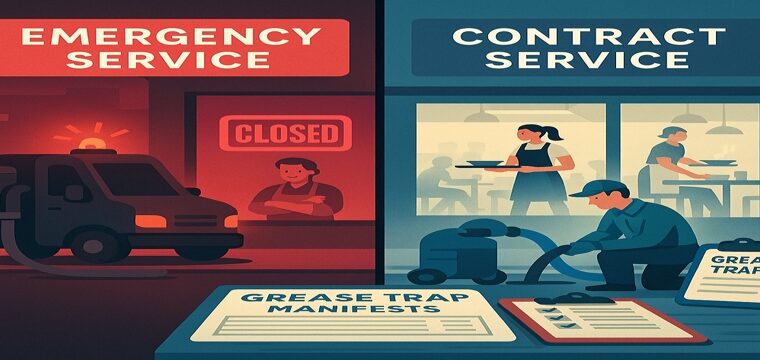
Picture this: Friday night during your dinner rush. The kitchen sinks start draining slower. Then that unmistakable smell hits. A floor drain burps wastewater onto the kitchen floor right in the middle of service. Servers notice. Guests notice. Your line cooks are working around standing water while you’re on the phone desperately searching for someone—anyone—who can pump your trap right now. You watch parties of four walk past your door and choose the restaurant next door instead.
Here’s the practical reality. Sign a commercial grease trap cleaning services contract with scheduled cleanings, and you avoid that emergency entirely. You get predictable costs, priority service, and the documentation inspectors actually want to see.
The Problem You Don’t See: Why Backups Blindside Your Budget
Emergency pumping doesn’t just cost more per service. It triggers a cascade of expenses that most restaurant operators don’t calculate until they’re already paying them. The direct service premium is real—after-hours rates, expedited dispatch, and short-notice availability all command higher prices. But that’s just the beginning.
When you wait for a crisis, multiple costs land at once: emergency call-out premiums, lost revenue during shutdown, staff standing idle on the clock, possible food loss and refunds, and compliance actions if inspectors find you’ve fallen behind on your maintenance cadence.
Watch for these early warning signs before you cross the quarterly threshold or hit that 25% accumulation level: persistent odors near floor drains, slower drainage in prep sinks, gurgling sounds when water flows, or visible grease in unexpected areas. When you spot any of these, you’re already approaching the danger zone.
What Makes Emergency Pumping Expensive
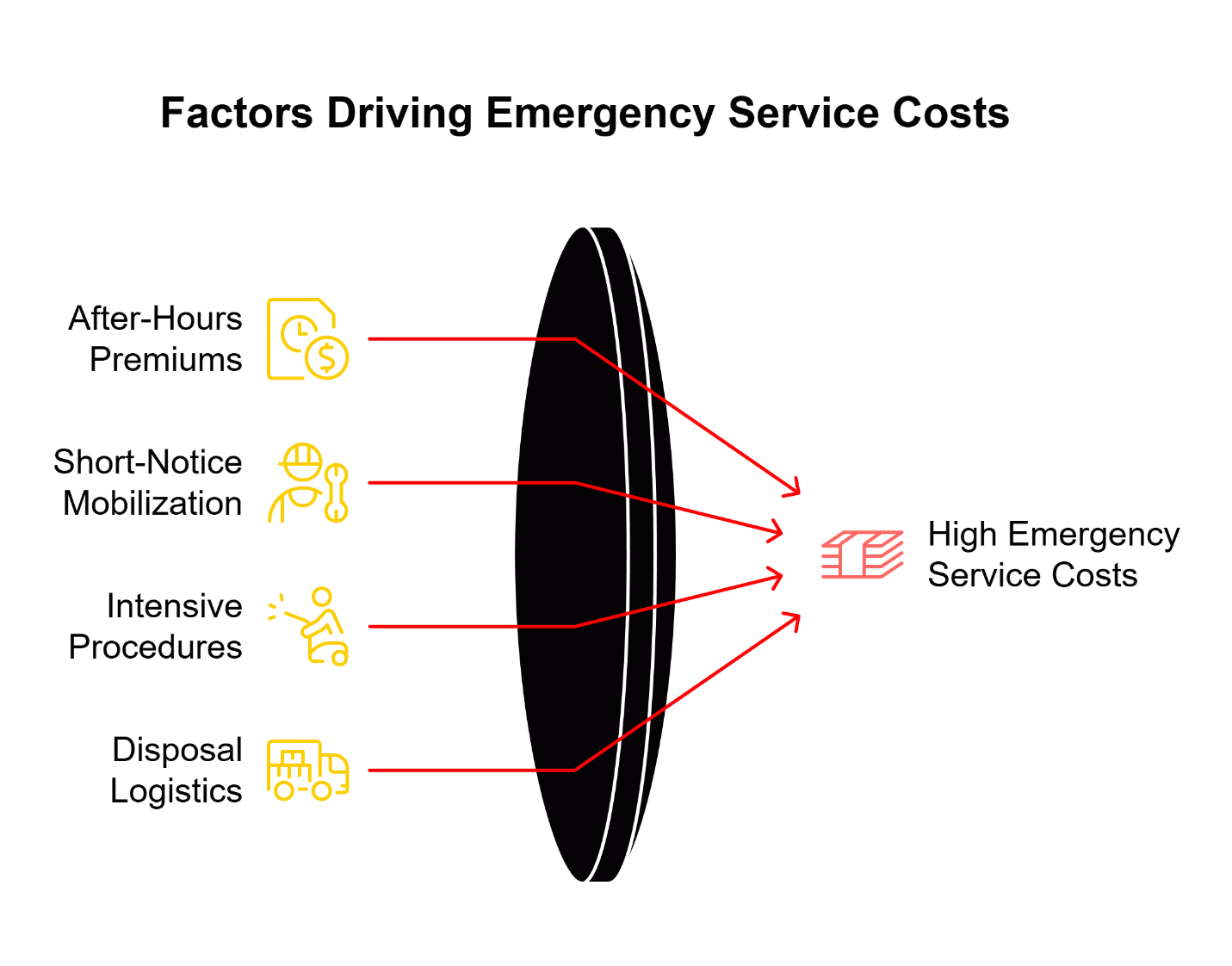
Several factors drive emergency service costs higher than scheduled maintenance. After-hours and weekend premiums apply when you need service outside normal business hours—which is exactly when most backups force your hand. Short-notice mobilization means your service provider has to rearrange their schedule, potentially pulling technicians from other jobs or calling them in on their day off.
The work itself often requires more intensive procedures. A backup usually means the trap is completely full and the lines may be partially clogged, requiring hydro-jetting to clean surfaces down to bare metal. Scheduled maintenance, by contrast, prevents buildup before it hardens and adheres to trap walls.
Disposal logistics become complicated in emergencies. Texas regulations on municipal liquid waste transport require proper vehicle authorization and manifesting for grease trap waste. With scheduled service, waste manifesting and transportation are planned and streamlined. During an emergency, those same logistics happen under time pressure, and proper documentation—critical for compliance—can become rushed or incomplete.
Reputable providers like Drane Ranger have maintained proper manifesting and legal disposal practices since 1985, ensuring every load is documented regardless of service timing. The City of Houston’s special waste program outlines clear expectations for FOG management that professional haulers must follow. But not every provider maintains those standards when responding to panic calls.
The Hidden, Bigger Bill: Downtime Math
The real expense of a backup isn’t the pump truck—it’s what happens to your operation while you wait for help. Use this formula to calculate your actual exposure:
Lost Sales = (Average tickets per hour × Hours closed or limited) × Gross profit margin
Here’s a concrete example: A restaurant serving 40 tickets per hour at $25 average check, closed for 4 hours during peak service, with a 65% gross margin loses $2,600 in margin alone. That’s before you add labor costs for staff standing idle or working overtime, inventory loss from food that spoiled or had to be discarded, or refunds and comped meals for guests who experienced the problem.
“The most expensive grease trap cleaning is the one you didn’t plan for.”
Now consider the reputation cost. Negative reviews don’t itemize on your P&L, but they compound. One dinner service interrupted by a grease trap emergency can generate social media posts and online reviews that affect your revenue for months. And if a city inspector happens to visit during a backup? Violations, fines, and potential closure orders become part of your emergency total.
In Houston’s commercial restaurant environment, where health department visits can happen without notice, operating with a full or malfunctioning trap carries regulatory risk that extends well beyond cleanup costs. Many busy kitchens with high FOG output need more frequent service than the quarterly minimum to avoid overloading their traps.
Why Contracts Win on Total Cost
Scheduled grease trap cleaning in Houston through a maintenance agreement delivers predictable rates across the year. You know your quarterly costs upfront, which simplifies budgeting and eliminates surprise expenses. More importantly, contract customers receive priority scheduling. When weather events, busy seasons, or unexpected demand spikes create service backlogs, contract customers get handled first.
Service frequency gets aligned to your actual needs—not just the regulatory minimum. Municipal FOG management guidelines describe how the 25% rule works for determining cleaning frequency based on actual trap performance. Busy kitchens with high-volume fryers may need cleaning every six to eight weeks, while slower operations stay compliant with standard quarterly service. A good provider helps you determine the right cadence based on your menu, volume, and trap size.
The documentation benefit alone justifies the contract approach. Each service generates manifests showing proper waste handling, cleaning records that demonstrate compliance, and maintenance logs that inspectors view favorably. When a health inspector asks to see your grease management records, you hand them a complete file instead of scrambling to remember when you last called someone.
As one Houston restaurant manager shared: “My experience with Drane Ranger was a very organized, professional and on time experience. I was kept informed of what was happening and a suggested time of cleaning again. I will use them again and will definitely recommend them to anyone I speak with.” — Harold R.
Simple Scenarios: One Backup vs. One Year on Contract
Consider this cost comparison. Keep in mind these are illustrative examples based on typical industry scenarios—actual costs vary by trap size, location, and specific circumstances. Contact Drane Ranger at 281-489-1765 for a site-specific quote.
| Cost Item | Single Emergency Backup | Annual Contract (4 Services) |
|---|---|---|
| Emergency pumping & deep clean | $1,400 | Included in scheduled visits |
| After-hours/rush premium | $300 | $0 (daytime scheduling) |
| Downtime loss (based on example above) | $2,600 | $0 (no operational disruption) |
| Overtime & additional cleanup | $400 | Minimal |
| Potential fines/re-inspection costs | $500+ | Avoided through compliance |
| Estimated total single-event impact | $5,200+ | Predictable annual budget |
The emergency scenario above doesn’t even account for longer-term revenue impact from negative reviews or customer loss during the shutdown.
What a Good Contract Includes
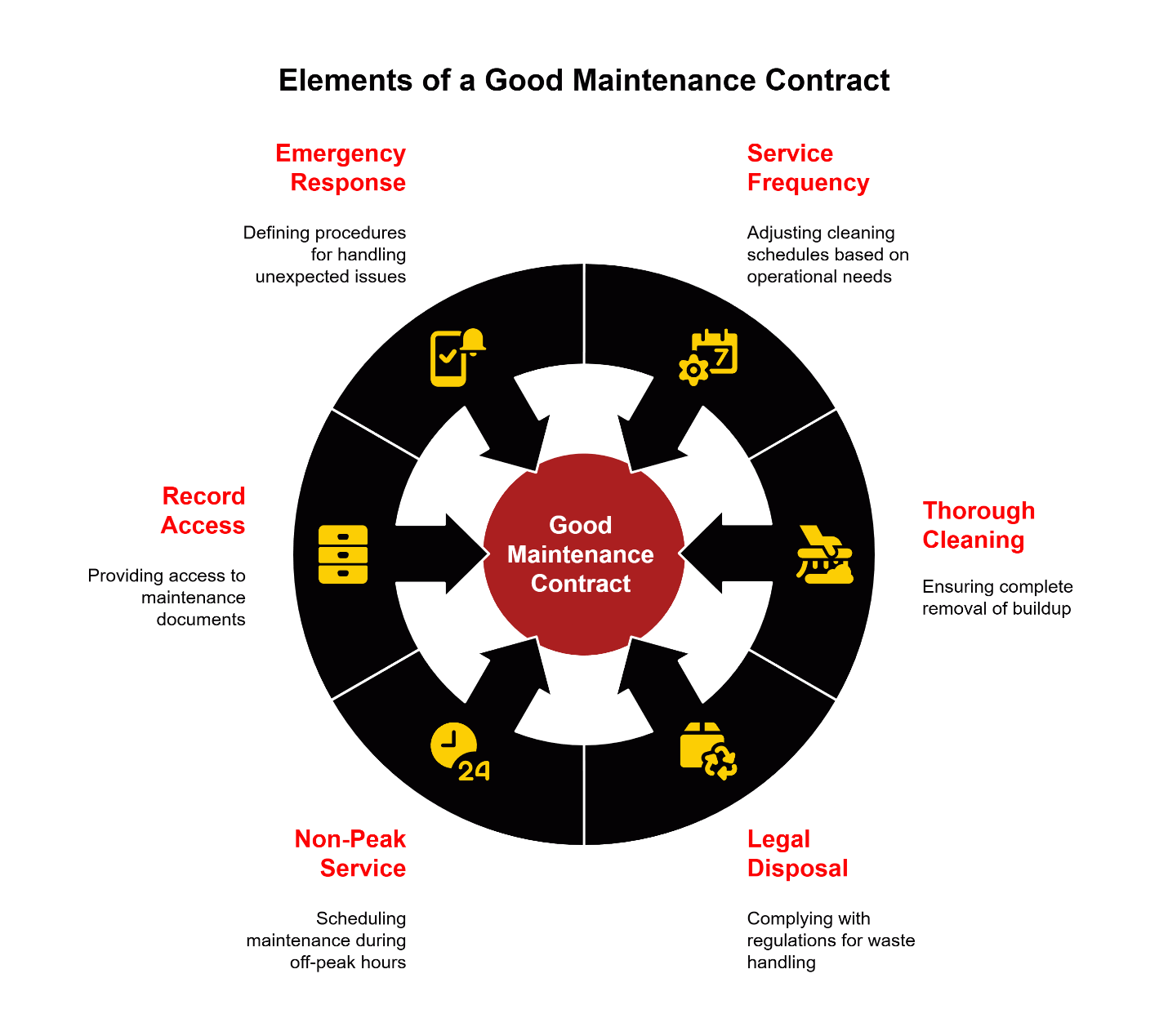
Look for these elements when evaluating maintenance agreements:
Service frequency tuned to your operation. Cookie-cutter quarterly schedules work for some kitchens, not all. Your contract should specify cleaning intervals based on your trap size, cooking volume, and menu type—aligned with the 25% accumulation threshold that triggers necessary cleaning. Busy kitchens frying food all day need more frequent service than operations with lower grease output.
Thorough cleaning to bare surfaces. The contract should specify complete pump-out and interior cleaning—not just surface removal. This prevents the hardened buildup that causes premature failure and costly deep cleans later, ensuring FOG and solids are removed to restore full working capacity.
Proper manifesting and legal disposal. Every load removed should generate a manifest documenting proper handling and disposal at licensed facilities. This isn’t a luxury—it’s a legal requirement under Texas rules that protects you from liability. Your provider should demonstrate clear compliance with state and local waste transport regulations.
Non-peak service windows. Quality contracts schedule service during your closed hours or slower periods, eliminating operational disruption entirely.
On-site record access. You should receive and retain copies of all service records, manifests, and inspection reports. These documents prove compliance when regulators ask and provide the service history inspectors want to see.
Clear emergency response terms. Even with preventive maintenance, unexpected issues occasionally arise. Your contract should spell out how emergency situations get handled for existing customers.
Drane Ranger has served the Greater Houston area—within approximately 100 miles of our Houston location—since 1985. Our approach focuses on safe, compliant collection and disposal practices, not just getting in and out as quickly as possible.
Request a contract quote to see how these elements apply to your specific operation.
Next Steps
Don’t wait for a backup to force your hand. If you’re stretching beyond quarterly cleaning inside Houston city limits or hitting the 25% accumulation level between visits, you’re likely overdue for a new maintenance schedule.
Call 281-489-1765 Monday through Friday, 9am to 6pm, to discuss your trap size, service frequency, and contract options. Our team will help you determine the right maintenance schedule based on your operation’s specific needs, ensuring you stay ahead of both the quarterly city requirement and the 25% accumulation threshold that triggers necessary cleaning.
Alternatively, visit our contact page to request a contract quote online. We’ll respond within 24 hours with a customized proposal for your location.
Maintenance is an investment. Emergencies are an expense. Choose predictability.
About the Drane Ranger Insights Team
The Drane Ranger Insights Team is our dedicated engine for synthesizing complex topics into clear, helpful guides. While our content is thoroughly reviewed for clarity and accuracy, it is for informational purposes and should not replace professional advice.