📌 Key Takeaways
Missing septic documentation can transform a smooth home sale into a stalled negotiation with price reductions, delayed closings, or lost buyers.
- Documentation Equals Negotiation Power: Complete septic records shift you from defensive seller to confident homeowner, eliminating buyer leverage before it starts.
- The Pre-Listing Inspection Advantage: Scheduling a professional assessment before listing gives you control over the timeline, budget, and narrative—avoiding rushed repairs under transaction pressure.
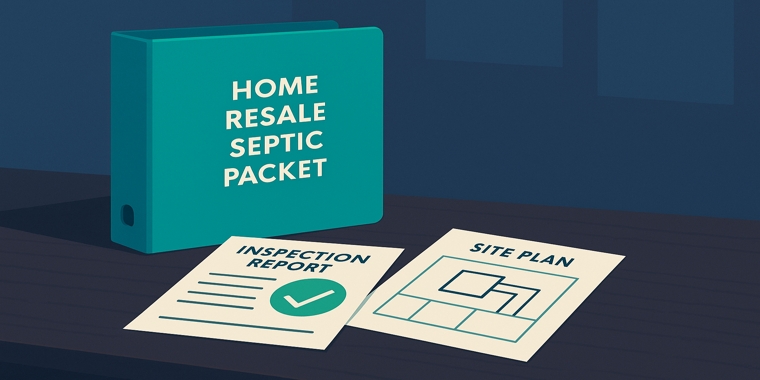
- The Home Resale Septic Packet Wins Sales: A organized file containing inspection reports, pumping records, system specifications, and provider contacts answers buyer questions immediately and speeds transactions.
- Proactive Transparency Beats Reactive Disclosure: Including maintenance recommendations and clear system history demonstrates honest stewardship that buyers value more than claims of perfection.
- Lender Requirements Follow Appraiser Flags: While not automatic, financing conditions often arise when appraisers note system concerns—making documentation your insurance against late-stage complications.
Prepared sellers close faster with fewer concessions and stronger buyer confidence.
Houston-area homeowners selling properties with septic systems will find essential guidance here, preparing them for the detailed documentation process that follows.
The “For Sale” sign is up. Showings are scheduled. Then a potential buyer’s inspector asks the question that makes your stomach drop: “When was the septic system last serviced, and do you have documentation?”
For homeowners in Houston and surrounding areas like Alvin, this moment can determine whether your closing proceeds smoothly or stalls indefinitely. A septic system represents one of your property’s most critical—yet often overlooked—infrastructure components. When you’re preparing to sell, the difference between a confident answer and an awkward silence can cost you thousands of dollars or derail your sale entirely.
A Septic System Maintenance Inspection is a diagnostic assessment of the tank and components to verify function. It’s like a ‘Check Engine’ diagnostic for your yard. Imagine the confidence of handing a potential buyer a certified report saying your septic system is in perfect health. Schedule this before listing your home or if you suspect a problem but don’t see sewage yet.
Why Documentation Is Your Most Important Home Sale Negotiation Tool
Your septic system operates silently beneath your property, breaking down waste and protecting your family’s health. Because it’s hidden underground, most homeowners adopt an “out of sight, out of mind” mentality. This approach works fine—until you try to sell your home.
Proper documentation of septic system maintenance inspections has become a non-negotiable requirement for many home sales. Lenders may demand proof that this essential system functions correctly before approving mortgages, particularly if the appraiser notes any concerns during the property evaluation. Title companies will verify that no recorded liens or violations exist related to septic system failures. Buyers want peace of mind that they’re not purchasing a property with a ticking time bomb buried in the backyard.
The documentation serves multiple critical functions. It proves responsible homeownership. It provides a clear maintenance history. Most importantly, it transforms an invisible system into a tangible asset with documented value.
Think of your septic documentation the same way you’d think about service records for a vehicle. A car with complete maintenance records commands a higher price and sells faster than an identical car with no history. Your home’s waste management system deserves the same treatment. When you can demonstrate consistent, professional maintenance, you’re not just meeting a requirement—you’re building buyer confidence from the first showing.
The Seller’s Nightmare: How Missing Paperwork Can Kill Your Closing
Consider what happens when you can’t produce maintenance records. The buyer’s agent raises concerns. Their inspector notes the unknown condition in the report. Suddenly, your perfectly functional home has developed a perceived problem.
A lack of records can spook buyers or trigger financing issues, delaying the sale. In the best case, the buyer requests a professional inspection before proceeding, pushing your closing date back by weeks. In worse scenarios, they demand a significant price reduction to account for the “risk.” The worst outcome? They walk away entirely, concerned about inheriting an expensive problem.
The anxiety of not knowing the system’s condition creates legitimate fear. Septic system failures don’t announce themselves gradually. A homeowner might experience slow drains for weeks, then wake up to sewage backing up into their home. Repair costs can be substantial, particularly if the drain field requires replacement. No buyer wants to assume that risk based solely on a seller’s verbal assurance that “everything seems fine.”
Lenders view undocumented septic systems as potential red flags. If the appraiser notes concerns during the property evaluation—such as standing water near the drain field, unusual odors, or evidence of system distress—lenders may request a professional inspection and proof of proper function before approving the loan. If your buyer needs financing and you can’t produce inspection records when concerns arise, the approval process can stall or require additional conditions. Your perfect buyer, with their perfect offer, faces unexpected obstacles because of missing paperwork.
The timeline matters too. If you wait until a buyer requests documentation to schedule an inspection, you’ve lost control of the process. Should the inspector discover issues—a tank that’s too full, a damaged baffle, or early signs of drain field saturation—you’ll face those repairs under pressure, likely paying premium rates for rush service. Worse, you’ll need to disclose these newly discovered problems to future buyers even if your current deal falls through.
The Home Resale Septic Packet: What to Gather Before You List
Proactively scheduling an inspection and gathering records turns a potential liability into a selling point. Here’s exactly what belongs in your documentation packet:
Essential Documentation Checklist:
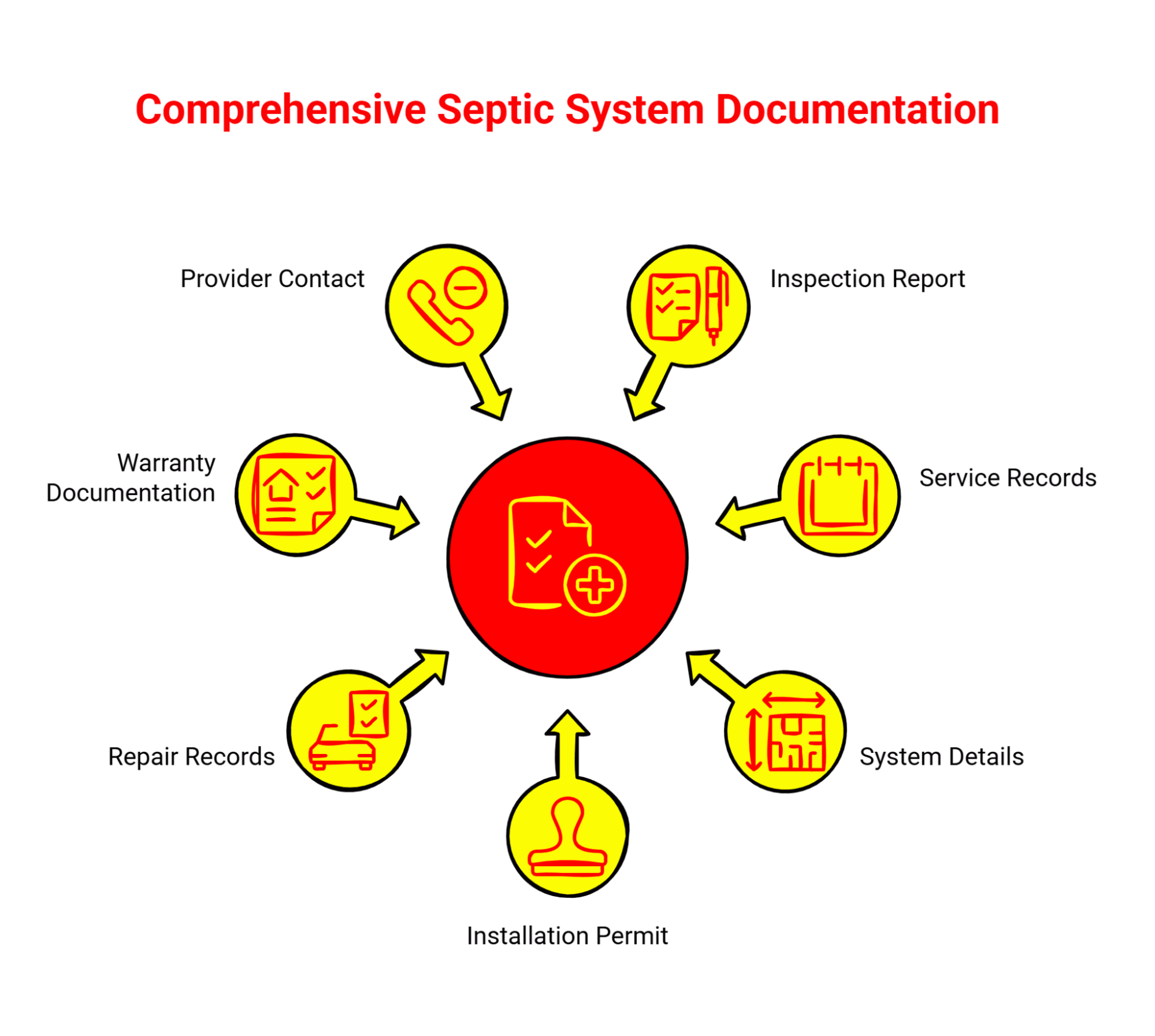
☐ Most Recent Inspection Report (ideally within the past year) showing tank levels, structural condition, and component function
☐ Pumping Service Records for at least the past five years, including dates and service provider details (typically every 2–3 years depending on household usage)
☐ System Details and Specifications including tank size, location map or description, access points/risers, and system age if known
☐ Original System Installation Permit (if available) showing the system design and approval
☐ Any Repair or Upgrade Records with contractor information and work completed
☐ Warranty Documentation for any system components replaced within their coverage period
☐ Provider Contact Information for verification or follow-up questions
Start by contacting Drane Ranger or your regular service provider to request copies of all past service records. Professional companies maintain detailed records of every visit, including tank measurements, waste removed, and observations about system health.
If you’ve lived in the home for years without service, schedule an inspection immediately. This proactive step accomplishes two critical goals. First, it gives you an accurate picture of the system’s condition. Second, it starts creating the documentation trail that buyers and lenders require. The inspection process is straightforward and costs far less than what you’d lose negotiating from a position of uncertainty.
For older homes where original permits may be difficult to locate, contact your local health department. Most jurisdictions maintain records of septic system permits going back decades. While retrieving these documents requires some effort, they provide valuable proof of proper installation and system specifications.
Organize these documents in a clear folder or binder. During showings, mention the packet’s existence. When buyers express interest, provide copies immediately. This transparency demonstrates responsible homeownership and differentiates your property from others where the septic system remains a question mark.
For additional guidance on maintaining proper records, see our detailed article: How to Document and Track Septic Service for Future Home Sales.
A Step-by-Step Guide to Proactive Septic Documentation
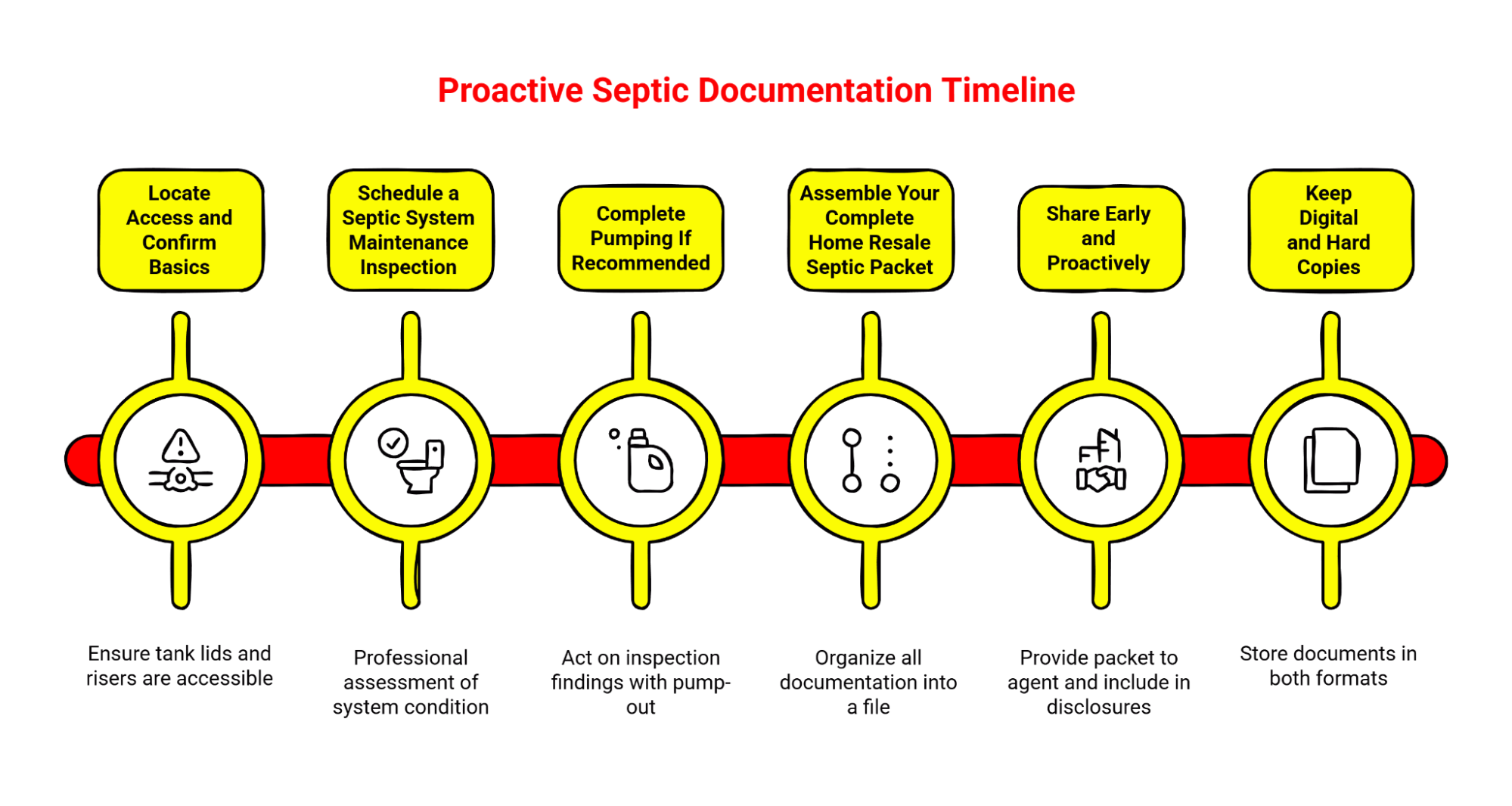
Follow this process to create a clean, buyer-ready file:
Step 1: Locate Access and Confirm Basics
Ensure tank lids and risers are accessible. Note the tank size and approximate age if known. This preparation makes the inspection process smoother and demonstrates proactive maintenance.
Step 2: Schedule a Septic System Maintenance Inspection
This professional assessment is the cornerstone of your documentation file. A current inspection validates that you’ve been a responsible homeowner who maintains critical infrastructure properly.
Step 3: Complete Pumping If Recommended
If inspection findings suggest it’s needed—or if you’re due based on your maintenance history—complete a pump-out and keep the receipt. This shows you’ve acted on professional recommendations.
Step 4: Assemble Your Complete Home Resale Septic Packet
Combine the inspection report, recent pumping records, service notes, system details, and provider contact information into a single, organized file.
Step 5: Share Early and Proactively
Provide the packet to your listing agent, include highlights in disclosures, and make it available during showings. Don’t wait for buyers to ask.
Step 6: Keep Digital and Hard Copies
Store PDFs for quick emailing and keep a printed set for open houses and inspections. Having both formats ensures you can respond immediately to any request.
Understanding the Risks and Your Protection Plan
| Risk in the Sale Process | Practical Mitigation |
| Buyer confidence drops due to limited records | Present a fresh inspection report up front and attach the packet to disclosures |
| Lender or underwriter requests proof late in the process | Keep digital copies ready to send same-day; include provider contact information |
| Delayed service availability during option period | Book the inspection before listing to avoid last-minute scheduling conflicts |
| Confusion about system location during buyer inspection | Include a simple location sketch or description in your packet |
| Negotiation leverage shifts to the buyer | Use proactive documentation to frame the home as responsibly maintained, reducing concessions |
Turning a Liability Into a Selling Point: How Proactive Inspection Wins Buyers
The transformation happens when you shift from defensive to confident. Instead of hoping buyers don’t ask difficult questions, you lead with proof of excellent maintenance.
Professional inspections validate that your system operates correctly. The report details tank capacity, measures current sludge and scum levels, verifies that baffles and tees function properly, and confirms the drain field shows no signs of failure. When you hand this report to a potential buyer, you’re providing peace of mind.
Frame your documentation as evidence of responsible property stewardship. You’ve protected your investment. You’ve ensured your family’s health and safety. You’ve maintained your home’s infrastructure with the same care you’ve given to its visible features. This narrative resonates with buyers who want assurance they’re purchasing from someone who took homeownership seriously.
The documentation also speeds transactions. When buyers know the septic system’s condition upfront, they face one less unknown during their due diligence period. Their inspector will likely still examine the system, but they’re verifying your documentation rather than investigating a mystery. This reduces the chance of surprising discoveries that derail negotiations.
Some sellers even include maintenance recommendations in their packet. If the inspection shows the tank is at fifty percent capacity and the service provider suggests pumping within the next year, include that guidance. This transparency demonstrates honesty and helps buyers plan their first year’s maintenance. Rather than viewing it as a defect, they appreciate the clear roadmap.
Consider the competitive advantage. In neighborhoods where multiple similar homes are for sale, documentation sets your property apart. When a buyer compares two nearly identical houses—one with complete septic records and one without—the choice becomes obvious. The documented property represents less risk, fewer potential surprises, and evidence of careful ownership.
The investment in a pre-listing inspection protects against potential losses during negotiations. It shifts you from hoping nothing goes wrong to knowing exactly what buyers will discover. That certainty is invaluable during negotiations.
For Houston area homeowners, proper septic system maintenance isn’t just about passing inspection. It’s about demonstrating that you understand how responsible waste management protects property values and community health. When you present comprehensive documentation, you’re signaling that you’re the type of owner who maintains infrastructure responsibly.
Drane Ranger has served the Houston area since 1985, providing professional septic services with a commitment to transparency and customer care. You can verify our credentials through our Better Business Bureau profile or find us on Google Maps.
Your home sale shouldn’t hinge on a buried system that works perfectly but lacks proof. Take control of the narrative. Schedule your inspection, gather your records, and transform your septic system from a potential obstacle into a documented asset. The buyer who ultimately purchases your home will thank you for the clarity. More importantly, you’ll thank yourself when closing proceeds without septic-related delays or last-minute negotiations.
Resources
Ready to Get Started?
Don’t let missing documentation become a closing-day crisis. Contact us today to schedule a comprehensive septic system inspection and start building the documentation packet that will set your home sale up for success. You can also reach us directly at 281-489-1765 to start your service today.
Disclaimer: This article provides general information about documenting septic service for home resale for educational purposes. Individual circumstances vary significantly based on factors like regulatory requirements, specific inspection procedures, and property age. For personalized guidance tailored to your home sale documentation needs, it is recommended to consult with a qualified professional.
Our Editorial Process
Our expert team uses AI tools to help organize and structure our initial drafts. Every piece is then extensively rewritten, fact-checked, and enriched with first-hand insights and experiences by expert humans on our Insights Team to ensure accuracy and clarity.
Author Byline & Bio
The Drane Ranger Insights Team is our dedicated engine for synthesizing complex topics into clear, helpful guides. While our content is thoroughly reviewed for clarity and accuracy, it is for informational purposes and should not replace professional advice.