📌 Key Takeaways
Confusion about septic services leads to expensive mistakes, but understanding the difference between cleaning and inspection transforms homeowners from reactive to protected.
- Pumping Removes, Inspection Reveals: Cleaning physically extracts accumulated waste to restore tank capacity, while inspection diagnostically assesses component health and system integrity—one resets function, the other verifies it.
- Timing Follows Purpose: Schedule cleaning every 2-3 years or when the tank reaches capacity; schedule inspection before real estate transactions, after unexplained symptoms, or to establish maintenance baselines.
- Bundling Delivers Certainty: Combining both services in a single visit provides capacity restoration and health verification simultaneously, eliminating the anxiety of unknown system conditions.
- Prevention Costs Less Than Crisis: Routine maintenance prevents the $15,000-$30,000 drain field replacement that results from neglect, while emergency backup cleanup adds immediate expense to long-term damage.
- Documentation Protects Value: Professional inspection reports serve as real estate certification, streamlining property transactions and demonstrating responsible ownership to potential buyers.
Know the difference, schedule strategically, protect your investment—that’s the path from system vulnerability to home security.
Suburban homeowners with septic systems will gain clarity here, preparing them for the comprehensive comparison and practical guidance that follows.
You’ve noticed slow drains in your home. Maybe there’s a faint odor near your yard that wasn’t there before. Or perhaps you’re simply wondering when the last time your septic tank was serviced. These moments of uncertainty are common for homeowners with septic systems, and they often lead to the same critical question: Do I need my tank pumped, or should I schedule an inspection?
The answer isn’t always straightforward because these two services serve fundamentally different purposes. Understanding the distinction between cleaning and inspection is essential for protecting your home’s value and ensuring your family’s health and comfort.
A Septic System Maintenance Inspection is a diagnostic assessment of the tank and components to verify function. It’s like a ‘Check Engine’ diagnostic for your yard. Imagine the confidence of handing a potential buyer a certified report saying your septic system is in perfect health. Schedule this before listing your home or if you suspect a problem but don’t see sewage yet.
What Are the Key Differences Between a Cleaning and an Inspection?
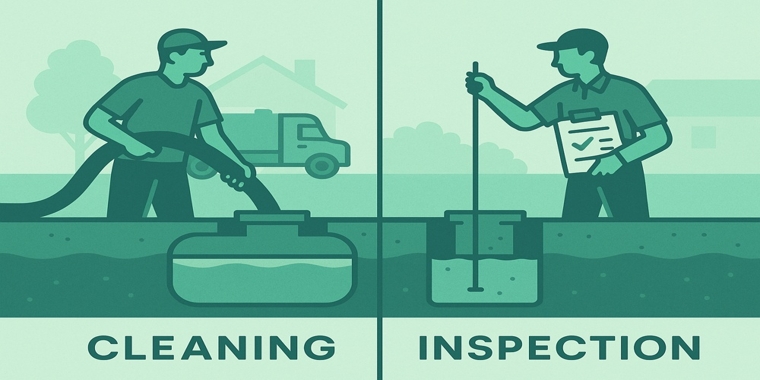
Residential septic tank cleaning is the physical removal of solid waste and wastewater to restore your system’s capacity. An inspection, by contrast, is a diagnostic assessment that reveals the overall health of your tank and its components. Pumping removes the waste; inspection reveals the health.
Think of cleaning as similar to an oil change for your home’s plumbing system. Skip it, and the entire system can seize up, leading to backups and contamination. The technician arrives with a vacuum truck, locates your tank’s access point, and uses specialized equipment to extract the accumulated sludge and liquid waste. This process typically takes one to two hours and immediately restores your tank’s working capacity.
An inspection involves a trained technician examining your tank’s structural integrity, checking sludge and scum levels with a measuring tool called a sludge judge for tank level assessment, and verifying that critical components like baffles and tees are functioning correctly through baffle and tee inspection. The inspector looks for cracks, leaks, or signs of system failure that aren’t visible from above ground. This service provides documentation of your system’s condition, which becomes invaluable during real estate transactions or when planning maintenance schedules.
The two services work hand in hand. Residential septic tank cleaning is used with septic system maintenance inspections because they complement each other perfectly. A thorough inspection often reveals that cleaning is needed, while a cleaning visit provides the opportunity to assess the tank’s condition from the inside. Many homeowners in Houston and surrounding areas like Alvin find that scheduling both services together provides the most complete picture of their system’s health.
When Do I Need a Cleaning vs. an Inspection?
You need septic tank cleaning every two to three years under normal household conditions, or sooner if your tank reaches capacity. An inspection becomes necessary before selling your home, if you notice warning signs like slow drains or odors, or when you want to establish a baseline for a newly purchased property.
Several factors influence how often you should schedule a cleaning. Household size matters significantly. A family of five generates more wastewater than a couple, which means the tank fills faster. Similarly, if you have a garbage disposal, use a water softener, or frequently do large loads of laundry, your tank accumulates solids more quickly.
The size of your tank also plays a role. A 1,000-gallon tank serving a four-person household typically needs pumping every two to three years. However, these are guidelines, not absolutes. The only way to know your tank’s actual condition is through regular monitoring.
Warning signs that demand immediate attention include:
- Toilets or drains that empty slowly throughout your home
- Gurgling sounds coming from your plumbing
- Sewage odors near the tank or drain field
- Unusually lush, green grass over the drain field
- Standing water or soggy ground near the septic system
If you experience any of these symptoms, contact Drane Ranger for an assessment. These signs often indicate your tank is full or that a component has failed.
For inspections, timing depends on your specific situation. Schedule one before listing your home for sale, as many buyers require real estate septic certification. If you’ve just purchased a property with a septic system, an inspection establishes a baseline and reveals any hidden issues the previous owner may have neglected. After severe weather events or if you’ve experienced any plumbing problems, an inspection can catch damage before it becomes a crisis.
Septic system maintenance inspections prevent the silent failure that homeowners dread most—the odor and soggy yard that appear without warning. By checking levels and critical components during an inspection, technicians spot developing issues like leaks or damaged fittings before they escalate into overflows or drain field damage. This preventive approach saves thousands of dollars in emergency repairs.
Comparison Chart: Cleaning vs. Inspection at a Glance
This comparison matrix helps you evaluate which service addresses your immediate need and understand how both contribute to long-term system health.
| Aspect | Septic Tank Cleaning | Septic System Inspection |
| Primary Goal | Remove accumulated solid waste and restore tank capacity | Assess system health and identify potential problems |
| What’s Involved | Physical pumping of sludge and wastewater from the tank | Tank level assessment, baffle and tee inspection, structural examination |
| Typical Outcome | Empty tank ready to process new waste efficiently | Documented system health check with maintenance recommendations |
| Recommended Frequency | Every 2-3 years for average household | Before home sale, after purchase, or when problems appear |
| Average Duration | 1-2 hours onsite | 30 minutes to 1 hour onsite |
| Primary Benefit | Prevents backups and system failure | Early detection of issues and real estate septic certification |
| Equipment Used | Vacuum truck with large-capacity tank | Sludge judge, flashlight, camera equipment |
| Cost Consideration | Varies by tank size and accessibility | Generally less expensive than cleaning |
Understanding these differences allows you to make informed decisions about your system’s care. When you know what each service accomplishes, you can schedule them strategically to maximize protection while managing your maintenance budget effectively.
Septic system maintenance inspections also solve the compliance and sale hurdle that can derail real estate transactions. Clear documentation of system condition builds buyer confidence and streamlines the closing process, avoiding delays caused by unknowns buried underground.
The Overlap: Why Bundling Both Services Provides Peace of Mind
A comprehensive septic service visit combines inspection and cleaning into a single appointment, providing maximum value and complete system insight. When a technician arrives to pump your tank, they have the unique opportunity to visually inspect the tank’s interior once it’s empty, checking for cracks, deterioration, or other structural issues that would be impossible to assess when the tank is full.
This combined approach offers several practical advantages. You only need to schedule one service call, which saves time and minimizes disruption to your day. The technician can provide accurate measurements of sludge accumulation before pumping, which helps establish your ideal pumping frequency. After cleaning, they can inspect baffles, tees, and the tank’s structural integrity with full visibility.
Many professional services, including septic tank cleaning services offered throughout the Greater Houston area, include a basic inspection as part of the standard pumping visit. This practice ensures nothing gets overlooked and provides you with a complete picture of your system’s status.
The inspection component also helps prevent the “silent failure” scenario, where small leaks or component damage gradually worsen without obvious symptoms. By the time you notice soggy grass or foul odors, the problem may require expensive drain field repairs. Regular inspections catch these issues when they’re still manageable and affordable to fix.
For homeowners planning to sell, this bundled approach streamlines the pre-listing process. You’ll have both the pumping receipt and the inspection report that potential buyers or their inspectors will request. This documentation demonstrates responsible ownership and can prevent negotiations from stalling over septic concerns.
Getting Started: Your 5-Step Quick Path
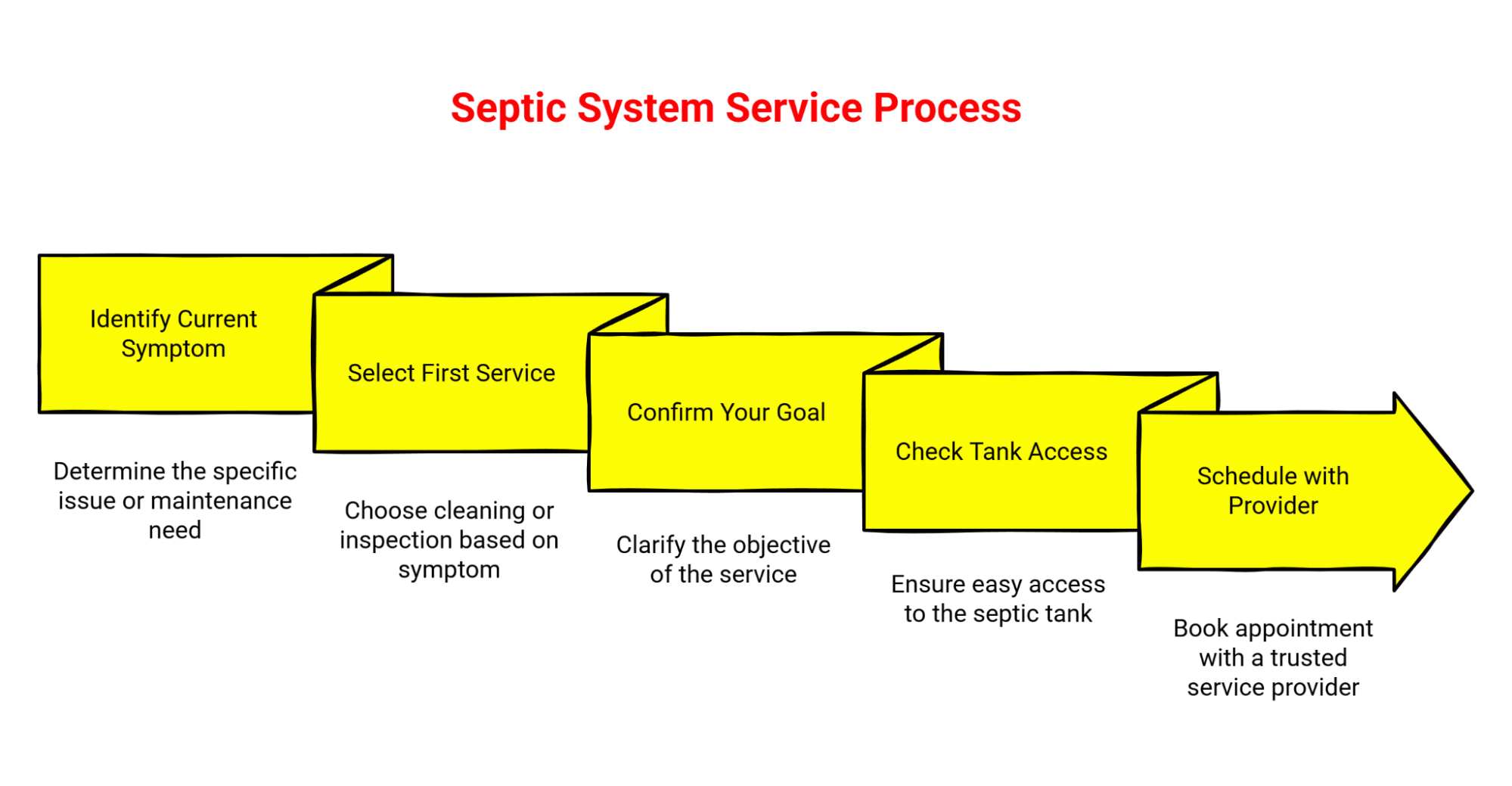
The fastest way to move from confusion to action is matching your current situation to the right first step. Follow this straightforward sequence:
Step 1: Identify Your Current Symptom Are you experiencing slow drains, odors, gurgling sounds, soggy yard areas, or are you simply overdue for service? Name the specific concern or note that routine maintenance is due.
Step 2: Select Your First Service Choose cleaning if your tank is overdue or showing signs of being full. Choose inspection if you have symptoms without a clear cause, need documentation for a real estate transaction, or want to verify system health after a long period without service.
Step 3: Confirm Your Goal Clarify whether you need to reset capacity (cleaning) or verify health and obtain documentation (inspection). This helps the service provider prepare the right equipment and approach.
Step 4: Check Tank Access Locate your tank’s access lids or risers. If they’re buried, note this for the service provider so they can bring excavation tools. Clear access saves time and reduces service costs.
Step 5: Schedule with a Trusted Local Provider Book your appointment with a licensed, compliant company that serves your area. For Houston and Alvin residents, Drane Ranger’s septic services provide comprehensive cleaning and inspection options.
This simple process transforms uncertainty into a concrete action plan, moving you from anxiety about your system to confidence in its care.
What If I Only Choose One?
Choosing only cleaning without inspection means you restore capacity but remain unaware of potential structural problems, damaged baffles, or developing leaks that could cause system failure. Choosing only inspection without cleaning leaves you with knowledge about your tank’s condition but doesn’t address the fundamental problem of waste accumulation that leads to backups.
If your tank is overdue for pumping, prioritize cleaning first. The immediate risk of backup outweighs the diagnostic value of an inspection. However, schedule an inspection within the next six months to verify that the cleaning resolved all issues and to establish your optimal maintenance interval.
If you’re experiencing symptoms but your last cleaning was recent, start with an inspection. This diagnostic approach identifies the root cause without the expense of unnecessary pumping. The inspection results will guide whether cleaning is needed immediately or can wait.
The most reliable long-term strategy is maintaining both services on a regular schedule. Think of it as a complete health maintenance program for your home’s waste management system.
Risk Mitigation Guide: 5 Common Risks and Solutions
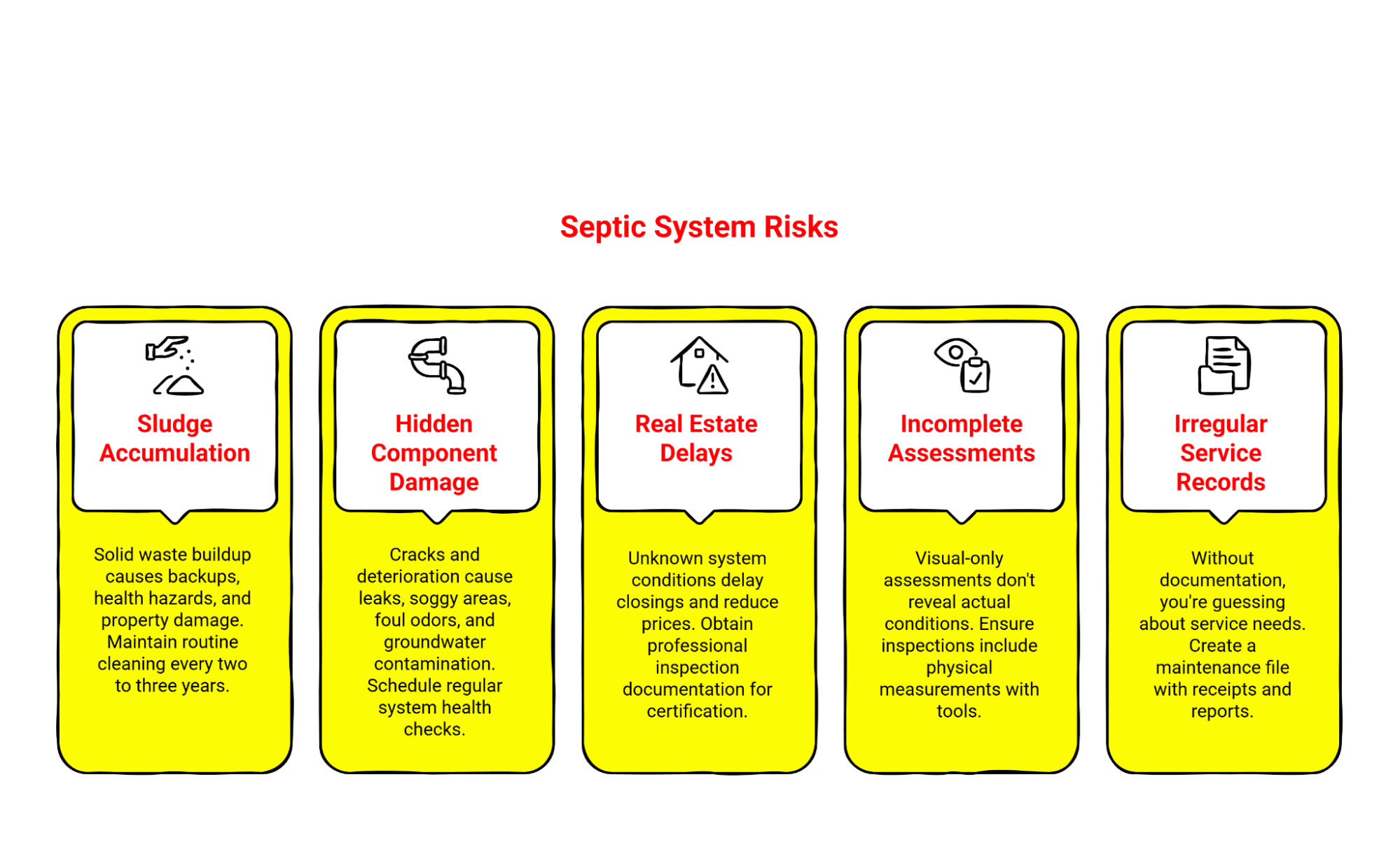
Understanding the specific risks your septic system faces helps you develop a practical protection plan.
Risk 1: Sludge Accumulation Leading to Backups
When solid waste builds up beyond safe levels, it has nowhere to go but backward through your plumbing. This creates health hazards, property damage, and emergency service costs that far exceed routine maintenance expenses.
Mitigation: Maintain a routine cleaning interval based on your household size and usage patterns. For most homes, this means scheduling service every two to three years. Keep a maintenance log with service dates and set calendar reminders well before your next due date.
Risk 2: Hidden Component Damage Causing Silent Leaks
Cracks in the tank, damaged baffles, or deteriorated tees allow untreated sewage to leak into the surrounding soil. These problems develop gradually and remain invisible until they cause soggy areas, foul odors, or contaminated groundwater.
Mitigation: Schedule regular system health checks that include thorough tank level assessment and baffle and tee inspection. A qualified inspector examines components that you can’t see from the surface, catching problems while they’re still inexpensive to repair.
Risk 3: Real Estate Transaction Delays
Buyers increasingly require septic system documentation before closing. Unknown system conditions create negotiation obstacles, delay closings, or result in price reductions that exceed the cost of proper maintenance.
Mitigation: Obtain professional inspection documentation that serves as real estate septic certification. Schedule this service at least 30 days before listing your property. The resulting report demonstrates system integrity and eliminates buyer concerns.
Risk 4: Incomplete Visual-Only Assessments
Looking into a tank from the surface reveals almost nothing about actual conditions. Sludge depth, scum thickness, and component integrity require proper measurement tools and technical expertise to evaluate accurately.
Mitigation: Ensure any inspection you schedule includes physical measurements using appropriate tools, not just a visual glance. Ask the inspector to document sludge and scum levels in inches and to test baffle function. Written reports with specific measurements provide actionable information.
Risk 5: Irregular Service Records Creating Maintenance Confusion
Without clear documentation of past service dates, tank measurements, and findings, you’re guessing about when service is actually needed. This leads to either premature pumping that wastes money or delayed pumping that risks system failure.
Mitigation: Create a simple maintenance file for your septic system. Save all service receipts, inspection reports, and pumping records. Note the dates and key findings. Use this information to establish your optimal service interval based on actual tank conditions rather than generic guidelines.
Pre-Service Checklist
Use this practical checklist to prepare for your service appointment and ensure nothing gets overlooked:
- Current symptom or concern identified (slow drains, odor, gurgling, soggy yard, overdue maintenance)
- Decision made: cleaning to reset capacity or inspection to verify health
- Tank location identified and access points located
- Previous service records gathered (dates and any notes from past visits)
- Preferred appointment date and time selected
- Questions prepared for the technician
- Plan established for completing the paired service (schedule inspection after cleaning, or vice versa)
- Licensed, local provider confirmed
Having these items ready before you call streamlines the scheduling process and helps the service provider prepare appropriately for your specific needs.
Common Pitfalls to Avoid When Scheduling Your Service
Pitfall 1: Assuming a Visual Inspection Is Enough
Many homeowners believe they can assess their system by lifting the tank lid and looking inside. However, accurate measurement requires inserting a measuring tool to the tank’s bottom to check sludge depth and scum thickness. The Environmental Protection Agency recommends pumping when the bottom of the scum layer is within six inches of the outlet tee, or when the top of the sludge layer is within 12 inches of the outlet. You can’t judge these measurements by looking at the surface.
Additionally, critical components like baffles, tees, and the tank’s structural integrity require professional expertise to evaluate properly. A trained inspector knows what to look for and can spot early warning signs that an untrained eye would miss.
Pitfall 2: Postponing Cleaning Until a Problem Occurs
The most expensive approach to septic maintenance is waiting until you experience backups, odors, or system failure. Emergency service calls cost significantly more than scheduled maintenance, and the damage from a backup often requires additional repairs and cleaning.
Septic systems don’t provide clear warnings before they fail. By the time you notice symptoms, the tank is already overfull and may have damaged the drain field. This reactive approach transforms an affordable, routine service into an expensive crisis.
Pitfall 3: Choosing a Provider Based Only on Price
The lowest price often comes with compromises. Some companies offer cut-rate pricing but skip important steps like proper waste disposal or thorough tank cleaning. They may pump out only the liquid layer, leaving solids behind that continue to reduce your tank’s capacity.
Proper disposal matters significantly. Licensed professionals transport waste to approved treatment facilities where it’s processed according to environmental regulations. Unlicensed operators may dump waste illegally, which creates environmental hazards and can result in fines for the property owner if authorities trace the waste back to your address.
Pitfall 4: Neglecting to Locate or Uncover Access Points
Many older septic tanks have buried access lids, which adds time and cost to service calls. Technicians may charge extra to dig out access points, and the excavation process can damage landscaping. In some cases, difficult access prevents thorough pumping because the technician can’t reach all compartments of the tank.
Consider installing risers that bring access points to ground level. This one-time investment makes all future service visits faster and less expensive while eliminating the risk of damaging your yard during excavation.
Pitfall 5: Ignoring the Drain Field
Your septic tank is only part of the system. The drain field performs the crucial function of filtering and dispersing treated wastewater into the soil. Many homeowners focus exclusively on tank maintenance while neglecting the drain field, which can lead to system failure even if the tank itself is properly maintained.
Never park vehicles or place structures over the drain field. Keep trees and shrubs at least 10 feet from drain field lines. Divert roof gutters and surface water away from the drain field area. These simple practices protect your system’s most expensive component from premature failure.
Trust & Local Resources
When evaluating service providers, independent third-party directories help verify local presence and business reputation. These resources provide unbiased information about companies serving the Houston area:
- Better Business Bureau – Drane Ranger Vacuum Service – Independent business profile with customer reviews and ratings
- Google Maps – Drane Ranger Location – Service area map and directions for Houston area residents
- Bing Maps – Drane Ranger – Alternative mapping resource with location details
These directory listings provide additional context about service providers in your area and support informed decision-making.
Resources
Taking Control of Your Home’s Hidden System
Your septic system represents a significant investment in your property’s functionality and value. Unlike the visible systems in your home that remind you when they need attention, your septic system operates silently underground, providing reliable service until the day it doesn’t.
The difference between a properly maintained system and a neglected one often comes down to a simple decision: choosing proactive care over reactive panic. Regular cleaning removes the waste that inevitably accumulates. Periodic inspections catch the small problems before they become expensive disasters. Together, these services form your defense against system failure.
Homeowners throughout Houston and Alvin who maintain their systems on schedule enjoy the peace of mind that comes from knowing their homes are protected. They don’t worry about embarrassing backups during family gatherings or scramble to find emergency service on weekends. They have documentation ready when it’s time to sell, and they avoid the $15,000 to $30,000 cost of drain field replacement that results from neglect.
You now understand the distinct roles that cleaning and inspection play in system health. You know when to schedule each service and what risks you face by postponing maintenance. Most importantly, you recognize that these aren’t just chores to check off a list—they’re investments in your home’s sanitation, your family’s health, and your property’s long-term value.
For comprehensive service in the Houston area, explore septic tank cleaning services or learn about service options in Alvin and surrounding communities. Ready to schedule? Contact us today or call 281-489-1765 to speak with our team about establishing a maintenance plan tailored to your household’s specific needs.
Disclaimer: This content is for informational purposes only and should not replace professional advice. Septic system requirements vary by location, soil conditions, and local regulations. Always consult with licensed professionals for services specific to your property.
Our Editorial Process
Our expert team uses AI tools to help organize and structure our initial drafts. Every piece is then extensively rewritten, fact-checked, and enriched with first-hand insights and experiences by expert humans on our Insights Team to ensure accuracy and clarity.
About the Drane Ranger Insights Team
The Drane Ranger Insights Team is our dedicated engine for synthesizing complex topics into clear, helpful guides. While our content is thoroughly reviewed for clarity and accuracy, it is for informational purposes and should not replace professional advice.