📌 Key Takeaways
Taking over a new kitchen means you own its grease trap compliance—even problems the last manager created.
- Name One Owner Immediately: Assign a single person responsible for grease trap records, service scheduling, and inspector questions—shared responsibility means no one is accountable.
- Manifests Prove Compliance, Not Invoices: Payment receipts show you paid someone; manifests show where the waste actually went, which is what Houston inspectors require.
- Clear the Path to Your Trap: If equipment blocks access to the sample well, you fail the inspection before paperwork questions even start.
- Quarterly Service Is the Minimum, Not the Goal: High-volume kitchens often hit the 25% grease accumulation limit in 6–8 weeks—adjust your schedule to match actual buildup.
- Warning Signs Mean Call Now: Slow drains, foul odors, or visible grease signal your current schedule has already failed—don’t wait for the next appointment.
Clear ownership + organized manifests + accessible trap = inspection-ready in 48 hours.
Restaurant managers and kitchen operators inheriting an unfamiliar compliance situation will find a structured action plan here, preparing them for the detailed implementation steps that follow.
~ ~ ~ ~ ~ ~ ~ ~ ~ ~ ~ ~ ~ ~ ~ ~ ~ ~
You just took over a new kitchen. The previous manager left two weeks ago. Somewhere in the back office, there might be service records. Or there might not.
The smell that greeted you this morning was concerning. The floor drain near the dishwasher is sluggish. And you have no idea when the grease trap was last pumped—or whether anyone kept the paperwork.
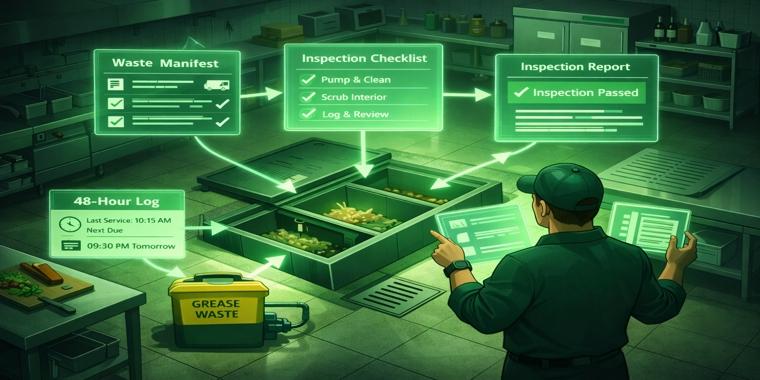
This is the moment that separates operators who inherit violations from those who get ahead of them. Within 48 hours, you can assign ownership, verify your physical inspection points, lock down your documentation process, and set a service rhythm that actually fits your kitchen’s volume.
Think of this as your pre-flight checklist before the inspector arrives.
What This 48-Hour Protocol Is Designed to Prevent
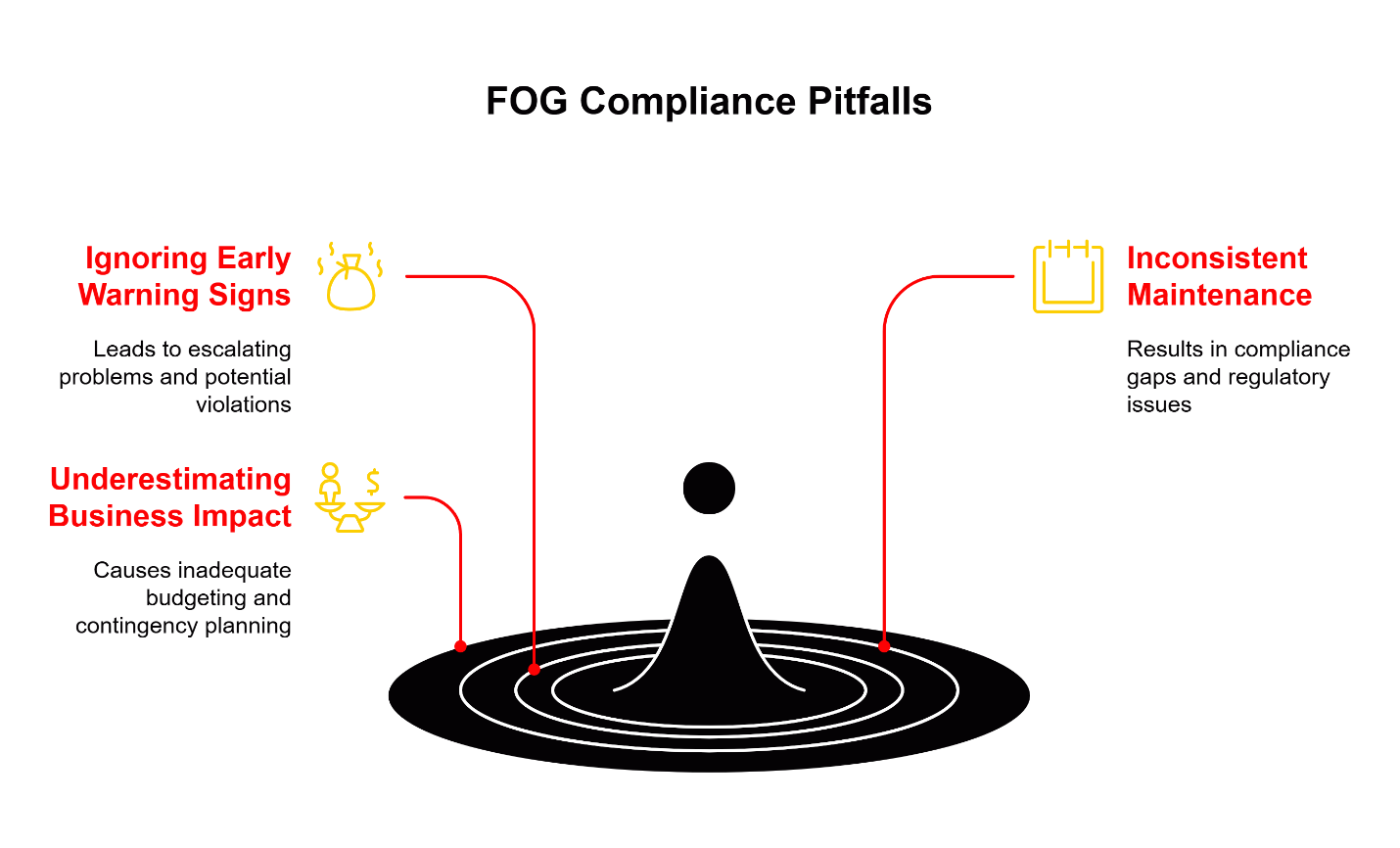
Kitchens change hands. Managers leave. Paperwork gets shoved into drawers and forgotten. And somewhere in that chaos, compliance gaps form—gaps that become your problem the moment you take the keys.
Here is what this protocol stops before it starts:
Backlogged violations you did not create. The city does not care who was running the kitchen when the trap overflowed or when the manifests went missing. If you are the operator now, you own the problem now.
The “someone must be handling it” trap. In busy kitchens, shared responsibility means no responsibility. If everyone assumes grease trap compliance is someone else’s job, no one is actually doing it.
Inspection failure before the paperwork review even begins. If an inspector cannot physically access your sample well—because equipment is stacked in front of it or the cover is damaged—you can fail before they ask a single question about your records.
Emergency service calls during your busiest hours. Slow drains and foul odors do not schedule themselves around your lunch rush. A protocol catches the warning signs before they become operational disasters.
This is not about paperwork theater. It is about running a kitchen that is genuinely ready when the city shows up.
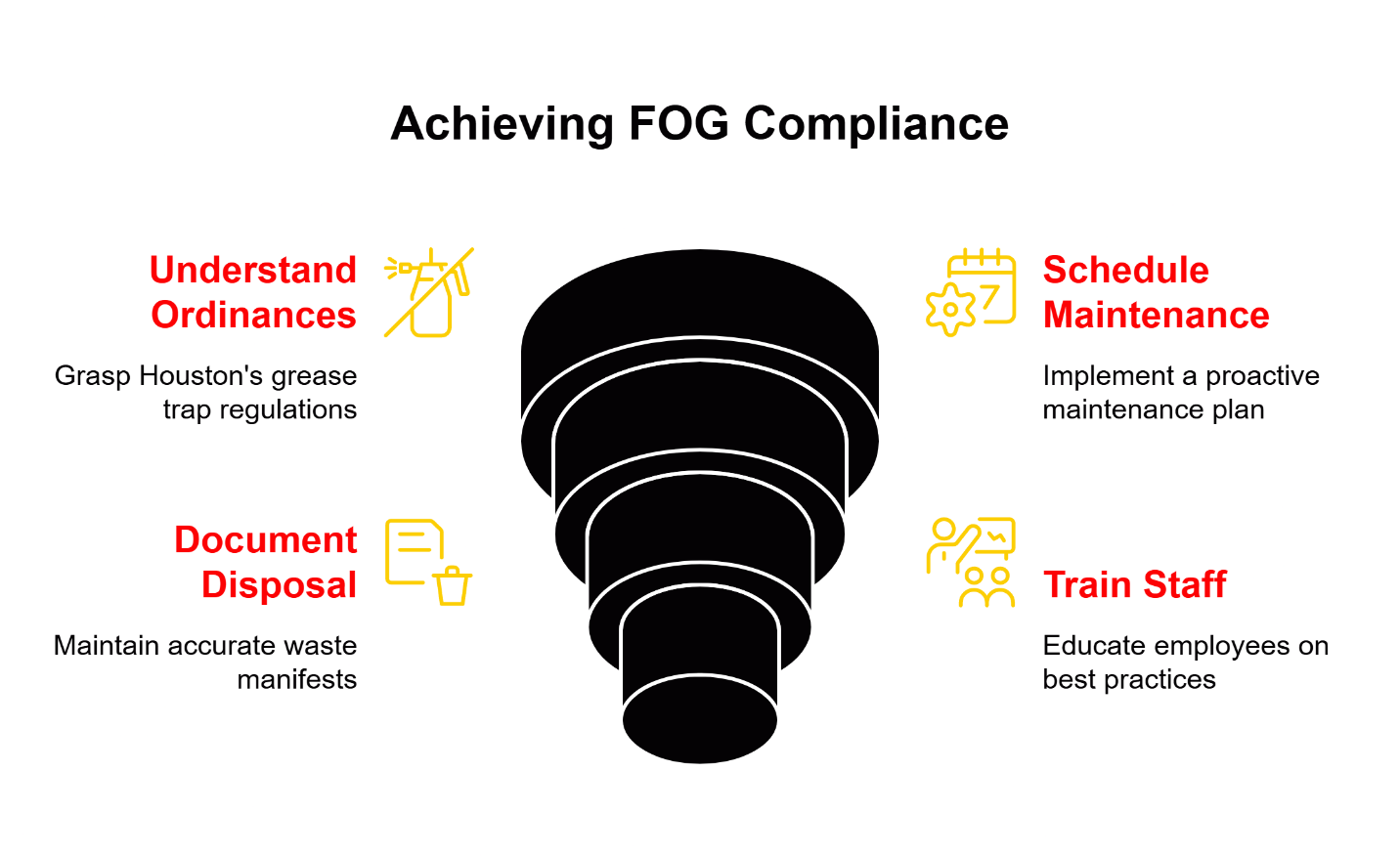
Hour 0 to 6: Assign One Compliance Owner and Gather Existing Records
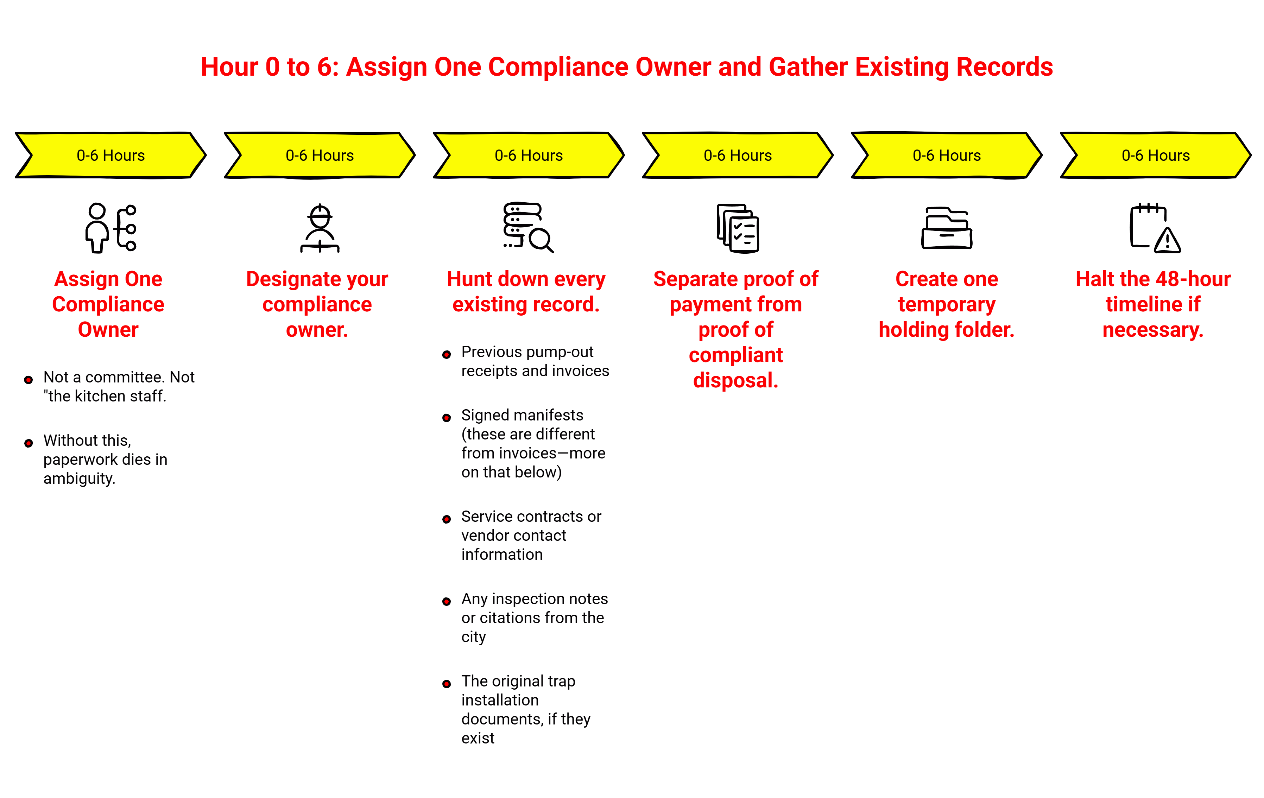
The single most important thing you can do in the first six hours is name one person responsible for grease trap compliance. Not a committee. Not “the kitchen staff.” One human being whose job includes knowing where the manifests are, when the next service is due, and who to call if something goes wrong.
Without this, paperwork dies in ambiguity.
Designate your compliance owner. This is typically the general manager, kitchen manager, or a senior shift lead. The title matters less than the clarity. Everyone in the kitchen should know: if there is a grease trap question, this person has the answer.
Hunt down every existing record. Pull together whatever you can find:
- Previous pump-out receipts and invoices
- Signed manifests (these are different from invoices—more on that below)
- Service contracts or vendor contact information
- Any inspection notes or citations from the city
- The original trap installation documents, if they exist
Separate proof of payment from proof of compliant disposal. This distinction matters enormously. An invoice proves you paid someone to pump the trap. A manifest proves where that waste actually went. Houston’s FOG regulations require manifests showing chain of custody—not just invoices. If all you have are payment records, you have a documentation gap.
Create one temporary holding folder. For now, put everything in a single location. You will organize it properly in the next phase. The immediate goal is to stop records from being scattered across filing cabinets, desk drawers, and email inboxes.
If you discover significant gaps during this process—such as a complete lack of manifests or vendor contact information—halt the 48-hour timeline. Unknown service history is an immediate compliance liability that requires scheduling a professional assessment today, not tomorrow.
Hour 6 to 24: Check the Physical Inspection Points in Your Kitchen
Documentation matters. But if an inspector cannot physically reach your trap or open your sample well, you fail before the conversation about paperwork even begins.
Physical accessibility of the sample well is the first operational hurdle.
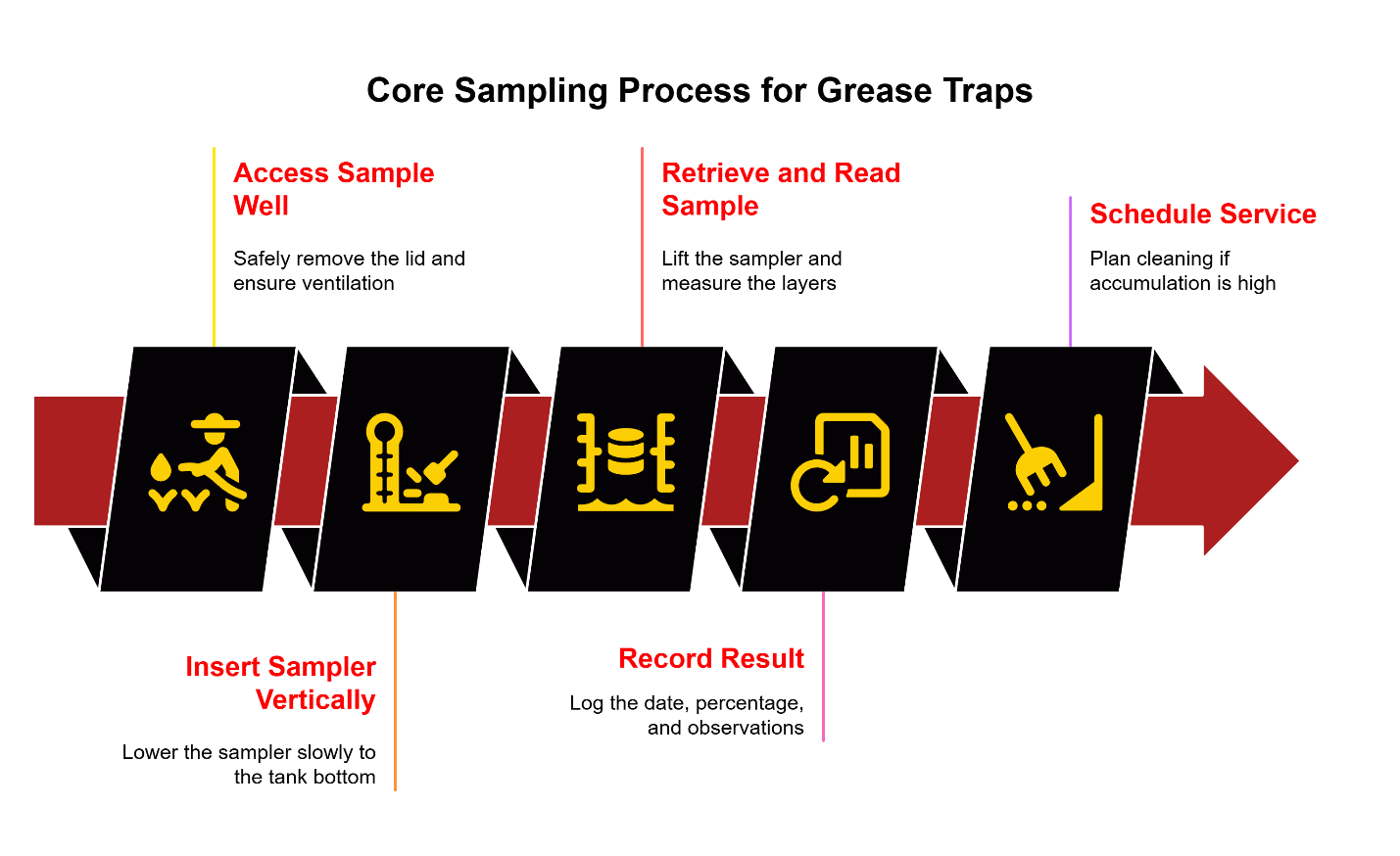
Locate your grease trap and sample well. In most commercial kitchens, the trap is in or near the floor, often close to the three-compartment sink or dishwashing area. The sample well is the access point inspectors use to check accumulation levels.
Verify an inspector can actually reach it. This sounds obvious, but kitchens have a way of accumulating obstacles. Check for:
- Equipment, shelving, or storage stacked in front of the access point
- Floor mats or pallets covering the trap lid
- Broken, corroded, or missing covers that would prevent safe access
- Standing water or debris around the access area
Clear every obstruction. If reaching the trap requires moving a prep table and three speed racks, fix that now. Access should be immediate and unobstructed.
Document what you find. Walk through with your phone and note the current state:
- Are there odors near the trap? How strong?
- Is drainage slow in any connected fixtures?
- Do you see grease in places it should not be—floor drains, sink basins, the area around the trap itself?
- What condition is the cover in?
These observations become your baseline. If you are seeing warning signs already—persistent odors, sluggish drains, visible grease—you may need to accelerate your timeline and schedule service before completing the full 48-hour protocol.
For a broader inspection-readiness walkthrough, review the FOG compliance checklist. The City of Houston’s Special Waste Program is also the right authority to confirm current local requirements.
Hour 24 to 36: Verify Your Service Status and Documentation Process
By now you have a compliance owner, a pile of existing records, and a clear picture of your physical access points. The next twelve hours are about moving from discovery to control.
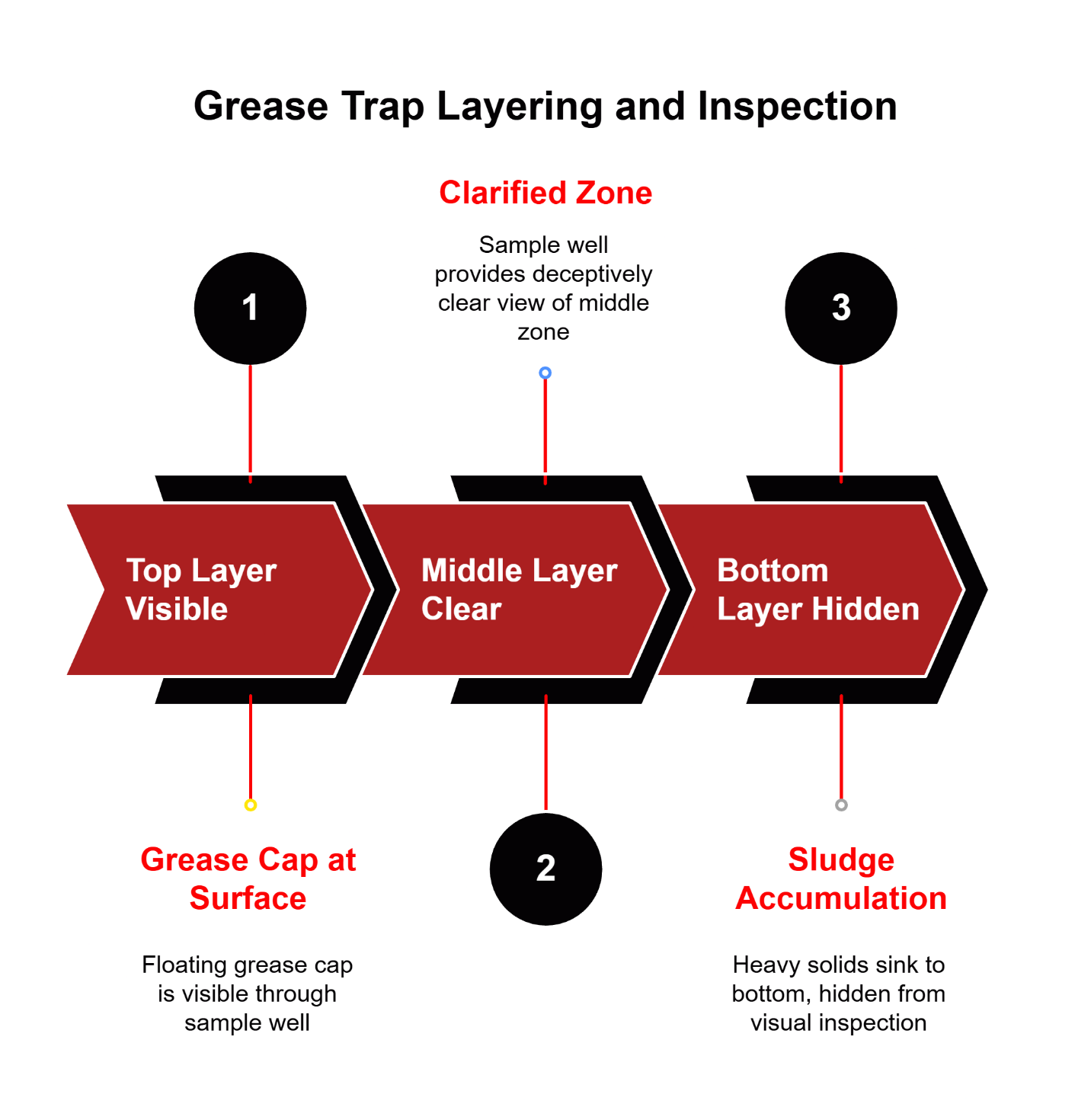
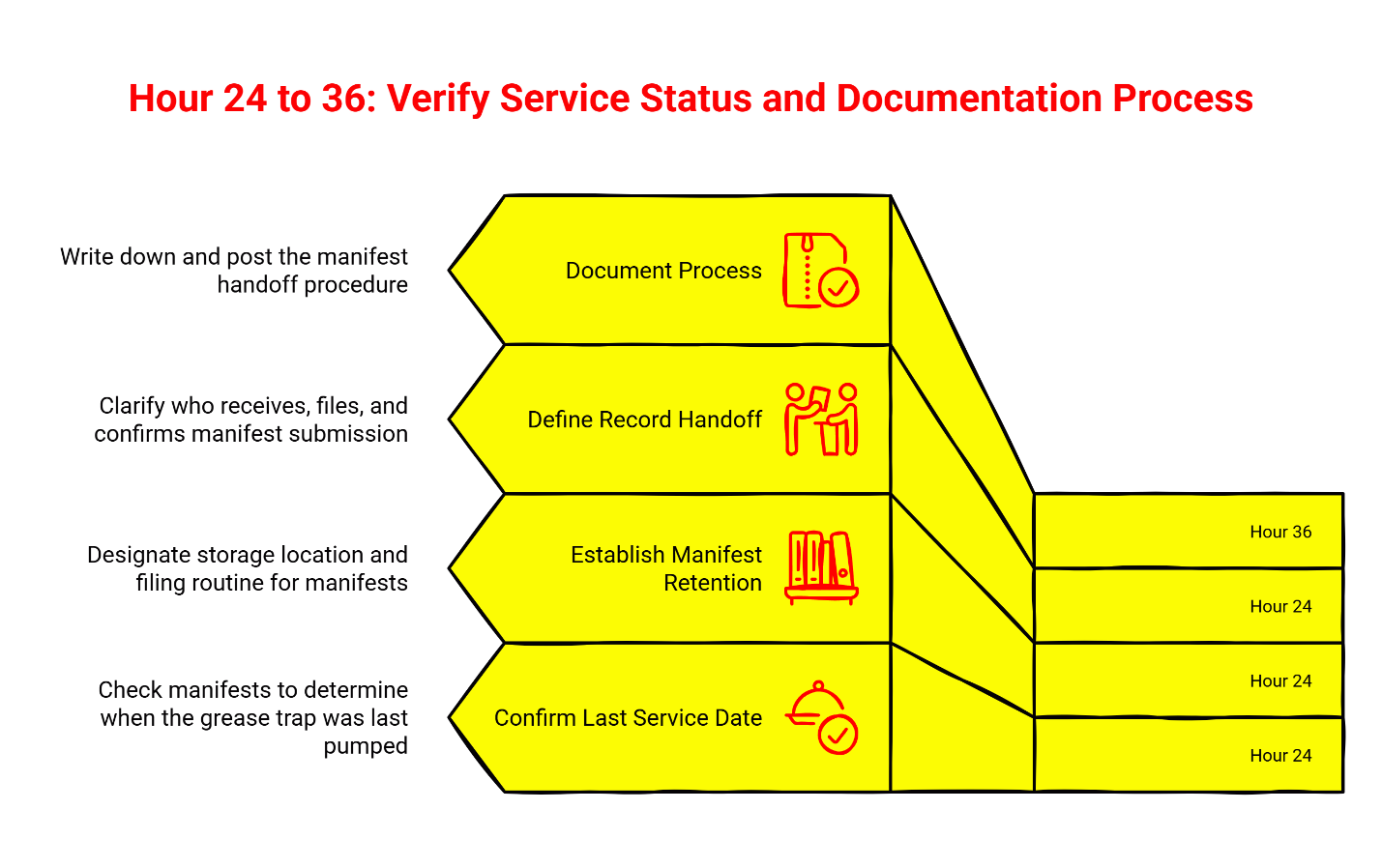
Confirm your last documented service date. Look at your manifests (not just invoices) and identify when the trap was last pumped. In Houston, grease traps must be completely evacuated at least once every 90 days, or more frequently if the ‘25% Rule’ is triggered. This rule dictates that the total thickness of the floating grease layer plus the settled solids layer cannot exceed 25% of the effective liquid depth of the trap. High-volume kitchens often hit that threshold faster than the calendar suggests.
If you cannot determine when the last service occurred, treat that as a red flag. Unknown service history is a compliance gap.
Establish your manifest retention routine. Signed manifests should be retained on-site for five years to support audit readiness. This is not negotiable. Create a system that will survive staff turnover:
- Designate a specific physical location for manifest storage (a labeled binder works well)
- Define who receives the manifest from the service technician
- Establish who files it and when
- Consider a backup: photograph each manifest and store it digitally
For a detailed approach to organizing these records, review how to organize your FOG manifests for a 5-year audit.
Decide where records live and who updates them. The compliance owner you named in hour six needs a defined handoff process. When a service technician finishes a pump-out, who takes the manifest? Where does it go? How does the compliance owner confirm it was filed correctly?
Write this down. Post it in the back office. Make it part of the shift checklist. The goal is a process so clear that it survives busy nights, staff changes, and the general chaos of restaurant operations. While the EPA’s National Pretreatment Program sets the federal framework for preventing ‘Pass Through’ or ‘Interference’ in municipal systems, the specific enforcement and permitting in your area are governed by the City of Houston’s Special Waste Office. They manage the permitting of Interceptors and the registration of transporters under the authority of the Texas Commission on Environmental Quality (TCEQ).
Hour 36 to 48: Set the Service Rhythm and Escalation Triggers
The final phase converts your initial audit into an ongoing operating rhythm. Do not assume the previous operator’s schedule was correct.
Evaluate whether quarterly service is actually enough. The 90-day cycle is a regulatory minimum, not a guarantee. Kitchens with high fryer usage, heavy prep volumes, or multiple cooking stations often need more frequent service. Some high-volume operations require monthly pump-outs to stay below the 25% accumulation threshold.
If you do not know your kitchen’s volume patterns yet, start with quarterly and monitor closely. Adjust based on what you observe.
Define your escalation triggers. These are the warning signs that mean “call for service now, do not wait for the scheduled date”:
- Slow drainage in sinks connected to the trap
- Persistent foul odors near the trap or in the kitchen generally
- Visible grease in floor drains, sink basins, or around the trap access
- Recurring backup issues even after recent service
- Inaccessible sample well due to damage or obstruction you cannot resolve
When any of these appear, your schedule has already failed. Do not wait. Professional services like Drane Ranger’s grease trap cleaning in Houston can verify whether your current rhythm matches your actual kitchen volume.
For context on what happens when these warning signs go ignored, read what happens during a grease trap overflow and how to prevent it.
Schedule your next service proactively. If you cannot confirm recent service, or if you are seeing warning signs, book an appointment now. Establishing a relationship with a reliable provider—one that delivers signed manifests, not just invoices—is part of the protocol.
Your 48-Hour Implementation Timeline
Use this checklist to track your progress. Each task has an owner, a proof point, and a consequence for skipping it.
Day 1 (Hours 0–24)
- Name one compliance owner
- Owner: General Manager or designated lead
- Proof: Written assignment communicated to all staff
- If skipped: No one is accountable; paperwork gets lost in shared responsibility
- Locate all existing service records
- Owner: Compliance owner
- Proof: Physical folder containing all found documents
- If skipped: You cannot determine current compliance status or service gaps
- Separate manifests from invoices
- Owner: Compliance owner
- Proof: Manifests in one stack, invoices in another, gaps flagged
- If skipped: You may believe you have compliance proof when you only have payment records
- Physically locate the trap and sample well
- Owner: Compliance owner + kitchen lead
- Proof: Confirmed location, documented with photos
- If skipped: Inspection failure before paperwork review begins
- Clear all access obstructions
- Owner: Kitchen lead
- Proof: Inspector can reach the trap immediately without moving equipment
- If skipped: Automatic inspection failure
- Document current condition and warning signs
- Owner: Compliance owner
- Proof: Written notes or photos of odors, drainage issues, visible grease
- If skipped: No baseline for monitoring; warning signs go unnoticed
Day 2 (Hours 24–48)
- Confirm last documented service date
- Owner: Compliance owner
- Proof: Manifest with date identified; gap flagged if unknown
- If skipped: Operating blind on compliance status
- Establish manifest retention location and process
- Owner: Compliance owner
- Proof: Labeled storage location; written handoff procedure
- If skipped: Manifests disappear during shift changes and turnover
- Evaluate service frequency against kitchen volume
- Owner: Compliance owner + GM
- Proof: Decision documented: quarterly, monthly, or immediate service needed
- If skipped: Relying on a schedule that may not match actual accumulation
- Define escalation triggers in writing
- Owner: Compliance owner
- Proof: Posted list of warning signs that require immediate service
- If skipped: Warning signs ignored until emergency occurs
- Schedule next service appointment
- Owner: Compliance owner
- Proof: Confirmed appointment date with compliant provider
- If skipped: Reactive instead of proactive; higher risk of emergency calls
What to Keep Ready for an Inspection
Once your 48-hour protocol is complete, you should be able to respond to an inspection with confidence. Keep these items accessible:
Signed manifests for at least the past five years. These prove chain of custody—where the waste went after it left your trap. Invoices alone are not sufficient. For context on Houston’s specific requirements, the FOG compliance checklist provides a detailed readiness framework, and surviving a City of Houston FOG audit walks through what inspectors actually look for.
Service dates showing your maintenance rhythm. Inspectors want to see that you are maintaining the trap on an appropriate schedule—every 90 days at minimum, or more frequently if your volume requires it.
Unobstructed access to the sample well. The inspector should be able to walk to the trap, open the cover, and take a sample without delay.
A named compliance owner who can answer questions. If the inspector asks who manages your grease trap compliance, someone should be able to answer immediately.
A documented filing method. Fumbling through drawers looking for manifests signals disorganization. A labeled binder or clearly designated file signals control.
When Your Kitchen Should Skip the Waiting and Call for Service Now
The 48-hour protocol assumes you are starting from a reasonably stable position—uncertain about records, but not actively in crisis. If any of the following are true, stop setting up and get professional help today:
Your drains are already slow. Sluggish drainage in the three-compartment sink, floor drains, or dishwasher connection means accumulation may already be past the 25% threshold. Waiting risks a backup during service.
You smell grease when you open the kitchen. Persistent foul odors are not normal. They indicate the trap is overdue for service or potentially damaged.
You see grease where it should not be. Grease in floor drains, pooling near the trap, or visible in sink basins means the system is not containing FOG properly.
You have no idea when the trap was last serviced. If you cannot find manifests or invoices and the previous operator left no records, assume the worst and verify with a professional assessment.
Your sample well is physically inaccessible. A damaged cover, blocked access point, or obstruction you cannot clear requires professional attention before you can even assess the trap’s condition.
These warning signs mean your current schedule—whatever it was—has already failed. Contact a professional service provider to assess your situation and establish a baseline.
True compliance is not a matter of luck; it is the result of systematic execution. By decisively assigning ownership, verifying physical access, and cementing a reliable maintenance cadence, you neutralize the inherited risks of a new kitchen.
You do not need to become a FOG compliance expert. You need a clear owner, a usable checklist, organized manifests, an accessible sample well, and a service rhythm you can trust.
That is what this protocol delivers. The inspector can arrive tomorrow. You will be ready.
For a deeper understanding of Houston’s commercial grease trap requirements, read the complete compliance guide for restaurants.
Disclaimer: This article is for informational purposes only and is not legal advice. Local grease trap, FOG, and special-waste requirements can change. Always confirm current requirements with the City of Houston and your licensed waste-service provider.