
📌 Key Takeaways
Transform FOG compliance from a recurring headache into a simple, automated part of your operations.
- The Calendar Isn’t the Only Clock: Houston’s 25% fill rule is an enforceable standard that can mandate a cleaning before the 90-day mark, making proactive service essential for compliance.
- Your Binder is Your Best Defense: Inspectors prioritize clear, consistent service manifests over everything else; organized paperwork is your non-negotiable proof of compliance.
- Match Your Schedule to Your Sizzle: A high-volume kitchen requires a cleaning schedule more frequent than the 90-day baseline to prevent odors, backups, and violations.
- Automate to Dominate Compliance: Locking in a recurring service schedule is the single most effective strategy to eliminate missed deadlines and ensure year-round peace of mind.
Systematic compliance protects your revenue and your reputation.
Inspection day is coming.
It’s a thought that can add a layer of stress to any Houston restaurant manager’s week. An inspector could walk in during the lunch rush or right before a busy weekend, clipboard in hand, ready to check your compliance with the city’s FOG ordinance. For a busy manager juggling staff, inventory, and customer service, the fear isn’t just about a potential fine; it’s the dread of being caught unprepared, the risk of a shutdown, and the headache of dealing with violations.
You’re likely wondering if your records are in the right place, if your last grease trap service was recent enough, or what, exactly, an inspector is even looking for. This uncertainty can feel like a constant, low-level anxiety. But it doesn’t have to be that way. Imagine that same inspector walks in, and you calmly retrieve a simple, organized binder. They review your service logs, see a clear and consistent maintenance schedule, and are out the door in minutes, leaving you to focus on what you do best.
This guide will get you there. We’re translating the Houston FOG ordinance from dense legal text into a straightforward, scannable playbook for restaurant managers. No jargon, just clear answers and simple checklists to make compliance the easiest part of your job.
What the Houston FOG Ordinance Covers (in simple terms)
Houston’s FOG rules exist to keep fats, oils and grease out of the sewer system. In practice, that means every restaurant must clean its grease trap on a set schedule, keep simple records, and be ready to show those records to inspectors. The easiest way to stay compliant is to lock a 90-day cleaning cadence, adjust to a shorter interval if your kitchen is high-volume, and file each service receipt the same day.
The entire regulation is designed to prevent blockages in the city’s sewer lines, which can cause backups, overflows, and public health issues. For your restaurant, compliance isn’t just about following the rules—it’s about preventing the kind of operational disasters that a clogged grease trap can cause, from foul odors that drive away customers to messy backups that can shut down your kitchen.
Who Must Comply (and what counts as FOG)
If you run a food service establishment in Houston, these rules apply to you. This includes full-service restaurants, fast-food outlets, school cafeterias, hotel kitchens, and any other business that prepares and serves food. Essentially, if your kitchen produces fats, oils, and grease, you are required to have a system to manage it.
- Fats, Oils, and Grease (FOG): This is exactly what it sounds like—cooking oils, bacon grease, meat fats, butter, shortening, and food scraps that go down your drains.
- Grit Traps: While most of the focus is on FOG from kitchens, facilities like car washes or service bays have their own version called a grit trap, which collects sand, dirt, and other solids. According to city laws, these also follow the same 90-day baseline for cleaning to prevent clogs and stay compliant.
The 90-Day Rule & When You Need More Frequent Service
The cornerstone of the Houston FOG ordinance is the 90-day cleaning rule. City law requires that your restaurant’s grease traps must be pumped and cleaned at least once every three months (quarterly). This is the absolute minimum frequency to remain compliant.
However, the 90-day schedule is a baseline, not a one-size-fits-all solution. For many busy Houston kitchens, waiting the full 90 days is a recipe for trouble. High-volume restaurants, especially those with busy fryers, grills, or wok stations, often need more frequent service to prevent backups and stay well within legal limits.
Beyond the calendar, there’s a crucial volume-based requirement that can mandate a cleaning sooner: the “25% Rule.” This is not just a guideline but an enforceable standard. If an inspector finds that the combined layer of FOG and solids in your trap exceeds 25% of its total liquid depth, your business could be cited for a violation, even if it hasn’t been 90 days since the last service.
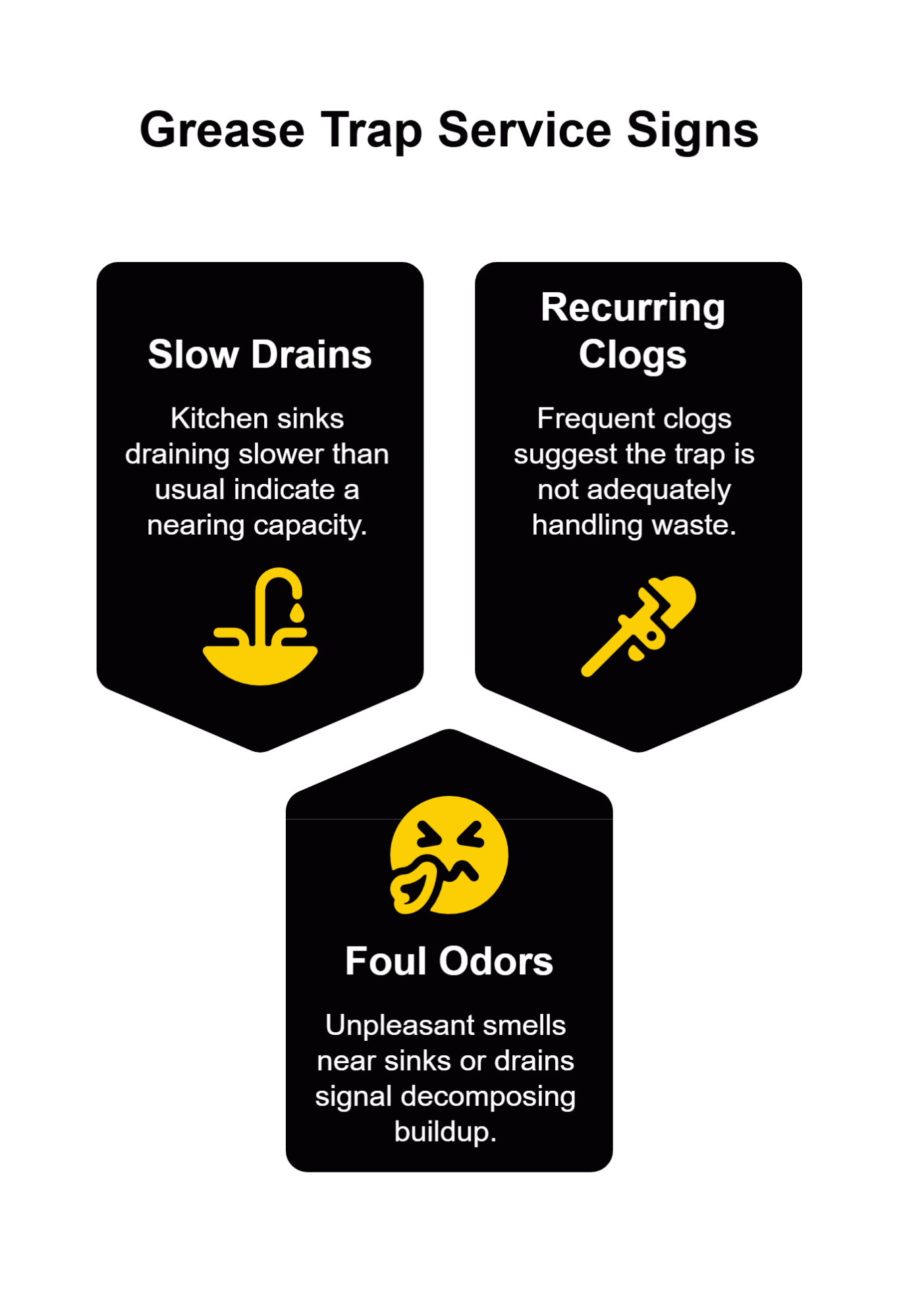
Pay close attention to these telltale signs that you need to service your trap, regardless of the schedule:
- Slow Drains: Are your kitchen sinks draining more slowly than usual? This is often the first sign that your grease trap is nearing capacity.
- Foul Odors: A persistent, unpleasant smell near your sinks, floor drains, or outside near the trap itself is a major red flag. This odor is caused by decomposing food solids and grease buildup.
- Recurring Clogs: If you find your team is frequently dealing with clogs, your trap isn’t keeping up.
Consider this simple framework for proactive scheduling:
| Kitchen Output Level | Example | Suggested Cleaning Interval |
|---|---|---|
| Low Volume | Cafe with limited fried items | Every 90 days |
| Medium Volume | Standard family restaurant | Every 60-75 days |
| High Volume | Busy fried chicken or BBQ spot | Every 30-60 days |
Adjusting your schedule based on your output is the single best way to prevent fines and operational headaches.
Records, Manifests & What Inspectors Ask For
Passing a FOG inspection is less about the trap itself and more about your paperwork. Inspectors need to see a clear, consistent record of maintenance. Keeping good records is your best defense and proof of compliance. It’s simpler than you think.
Here’s what you need to keep on file for every service visit:
- Service Date: The exact date the cleaning was performed.
- Volume Removed: The amount of grease and waste pumped from your trap.
- Hauler Information: The name and contact details of your licensed waste hauler (like Drane Ranger).
- Disposal Site Confirmation: Proof of where the waste was legally disposed of.
This information is typically included on a service receipt or a “trip manifest” provided by your hauler. Look, the bottom line is this: inspectors want to see a consistent effort. Your goal is to make it easy for them to check the box and move on.
A Simple System for Staying Organized
- Create a “FOG Compliance Binder”: Get a simple three-ring binder and label it. This is where every manifest and service receipt will go.
- File Immediately: After each service, place the manifest in the binder right away. Don’t let it get lost in a stack of invoices.
- Confirm the Official Retention Period: For immediate access during an inspection, keep a rolling 12 months of records in your binder. However, be aware that official regulations often require a longer retention period—typically two years or more. It is a critical best practice to verify the exact record-keeping timeline in the current City of Houston ordinance to ensure full compliance.
- Digitize (Optional but Smart): Snap a photo of each manifest with your phone and save it to a dedicated folder in a cloud service like Google Drive. This creates a permanent, searchable backup.
Inspection-Day Prep: What to Expect
With your FOG Compliance Binder in order, inspection day becomes a simple, stress-free event. An inspector’s visit is usually quick and follows a predictable pattern. They’ll want to see your records and ensure your trap is accessible.
Use this checklist to make sure you’re always ready.
FOG Inspection-Day Checklist
- [ ] Records are Ready: Your FOG Compliance Binder with at least the last 12 months of service manifests is in a known location.
- [ ] Staff is Aware: Your key staff members (like the assistant manager or head chef) know where the binder is located.
- [ ] Grease Trap is Accessible: The area around your grease trap is clear of boxes, equipment, or other obstructions. Lids should be easy to access.
- [ ] Hauler Contact Info is Handy: You have the phone number for Drane Ranger or your service provider readily available in case the inspector has a question.
If an inspector arrives and you realize a receipt is missing, don’t panic. Simply call your hauler and ask them to email a copy right away. Print it, add it to the binder, and show the inspector. Proactive problem-solving demonstrates that you take compliance seriously.
Avoiding Fines & Shutdowns: Common Pitfalls

Violations and fines almost never happen because of a single bad day. They’re the result of small oversights that snowball over time. The most common pitfalls are entirely preventable with a simple system.
Here are the top three mistakes that lead to trouble:
- Waiting for Symptoms: Many managers wait until they notice slow drains or bad odors to schedule a cleaning. By then, you’re already out of compliance and risking a backup. The solution is to get on a recurring schedule and let the calendar, not the symptoms, dictate your service.
- Missing a Quarterly Service: Life gets busy, and it’s easy for a 90-day deadline to slip by. Missing even one required cleaning in a year is a red flag for an inspector. A recurring service appointment that you don’t have to think about is the best way to prevent this.
- Having No Paper Trail: You might be getting service regularly, but if you can’t prove it, it’s as if it never happened. An inspector cannot verify a verbal confirmation. This is why filing every manifest immediately is non-negotiable.
Ultimately, preventing these issues comes down to one core idea: turning compliance into a routine, not an emergency.
Your Simple Compliance Plan for the Next 12 Months
Let’s put it all together. You don’t need a complicated project management system to stay on top of FOG compliance. All you need is a simple, repeatable plan.
Here is a straightforward 12-month compliance plan you can implement today:
- This Week: Call your service provider and set up a recurring 90-day schedule for the entire year. Lock in tentative dates for each quarter.
- Each Quarter:
- One week before the scheduled service, your provider should call to confirm.
- On the day of service, ensure the trap is accessible.
- Immediately after the service is complete, get the manifest and file it in your FOG Compliance Binder.
- Once a Month: Do a quick spot-check. Are drains running freely? Are there any unusual odors? If you notice issues, consider tightening your service schedule (for example, moving from 90 to 75 days) during your busiest seasons.
That’s it. By putting your grease trap cleaning in Houston on autopilot, you eliminate the primary cause of violations and can focus on running your restaurant. Compliance isn’t complicated. It’s just consistent.
Ready to Make Compliance Effortless
Navigating Houston’s regulations doesn’t have to be a source of stress. With a simple plan and a reliable partner, you can have complete peace of mind. Drane Ranger specializes in providing Houston restaurants with the Grease trap, grit & lint trap service (Houston) needed to stay compliant and operate smoothly.
If you’re ready to put your FOG compliance on autopilot, contact Drane Ranger today. Let us help you request your quote or set up a recurring 90-day schedule that keeps you protected all year long. You can also explore The Official Houston Restaurant FOG Compliance Checklist for more resources.