📌 Key Takeaways
Document when grease trap problems return, then compare your observations with the service scope before deciding what caused them.
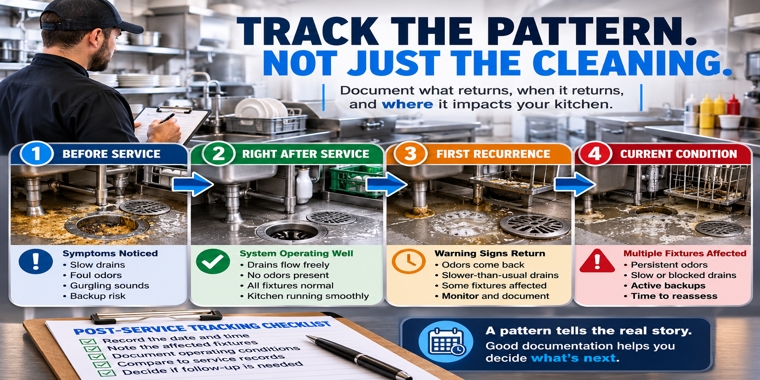
- Track the Full Pattern: Record each symptom’s timing, location, kitchen activity, and affected fixtures to show what changed after service.
- Review the Service Scope: An invoice confirms a visit, but technician notes explain the work, access limits, and findings.
- Avoid Quick Blame: Returning odors or slow drains may involve another system problem, heavier kitchen use, or a temporary dry drain.
- Ask Clear Questions: Share your records and ask the provider what work occurred, what remained unresolved, and whether follow-up makes sense.
- Treat Active Backups Urgently: The author recommends professional help when wastewater appears, several fixtures fail, or safe kitchen operations become difficult.
Document the pattern before deciding the cause.
Houston restaurant managers will handle recurring problems more clearly by using these checks before the provider questions that follow.
~ ~ ~ ~ ~ ~ ~ ~ ~ ~ ~ ~ ~ ~ ~ ~ ~ ~
Your restaurant paid for grease trap service, resumed normal operations, and then the same odor, slow drainage, gurgling, or backup returned. The frustration is understandable, especially when the invoice says the work was completed.
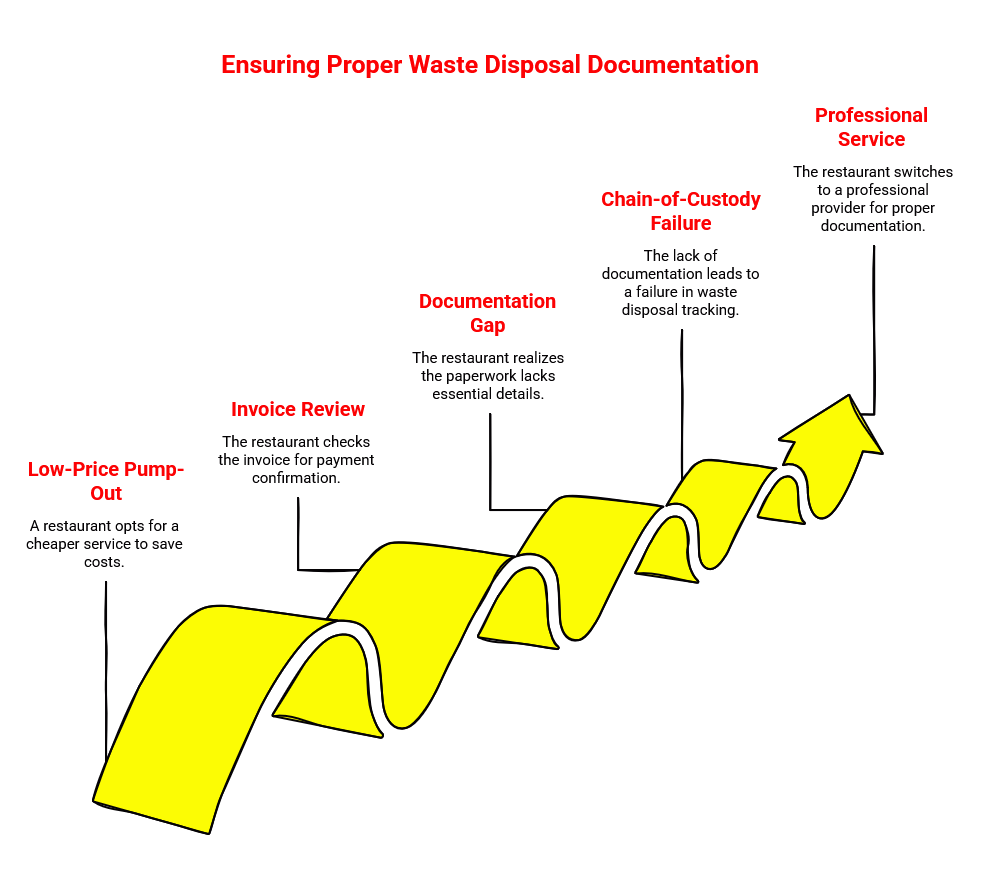
A completed service ticket confirms that a visit occurred. It does not, by itself, explain whether the original operational problem was fully resolved.
For Houston restaurant managers, the next step is not to assume that the provider failed or that another cleaning is automatically required. First, establish a recurrence timeline—the period and operating conditions between the service and the return of symptoms. Then compare affected locations, kitchen activity, and available records with the service scope, meaning the work the provider agreed to perform and recorded as completed.
This review will help you identify warning patterns, prepare useful questions, and distinguish routine follow-up from an active condition requiring prompt professional attention.
Start With the Before-and-After Result
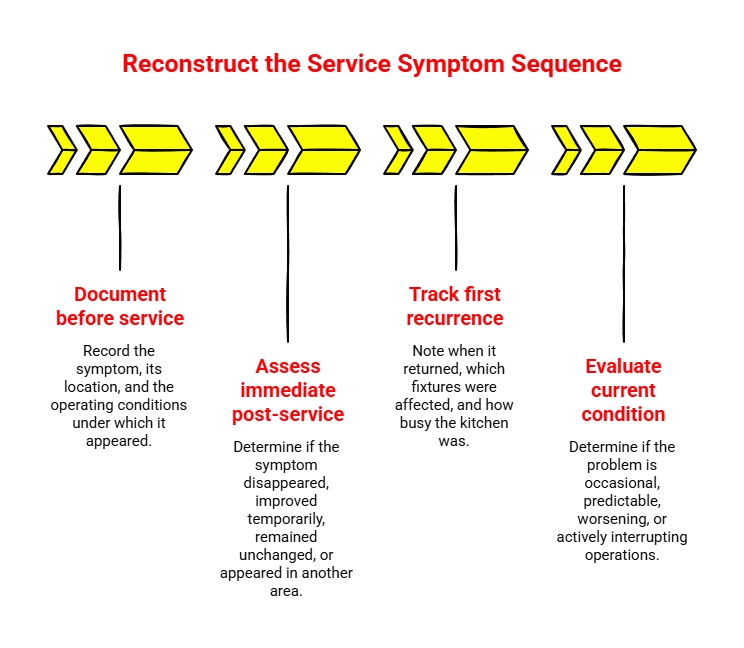
Begin with the problem that prompted the service. Record the symptom, its location, and the operating conditions under which it appeared. “Odor near the three-compartment sink during closing” is more useful than “the kitchen smelled bad.”
Reconstruct the sequence in four stages:
- Before service: What was happening, where was it happening, and who observed it?
- Immediately after service: Did the symptom disappear, improve temporarily, remain unchanged, or appear in another area?
- First recurrence: When did it return, which fixtures were affected, and how busy was the kitchen?
- Current condition: Is the problem occasional, predictable, worsening, or actively interrupting operations?
For example, a manager might note that an odor near the sink area existed before service, seemed unchanged the following day, and was reported independently by two shifts. That lack of improvement may justify follow-up. It does not prove that the documented work was incomplete because the odor could involve a condition outside the service scope.
The goal is to establish what changed, not to diagnose the system remotely.
Grease Trap Problems After Cleaning That May Justify Follow-Up
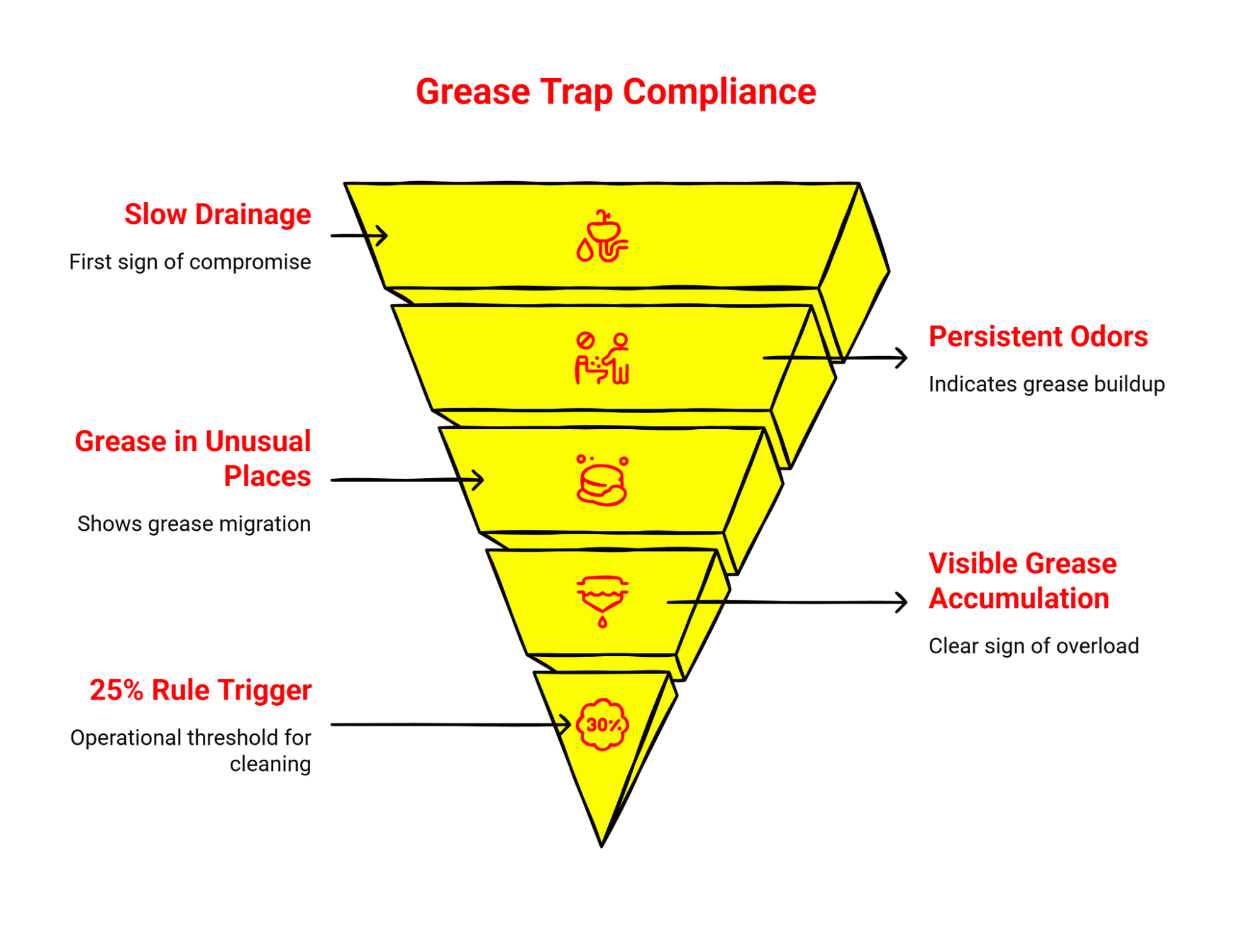
There was little or no observable improvement
When the original odor or drainage complaint remains essentially unchanged after normal operations resume, ask what outcome the completed service was expected to produce.
For example, the high-suction vacuum trucks we use for pump-outs can sometimes temporarily siphon the water barrier out of a nearby floor drain’s P-trap. This allows sewer gas to enter the building immediately after a service. Simply running water down nearby drains for 60 seconds will restore the water seal and quickly rule out this common, temporary issue.
The visit may not have addressed the entire source of the complaint, or another part of the wastewater system may need evaluation. Either possibility is worth documenting. Neither can be confirmed from the symptom alone.
The same problem returned during ordinary operations
Recurrence under normal operating conditions may deserve more scrutiny than a single event following an unusually heavy production period. Record when the symptom appeared, how long it lasted, and whether it continued after kitchen activity decreased.
There is no universal number of hours or days that proves the service was incomplete. Compare the recurrence with your restaurant’s own baseline rather than relying on an unsupported deadline.
Several fixtures or kitchen areas are affected
One slow fixture and several drains showing the same pattern are different observations. If multiple areas are involved, note whether the symptoms began together and whether employees heard gurgling or observed drainage changes in the same period.
A broader pattern could warrant professional evaluation, but it does not identify a blocked line, damaged component, or other specific cause.
Symptoms appear during higher-volume periods
For instance, drainage might appear normal during food preparation but slow down during the busiest meal period. The manager records which fixtures are affected and compares the pattern with recent kitchen volume.
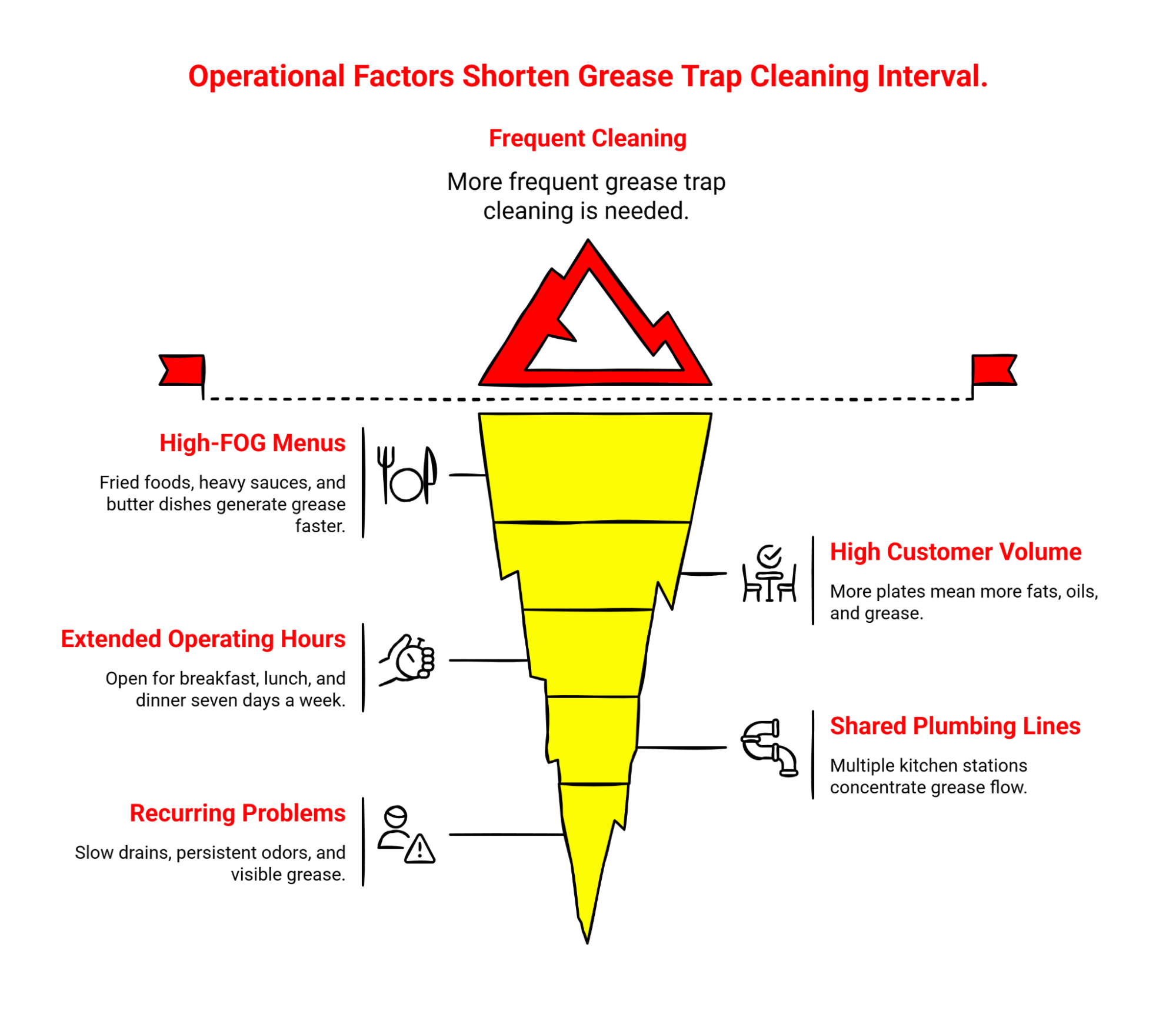
This pattern shows that operating load matters. Operating load includes the restaurant activity that may affect wastewater and grease generation, such as production volume, operating hours, and menu activity. Peak-period symptoms do not prove that the trap is full, undersized, or improperly cleaned.
Similar incidents continue after successive visits
Repeated incidents warrant a broader review of service scope, operating changes, prior technician observations, and service frequency. Maintain a simple incident log containing the date, shift, affected area, operating conditions, service reference, and follow-up result.
A repeated pattern may justify reassessment even when no single incident identifies the cause.
Post-Service Symptom and Scope Review Checklist
| What You Observed | What to Record | Neutral Provider Question |
|---|---|---|
| Odor returned | Date, time, exact location, duration, and kitchen activity when it appeared | “Did the visit identify any remaining odor source, access restriction, or condition outside the service scope?” |
| Slow drainage returned | Affected fixtures, whether several drains were involved, and whether flow improved when activity decreased | “Was normal flow observed or discussed after the service?” |
| Problem appears during peak volume | Meal period, production level, affected areas, and whether the pattern repeats | “Could our current operating load affect the service interval or require another evaluation?” |
| No meaningful improvement | The condition before service, the immediate result, and the first post-service report | “What work was completed, and what operational result was expected?” |
| Records are vague | Documents available, missing details, and which department or person holds each record | “Can you provide the technician notes or clarify the recorded service scope?” |
Prepare the checklist before contacting any qualified local provider.
Observation is not proof: Returning symptoms justify a structured review, but they do not establish who or what caused the problem.
What Returning Symptoms Do Not Prove
Recurring symptoms can raise a legitimate service question without identifying the answer.
Ask whether the restaurant’s hours, menu, production, staffing, or customer volume changed. A regular calendar schedule may no longer reflect actual kitchen activity. A detailed review of whether your maintenance schedule matches actual kitchen load can help frame that discussion without prescribing one interval for every restaurant.
Access may also have affected the visit. Parked vehicles, locked areas, obstructed access points, or service-hour restrictions could limit intended work, but do not assume that occurred. Look for a record of the restriction or ask the provider directly.
The agreed service scope may have addressed a defined task rather than every possible source of the complaint. Another drainage, fixture, line, or system condition may require separate evaluation.
For example, after reviewing the recurrence timeline, a provider might recommend assessing another part of the drainage system. That outcome would not establish that the original service was incomplete; it would show that the reported symptom required a broader evaluation.
Communication gaps matter as well. The technician, dispatcher, restaurant manager, facilities contact, and accounting department may each hold different information. Gather those records before deciding that an explanation is unavailable.
Review the Service Record Before Calling
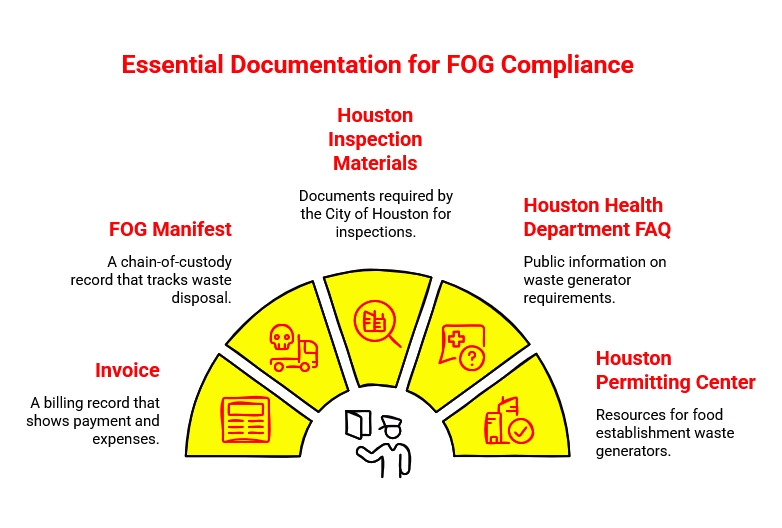
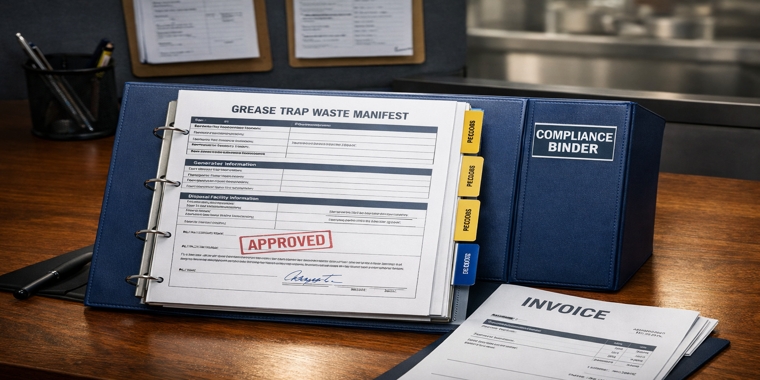
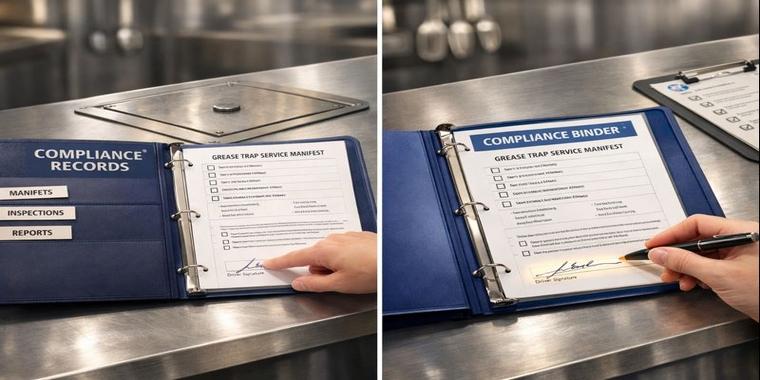
A work order, invoice, manifest, or payment record should be read for what it actually establishes. None should automatically be treated as proof that every cause of the original complaint was resolved.
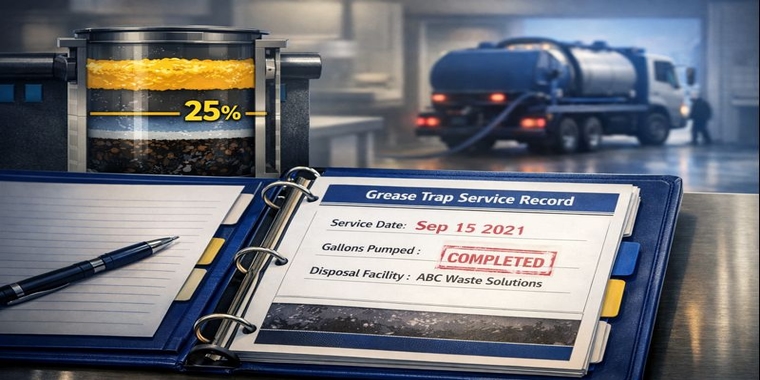
When available, look for the service date and time, stated scope, equipment or access point identified, technician observations, access restrictions, photographs or measurements, waste documentation, follow-up recommendations, and the basis for any proposed future interval.
Terminology may vary by provider and system. “Pumping,” “cleaning,” “evacuation,” and “maintenance” do not necessarily describe identical work. Similarly, “grease trap” and “grease interceptor” may be used differently in technical records or local requirements; they should not automatically be treated as mechanically or legally interchangeable.
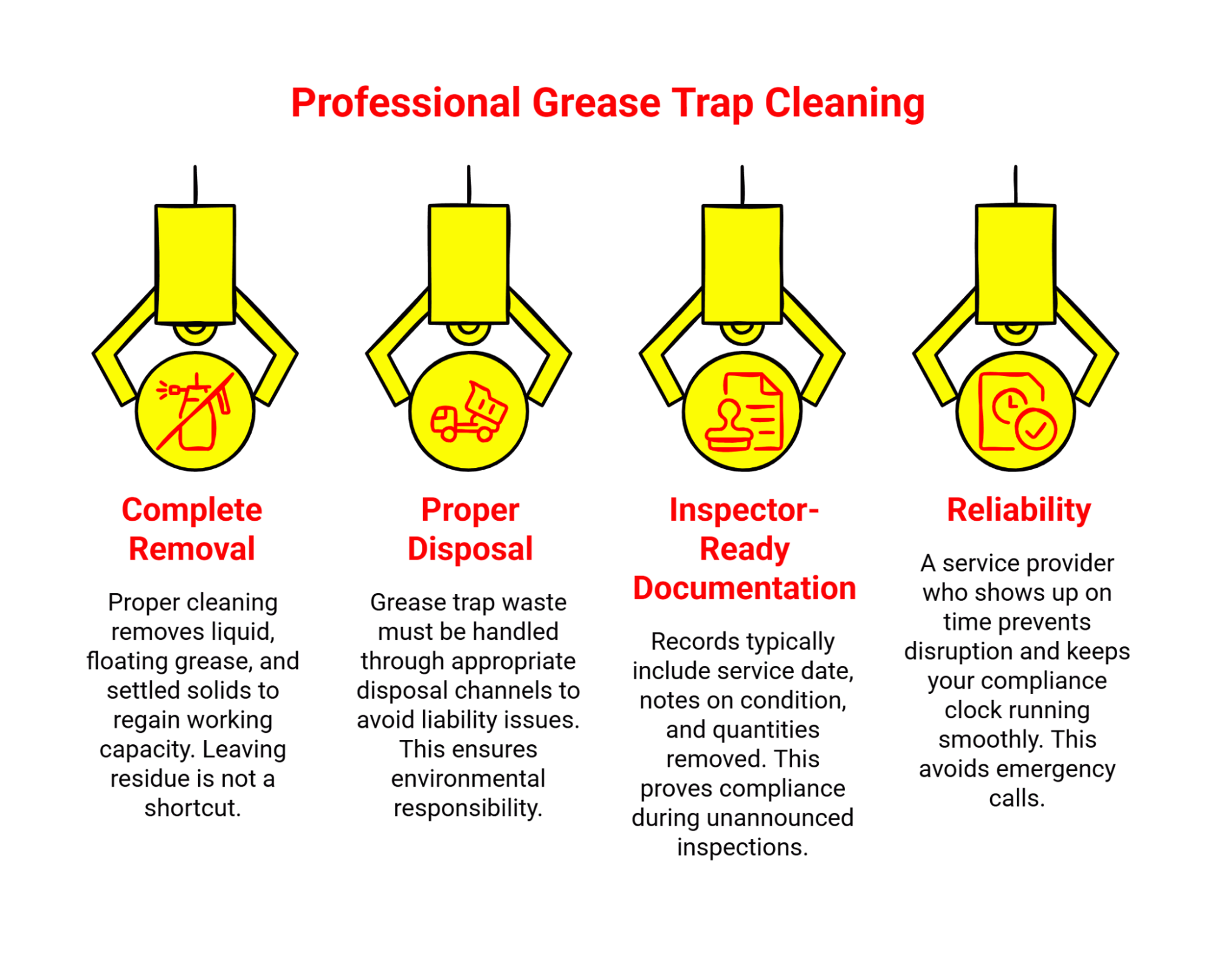
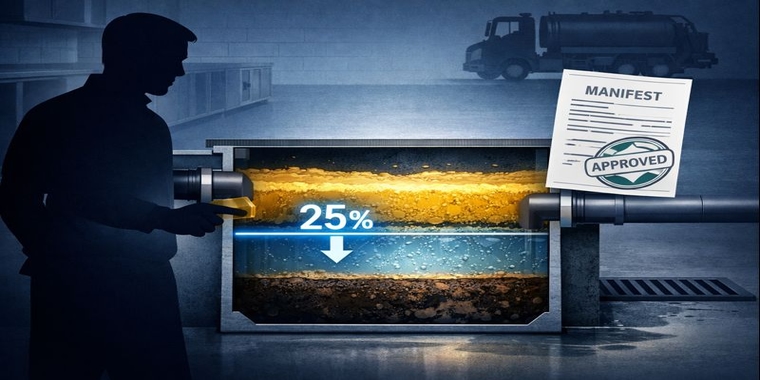
Full evacuation generally refers to removal of the trap or interceptor contents under the applicable service scope or current rule. It does not, without supporting documentation, establish every other action performed during the visit.
Consider a scenario where accounting has an invoice marked “service completed,” while operations does not have the technician’s notes or know which access points were available. The invoice confirms a billed service, but management still needs clarification about what was performed. Reviewing what professional grease trap cleaning may include can help managers develop questions, but the restaurant’s own agreement and service record remain controlling.
As of July 12, 2026, the current Houston Code of Ordinances states that generators must clean interceptors as often as necessary, generally fully evacuate them at least every 90 days, and clean more frequently under specified conditions. It also states that when waste is removed, the entire contents must be removed from the site. The code contains waiver and other provisions, and the Houston Permitting Center’s food-establishment guidance limits its 90-day statement to interceptors within incorporated city limits. These requirements provide compliance context; they do not prove what occurred during a particular service visit or explain a recurring symptom.
Questions to Ask the Grease Trap Provider
A concise timeline helps the provider compare your observations with dispatch records and technician notes. Keep the discussion factual:
- What exact work was included in the service?
- Which access points or parts of the system were reached?
- Was anything inaccessible, damaged, blocked, or outside the agreed scope?
- What did the technician observe before and after the work?
- Was normal flow checked or discussed?
- Were any connected-line, fixture, or other system concerns noted?
- Could our recent operating volume affect the recommended service approach?
- What notes, photographs, measurements, or other records are available?
- What follow-up would help determine why the symptom returned?
- Should the current service frequency or scope be reassessed?
Avoid beginning with an accusation such as, “Your technician did not clean it correctly.” That conclusion has not yet been established and may make the conversation less productive.
A clearer opening is: “The same slow drainage returned during our dinner period. These are the fixtures involved, the service date, and the conditions when it happened. Can you review the technician’s notes and explain whether follow-up is appropriate?”
When to Request Follow-Up—and When the Condition Is Urgent
Use the active operating condition, not an arbitrary number of days, to set the priority.
| Routine but Prompt Follow-Up | Urgent Professional Contact |
|---|---|
| Odor or drainage symptoms recur, but no active overflow is present | An active backup or overflow is occurring |
| Employees can document a contained, repeating pattern | Wastewater is entering an occupied or food-preparation area |
| The work order or service explanation is unclear | Several fixtures become unusable or drainage worsens rapidly |
| The provider recommended monitoring or reassessment | The condition interferes with safe kitchen operation |
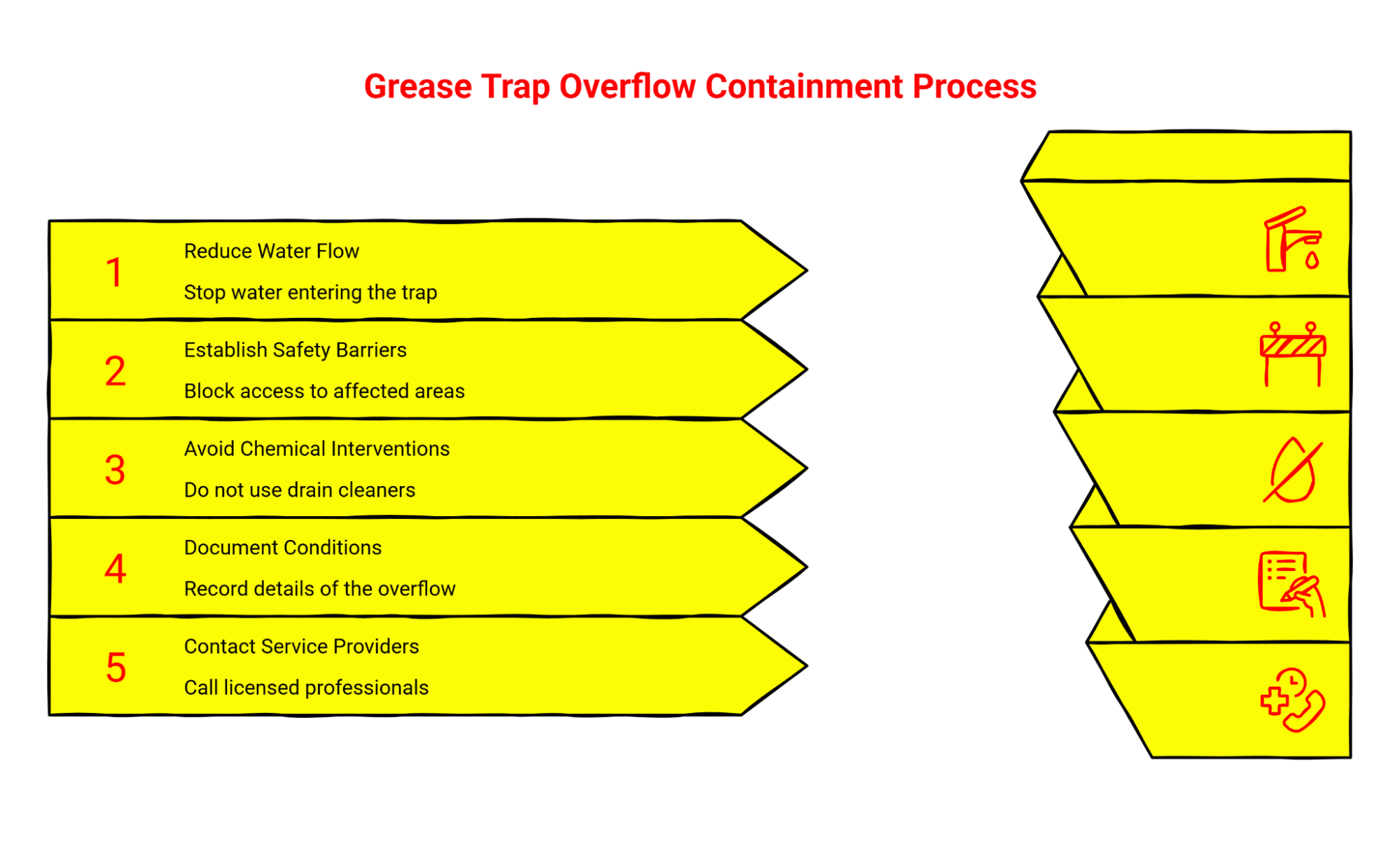
For an urgent condition, stop using affected fixtures where operationally feasible. Keep staff and customers away from the affected area, follow the restaurant’s established safety procedures, and contact a qualified provider.
Do not direct employees to open, enter, probe, measure, pump, scrape, or chemically treat the trap. Odor alone should not be presented as proof of an emergency; evaluate whether there is an active backup, overflow, visible wastewater, or serious operational interruption.
Turn the Recurrence Into a Documented Provider Conversation
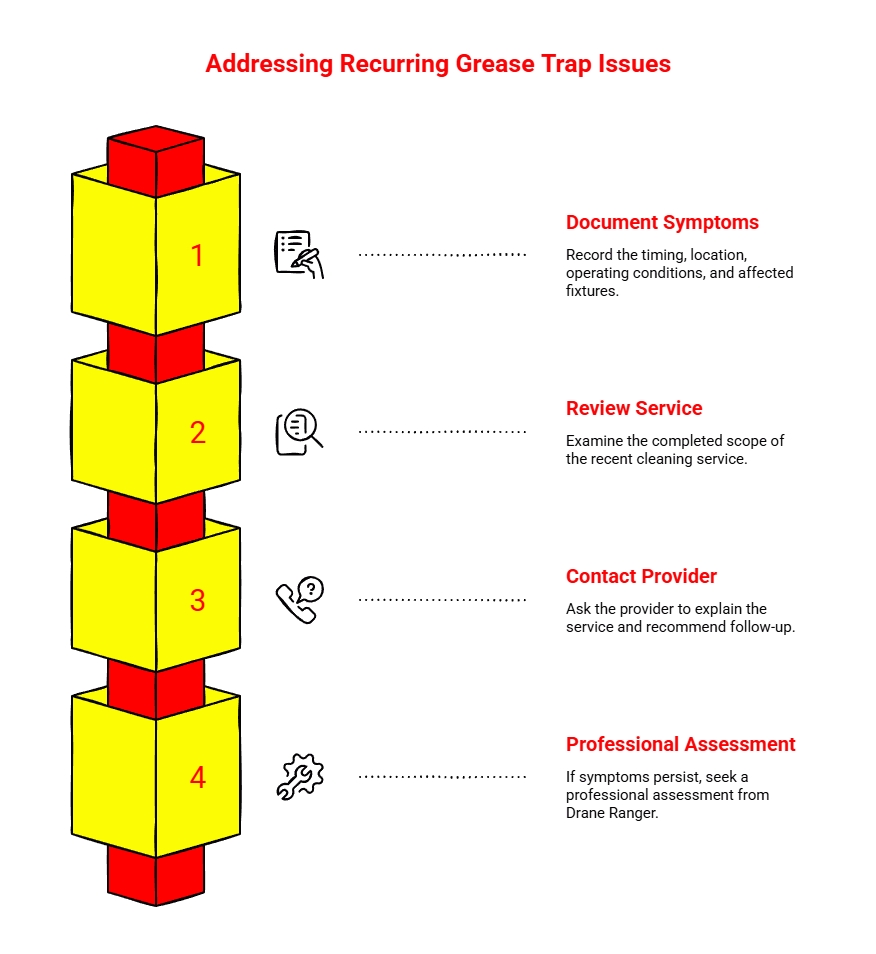
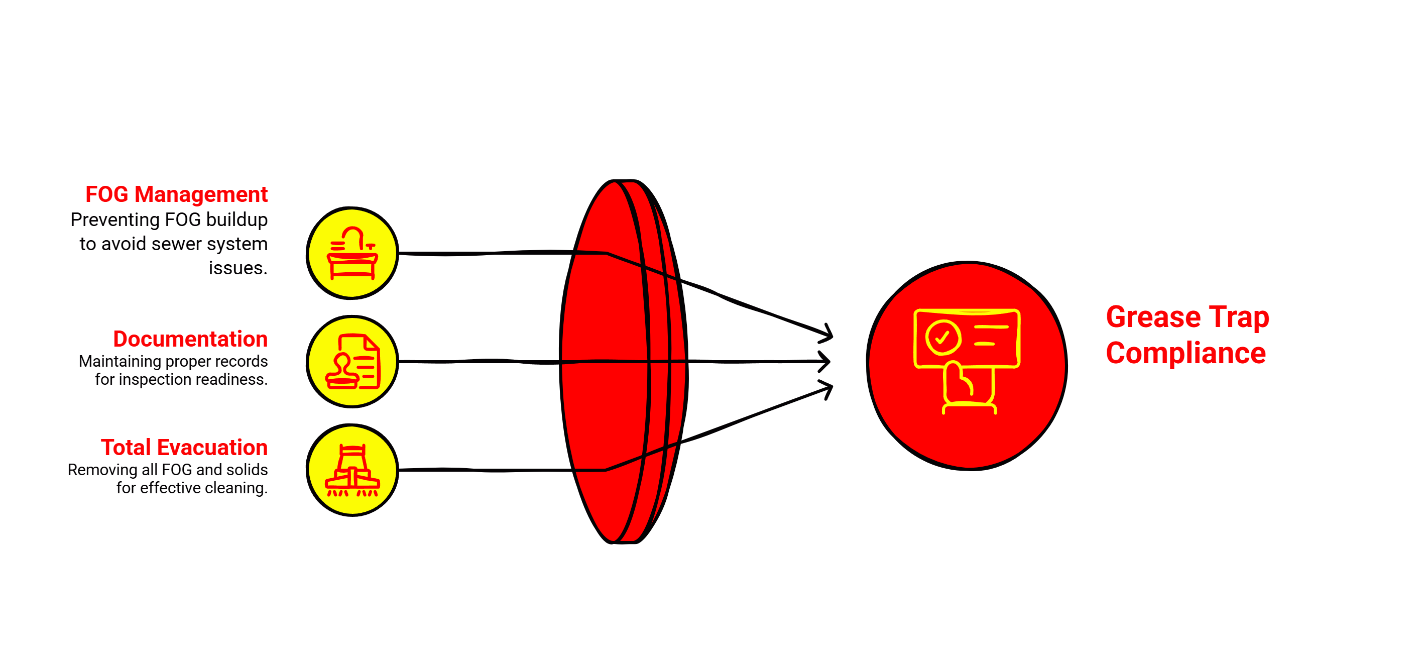
Grease trap problems after cleaning are a reason to review the recent visit, not proof of provider failure. Document the timing, location, operating conditions, affected fixtures, and available records. Then ask the provider to explain the completed scope and recommend the appropriate follow-up.
If you need a professional assessment of a recurring issue, Drane Ranger provides commercial grease trap cleaning across the Houston area.
If the symptoms remain unresolved and you need a Houston-area professional to review the situation, contact Drane Ranger and be ready to describe the service date, recurring symptoms, affected areas, and operating conditions.
Frequently Asked Questions
How soon is too soon for grease trap problems to return after cleaning?
No standard timeframe automatically invalidates a recent service visit. Compare the recurrence with the pre-service condition, normal kitchen activity, affected fixtures, and documented scope. A rapid or repeated return may justify prompt follow-up, but it does not identify the cause by itself.
Does a returning odor prove that the grease trap was not cleaned properly?
No. A returning odor is worth documenting, especially when it appears repeatedly or accompanies drainage changes. However, an odor alone does not prove incomplete cleaning. Record its exact location, timing, duration, and operating conditions, then ask what the technician observed.
What should a restaurant manager ask to see after service?
Review the records that are available, such as the work order, invoice, waste documentation, technician notes, photographs, measurements, and follow-up recommendations. Ask the provider to explain what each document establishes. Do not assume that every document must contain identical information unless a current rule or contract says so.
Should the same provider return, or should management request a second evaluation?
Start by giving the previous provider a clear recurrence timeline and requesting a scope explanation or follow-up recommendation. A second professional evaluation may be reasonable when the condition remains unresolved, the explanation does not address the observed pattern, or an active problem requires qualified assistance.
Disclaimer: This article is for general informational purposes only. It is not a substitute for advice from a qualified professional, provider, or official source relevant to your situation. Always verify important decisions with the appropriate expert, authority, or service provider.
Our Editorial Process:
This article was developed from the approved Content Strategy Document, Drane Ranger project files, official Houston and Texas regulatory sources, and documented customer testimonial material. It avoids unsupported service-cost claims, guaranteed inspection outcomes, invented fine timelines, and competitor comparisons.
By Drane Ranger Insights Team
The Drane Ranger Insights Team creates practical wastewater, grease trap, and liquid waste compliance resources for Houston-area businesses. Drawing from Drane Ranger Vacuum Services’ decades of local service experience, the team focuses on clear, useful guidance that helps operators maintain safe, compliant, and reliable facilities.