
📌 Key Takeaways
Shift your focus from managing grease trap service costs to eliminating operational risk.
- Look Beyond the Invoice: The true cost of a neglected grease trap isn’t the service fee you skip, but the emergency repairs, lost revenue, city fines, and reputation damage that follow.
- The Calendar Is a Baseline, Not a Guarantee: Houston’s 90-day cleaning rule is the bare minimum; your kitchen’s actual output determines the correct service frequency needed to prevent backups.
- Maintenance Is Revenue Protection: A predictable service rhythm is a strategic investment that directly prevents the significant financial losses caused by unplanned kitchen shutdowns.
- Small Symptoms Signal Major Failures: Minor issues like slow drains and faint odors are not annoyances to ignore but critical early warnings of a future system backup and costly emergency.
A proactive maintenance schedule eliminates risk and ensures operational stability.
Putting off grease trap service in Houston does more than just risk a fine; it invites hidden costs that can disrupt your entire operation. From emergency shutdowns and lost revenue to lasting reputation damage, the true price of neglect goes far beyond a simple service invoice. A predictable, compliant maintenance rhythm isn’t an expense—it’s the most effective way to protect your kitchen, your customers, and your bottom line.
The real cost of a poorly maintained grease trap isn’t the service bill you’re trying to avoid. It’s the hidden expenses that strike without warning. For Houston restaurant owners, these costs typically fall into four categories:
- Emergency Repairs & Cleanup: Sudden backups require expensive, after-hours service calls and messy cleanup.
- Lost Revenue from Downtime: A closed kitchen, even for a few hours, means lost sales and disappointed customers.
- Fines & Forced Compliance: Non-compliance with Houston’s FOG ordinance can lead to costly penalties and mandated service schedules.
- Reputation Damage: Foul odors and unsanitary conditions lead to negative reviews that can deter customers for good.
What “Neglect” Really Means for a Houston Restaurant
It starts small. A drain in the dish pit runs a little slower than usual, or a faint, unpleasant odor hangs in the air near the grease interceptor. It’s easy to dismiss these as minor annoyances during a busy lunch rush. But in Houston, this is what grease trap “neglect” looks like—not a deliberate choice, but a slow creep of overlooked warning signs.
For food service establishments in the Houston area, the city mandates that grease traps be cleaned regularly, with a typical baseline of at least every 90 days. Neglect is simply stretching that service interval too far or ignoring the red flags that your kitchen produces too much fats, oils, and grease (FOG) for that schedule. When you push a service call from 90 days to 120, you’re not just saving a little money. You’re starting a countdown to a much bigger bill.
Hidden Cost #1: Emergency Repairs and Cleanup Nightmares
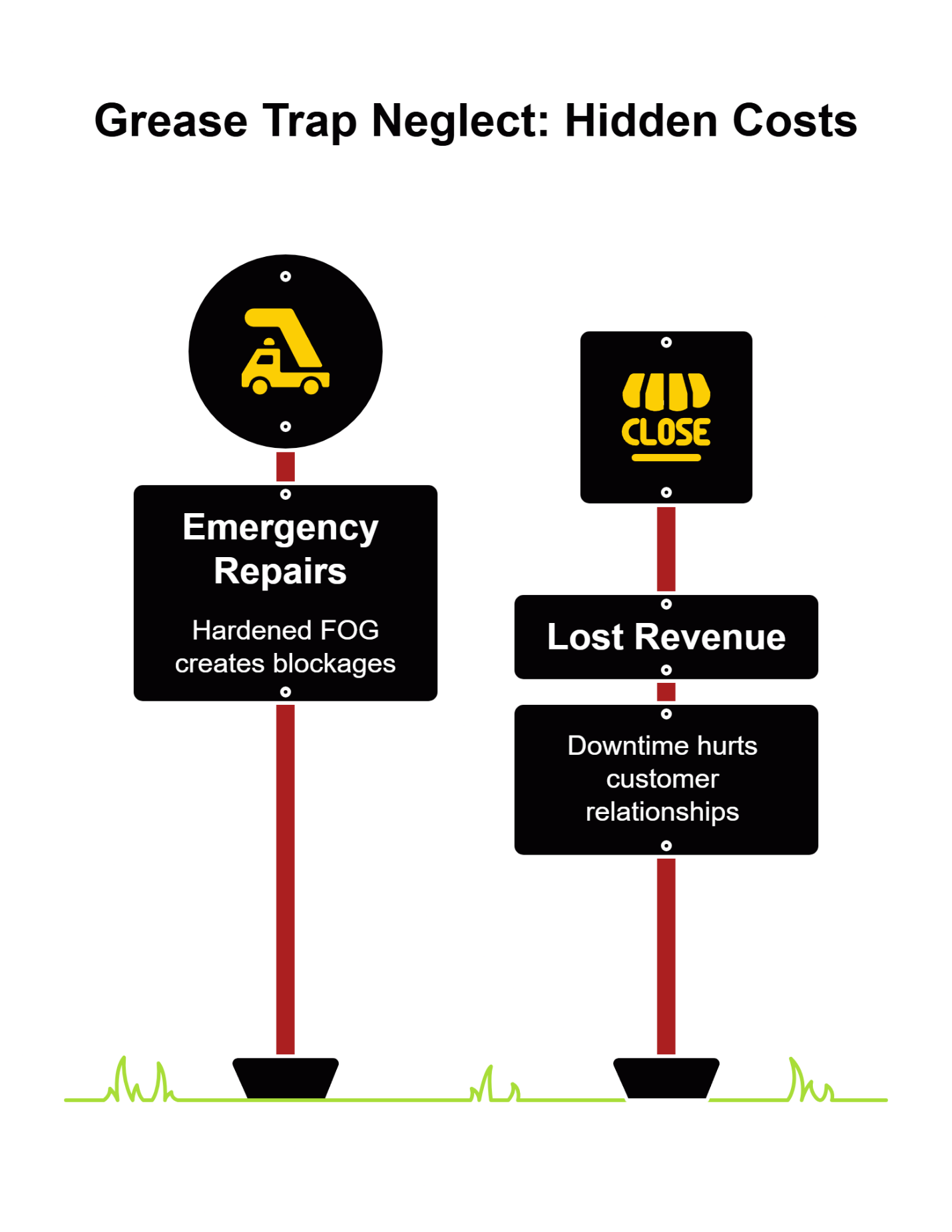
The most immediate and jarring cost of a neglected grease trap is the emergency call. FOG doesn’t just sit in the trap; it hardens and builds up, eventually creating a solid blockage in your plumbing. One moment your kitchen is running smoothly, and the next, you have wastewater backing up through your floor drains.
This rarely happens on a quiet Tuesday morning. It’s almost always during a peak service when your plumbing is under maximum strain. Suddenly, you’re not just dealing with a clog; you’re dealing with an operational crisis that requires an after-hours call to a vacuum truck service, premium rates for the emergency response, and a team of staff trying to manage a messy and unsanitary cleanup.
Hidden Cost #2: Lost Revenue from Unplanned Downtime
An emergency backup doesn’t just cost you in repair bills; it costs you in lost revenue. A backed-up drain can force you to close your doors until the issue is resolved3. Shutting down for a Friday night dinner service can cost you thousands of dollars in sales—far more than the price of several routine maintenance visits combined.
Beyond the immediate financial hit, there’s the damage to your customer relationships. Turning away guests with reservations or having to close unexpectedly creates a poor experience that can lead to lost repeat business. A predictable maintenance schedule ensures your business continues to run smoothly, avoiding these costly interruptions.
Hidden Cost #3: Fines and Forced Compliance Actions from the City
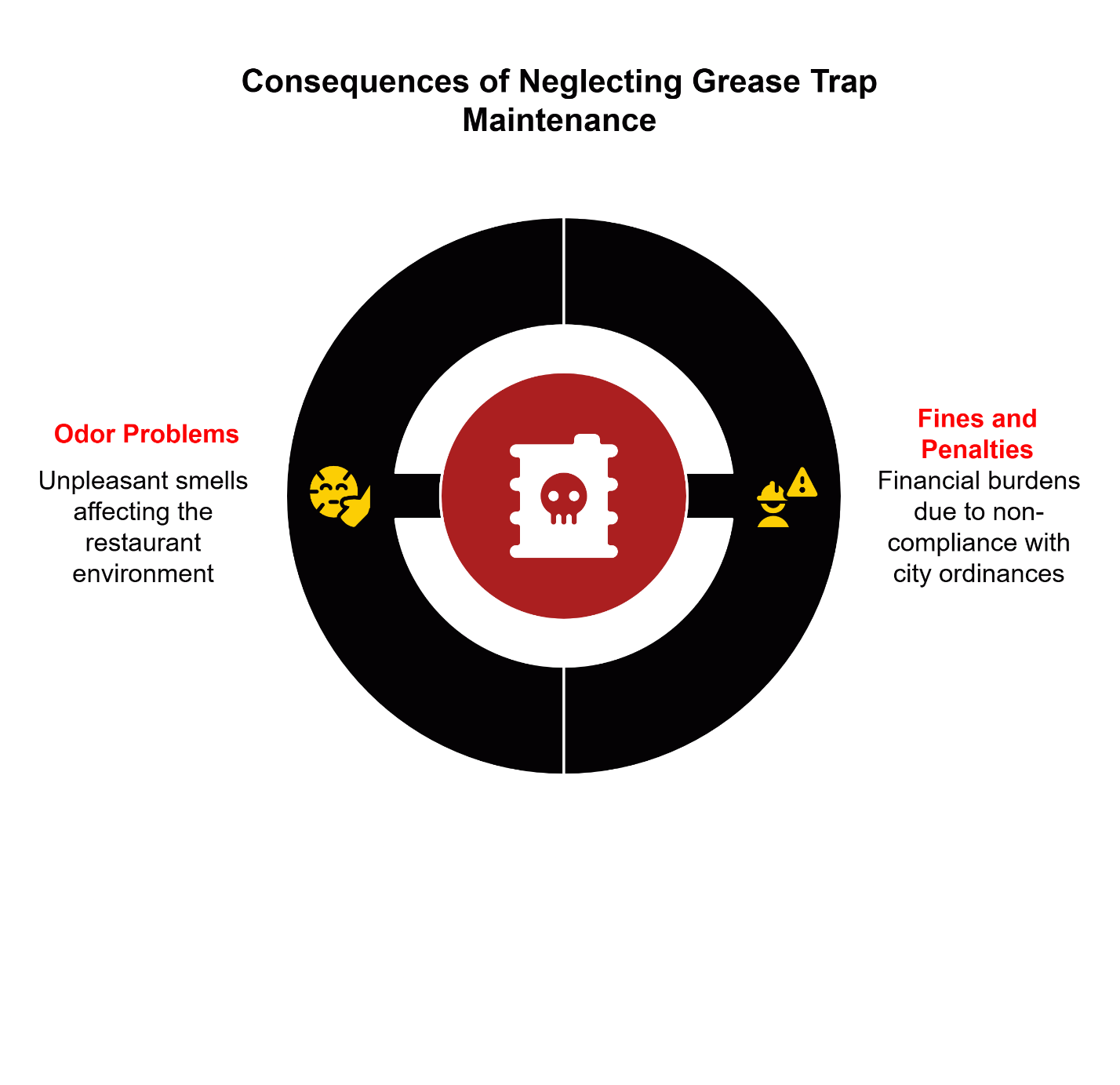
Houston has a vested interest in keeping FOG out of its municipal sewer system, where it causes massive blockages and expensive damage. As a result, the city enforces a strict FOG ordinance. Failing to comply with the mandated cleaning schedule can result in significant fines and other penalties.
Think of routine cleaning as a proactive investment in compliance. At Drane Ranger, we ensure our customers are in compliance with local laws by providing thorough, documented service. While we are not legal advisors, we provide the reliable service and manifests you need to satisfy inspectors. This helps you avoid fines and forced corrective actions that almost always cost more than a simple, scheduled pump-out. For official regulations, restaurant owners can consult the City of Houston (Official) website.
Hidden Cost #4: Odors, Bad Reviews, and Lasting Reputation Damage
Some of the most damaging costs aren’t financial—at least not at first. A grease trap that is overdue for service will inevitably produce strong, foul odors as the trapped waste decomposes. These smells can permeate your kitchen and even drift into your dining area, creating an unpleasant environment for both staff and customers.
In the age of online reviews, an odor problem is a reputation problem. A single one-star review mentioning a bad smell can deter hundreds of potential customers and stain your restaurant’s reputation for years. This kind of damage is hard to quantify but can quietly erode your business from the inside out.
The Houston Reality Check: Why the 90-Day Rule Isn’t Always Enough
The 90-day cleaning cadence is a baseline, not a one-size-fits-all rule. A busy restaurant in a high-traffic area like Sugar Land or Pearland will produce significantly more FOG than a smaller café. For these high-volume kitchens, a 60- or even 30-day schedule might be necessary to prevent problems. A grease trap, or interceptor, is designed to handle a specific load, and exceeding that capacity is what triggers issues. The key is to monitor your trap’s performance and adjust your schedule accordingly.
Quick Scan: Are You Paying the Hidden Costs?
Use this checklist to see if your trap is overdue for service:
- Are you noticing any slow drains, recurring backups, or gurgling sounds near floor sinks?
- Are there noticeable odors near your interceptors or in the dishwashing area?
- Does your trap’s FOG layer exceed 25% of its capacity between services?
- Do you lack a documented service manifest from within the last 90 days?
If you answered “yes” to any of these, you’re likely already paying for neglect in the form of operational friction and rising risk.
A Simple Maintenance Rhythm to Protect Your Revenue
Avoiding these hidden costs doesn’t require a complex strategy. It just requires a simple, consistent maintenance rhythm that turns an unpredictable risk into a manageable line item. For more on planning this expense, see our guide on How to Budget for Grease Trap Cleaning.
Drane Ranger helps Houston-area restaurants establish and maintain this rhythm. With over 30 years of experience, our professional technicians provide reliable grease trap cleaning in Houston, ensuring your business stays compliant and runs without interruption. We handle the unpleasant but necessary work of pumping out your traps and disposing of the waste responsibly so you can focus on your customers. Our services extend beyond just grease to include grease, grit & lint traps and even grit trap cleaning in Houston for other commercial needs. And if the worst happens, our fleet of general wastewater services (vacuum truck) is ready to handle emergencies.
Houston Maintenance Rhythm
- Baseline: Schedule service at least every 90 days. Increase this frequency for high-volume kitchens or if you notice any warning signs.
- Documentation: Log every pump-out and keep service manifests accessible for health inspections.
- Proactive Scheduling: Schedule your next service before peak seasons and holidays to prevent inconvenient surprises.
When you partner with a trusted provider, you’re not just buying a service; you’re protecting your revenue, your reputation, and your peace of mind. As a Better Business Bureau accredited business, we are committed to that partnership. You can view our profile with the Better Business Bureau: Drane Ranger Vacuum Services.
Ready to build a worry-free maintenance rhythm? Explore our complete grease trap cleaning in Houston guide to understand the process, or take the next step to protect your business today.
Get Your Custom Quote
Don’t wait for an emergency. Request a quote from our team to set up a reliable, compliant service schedule. Start your service today – call 281-489-1765.
Frequently Asked Questions
How often does Houston require grease trap service?
As a baseline, you should plan for service at least every 90 days. However, many high-volume restaurants and food service locations require more frequent cleaning depending on their FOG output.
What are the fastest red flags that my trap is overdue?
Slow drainage in your kitchen sinks, persistent foul odors, and visible grease near floor drains are the most common early warning signs that your trap needs service.
Will professional service help with compliance?
Yes. Routine cleaning by a professional service with proper, documented disposal is a key part of staying compliant with local FOG ordinances.
Can emergency pump-outs be avoided?
Absolutely. The vast majority of emergencies are caused by delaying scheduled maintenance. By maintaining a documented service cadence and scheduling ahead of your busiest seasons, you can significantly reduce the risk of an after-hours crisis.
Of course. Here are the requested sections based on the provided document.
Disclaimer
This article is for general information and does not replace professional or legal advice. We provide services to help you comply with regulations, but we do not offer legal guidance.
Our Editorial Process
Our expert team uses AI tools to help organize and structure our initial drafts. Every article is then extensively rewritten, fact-checked, and enriched with first-hand insights by our human experts to ensure accuracy and clarity.
About the Drane Ranger Insights Team
The Drane Ranger Insights Team is our dedicated engine for synthesizing complex topics into clear, helpful guides. While our content is thoroughly reviewed for clarity and accuracy, it is for informational purposes and should not be used as a substitute for professional advice.