📌 Key Takeaways
Houston’s FOG Rules Are Performance-Based, Not Calendar-Based: Houston restaurants must clean grease traps when the combined FOG and solids layers reach 25% of total liquid depth—not automatically every three months. High-volume establishments may need cleaning every few weeks, while lower-volume operations might extend beyond traditional timeframes if they stay below the 25% threshold.
Documentation Serves as Legal Protection During Inspections: Maintaining organized compliance files with waste manifests, service records, and inspection reports demonstrates professionalism to inspectors and provides legal evidence of proper FOG disposal and regulatory adherence.
Daily Kitchen Habits Prevent Compliance Violations: Scraping food waste before washing dishes and using dry cleaning methods before wet washing eliminates the primary source of grease trap buildup, helping extend time between cleanings and reducing emergency service needs.
The Three-Step Inspection Response Strategy: When surprise inspections occur, immediately locate compliance documentation, present recent waste manifests and service records, then escort inspectors to the grease trap area while explaining daily maintenance procedures and current accumulation levels.
Systematic Compliance Creates Operational Confidence: Implementing these performance-based monitoring systems transforms FOG compliance from a source of stress into a manageable business process, allowing restaurant managers to focus on growth and profitability instead of worrying about potential violations.
This comprehensive checklist provides the specific regulatory framework and actionable procedures Houston restaurant operations managers need to maintain proper FOG compliance while protecting their business from costly violations and operational disruptions.
Disclaimer: This content is informational only and does not constitute professional legal or regulatory advice. Consult with qualified professionals familiar with current Houston municipal codes for individual compliance requirements.
Running a restaurant in Houston means staying on top of countless regulations—but none are more critical than FOG (Fats, Oils, and Grease) compliance. The constant stress of potential violations, surprise inspections, and costly shutdowns keeps many operations managers awake at night.
Here’s the thing: compliance doesn’t have to be overwhelming when you have the right system in place.
This comprehensive checklist provides exactly what Houston restaurant operations managers need—a clear, actionable framework that transforms compliance from a source of anxiety into a manageable process. (Think of it as your insurance policy against the nightmare scenarios that can disrupt operations.)
Whether you’re managing a single location or preparing for expansion, this tool gives you the control and confidence to maintain proper FOG compliance while focusing on what matters most: running a successful restaurant.
Why a FOG Compliance Checklist is a Non-Negotiable Tool for Houston Restaurants
The Real Cost of Non-Compliance Goes Beyond Fines
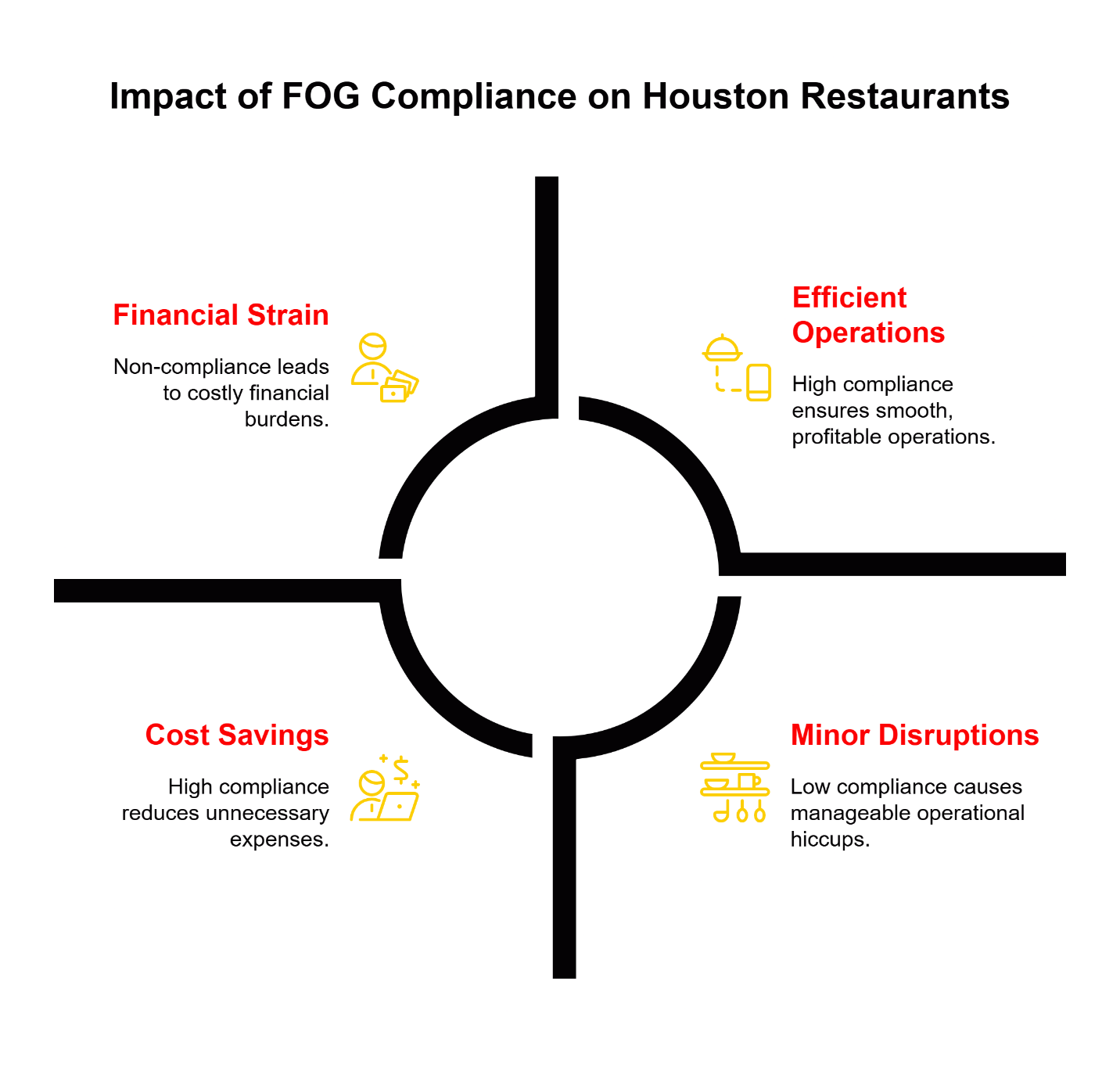
Houston’s FOG regulations aren’t suggestions—they’re mandatory requirements that can significantly impact your operation. Restaurant operations managers face a complex web of performance-based cleaning requirements, documentation protocols, and inspection procedures that must be executed properly.
The financial impact extends far beyond penalty fees. Failed inspections can potentially trigger operational disruptions, lost revenue during peak periods, and emergency cleanup costs that impact profit margins. More importantly, compliance failures create a ripple effect that damages relationships with franchise owners and threatens long-term viability.
Houston Grease Trap Cleaning Requirements: What You Must Know
Houston’s FOG regulations are performance-based, centered around what’s known as the “25% Rule.” According to the City of Houston Code of Ordinances, grease interceptors must be cleaned whenever the combined depth of the floating FOG layer and settled solids exceeds 25% of the total liquid depth of the unit.
This means cleaning frequency varies significantly based on your restaurant’s volume and grease production. High-volume establishments may need cleaning every few weeks, while lower-volume operations might extend beyond traditional timeframes—but only if they remain below the 25% threshold.
Business Impact: Understanding this performance-based system protects your operation from costly emergency repairs, maintains consistent cash flow through uninterrupted service, and helps avoid regulatory penalties that can be substantial.
The Official Houston Restaurant FOG Compliance Checklist (Your Downloadable Tool)
This checklist serves as your complete compliance management system. Print it, post it in your kitchen, and use it to maintain proper regulatory standing year-round.
THE HOUSTON RESTAURANT FOG COMPLIANCE CHECKLIST
PERFORMANCE-BASED CLEANING REQUIREMENTS □ Schedule professional grease trap cleaning when 25% threshold is reached □ Obtain waste manifest documentation from service provider □ Measure and document FOG and solids accumulation levels □ Verify cleaning resets accumulation to compliant levels □ File waste manifest with regulatory records
MONTHLY INSPECTIONS □ Check for visible grease in unusual areas (floor drains, sinks) □ Inspect crossover pipes for clogs or blockages □ Verify proper water flow between trap chambers □ Document any signs of system stress or malfunction □ Review staff compliance with daily procedures
WEEKLY MAINTENANCE □ Monitor drainage speed in kitchen sinks □ Check for persistent odors near grease trap location □ Inspect trap access points for leaks or damage □ Test alarm systems (if equipped) □ Review FOG disposal logs with kitchen staff
DAILY OPERATIONS □ Scrape all food waste into designated containers before washing □ Use dry cleaning methods before wet washing dishes □ Dispose of cooking oil through approved waste oil collection □ Train staff on proper FOG disposal procedures □ Maintain cleaning supply inventory for emergency situations
DOCUMENTATION REQUIREMENTS □ Keep all waste manifests according to local retention requirements □ Maintain service provider contracts and certifications □ Document all maintenance activities with dates and signatures □ Store inspection reports in easily accessible files □ Track staff training records for FOG procedures.
Performance-Based Service & Cleaning Requirements
Professional cleaning based on the 25% Rule represents the foundation of FOG compliance in Houston restaurants. This isn’t just a regulatory checkbox—it’s preventive maintenance that protects your entire operation from potential failures.
The cleaning service should include complete pump-out of accumulated grease, thorough cleaning of all trap components, and inspection of the entire system for potential issues. Your service provider should deliver a waste manifest that documents proper disposal methods and regulatory compliance.
Technical Note: Most grease traps function through gravity separation, where oils generally float to the surface while solids settle to the bottom. When the combined layers reach 25% of total liquid depth, the system requires cleaning to maintain efficiency and regulatory compliance.
Daily & Weekly Internal Best Practices
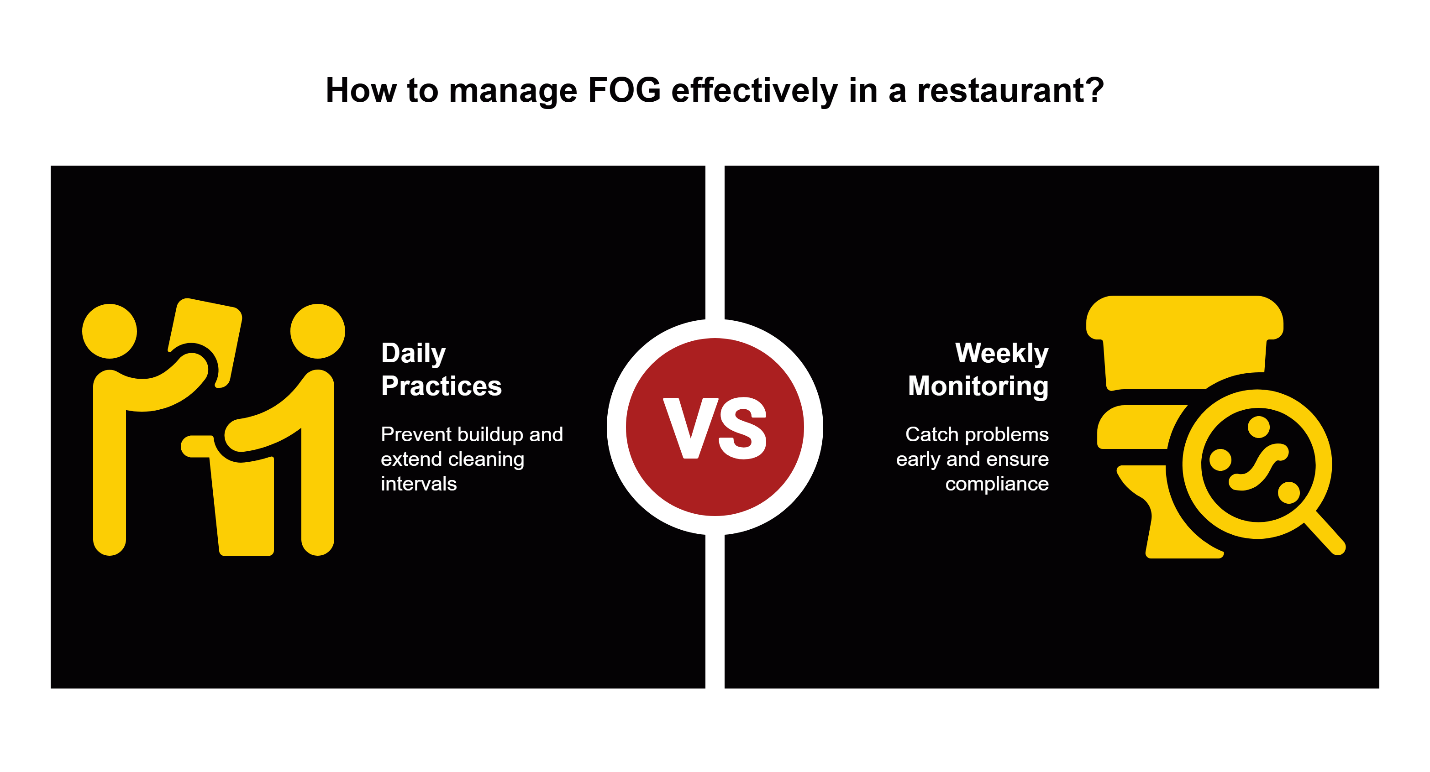
Effective FOG management starts with your kitchen team’s daily habits. The most successful restaurants treat FOG prevention as part of their standard operating procedures, not an afterthought.
Daily scraping of food waste before washing eliminates the primary source of grease trap buildup. This simple practice—when executed consistently—can help extend the time between cleanings and reduce the frequency of emergency services.
Weekly monitoring helps catch problems before they become compliance violations. Slow drainage, persistent odors, or visible grease in unexpected locations all signal potential system stress that requires attention.
Documentation & Record-Keeping Mandates
Documentation serves as your legal protection during inspections and your operational guide for maintaining consistent service. The waste manifest represents the most critical piece of this puzzle—it provides evidence that your grease was disposed of properly and legally.
Keep all service records, manifests, and inspection reports in a dedicated compliance file that’s easily accessible during inspections. This organizational system demonstrates professionalism and shows inspectors that compliance is a priority, not an accident.
Day-to-Day Application: Create a simple binder system with tabs for cleaning services, monthly inspections, weekly maintenance, and daily logs. This physical system helps ensure compliance documentation stays current even during busy periods or staff changes.
What If…? Planning for a Surprise Health Inspection
Surprise inspections happen—and they’re designed to catch operations off-guard. The key to handling them successfully lies in maintaining inspection-ready standards every single day, not scrambling when inspectors arrive.
Here’s your three-step response plan: First, immediately locate your compliance documentation binder and greet the inspector professionally. Second, walk them through your most recent waste manifest and cleaning service records to demonstrate ongoing compliance efforts. Third, escort them to your grease trap area while explaining your daily maintenance procedures and current accumulation levels.
The inspection becomes routine when compliance is routine. Inspectors typically respond positively to operations that clearly prioritize regulatory adherence and can demonstrate systematic FOG management through documentation and visible best practices.
Remember—a well-maintained compliance system actually makes inspections easier for everyone involved. You’ll spend less time answering questions and more time showcasing the professional operation you’ve built.
Conclusion: From Checklist to Compliance Confidence
This checklist transforms FOG compliance from a source of stress into a manageable business process. When you implement these systems consistently, regulatory adherence becomes automatic rather than accidental.
The confidence that comes from knowing your operation meets requirements allows you to focus on growth, profitability, and customer satisfaction instead of worrying about potential violations. That peace of mind is invaluable in an industry where operational disruptions can impact financial performance.
Looking ahead, the compliance management skills you develop today prepare you for the challenges of multi-unit operations and regional management responsibilities. Understanding regulatory systems at this detailed level becomes a competitive advantage as you advance in your career and take on broader operational oversight.
Ready to eliminate compliance stress from your operation? Professional commercial grease trap cleaning ensures your restaurant stays ahead of all regulatory requirements while protecting your business from costly violations.
Start Your Service Today – Call 281-489-1765
Our Editorial Process
This tutorial was drafted with AI assistance and has been reviewed, fact-checked, and edited by the humans experts on our Insights Team to ensure accuracy and clarity.