📌 Key Takeaways
The author recommends controlling the affected area, recording observable facts, and calling qualified help instead of guessing the cause.
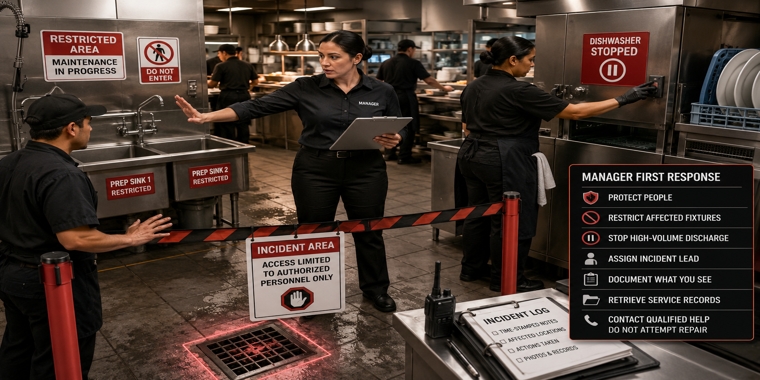
- Protect People First: Follow emergency procedures and restrict affected fixtures before taking photographs or gathering records.
- Stop High-Volume Discharge: Immediately halt connected commercial dishwashers because their discharge can quickly worsen backups and cause flooding.
- Record Facts, Not Theories: Log times, locations, visible conditions, staff reports, and changes without declaring a root cause.
- Prepare a Clear Handoff: Give qualified providers service records, access details, affected locations, and a time-stamped incident log.
- Confirm Before Reopening: Improved drainage does not prove full resolution, so qualified professionals or authorities should guide operating decisions.
Control the area, document facts, and escalate clearly.
Houston restaurant managers will respond more safely and quickly using the first-response checklist that follows.
~ ~ ~ ~ ~ ~ ~ ~ ~ ~ ~ ~ ~ ~ ~ ~ ~ ~
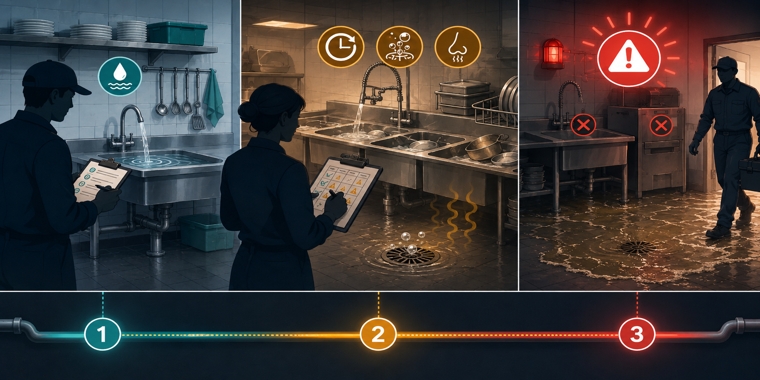
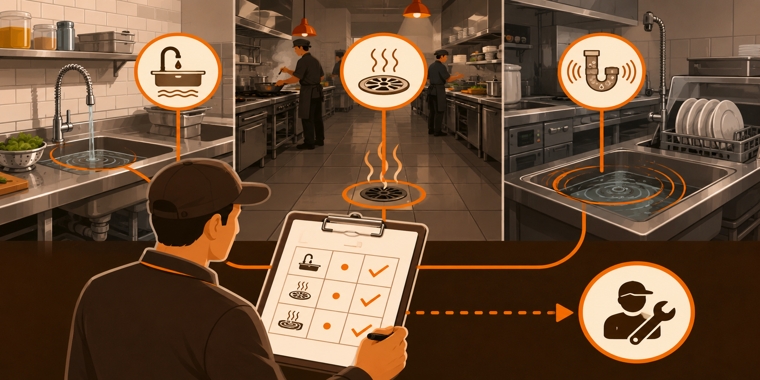
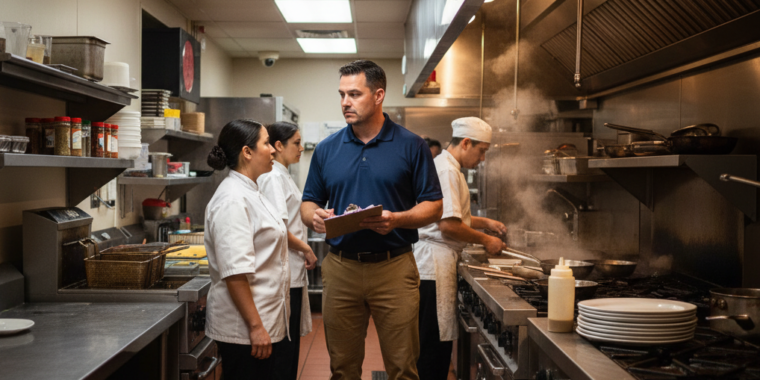
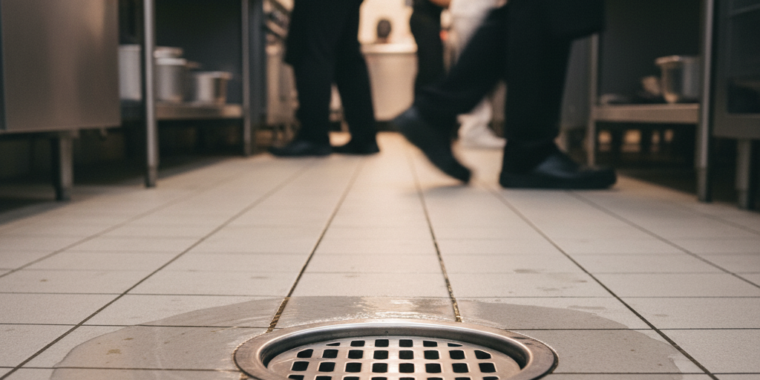
Consider a common emergency: dinner service is active in a Houston restaurant when one employee reports a strong odor near a floor drain and another says two prep sinks are draining slowly. Orders are moving, customers are present, and the cause is unknown.
The manager’s first job is not to decide whether the grease trap, a connected drain, or another condition is responsible. Treat the disruption as an operational incident: follow the establishment’s emergency procedures, control the affected area, consolidate reports, preserve useful records, and prepare a clear handoff for qualified help. Operating restrictions may vary with the conditions and current local requirements, so this checklist does not replace qualified or regulatory guidance.
Start With Observable Conditions, Not a Root-Cause Theory
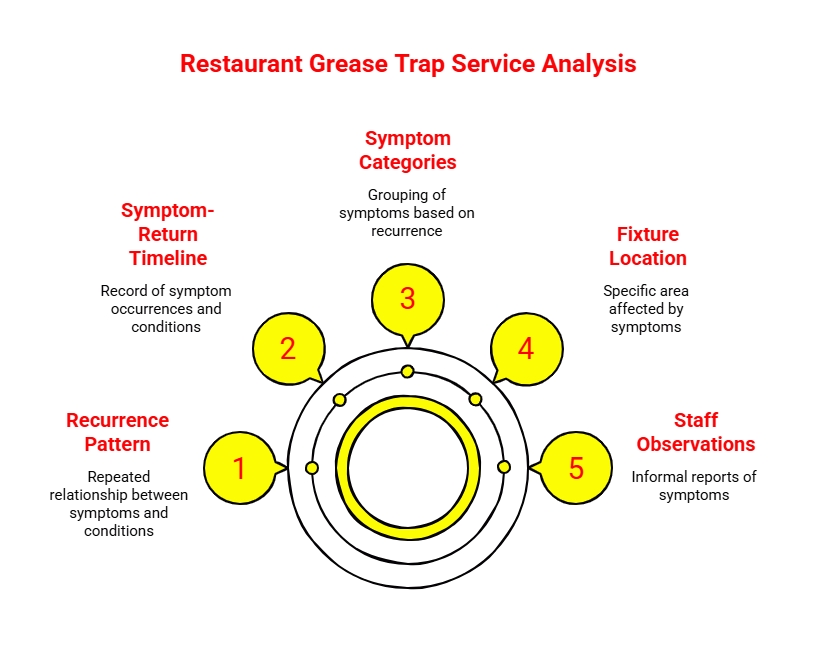
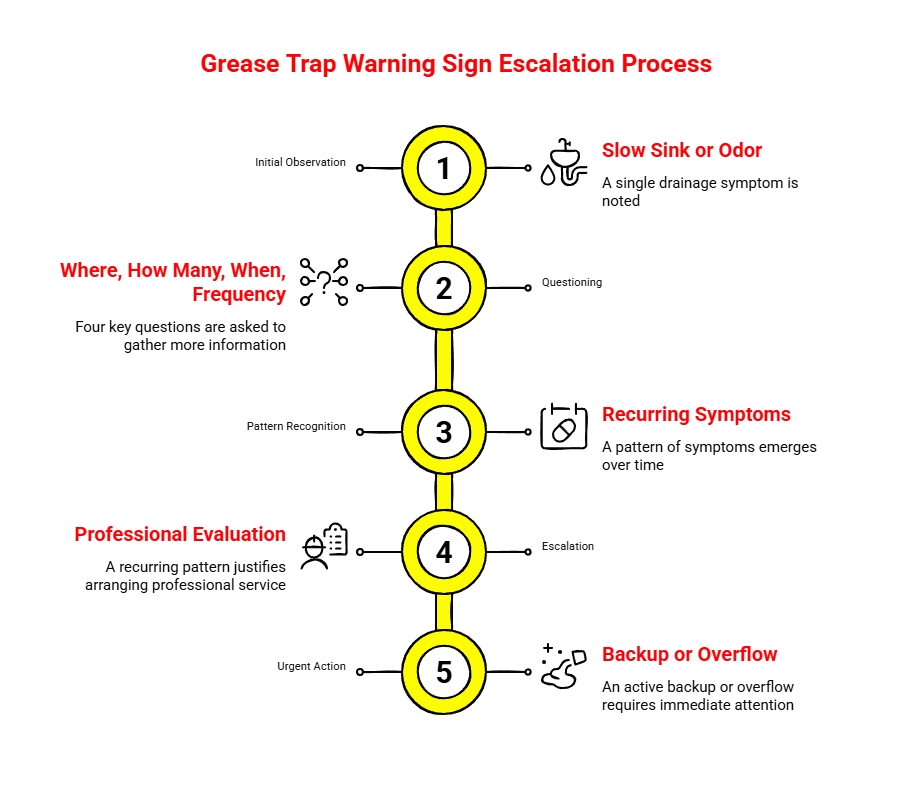
An observable condition is something directly seen, heard, smelled, or reported without assigning a technical cause. Record slow drainage, gurgling, visible grease or wastewater, recurring odor, and the exact location.
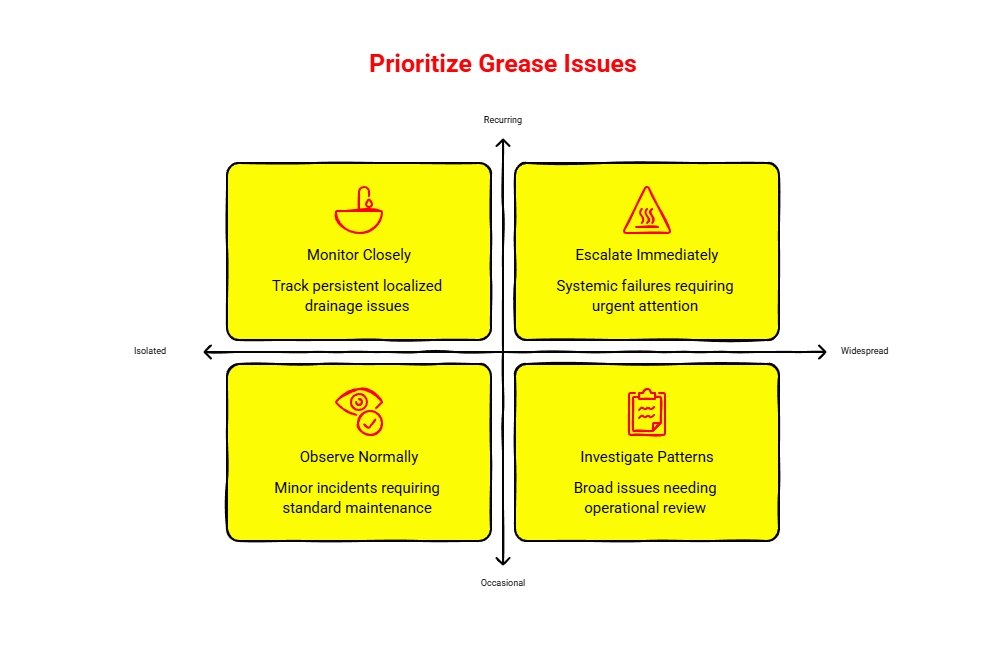
An affected fixture is a sink, floor drain, dish-area connection, or other drainage point showing a change from normal operation. Note whether the issue is isolated, recurring, or expanding, and whether it is near food preparation, storage, equipment, employees, customers, or a travel path.
| Record this | Do not assume this |
|---|---|
| “Two prep sinks began draining slowly at approximately 7:15 p.m.” | “The grease trap is full.” |
| “A recurring odor was reported near the back floor drain.” | “The trap has failed.” |
A grease trap or grease interceptor separates fats, oils, and grease from kitchen wastewater. Symptoms near connected fixtures may be relevant, but they do not identify the responsible component.
For example, imagine staff report slow drainage at two sinks and an odor near a floor drain, with no visible wastewater. The person in charge records the time, locations, and operating-volume pattern, restricts affected fixtures under the restaurant’s procedures, and prepares the provider handoff.
Restaurant Manager’s First-Response Checklist
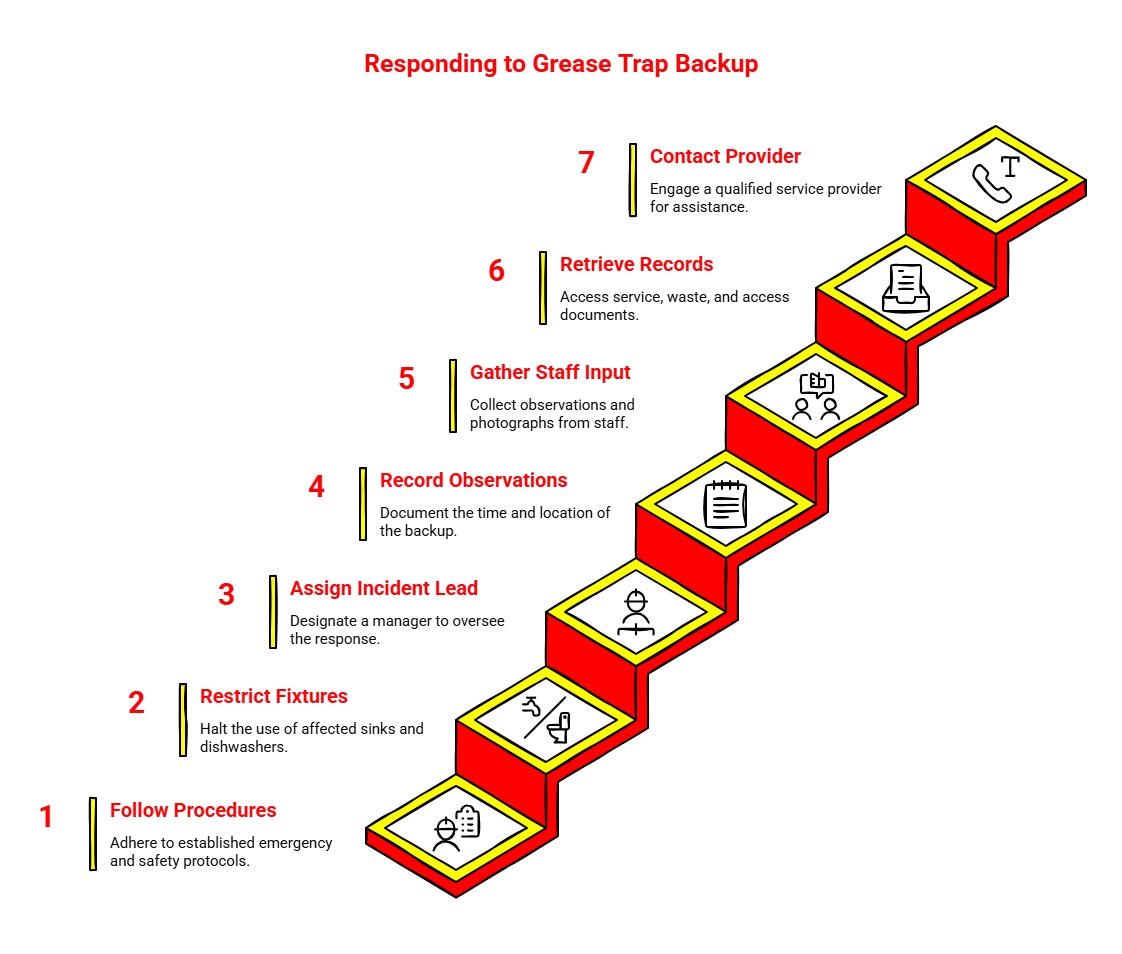
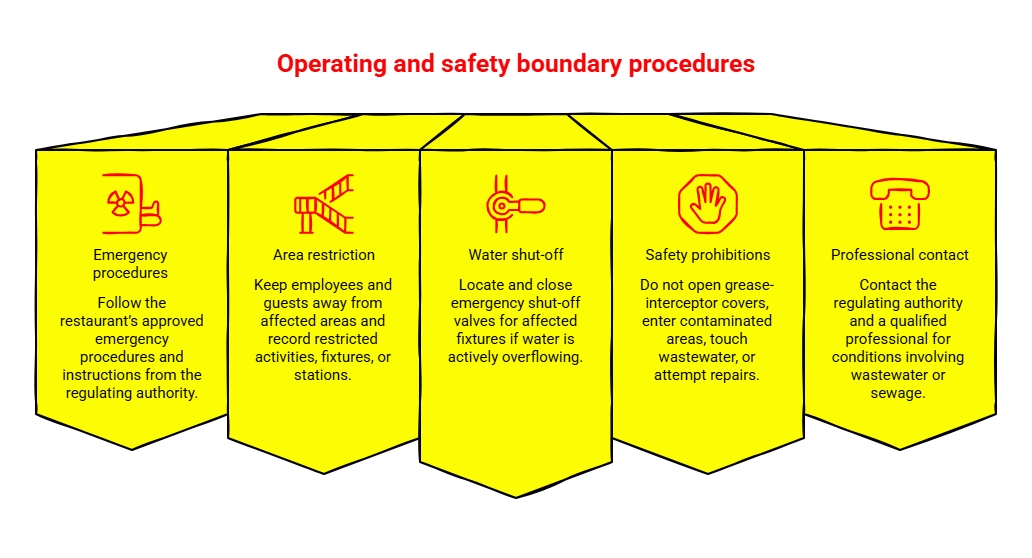
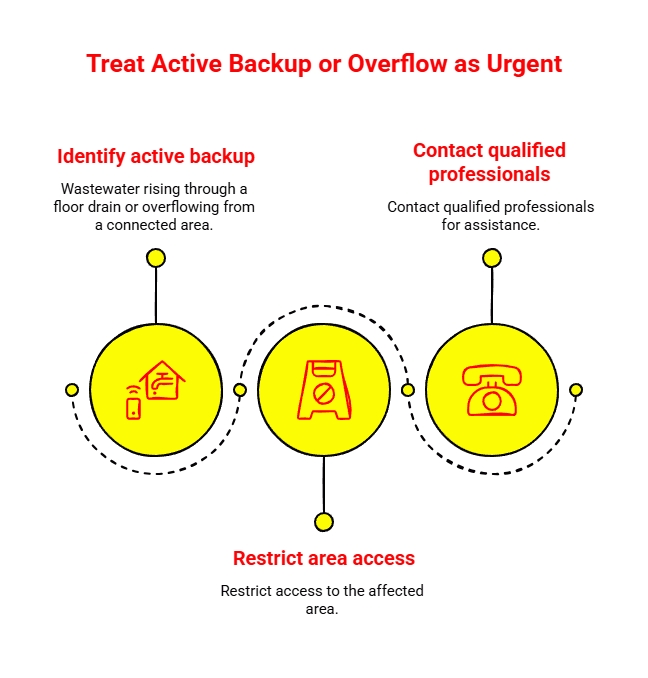
- Follow the establishment’s emergency and safety procedures.
Use existing food-safety, facilities, and incident-response protocols. If wastewater, grease, or another material is visible, protective action and access control take priority over documentation. - Restrict affected fixtures or areas as directed by those procedures and qualified guidance.
Do not keep using a slow or backed-up fixture merely because service is busy. Immediately halt the use of connected commercial dishwashers, as their high-volume, high-temperature discharge will rapidly accelerate a backup and cause immediate flooding. Do not make facility-wide closure or partial-operation decisions based solely on symptoms. - Assign one manager as incident lead.
That person consolidates observations, communicates with ownership, speaks with the service provider, and maintains the incident log. - Record the first known time and map affected locations.
Use labels such as “prep sink 2,” “dish area,” or “rear floor drain.” Mark odor locations separately from visible material. - Gather staff observations and photographs when safe.
Ask what was noticed, where, and when. Take photographs only when this does not delay protective action or require entry into a restricted area. - Retrieve service, waste, and access records.
Locate the last service report, invoice, applicable waste manifest, known trap location and capacity, prior incident notes, property contact, and gate or loading details. A waste manifest records the handling or disposition of removed waste under applicable requirements; it is not the same as an invoice. - Contact the appropriate qualified provider or authority with a structured handoff.
A qualified provider has services, training, and scope appropriate to the condition. Confirm that the provider handles the relevant system, serves the location, and can work within current access constraints.
Do not diagnose or repair: Do not open the trap, remove covers, add chemicals, pour unusually hot water into fixtures, snake or jet lines, operate pumps or valves, handle wastewater, or run large volumes of water to test the system.
In a more severe case, a manager sees visible wastewater or grease near an active work area. The manager follows the establishment’s procedures, controls access, records facts when safe, and contacts the appropriate provider or authority. Closure, cleanup, food handling, and reopening decisions require current, situation-specific guidance.
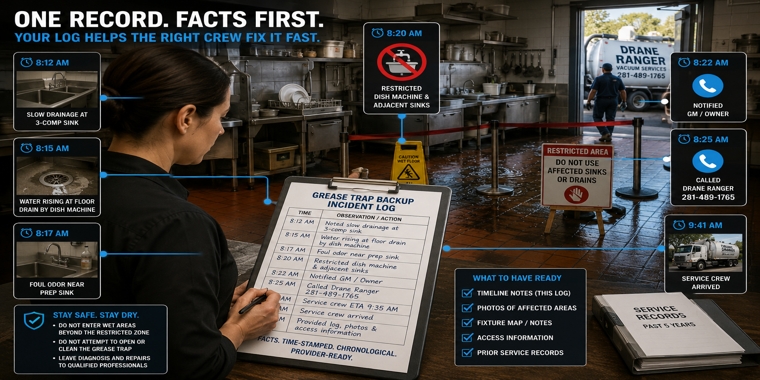
Build an Incident Record Before Details Are Lost
An incident log is a time-stamped record of observations, communications, and management actions. It helps ownership, property management, a provider, or an authority understand the sequence; it does not prove causation.
| Time | Area or fixture | Observable condition | Staff member | Action taken | Photo | Change |
|---|---|---|---|---|---|---|
| 7:15 p.m. | Prep sink 2 | Draining slowly | Kitchen lead | Reported to incident lead | — | First report |
| 7:22 p.m. | Rear floor drain | Strong odor | Dishwasher | Area handled under site procedure | IMG-01 | New location |
| 7:35 p.m. | Prep sinks 1 and 2 | Slow drainage continues | Incident lead | Provider contacted | IMG-02 | Recurring |
Record later locations, visible material, gurgling, changes between high- and lower-volume periods, previous occurrences, notifications, and outside contacts. Do not delay area control to take photographs.
Staff and customer communication needs one point of control. Give employees one factual message: identify the affected area, state which procedure is being followed, direct observations to the incident lead, and prohibit speculation about cause or reopening time. Customer-facing explanations should remain factual and limited; do not claim the issue is minor, resolved, or safe because it is out of view.
Retrieve Records and Prepare the Professional-Service Handoff
Prioritize these records and site details:
- Last service date, provider name, report, and invoice
- Applicable waste manifest and other available waste documentation
- Known trap location, capacity, or identifying information
- Specify whether the unit is an indoor under-sink trap or an exterior in-ground interceptor.
- Previous incidents and recent changes in operating volume
- Property-management or landlord contact when access is shared
- Gate, key, utility-room, parking, loading, delivery, and after-hours conditions
- Restricted areas the provider should know about
An invoice may show that a transaction occurred, but it may not describe the full service scope, findings, access limitations, or disposal documentation. A separate grease trap inspection readiness checklist can support records organization after the active incident.
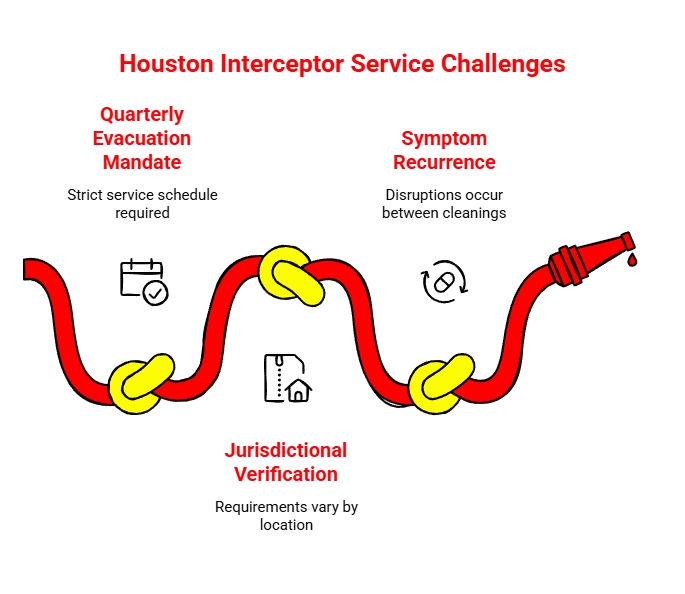
For restaurants within the applicable City scope, consult the City of Houston Health Department’s special-waste generator guidance for current grease-interceptor and manifest information. The official guidance notes that proposed Chapter 47 changes have been posted, so recheck the live official guidance before relying on a specific service frequency, retention period, or compliance procedure. Do not extend a City rule automatically to surrounding jurisdictions.
When professional evaluation is needed, review available commercial grease trap cleaning information while preparing this handoff:
“The issue began at approximately (time). We observed (condition) at (fixtures or areas). The incident log shows it is (stable, recurring, or worsening). We restricted (fixture or area) under our procedures. The last known service was (date), and (records are available or unavailable). Access is through (location), with these constraints: (details).”
If owner approval is required, prepare the facts and authorization request simultaneously. While cost concerns may affect the decision, they must not prevent an accurate escalation request.
Prepare Access Without Altering the Incident
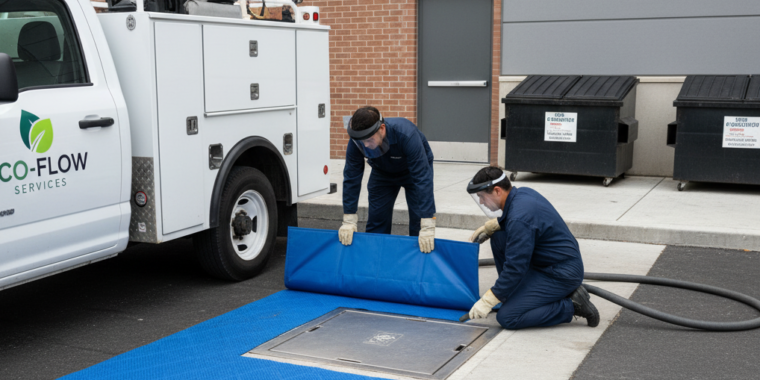
Confirm the service access point without opening it. Identify locked gates, utility rooms, parked vehicles, delivery conflicts, shared loading areas, and property permissions. Designate the person who will meet the provider, and keep the log, records, photographs, and site contacts together.
In a practical access scenario, a Houston restaurant might share a rear service lane. The manager confirms who controls the gate, identifies a delivery conflict, and assigns an employee to meet the provider. The manager does not promise equipment placement or alter the affected area outside established procedures and qualified guidance.
Even when a provider has visited before, reconfirm the current contact, affected fixtures, access route, restricted areas, and operating conditions.
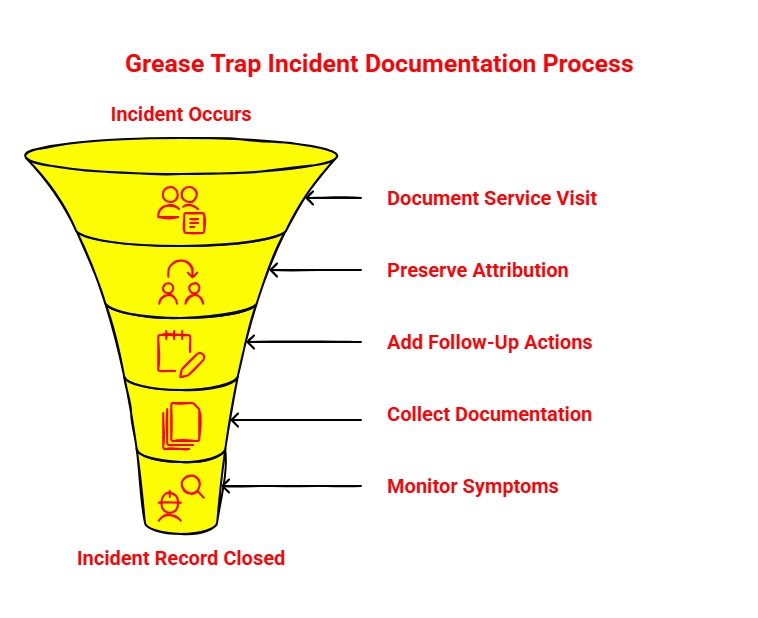
Ask What Was Found, What Was Completed, and What Remains Unresolved
Do not treat “service completed” as proof that every contributing issue was evaluated. Before closing the incident record, ask:
- What conditions were observed, and what service was completed?
- Which system areas were and were not evaluated?
- Were access limitations encountered?
- Is another qualified trade or authority needed?
- What service and disposal documentation will be provided?
- What should management continue recording?
- Who should confirm the next operating decision?
- Is follow-up or separate evaluation recommended?
Document arrival and departure times, provider name, work described, documents received, outstanding recommendations, and the person responsible for the next operating decision. Give every follow-up item an owner and target date.
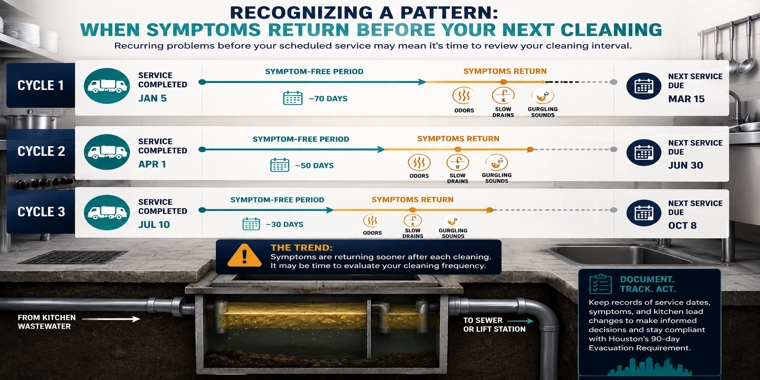
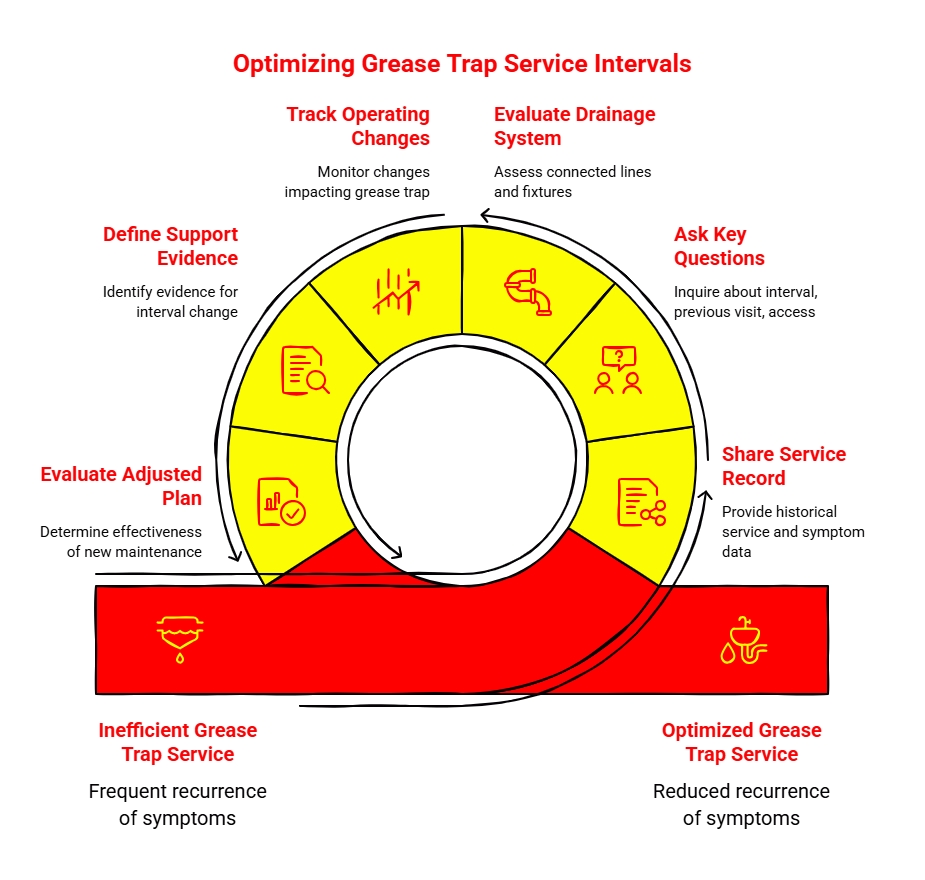
If dealing with a recurrence, suppose the restaurant was serviced recently, but drainage disruption returned. The manager retrieves the earlier report, records when symptoms reappeared, and asks what was previously evaluated. The question is whether another component, trade, or authority should be involved—not whether the earlier provider should be blamed.
Improved drainage does not establish that every issue is resolved or that affected operations may resume. Confirm the next decision with the appropriate authority or qualified professional. For recurrence prevention, ask whether a separate maintenance or system review is appropriate rather than calculating a new service interval during the incident.
Common Mistakes During a Service-Hours Backup
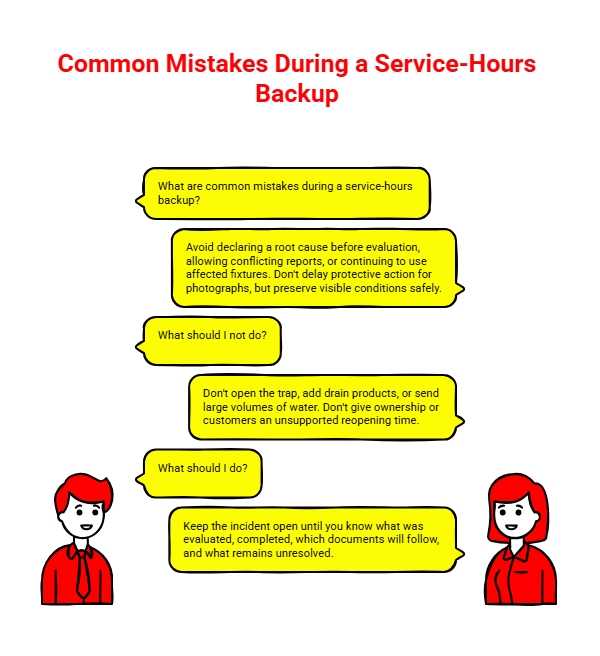
Avoid declaring a root cause before evaluation, allowing several staff members to give conflicting reports, or continuing to use affected fixtures as a test. Do not delay protective action for photographs, but preserve visible conditions when this can be done safely.
Opening the trap, adding a drain product, or sending large volumes of water through the system moves the manager from coordination into technical intervention. Giving ownership or customers an unsupported reopening time turns uncertainty into a promise.
A recent visit does not rule out another grease-system or plumbing condition. An invoice is not automatically a complete technical or waste record. Keep the incident open until the manager knows what was evaluated, what was completed, which documents will follow, and what remains unresolved.
Frequently Asked Questions
Can a restaurant keep operating during a suspected grease trap backup?
There is no universal answer. The decision may depend on the affected area, whether wastewater or contamination is present, the establishment’s procedures, and current local requirements. Control the affected area and confirm the operating decision with the appropriate authority or qualified professional.
What information should a manager have ready when calling a provider?
Have the start time, affected fixtures, visible conditions, odor locations, condition trend, prior service date, available reports or manifests, trap location and capacity if known, access restrictions, and onsite contact ready.
Should employees open the grease trap or run water to determine whether it is blocked?
No. Employees should document ordinary observations, follow restaurant procedures, and leave inspection, diagnosis, and technical work to qualified personnel.
Which records may matter after a Houston grease trap incident?
Prior service reports, invoices, applicable waste manifests, previous logs, provider correspondence, and post-service documents may help. Check current City guidance before relying on a retention period or Chapter 47 requirement because proposed changes have been posted.
End With a Prepared Handoff, Not a Guess
Once the immediate disruption is contained and the sequence of events logged, focus entirely on organizing the site and documentation so the service provider can evaluate the system without delay. After the visit, record what was evaluated, completed, and left unresolved.
Use the checklist to prepare a clear handoff, then contact Drane Ranger to discuss the incident details, affected fixtures, available records, and service access. No response time, operating outcome, or reopening result is implied.
Disclaimer: This article is for general informational purposes only and does not constitute compliance, safety, technical, or professional advice. Requirements, risks, and best practices may vary by context, jurisdiction, system, provider, or use case. Confirm important decisions with the appropriate qualified professional, authority, or technical expert.
Our Editorial Process:
This article was developed from the approved Content Strategy Document, Drane Ranger project files, official Houston and Texas regulatory sources, and documented customer testimonial material. It avoids unsupported service-cost claims, guaranteed inspection outcomes, invented fine timelines, and competitor comparisons.
By Drane Ranger Insights Team
The Drane Ranger Insights Team creates practical wastewater, grease trap, and liquid waste compliance resources for Houston-area businesses. Drawing from Drane Ranger Vacuum Services’ decades of local service experience, the team focuses on clear, useful guidance that helps operators maintain safe, compliant, and reliable facilities.