📌 Key Takeaways
A grease trap that looks clean on top can still fail an inspection because hidden buildup sits at the bottom where you can’t see it.
- Surface Checks Miss the Real Problem: Grease floats and sludge sinks, so the middle layer looks clear even when total buildup has crossed Houston’s 25% limit.
- Your Kitchen Sends Warning Signals: Slow drains, bad smells during busy shifts, and grease showing up in strange places all point to hidden accumulation before any visual check would catch it.
- Track Symptoms Weekly: A simple log of odors, drain speed, and timing helps you spot patterns and call for service before problems become emergencies.
- Don’t Wait for the Calendar: High-volume kitchens often hit the 25% threshold in six to eight weeks, not the 90-day minimum Houston requires.
- Professional Assessment Removes the Guesswork: Only a full evaluation measures what’s actually in the trap and tells you when service is truly needed.
Catching hidden buildup early prevents failed inspections, emergency shutdowns, and repair bills that cost far more than routine maintenance.
Houston restaurant operators and kitchen managers will find practical ways to spot trouble before audits or backups force urgent action, preparing them for the detailed guidance that follows.
~ ~ ~ ~ ~ ~ ~ ~ ~ ~ ~ ~ ~ ~ ~ ~ ~ ~
Prep starts. Something smells slightly off—a faint, greasy undertone that wasn’t there last month. The floor drain near the dishwasher is slower than usual. Not clogged, just sluggish. The trap didn’t look terrible the last time anyone checked, so the easy move is to assume it can wait.
That uncertainty is exactly where compliance risk hides.
This guide is for Houston-area restaurant operators who want to stop guessing and start recognizing the warning signs of hidden grease trap accumulation before an audit, a backup, or an embarrassing odor event forces the issue. Not for operators chasing the cheapest invoice or a cosmetic fix—for kitchen managers, GMs, and owner-operators who want real inspection readiness and need a clearer way to read the signals before a small warning becomes a shutdown.
Why a Grease Trap Can Look Fine and Still Fail You
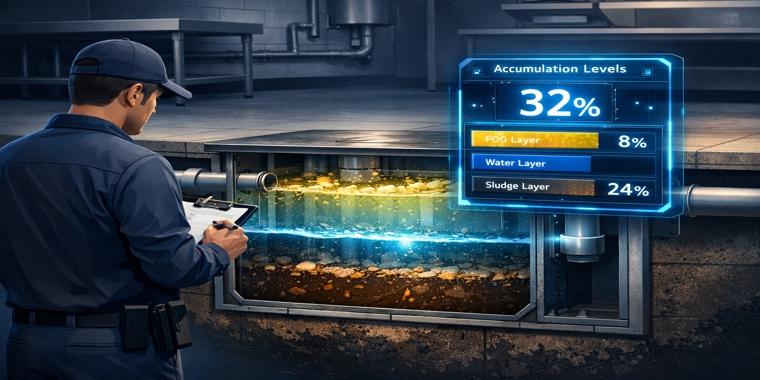
Grease traps work through a simple principle: fats, oils, and grease (FOG) float to the top, while heavier solids sink to the bottom. Clean water flows out through a pipe positioned in the middle layer.
The problem? That middle layer can look deceptively normal even when accumulation has already crossed into dangerous territory.
Grease floats. Sludge sinks. And the sample well or inspection port only shows you what’s happening at the surface. A trap can pass the eyeball test while hidden sludge builds underneath, pushing total accumulation toward the 25% threshold that triggers mandatory service under Houston regulations.
The calendar is a baseline. It is not proof that the trap is fine.
The Early Warning Signs of Hidden Accumulation
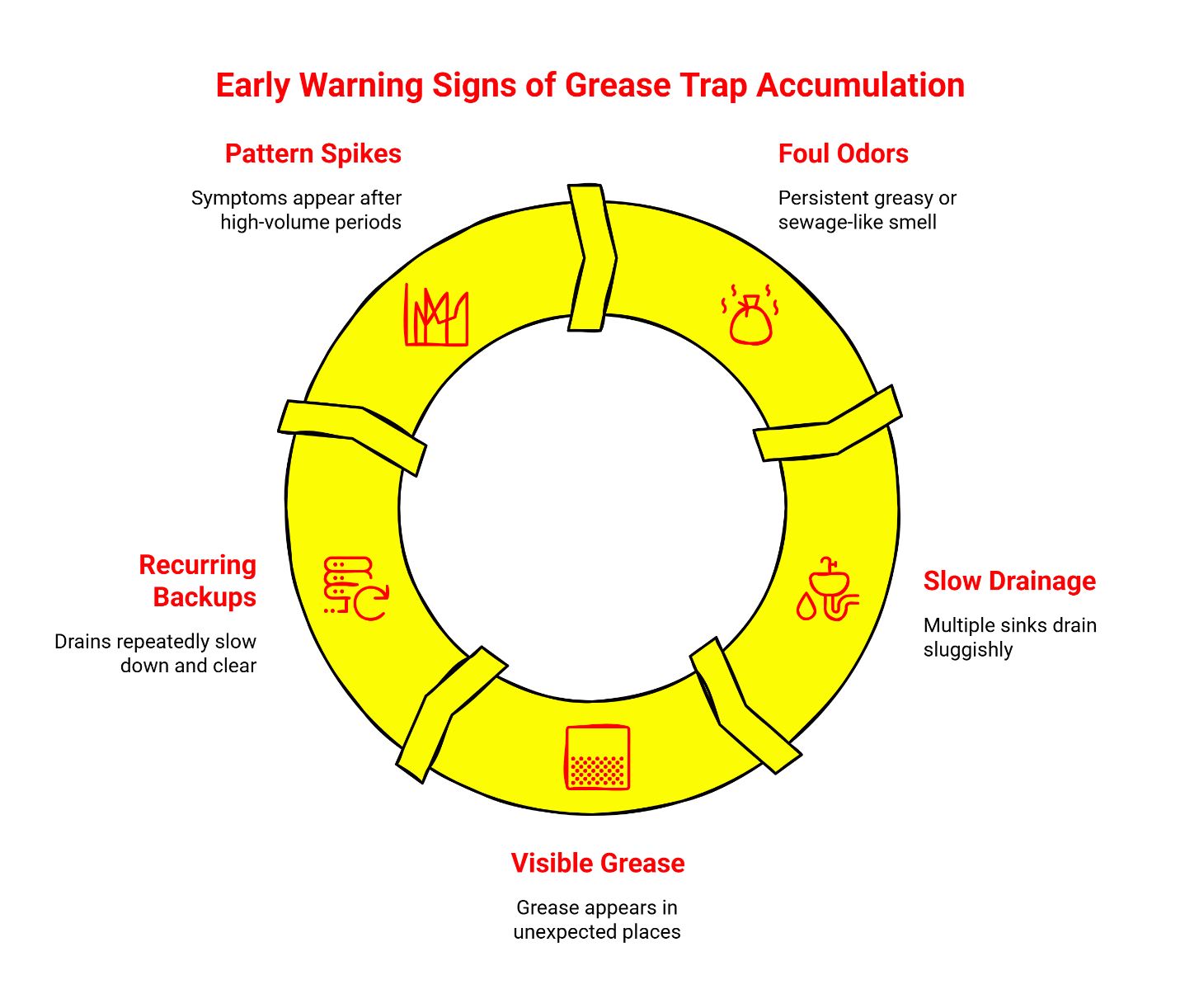
Kitchen managers and operators who pay attention to daily operations often notice accumulation problems before any visual inspection would reveal them. The trap sends signals through the plumbing system long before it overflows.
Foul odors during prep or peak service periods. A persistent greasy or sewage-like smell, especially when the kitchen heats up, often indicates accumulation is affecting the trap’s ability to properly separate and contain FOG.
Slow drainage in kitchen sinks. When multiple sinks drain sluggishly—not just one with a localized clog—the restriction is likely downstream in the trap itself.
Grease appearing where it shouldn’t. Visible grease around floor drains, in mop sink basins, or backing up into unexpected places suggests the trap is approaching capacity.
Recurring “almost-backup” incidents. If drains repeatedly slow down, partially clear, then slow again, the pattern points to accumulation that’s affecting flow without completely blocking it.
Pattern spikes after high-volume periods. Symptoms that consistently appear after busy weekends, catering events, or menu changes involving fried foods indicate the kitchen’s FOG output may be outpacing the trap’s capacity between service visits.
These symptoms are operational diagnostics, not minor annoyances to mask with deodorizers. Each acts as an early warning trigger. Early odor and slow-flow symptom tracking enables timely grease trap assessment—patterns tell a clearer story than a single glance into a trap.
The Texas Commission on Environmental Quality emphasizes active FOG control because fats, oils, and grease create preventable wastewater problems when they build up in the system.
Why Sample Wells and Surface Checks Miss the Real Problem
The standard advice is straightforward: check the sample well, and if it looks clear, the trap is fine. This guidance fails in practice because it assumes accumulation is visible from the top.
Here’s what actually happens inside the trap. Lighter FOG rises and forms a cap at the surface. Heavy food particles, sediment, and solidified grease sink to the bottom as sludge. The middle layer—the only part visible through most sample wells—remains relatively clear even as both the floating cap and the sunken sludge grow.
Houston’s FOG ordinance requirements specify that traps must be serviced when combined accumulation (floating grease plus settled sludge) reaches 25% of the trap’s total liquid depth. A surface glance cannot measure that combined total. Only a proper assessment that accounts for what’s happening at the bottom can determine whether the trap is actually compliant.
This is why visual checks often fail to detect sludge that has already pushed accumulation past the threshold. The middle looks fine. The bottom does not. And the next inspection will measure the whole column, not just the visible layer.
A Simple Symptom Tracker Your Kitchen Can Start Using This Week
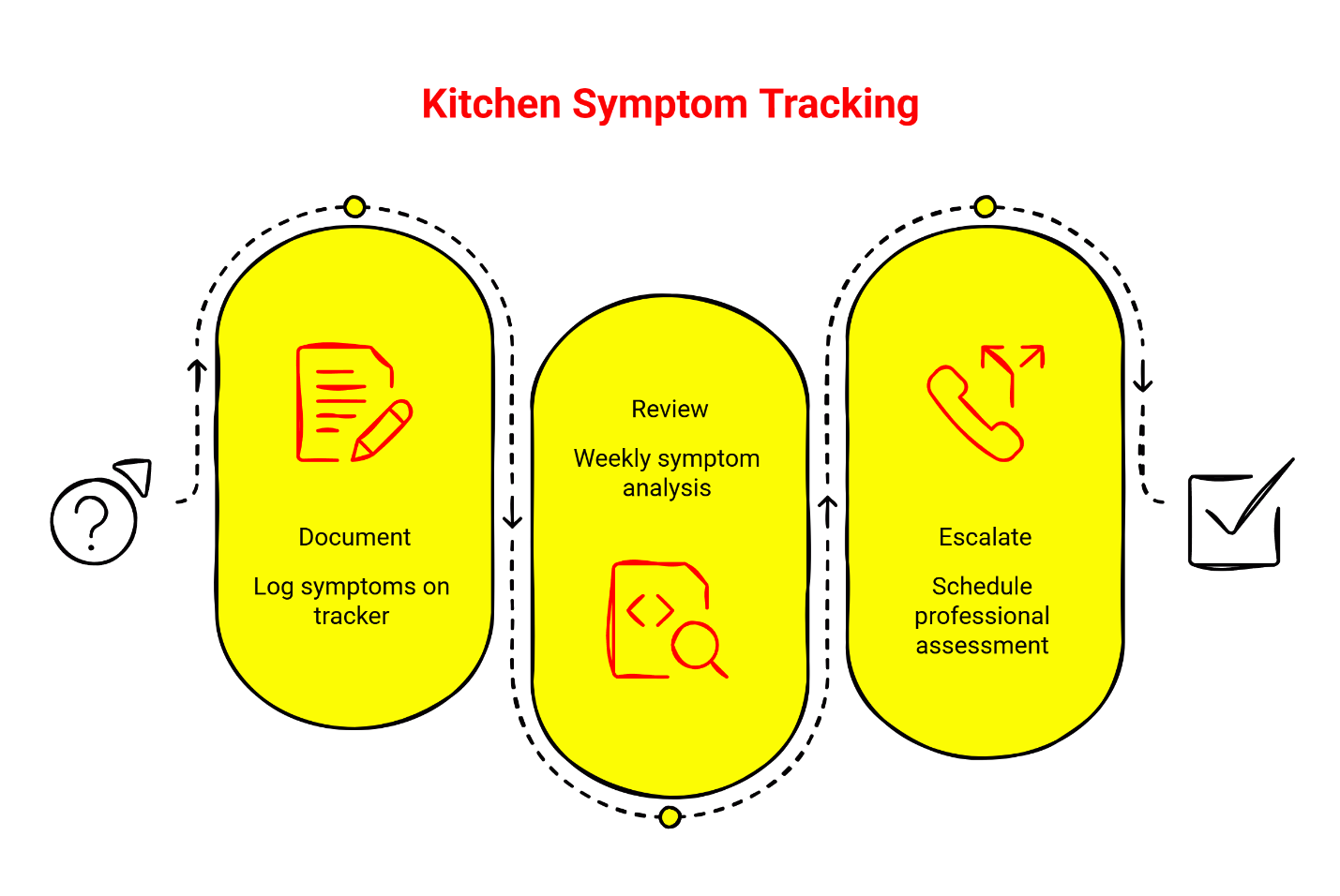
Moving from guesswork to evidence starts with documentation. A clipboard-ready symptom tracker gives kitchen staff a simple way to log what they notice, when they notice it, and whether the pattern warrants escalation.
The tracker doesn’t need to be complicated. A single sheet with the following fields covers the essentials:
- Date — When the observation occurred
- Time/Shift — Morning prep, lunch rush, dinner service, or closing
- Odor Strength — None, faint, noticeable, or strong
- Drain Speed Notes — Normal, slightly slow, noticeably slow, or backing up
- Visible Grease Where It Shouldn’t Be — Yes or no, with location if yes
- Recent High-Volume Period — Was this observation within 24-48 hours of a busy service window, catering event, or menu heavy on fried items?
- Manager Initials — Who reviewed the entry
- Escalate to Vendor? — Yes or no
Post the tracker near the dish station or mop sink where staff already notice drainage issues. Review it weekly. When symptoms cluster or repeat, that’s the signal to stop monitoring and schedule a professional assessment.
When to Stop Monitoring and Call for a Professional Assessment
Monitoring is useful only until delay becomes the bigger risk. At a certain point, the operational signals become clear enough that continued monitoring is just delayed action.
A professional assessment converts uncertainty into proper timing. It measures actual accumulation and operating condition instead of relying on a surface impression or a vague memory of the last service date.
Schedule a professional evaluation when any of these patterns emerge:
Repeated odors across multiple shifts. If the smell keeps coming back despite normal operations, the trap is telling you something that won’t resolve on its own.
Slow drains that return after temporarily clearing. This pattern indicates accumulation is restricting flow, not a simple clog that can be snaked away.
Symptoms appearing well before the quarterly service window. Houston generally requires commercial grease trap cleaning at minimum every 90 days—unless a formal Notice of Waiver has been submitted and approved—but high-volume kitchens often reach the 25% threshold faster. If warning signs appear at week six or eight, the trap needs attention regardless of when the last service occurred.
Consistent post-volume spikes. When symptoms reliably follow busy periods, the kitchen’s FOG output is likely exceeding what the current service schedule can manage.
Professional assessment measures actual accumulation levels, evaluates whether the trap is functioning correctly, and recommends a maintenance rhythm based on the kitchen’s real-world output—not just the calendar minimum.
“Drane Ranger is very professional and reliable. Basically they can take care of all your grease drain needs.” — Shelley M., Google Reviews
For operators who need a local overview of warning signs and service context, grease trap cleaning in Houston offers useful background.
How Hidden Accumulation Turns Into Audit Risk, Odors, and Downtime
The business cost of hidden accumulation extends well beyond the pump-out invoice. When accumulation reaches critical levels undetected, the consequences compound.
Failed inspections and citations. City of Houston FOG inspectors measure total accumulation, not just what’s visible. A trap that “looked fine” last week can fail an unannounced inspection if sludge has been building below the surface. Citations under Chapter 47 come with fines and correction deadlines that disrupt operations.
Emergency service premiums. Scheduled maintenance costs less than emergency pump-outs. When accumulation causes a backup during service hours, the restaurant pays rush fees on top of the cleanup and potential lost revenue from closing the kitchen.
Persistent odor problems. Accumulated FOG doesn’t just create compliance risk—it creates guest-facing problems. Odors that reach the dining room damage reputation in ways that take months to repair.
Equipment strain and plumbing damage. Restricted flow puts stress on connected systems. Over time, hidden accumulation can contribute to pipe damage, equipment failures, and repair costs that dwarf the price of proactive maintenance.
The EPA’s pretreatment guidance explains why unmanaged grease creates broader wastewater problems and why upstream prevention matters in day-to-day operations, not only during inspections. Proper FOG management protects both the business and the municipal infrastructure.
Next Step: Build an Inspection-Ready Maintenance Rhythm
Inspection readiness is not one big move. It is a habit.
The pattern is simple: observe the signals, track them consistently, escalate when the pattern is clear, and stay ready before the trap forces the decision for you.
Start with the symptom tracker this week. Pay attention to what the kitchen is already telling you through drainage behavior, odors, and post-volume patterns. When those signals cluster, escalate to professional assessment rather than waiting for the scheduled service date.
For a structured approach to evaluating your current readiness, the FOG Compliance Checklist walks through the key questions inspectors ask and helps identify gaps before they become citations.
Understanding why surface-level checks miss hidden problems gives kitchen managers the context they need to advocate for service timing based on actual conditions rather than arbitrary schedules.
If your kitchen is already showing repeated odor or slow-drain symptoms, contact Drane Ranger for a professional grease trap evaluation. Since 1985, our trained and certified team has helped Houston-area restaurants build customized maintenance plans that fit their operations—keeping kitchens compliant, protecting against surprise failures, and ensuring the trap never becomes the reason for a shutdown.
A trap that looks fine is not the same thing as a trap that is safe. In a busy kitchen, that difference matters.
Disclaimer: This article is for informational purposes only and does not replace legal, regulatory, or site-specific professional advice. Houston-area requirements and enforcement practices can change, and trap conditions vary by kitchen volume and setup. When in doubt, confirm requirements with the City of Houston and a qualified liquid-waste service provider.
Our Editorial Process:
Our expert team uses AI tools to help organize and structure initial drafts. Every piece is then extensively rewritten, fact-checked, and enriched with first-hand insights and experience by expert humans on the Insights Team to ensure accuracy and clarity.
About the Drane Ranger Insights Team
The Drane Ranger Insights Team focuses on turning complex wastewater and compliance topics into clear, practical guidance for businesses and property operators. Content is reviewed for clarity and accuracy, but it is informational only and should not replace professional advice.