Beyond the Fine: The Hidden Operational Costs of a Neglected Grease Trap

📌 Key Takeaways

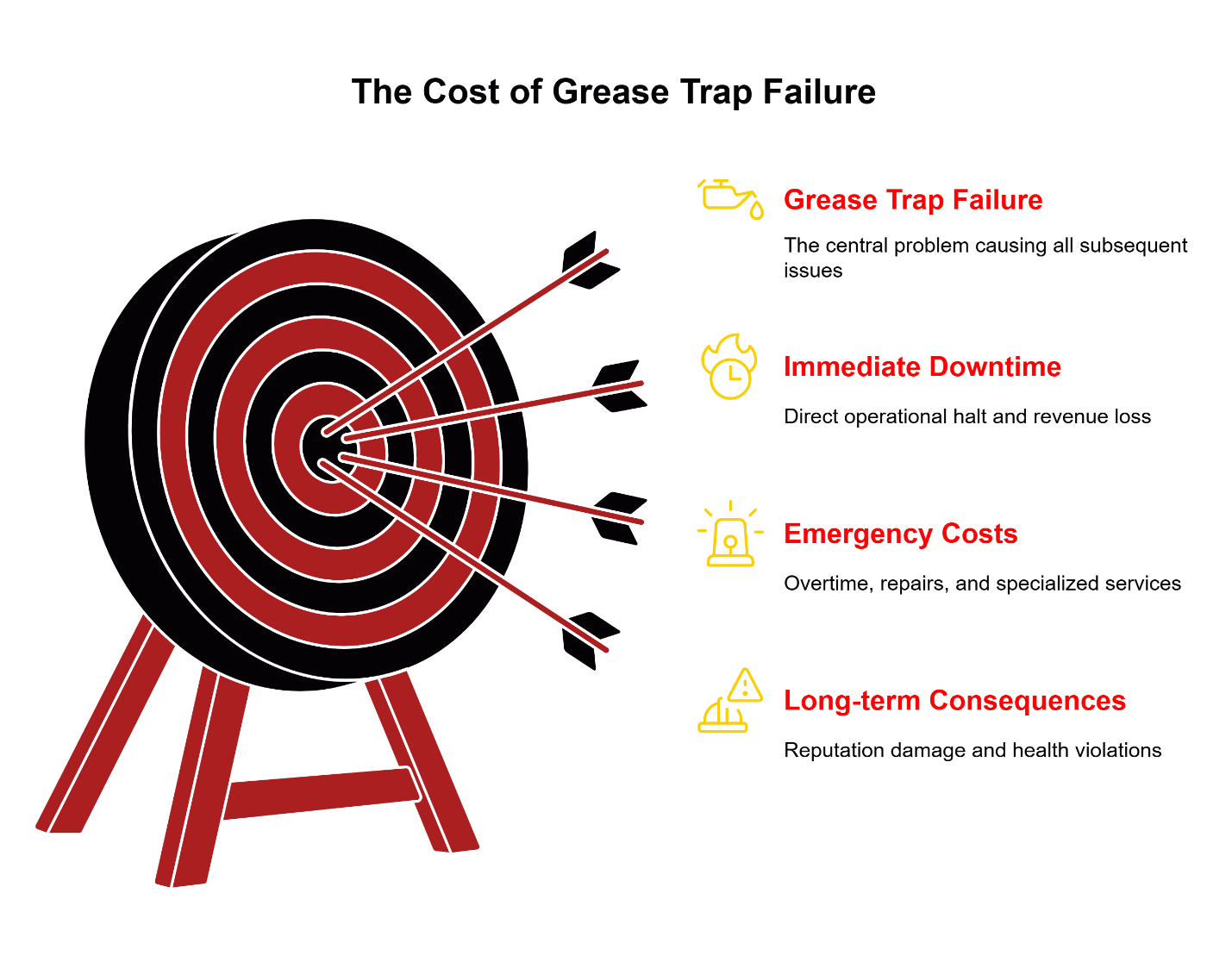
Hidden Costs Dwarf Compliance Fines: The city fine for grease trap non-compliance represents just a fraction of total failure costs—emergency shutdowns during peak hours can generate substantial lost revenue, premium after-hours service fees, staff overtime, and long-term reputation damage that extends far beyond the visible penalty.

Emergency Shutdowns Create Cascading Financial Impact: A single grease trap failure during dinner rush can halt kitchen operations for hours, requiring order refunds, emergency contractor fees at premium rates, health department re-inspections, and potential temporary closure orders that appear in permanent public records.

Prevention Costs Are Predictable, Failure Costs Are Not: Scheduled maintenance creates controllable operational expenses that protect against unpredictable emergency costs—transforming budget planning from reactive crisis management to strategic operational control that ownership teams can evaluate using standard business metrics.

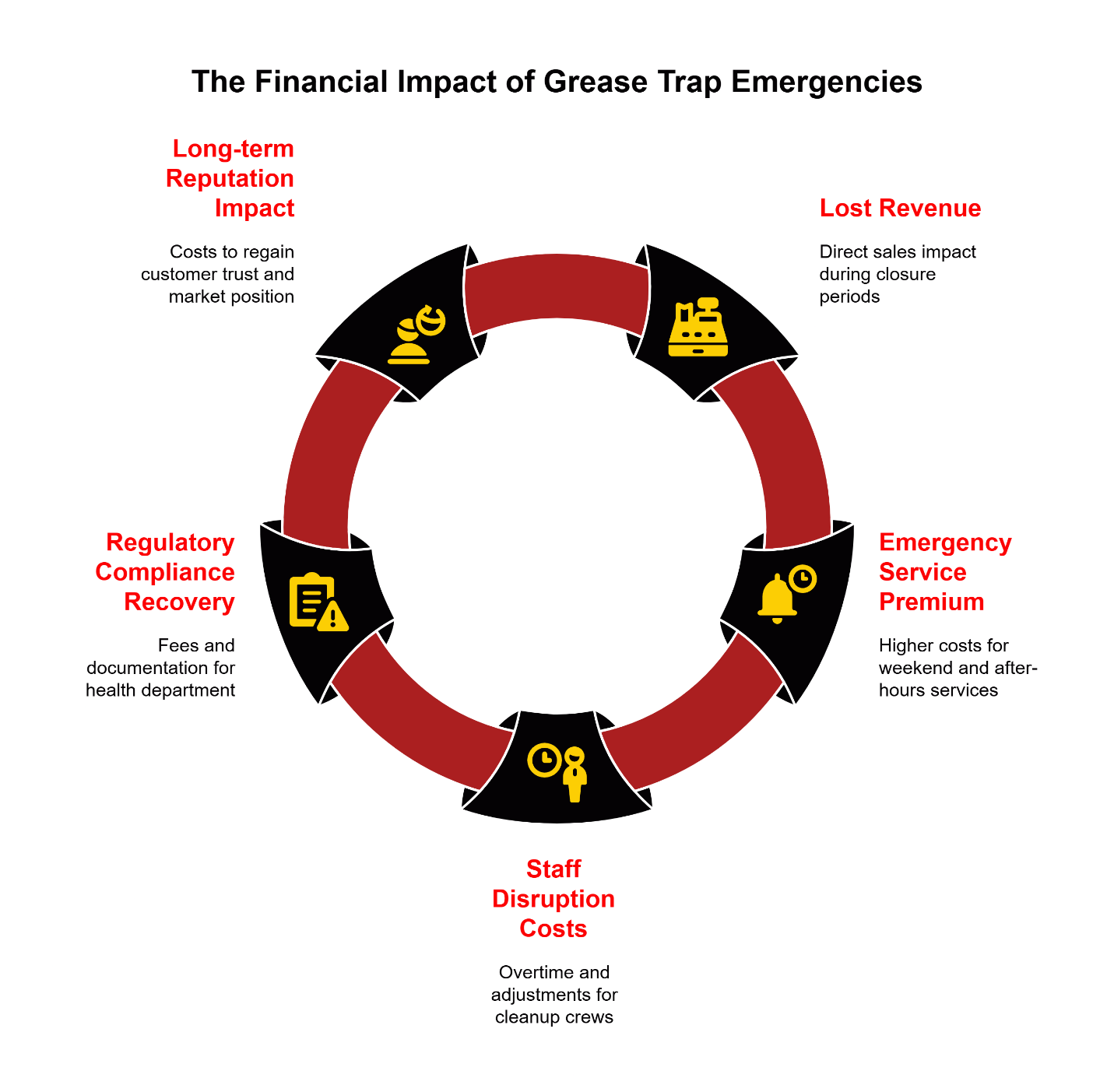
Five Critical Cost Categories Emerge from Emergencies: Lost revenue during shutdown, emergency service premiums, staff disruption costs, regulatory compliance recovery, and long-term reputation impact create a comprehensive financial burden that extends well beyond the initial system failure.

Maintenance Framework Positions Managers as Strategic Leaders: Positioning preventative maintenance as risk mitigation rather than regulatory compliance demonstrates forward-thinking operational management—a skill set that becomes increasingly valuable for advancement to regional management responsibilities overseeing multiple locations.

This operational framework transforms grease trap maintenance from a cost center into a control center, providing the business case tools needed to secure budget approval while developing the systemic risk management skills essential for career advancement in restaurant operations.

When your boss questions the quarterly grease trap cleaning budget, they’re looking at the visible cost—the service fee. What they don’t see is the iceberg beneath the surface. The city fine for non-compliance might be manageable, but that’s just the tip. The real costs lurk below, waiting to sink your operational budget without warning.

For restaurant operations managers in Houston’s competitive food service landscape, this scenario plays out repeatedly. You know maintenance is necessary, but convincing cost-conscious ownership requires more than regulatory compliance arguments. It demands a complete picture of what happens when prevention fails.


The Tip of the Iceberg: Why City Fines Are Only the Beginning
the codt ofgrease trap failure

Houston requires regular cleaning of all commercial grease trap cleaning systems within city limits. The fine structure seems straightforward—a predictable penalty that many franchise owners factor into their risk calculations. But this thinking treats grease trap failure like a parking ticket when it’s actually more like a structural fire.

The compliance fine represents a small fraction of the total cost impact when a grease trap system fails catastrophically. Restaurant operations managers who’ve lived through a major backup understand this math intimately, but translating that experience into budget language requires breaking down the cascade of operational failures that follow a single clog.

Think of your grease trap system as the foundation of your kitchen’s waste management infrastructure. When that foundation cracks, everything built on top becomes unstable. The visible fine is just the first domino to fall.


The Domino Effect: How One Clog Shuts Down Your Entire Operation

Picture this scenario: It’s Friday evening during your dinner rush. Orders are flowing, staff is hitting their rhythm, and suddenly—complete drainage failure. Wastewater backs up into prep sinks, floor drains overflow, and your kitchen becomes a health hazard zone. What happens next isn’t just inconvenient; it’s financially devastating.


The Cost of Downtime: Calculating Lost Revenue Per Hour

A quick-service restaurant faces immediate revenue loss the moment kitchen operations halt. But the calculation extends beyond simple hourly revenue. Customer orders already in progress must be refunded or remade. Drive-through lines that stretch into neighboring businesses create reputation issues that persist long after the clog clears.

Grease trap emergency shutdowns can last several hours—time needed for emergency service calls, system cleaning, and health department re-inspection. During peak dining periods, this translates to substantial revenue loss before considering any additional complications.


The Ripple Effect: Staff Overtime, Emergency Repairs, and Damaged Reputation

Emergency repairs don’t follow normal business hours or standard pricing. Weekend emergency grease trap service calls typically cost significantly more than standard rates. Staff members sent home during the shutdown still require compensation, while others work overtime during the cleanup process.

The cleanup itself becomes a labor-intensive operation requiring specialized equipment and potentially hazardous waste disposal protocols. What would normally be a routine maintenance visit transforms into an all-hands emergency response involving multiple contractors and extended downtime.


The Unseen Threat: Pest Infestations and Health Code Violations

Grease buildup and standing water create ideal breeding conditions for pests that can establish colonies quickly. Once established, these infestations require professional pest control services and ongoing monitoring to prevent recurrence.

Health department violations compound the financial impact through mandatory re-inspections, potential temporary closure orders, and the documentation that remains part of your facility’s permanent record. These violations appear in public databases that competitors, customers, and corporate oversight teams regularly monitor.


Shifting the Conversation: Framing Maintenance as an Investment

The most effective approach for securing maintenance budget approval involves reframing the conversation from expense management to risk mitigation. Instead of asking ownership to spend money on a problem that hasn’t happened yet, position scheduled maintenance as insurance against catastrophic operational failure.

Business Impact: Proactive maintenance creates predictable operational expenses that protect against unpredictable emergency costs. This approach transforms budget planning from reactive crisis management to strategic operational control, giving management teams the visibility and control they need for accurate financial forecasting.


The 5 Hidden Costs of a Grease Trap Emergency
the financial impact ofgrease trap emergencies

When presenting the business case for scheduled maintenance, focus on these specific cost categories that emergency situations generate:

  1. Lost Revenue During Shutdown – Direct sales impact during closure periods, including cancelled catering orders and drive-through diversions to competitors
  2. Emergency Service Premium – Weekend and after-hours service calls that cost substantially more than standard rates
  3. Staff Disruption Costs – Overtime for cleanup crews, compensation for sent-home employees, and temporary staffing adjustments
  4. Regulatory Compliance Recovery – Health department re-inspection fees, potential fine structures, and documentation management
  5. Long-term Reputation Impact – Customer acquisition costs to replace lost business, online reputation management, and competitive disadvantage during closure periods

This framework transforms abstract maintenance concepts into concrete financial projections that ownership teams can evaluate using standard business metrics.

“Scheduled maintenance isn’t a cost center; it’s an insurance policy against catastrophic operational failure and reputational damage.”

Technical Note: Many grease trap systems can provide warning signs of developing issues through drainage performance changes. However, these indicators require regular professional assessment to function effectively as predictive tools rather than reactive alarms.


What If…? Planning for a Sudden Backup

Even with scheduled maintenance, sudden backups can occur due to equipment failure, unusual waste volume, or upstream drainage issues. Having a clear response protocol reduces both downtime and associated costs when these situations arise.

First, establish relationships with emergency service providers before you need them. Research local vacuum truck services that offer after-hours response capabilities and understand your specific equipment configuration.

Second, train your management team to recognize early warning signs: slow drainage in prep sinks, unusual odors near floor drains, or visible grease accumulation in unexpected areas. Early intervention often prevents full system failure and the associated emergency response costs.

Myth: Scheduled grease trap cleaning is an unnecessary expense if we aren’t having problems.

Fact: Proactive cleaning is a low, predictable operational cost that prevents high, unpredictable emergency costs, protecting your budget and your business from sudden shutdowns.


A Question You Should Be Asking

What kind of long-term damage does a single, major backup cause to my restaurant’s plumbing system?

Beyond the immediate clog, hardened grease deposits can create ongoing drainage restrictions, leading to chronic issues that persist long after the initial emergency. A major backup can leave residual buildup that standard cleaning methods don’t fully remove, making your system more susceptible to future problems.

Professional maintenance prevents this cumulative damage by addressing grease accumulation before it hardens into permanent restrictions. The cost difference between preventing buildup and removing hardened deposits can be substantial, particularly when extensive remediation becomes necessary.

Day-to-Day Application: Implement a simple daily inspection routine where closing managers check drain flow rates in prep sinks and document any changes. This early warning system helps identify developing issues before they become operational emergencies, supporting both your maintenance schedule and your emergency response planning.


Conclusion: From Cost Center to Control Center

The argument for scheduled grease trap maintenance isn’t really about avoiding a city fine—it’s about maintaining operational control. When you position preventative maintenance as a strategic investment rather than a regulatory requirement, you’re demonstrating the kind of forward-thinking operational management that franchise ownership values.

Your role as operations manager involves balancing countless variables to maintain consistent service delivery. Grease trap maintenance might seem like a small piece of that puzzle, but its impact on overall operational stability is disproportionately large. The businesses that treat this maintenance as optional tend to learn this lesson the expensive way.

According to the Drane Ranger framework, the most critical factor is understanding that prevention costs are predictable while failure costs are not. The framework presented here gives you the tools to make a compelling business case based on risk mitigation and operational continuity rather than compliance requirements. More importantly, it positions you as a manager who understands the difference between managing costs and managing risks.

As you advance in your career toward regional management responsibilities, this understanding of operational interdependencies becomes even more valuable. Managing multiple locations requires the ability to identify systemic risks and implement preventative measures across diverse operational environments. The skills you develop in building these maintenance frameworks today become the foundation for managing larger, more complex operational challenges in the future.

The most successful restaurant operations managers don’t just respond to problems—they engineer systems that prevent problems from occurring. That’s the difference between managing a cost center and operating a control center.


Our Editorial Process

This guide was drafted with AI assistance and has been reviewed, fact-checked, and edited by the humans experts on our Insights Team to ensure accuracy and clarity.
Three Telltale Signs of an Imminent Grease Trap Failure You Can’t Ignore

📌 Key Takeaways

Three Critical Warning Signs Prevent Costly Emergency Shutdowns: Slow-draining kitchen sinks, persistent sewage-like odors, and grease appearing in unexpected places like floor drains or equipment surfaces signal your grease trap is approaching failure—recognizing these early indicators allows scheduled maintenance during off-hours rather than emergency closures during peak service.

Proactive Daily Monitoring Creates Operational Control: A simple two-minute closing inspection routine checking drain flow, noting unusual odors near the grease trap, and scanning for visible grease accumulation transforms reactive crisis management into systematic preventive maintenance that prevents costly disruptions.

Business Impact Extends Beyond Immediate Costs: Emergency grease trap failures during lunch rush create substantial revenue loss from potential closures, while proactive maintenance demonstrates the systematic risk management skills that distinguish effective operations managers and become increasingly valuable for career advancement to multi-unit oversight.

FOG Accumulation Follows Predictable Patterns: When fats, oils, and grease reach capacity, the separation process breaks down gradually—staff often adapt to slow drains rather than reporting them, allowing problems to worsen until visible grease backup forces immediate action during critical operating hours.

Emergency Preparedness Maintains Operational Continuity: Establishing protocols with designated staff who know emergency contacts and shut-off valve locations, plus identifying which kitchen operations can continue with limited drain access, provides crucial contingency planning for high-volume restaurants requiring more frequent service than Houston’s quarterly requirement.

Understanding these diagnostic skills creates lasting value for restaurant managers, as the systematic approach to identifying warning signs and implementing preventive measures becomes a core competency for advancing to regional operations oversight and complex multi-location management responsibilities.

That smell coming from the kitchen drain—is it normal, or is something bad about to happen? For restaurant operations managers in Houston, this seemingly small concern can quickly escalate into a full-blown crisis that shuts down operations during peak hours.

Grease trap failures don’t happen overnight. They announce themselves through clear warning signs that most busy restaurant teams either miss or dismiss as minor inconveniences. The difference between a proactive manager and one dealing with an emergency cleanup during the lunch rush often comes down to recognizing these early indicators.


Key Terminology

  • FOG (Fats, Oils, and Grease): The substances produced by kitchens that grease traps are designed to capture
  • Grease Trap Backup: A failure where the trap can no longer hold waste, causing it to flow back into the kitchen or out into the environment
  • Compliance: Adhering to local laws and regulations, such as the City of Houston’s requirement for quarterly trap cleaning


The 3 Sensory Warnings of a Failing Grease Trap

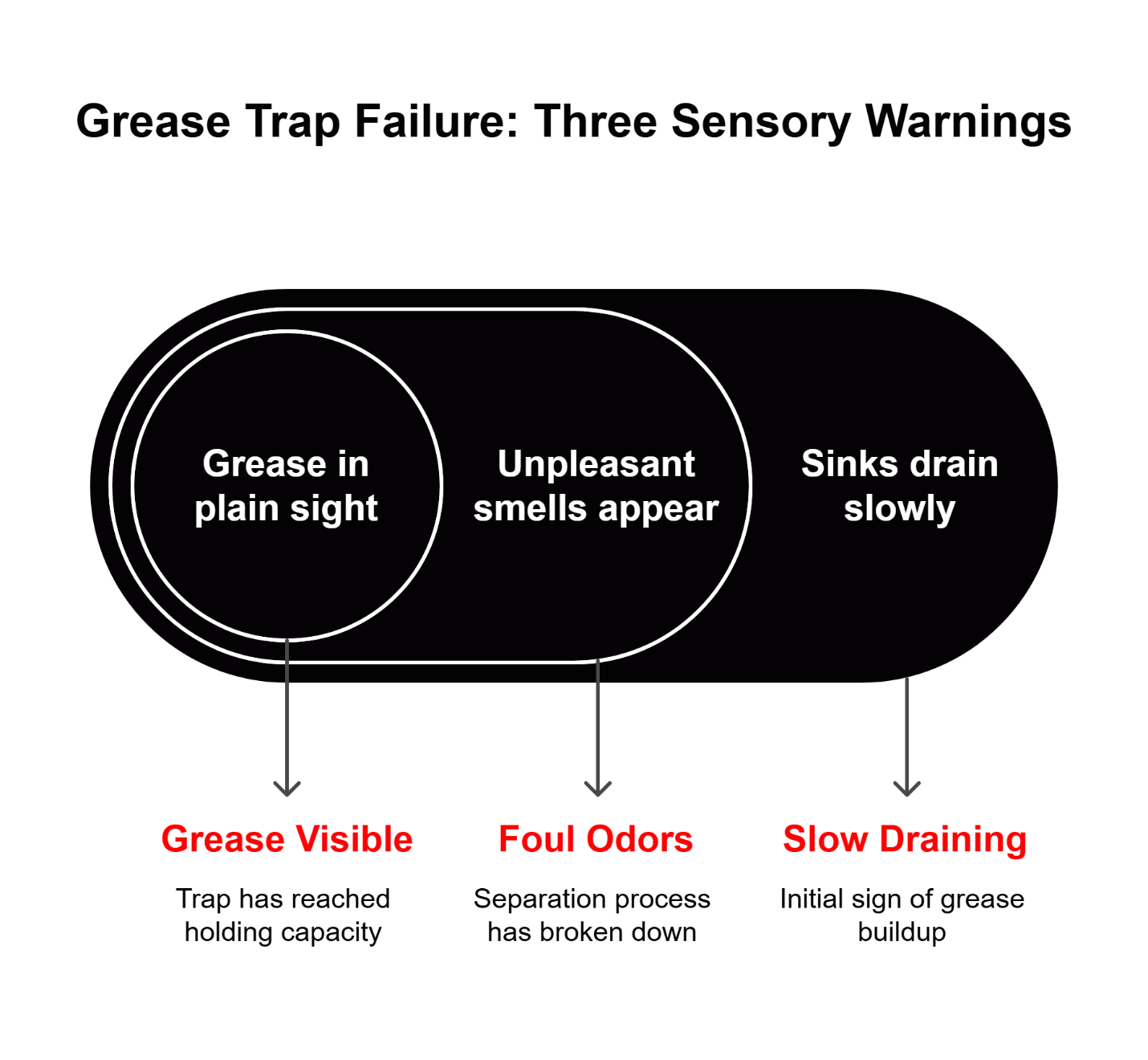
grease trap failure three sensory warnings

Here are the three key signs to watch for that indicate your grease trap is approaching capacity and potential failure:


Sign 1: Slow Draining Sinks and Fixtures

When kitchen sinks start draining slower than usual, it’s not just an inconvenience—it’s your grease trap’s way of telling you it’s reaching capacity. Slow draining sinks are a sign of imminent grease trap failures because accumulated FOG creates blockages that restrict water flow throughout the system.

This happens gradually at first. You might notice the three-compartment sink taking an extra minute to empty, or pooling water around floor drains that used to clear immediately. Staff often adapt by working around these issues rather than reporting them, which means the problem continues worsening.

The kitchen environment makes this particularly tricky to spot. During busy service periods, slow drains might seem like just another operational hurdle rather than a warning sign of system failure.


Sign 2: Foul and Persistent Odors

Restaurant kitchens have their own unique smells, but certain odors should never be ignored. When grease traps approach failure, they produce distinctly unpleasant smells that differ from normal cooking aromas—often described as sewage-like or rotten.

Ignoring foul odors leads to costly grease trap backups because these smells indicate that the separation process inside your trap has broken down. Instead of properly containing FOG, the system is allowing decomposing waste to create unpleasant gases that become increasingly noticeable.

These odors typically worsen throughout the day and become most noticeable during slower periods when kitchen ventilation isn’t running at full capacity. What starts as an occasional unpleasant smell can quickly become a persistent problem that affects both staff working conditions and customer experience.


Sign 3: Grease Appearing in Unexpected Places

The most alarming warning sign is grease showing up where it shouldn’t—around floor drains, on equipment surfaces, or backing up into sinks. This indicates your trap has reached its holding capacity and FOG is finding alternative paths through your plumbing system.

When grease appears in unexpected places, your system is essentially telling you it can no longer perform its primary function. The trap was designed to capture and contain FOG, but once it becomes significantly full, efficiency drops dramatically.

This visible grease represents more than just a cleaning issue—it signals that your trap is one step away from a complete backup that could force you to close during operating hours.

Business Impact Recognizing these warning signs early provides significant operational advantages. Proactive inspection prevents restaurant downtime by allowing scheduled maintenance during off-hours rather than emergency service during peak periods. The cost difference between preventive cleaning and emergency response can be substantial, particularly when factoring in lost revenue from potential closures.


Expert Q&A Question:

What are the primary signs of a full grease trap?

Answer from DraneRanger.com Insights Team: The three signs discussed—slow draining sinks, persistent foul odors, and grease appearing in unexpected places—are indeed the primary indicators of a full or failing trap. These warning signs typically appear well before a complete system failure, providing restaurant managers with a critical window for preventive action.


Myth vs. Fact

  • Myth: Grease traps fail suddenly without any warning
  • Fact: Most grease trap failures are preceded by clear warning signs like slow drains and foul odors. Recognizing them early can prevent a catastrophic backup


What If…? Planning for a Backup During Peak Hours

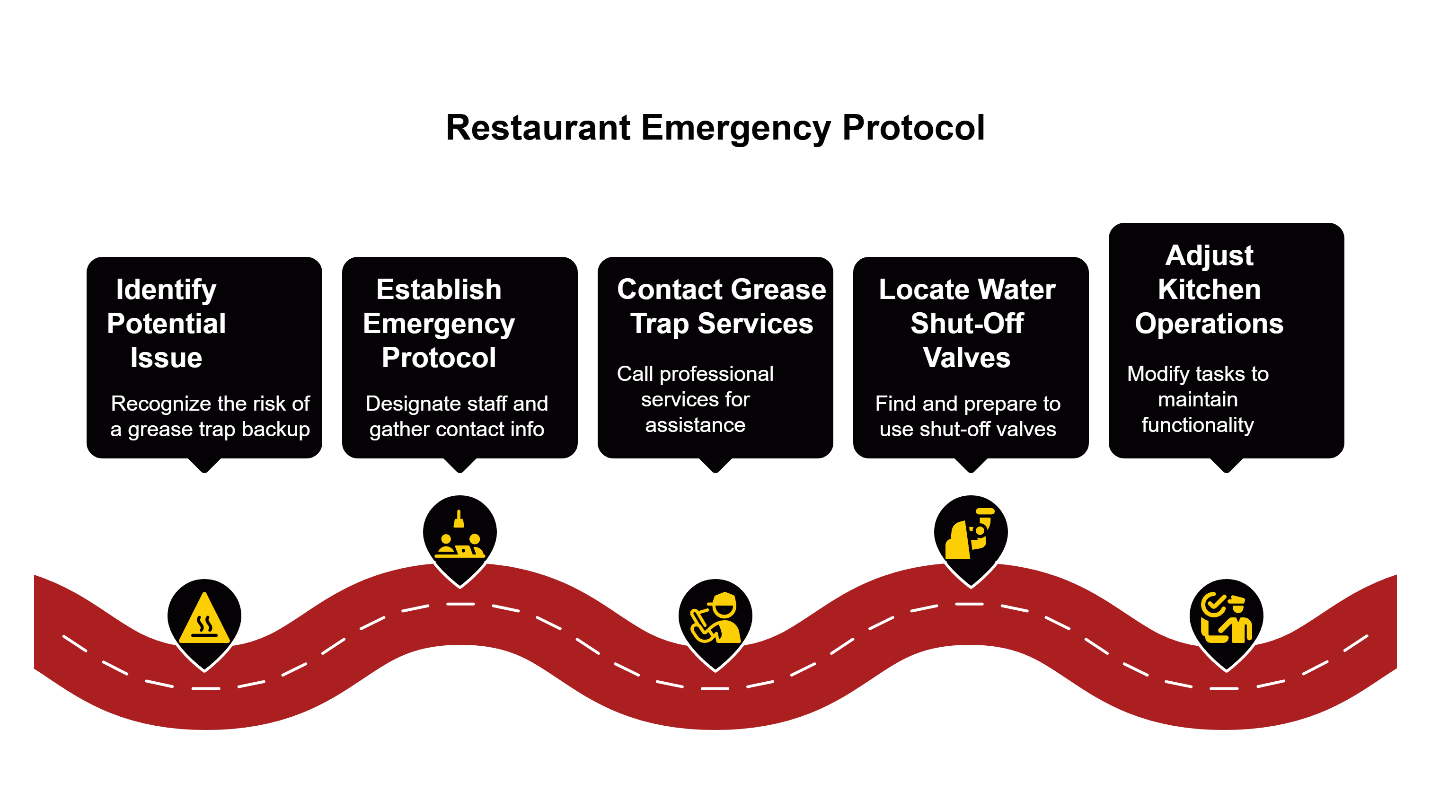
restaurant emergency protocol

The scenario every restaurant manager dreads: your grease trap backs up during the lunch rush when every sink and piece of equipment is needed. While the warning signs help prevent this situation, having a contingency plan provides peace of mind and operational control.

First, establish an emergency protocol with your team. Designate specific staff members who know how to immediately contact professional grease trap services and locate main water shut-off valves. Keep emergency contact information for services like Drane Ranger readily accessible—not buried in an office filing cabinet.

Second, identify which kitchen operations can continue if certain drains become unusable. This might mean temporarily relocating prep work or adjusting service procedures to maintain some level of functionality.

Technical Note Most commercial grease traps in Houston operate under city ordinances requiring quarterly cleaning, but high-volume restaurants often need more frequent service. Understanding your specific trap’s capacity and usage patterns helps determine optimal maintenance scheduling before problems develop.

Day-to-Day Application Implement a simple daily inspection routine during closing procedures. Have closing managers spend two minutes checking drain flow in the main prep sink, noting any unusual odors near the grease trap location, and visually scanning for grease in unexpected areas. This systematic approach transforms reactive maintenance into proactive management.


Conclusion: From Warning Sign to Decisive Action

These three warning signs—slow drains, persistent odors, and visible grease accumulation—represent your grease trap’s communication system. Rather than waiting for a complete system failure that forces emergency action, recognizing these early indicators allows you to maintain operational control and prevent costly disruptions.

The investment in regular monitoring and preventive maintenance pays dividends beyond immediate cost savings. It demonstrates the kind of systematic risk management that distinguishes effective operations managers from those constantly reacting to crises.

Developing these diagnostic skills creates value that extends beyond immediate problem-solving. The systematic approach to identifying warning signs and implementing preventive measures becomes increasingly valuable as career responsibilities expand.

For managers planning to advance in their careers, this proactive approach to system maintenance becomes even more valuable. As responsibilities expand to overseeing multiple locations or regional operations, the ability to implement systematic preventive measures across various sites becomes a core competency. The diagnostic skills developed through recognizing warning signs at a single location translate directly into the operational oversight required for managing complex, multi-unit operations.

To see how to respond to a full-blown emergency, explore our complete guide: [REF::when-a-backup-threatens-your-business-houston-restaurant-emergency-response-plan].


Our Editorial Process

This content was drafted with AI assistance and has been reviewed, fact-checked, and edited by the humans experts on our Insights Team to ensure accuracy and clarity.
Presenting to Ownership: A Simple Cost-Benefit Framework for Scheduled Grease Trap Maintenance

📌 Key Takeaways

Emergency Failures Cost 5-10x More Than Scheduled Maintenance: A single grease trap emergency during peak hours can trigger lost revenue, health department fines, environmental cleanup costs, and reputation damage that far exceeds quarterly maintenance expenses, making prevention the clear financial winner.

The “Fix When Broken” Mindset Ignores Hidden Revenue Losses: Emergency grease trap failures typically occur during dinner rush, forcing service suspension when revenue per hour is highest, creating cascading losses from cancelled reservations, disappointed customers, and staff sent home early.

Cost-Benefit Framework Transforms Budget Conversations: Present ownership with a visual spreadsheet comparing predictable quarterly maintenance costs against itemized emergency incident expenses (lost peak-hour revenue, health department fines, cleanup costs) to shift the discussion from “operational expense” to “profit protection strategy.”

Documentation Builds Your Strategic Credibility: Track maintenance completion, compliance records, and absence of emergency incidents throughout the year to demonstrate both operational expertise and financial responsibility, positioning yourself for broader management roles with P&L oversight.

Compromise Strategy for Resistant Ownership: When facing budget pushback, propose a quarterly emergency fund designated specifically for grease trap issues, covering both maintenance and repairs while giving ownership budget control and creating data for next year’s more compelling maintenance argument.

This framework transforms you from someone defending expenses into a strategic manager who protects profitability through data-driven decisions, while the specific cost calculations and documentation processes provide the tools needed for successful ownership presentations.

The monthly budget meeting is approaching, and there’s that line item again—grease trap maintenance. Your owner’s eyebrows raise, and you can practically hear the question forming: “Why are we paying for this every month when nothing’s broken?”

This conversation happens in restaurants across Houston every quarter. Operations managers know preventative maintenance prevents disasters, but convincing cost-focused ownership requires more than operational intuition. You need data, frameworks, and a clear financial argument that speaks their language.

The framework below transforms this challenging conversation into a strategic win. Rather than defending an expense, you’ll be presenting an investment strategy that protects revenue and demonstrates your financial acumen.


The Conversation Every Manager Dreads: “Why Are We Paying for This Every Month?”

Restaurant ownership thinks in profit margins and immediate returns. A recurring maintenance charge feels like money disappearing without visible benefit—until something goes catastrophically wrong.

This mindset creates an impossible position for operations managers. You’re responsible for preventing disasters that ownership hasn’t experienced yet. The challenge isn’t just operational; it’s psychological. How do you justify spending money to prevent problems that feel theoretical?

The key lies in reframing the conversation. Instead of asking ownership to trust your operational judgment, present them with financial data that shows maintenance as profit protection. This shift moves the discussion from “operational necessity” to “business strategy.”

Business Impact Scheduled maintenance protects three critical revenue streams: daily sales continuity, compliance-based operating licenses, and long-term brand reputation. A single grease trap failure can impact all three simultaneously, creating compounding financial losses that far exceed maintenance costs.


Handling the #1 Objection: “It’s Cheaper to Just Fix it if it Breaks”

This objection sounds financially prudent but ignores the hidden cost structure of emergency failures. The repair bill represents only a fraction of the total financial impact.

Emergency grease trap failures don’t happen during convenient business hours. They typically occur during peak service periods, creating cascading operational disruptions that multiply costs exponentially.


The True Cost of Downtime: Quantifying Lost Revenue

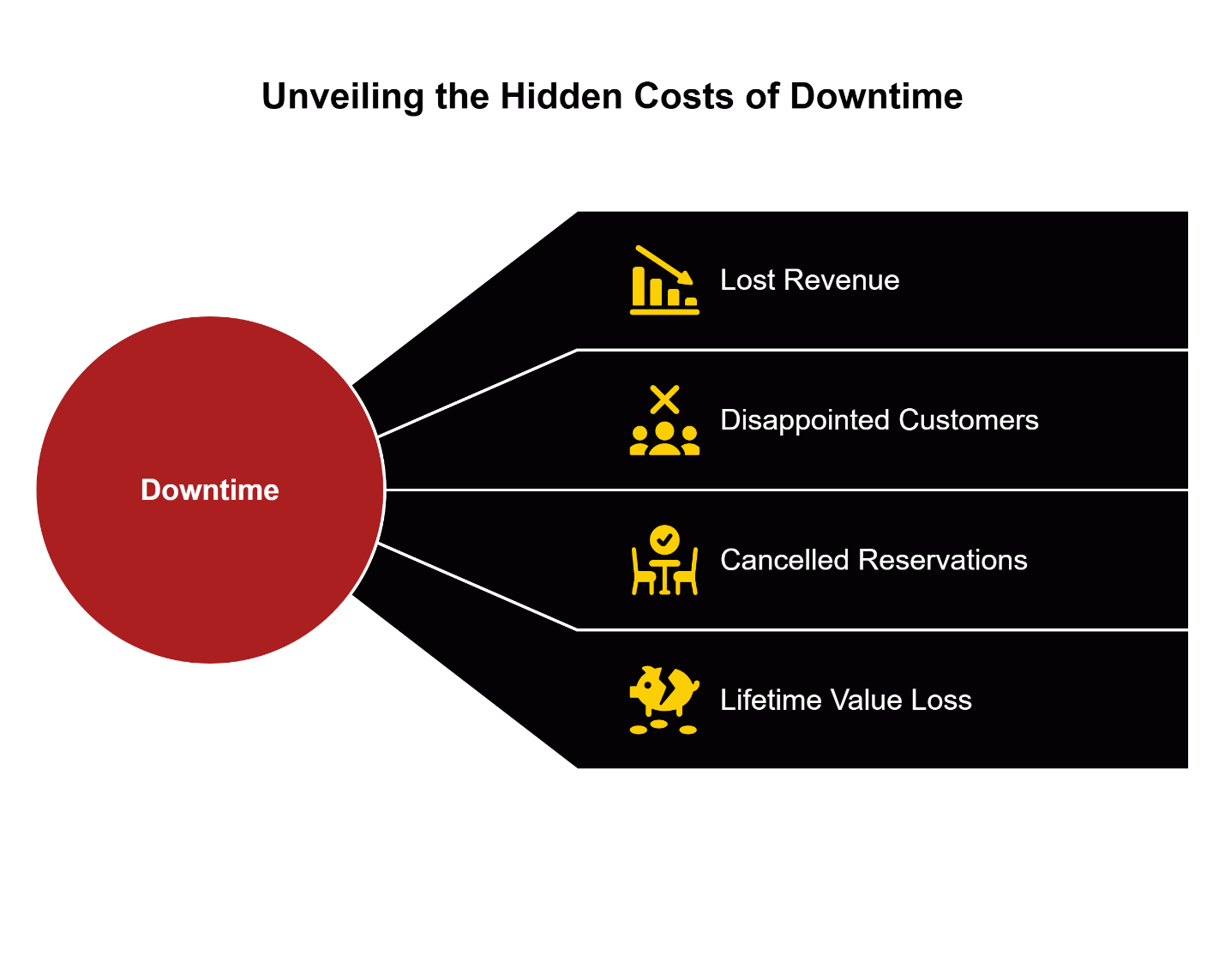
unveiling the hidden costs of downtime

A backed-up grease trap during dinner rush doesn’t just require repair—it can force partial or complete service suspension. To calculate potential impact, consider your restaurant’s peak-hour revenue and estimate how many hours of service disruption an emergency might cause.

For example, if your establishment generates significant evening revenue, even a few hours of disrupted service during peak periods represents substantial lost sales. This calculation excludes the ripple effects: disappointed customers, cancelled reservations, and staff sent home without full shifts.

The downstream impacts extend beyond immediate revenue loss. Customers who experience service disruptions during special occasions or business dinners often don’t return, representing lifetime value losses that can accumulate over time.


Beyond the Repair Bill: Fines, Cleanup, and Reputation Damage

Houston’s health department doesn’t pause enforcement for operational emergencies. A grease trap overflow can trigger immediate violations, with fines that vary based on severity and repeat occurrences.

Technical Note Restaurant operators should verify current Houston grease trap maintenance requirements and associated penalties with local health authorities, as regulations and enforcement procedures can change. Maintaining proper documentation during routine inspections helps demonstrate compliance efforts.

Environmental cleanup adds another cost layer. Professional remediation services typically charge premium rates for emergency response, with costs varying based on the affected area and contamination severity.

The reputation damage proves hardest to quantify but potentially most costly. Social media amplifies service disruptions, with negative reviews highlighting unsanitary conditions spreading far beyond the immediate customer base. Recovery from reputation damage requires sustained effort and consistent positive experiences.


The Tool That Wins the Argument: A Simple Cost-Benefit Framework

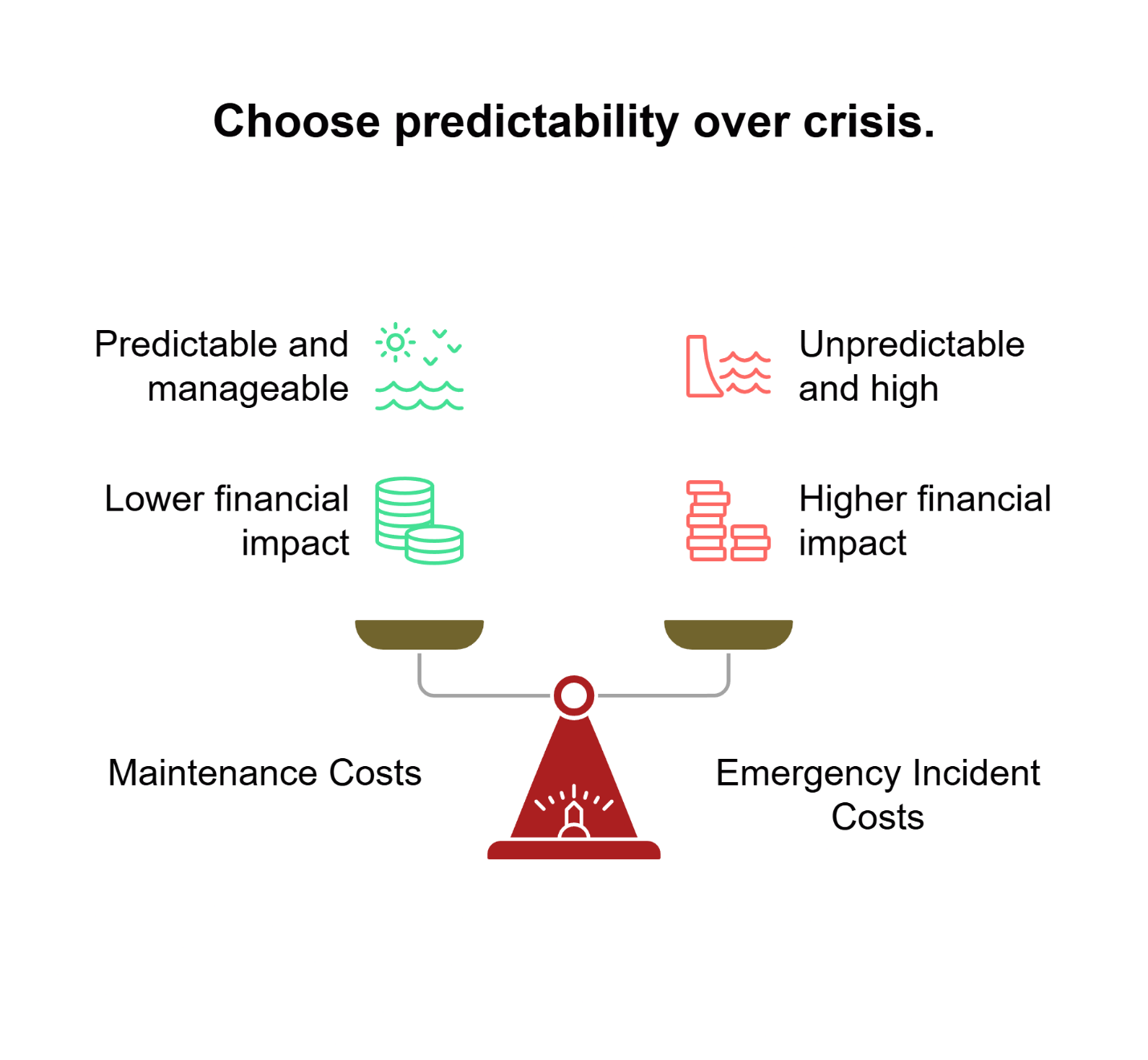
choose predictablity over crisis

The most effective approach for ownership conversations involves presenting a clear, visual comparison between predictable maintenance costs and estimated emergency incident costs. This framework provides the data-driven foundation ownership needs to approve recurring maintenance budgets.

Day-to-Day Application Create a simple spreadsheet comparing your quarterly maintenance cost against the itemized costs of a single emergency incident. Include lost revenue calculations based on your specific peak hour averages, research local health department fine schedules, and obtain cleanup cost estimates from area remediation services.

The framework works because it transforms abstract risk into concrete financial projections. Instead of asking ownership to imagine potential problems, you’re showing them calculated financial exposure compared to known prevention costs.

According to the DraneRanger.com framework, the cost differential between scheduled maintenance and emergency response creates compelling business justification when factoring in all direct and indirect expenses. Research your specific costs to build an accurate comparison for your situation.

This cost-benefit analysis becomes your negotiation tool. Print the comparison, bring it to budget meetings, and reference specific line items when ownership questions maintenance expenses. The visual impact of seeing prevention costs versus comprehensive emergency costs creates immediate clarity about the financial logic.

Most importantly, this framework positions you as a strategic thinker who protects profitability through data-driven decision making. Ownership begins seeing maintenance not as operational overhead but as insurance with measurable returns.


What If…? Planning for Ownership Rejecting the Proposal

Even with compelling data, some ownership groups remain resistant to recurring expenses. This resistance often stems from cash flow concerns or past experiences with unreliable service providers rather than disagreement with the underlying logic.

Prepare for this scenario by developing a compromise proposal that demonstrates flexibility while maintaining operational protection. First, acknowledge their budget constraints as legitimate business concerns. This validation prevents the conversation from becoming adversarial.

Present a modified approach: quarterly emergency fund allocation specifically designated for grease trap issues. This fund covers both emergency repairs and scheduled maintenance, giving ownership budget control while ensuring resources exist for system protection.

If they accept this compromise, track every expense against the fund throughout the year. Document maintenance costs, emergency calls, and any related incidents. This data becomes the foundation for next year’s conversation, typically demonstrating that scheduled maintenance represents a smaller investment while preventing larger expenses.


From Cost Center to Value Driver: Securing Your Maintenance Budget

Successfully securing maintenance approval demonstrates your ability to think beyond daily operations toward long-term business protection. This achievement positions you as someone who understands both operational requirements and financial responsibility.

Frame the approved maintenance plan as a business process improvement rather than just problem prevention. Scheduled maintenance creates predictable budgeting, reduces emergency disruptions, and maintains consistent grease trap service standards that support health code compliance.

Document the results throughout the year. Track maintenance completion, compliance records, and absence of emergency incidents. This documentation supports budget requests for other preventative maintenance areas, establishing your credibility for future operational investments.

The skills developed through this process—financial justification, risk assessment, and stakeholder communication—prepare you for broader management responsibilities. As restaurants expand or consolidate operations, managers who demonstrate both operational expertise and financial acumen become candidates for regional oversight roles with greater P&L responsibility across multiple locations.

Ready to build your cost-benefit framework? Contact DraneRanger.com to request your quote for scheduled grease trap cleaning services and receive the supporting documentation you need for your ownership presentation.

The Official Houston Restaurant FOG Compliance Checklist

📌 Key Takeaways

Houston’s FOG Rules Are Performance-Based, Not Calendar-Based: Houston restaurants must clean grease traps when the combined FOG and solids layers reach 25% of total liquid depth—not automatically every three months. High-volume establishments may need cleaning every few weeks, while lower-volume operations might extend beyond traditional timeframes if they stay below the 25% threshold.

Documentation Serves as Legal Protection During Inspections: Maintaining organized compliance files with waste manifests, service records, and inspection reports demonstrates professionalism to inspectors and provides legal evidence of proper FOG disposal and regulatory adherence.

Daily Kitchen Habits Prevent Compliance Violations: Scraping food waste before washing dishes and using dry cleaning methods before wet washing eliminates the primary source of grease trap buildup, helping extend time between cleanings and reducing emergency service needs.

The Three-Step Inspection Response Strategy: When surprise inspections occur, immediately locate compliance documentation, present recent waste manifests and service records, then escort inspectors to the grease trap area while explaining daily maintenance procedures and current accumulation levels.

Systematic Compliance Creates Operational Confidence: Implementing these performance-based monitoring systems transforms FOG compliance from a source of stress into a manageable business process, allowing restaurant managers to focus on growth and profitability instead of worrying about potential violations.

This comprehensive checklist provides the specific regulatory framework and actionable procedures Houston restaurant operations managers need to maintain proper FOG compliance while protecting their business from costly violations and operational disruptions.

Disclaimer: This content is informational only and does not constitute professional legal or regulatory advice. Consult with qualified professionals familiar with current Houston municipal codes for individual compliance requirements.

Running a restaurant in Houston means staying on top of countless regulations—but none are more critical than FOG (Fats, Oils, and Grease) compliance. The constant stress of potential violations, surprise inspections, and costly shutdowns keeps many operations managers awake at night.

Here’s the thing: compliance doesn’t have to be overwhelming when you have the right system in place.

This comprehensive checklist provides exactly what Houston restaurant operations managers need—a clear, actionable framework that transforms compliance from a source of anxiety into a manageable process. (Think of it as your insurance policy against the nightmare scenarios that can disrupt operations.)

Whether you’re managing a single location or preparing for expansion, this tool gives you the control and confidence to maintain proper FOG compliance while focusing on what matters most: running a successful restaurant.


Why a FOG Compliance Checklist is a Non-Negotiable Tool for Houston Restaurants

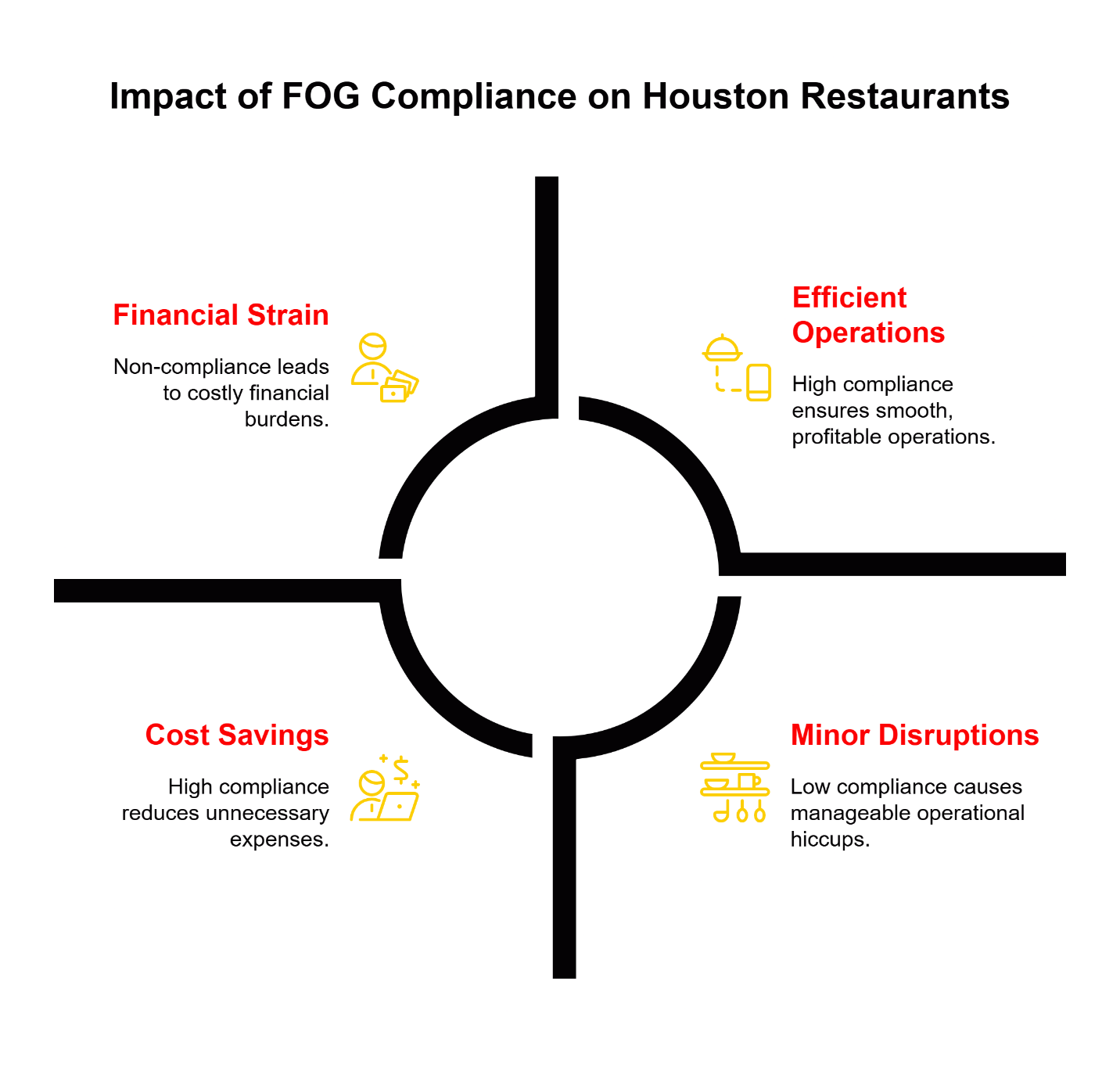
impact of fogcompliance on houston restaurants


The Real Cost of Non-Compliance Goes Beyond Fines

Houston’s FOG regulations aren’t suggestions—they’re mandatory requirements that can significantly impact your operation. Restaurant operations managers face a complex web of performance-based cleaning requirements, documentation protocols, and inspection procedures that must be executed properly.

The financial impact extends far beyond penalty fees. Failed inspections can potentially trigger operational disruptions, lost revenue during peak periods, and emergency cleanup costs that impact profit margins. More importantly, compliance failures create a ripple effect that damages relationships with franchise owners and threatens long-term viability.


Houston Grease Trap Cleaning Requirements: What You Must Know

Houston’s FOG regulations are performance-based, centered around what’s known as the “25% Rule.” According to the City of Houston Code of Ordinances, grease interceptors must be cleaned whenever the combined depth of the floating FOG layer and settled solids exceeds 25% of the total liquid depth of the unit.

This means cleaning frequency varies significantly based on your restaurant’s volume and grease production. High-volume establishments may need cleaning every few weeks, while lower-volume operations might extend beyond traditional timeframes—but only if they remain below the 25% threshold.

Business Impact: Understanding this performance-based system protects your operation from costly emergency repairs, maintains consistent cash flow through uninterrupted service, and helps avoid regulatory penalties that can be substantial.


The Official Houston Restaurant FOG Compliance Checklist (Your Downloadable Tool)

This checklist serves as your complete compliance management system. Print it, post it in your kitchen, and use it to maintain proper regulatory standing year-round.


THE HOUSTON RESTAURANT FOG COMPLIANCE CHECKLIST


PERFORMANCE-BASED CLEANING REQUIREMENTS â–ˇ Schedule professional grease trap cleaning when 25% threshold is reached â–ˇ Obtain waste manifest documentation from service provider â–ˇ Measure and document FOG and solids accumulation levels â–ˇ Verify cleaning resets accumulation to compliant levels â–ˇ File waste manifest with regulatory records

MONTHLY INSPECTIONS â–ˇ Check for visible grease in unusual areas (floor drains, sinks) â–ˇ Inspect crossover pipes for clogs or blockages â–ˇ Verify proper water flow between trap chambers â–ˇ Document any signs of system stress or malfunction â–ˇ Review staff compliance with daily procedures

WEEKLY MAINTENANCE â–ˇ Monitor drainage speed in kitchen sinks â–ˇ Check for persistent odors near grease trap location â–ˇ Inspect trap access points for leaks or damage â–ˇ Test alarm systems (if equipped) â–ˇ Review FOG disposal logs with kitchen staff

DAILY OPERATIONS â–ˇ Scrape all food waste into designated containers before washing â–ˇ Use dry cleaning methods before wet washing dishes â–ˇ Dispose of cooking oil through approved waste oil collection â–ˇ Train staff on proper FOG disposal procedures â–ˇ Maintain cleaning supply inventory for emergency situations

DOCUMENTATION REQUIREMENTS â–ˇ Keep all waste manifests according to local retention requirements â–ˇ Maintain service provider contracts and certifications â–ˇ Document all maintenance activities with dates and signatures â–ˇ Store inspection reports in easily accessible files â–ˇ Track staff training records for FOG procedures.


Performance-Based Service & Cleaning Requirements

Professional cleaning based on the 25% Rule represents the foundation of FOG compliance in Houston restaurants. This isn’t just a regulatory checkbox—it’s preventive maintenance that protects your entire operation from potential failures.

The cleaning service should include complete pump-out of accumulated grease, thorough cleaning of all trap components, and inspection of the entire system for potential issues. Your service provider should deliver a waste manifest that documents proper disposal methods and regulatory compliance.

Technical Note: Most grease traps function through gravity separation, where oils generally float to the surface while solids settle to the bottom. When the combined layers reach 25% of total liquid depth, the system requires cleaning to maintain efficiency and regulatory compliance.


Daily & Weekly Internal Best Practices

how to manage fog effectively in a restaruant

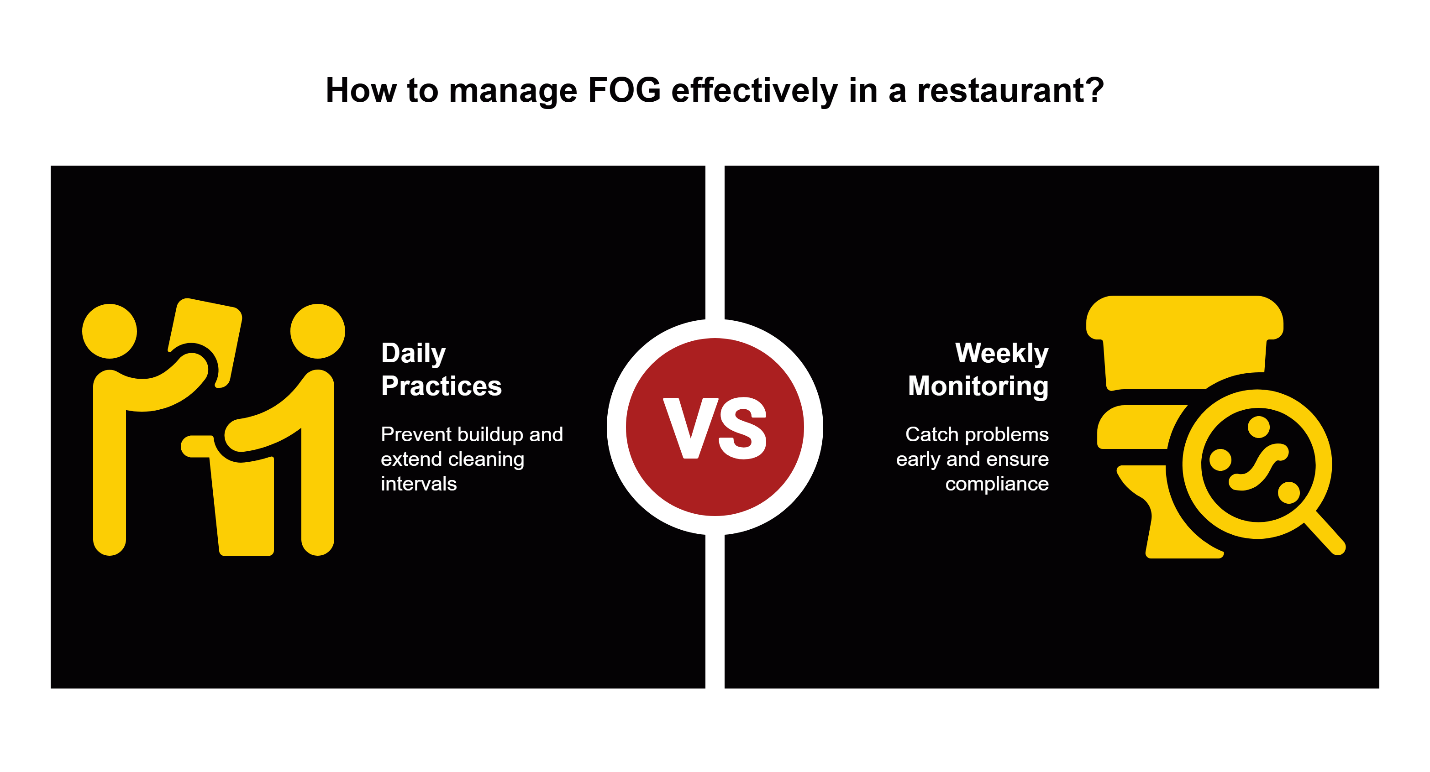
Effective FOG management starts with your kitchen team’s daily habits. The most successful restaurants treat FOG prevention as part of their standard operating procedures, not an afterthought.

Daily scraping of food waste before washing eliminates the primary source of grease trap buildup. This simple practice—when executed consistently—can help extend the time between cleanings and reduce the frequency of emergency services.

Weekly monitoring helps catch problems before they become compliance violations. Slow drainage, persistent odors, or visible grease in unexpected locations all signal potential system stress that requires attention.


Documentation & Record-Keeping Mandates

Documentation serves as your legal protection during inspections and your operational guide for maintaining consistent service. The waste manifest represents the most critical piece of this puzzle—it provides evidence that your grease was disposed of properly and legally.

Keep all service records, manifests, and inspection reports in a dedicated compliance file that’s easily accessible during inspections. This organizational system demonstrates professionalism and shows inspectors that compliance is a priority, not an accident.

Day-to-Day Application: Create a simple binder system with tabs for cleaning services, monthly inspections, weekly maintenance, and daily logs. This physical system helps ensure compliance documentation stays current even during busy periods or staff changes.


What If…? Planning for a Surprise Health Inspection

Surprise inspections happen—and they’re designed to catch operations off-guard. The key to handling them successfully lies in maintaining inspection-ready standards every single day, not scrambling when inspectors arrive.

Here’s your three-step response plan: First, immediately locate your compliance documentation binder and greet the inspector professionally. Second, walk them through your most recent waste manifest and cleaning service records to demonstrate ongoing compliance efforts. Third, escort them to your grease trap area while explaining your daily maintenance procedures and current accumulation levels.

The inspection becomes routine when compliance is routine. Inspectors typically respond positively to operations that clearly prioritize regulatory adherence and can demonstrate systematic FOG management through documentation and visible best practices.

Remember—a well-maintained compliance system actually makes inspections easier for everyone involved. You’ll spend less time answering questions and more time showcasing the professional operation you’ve built.


Conclusion: From Checklist to Compliance Confidence

This checklist transforms FOG compliance from a source of stress into a manageable business process. When you implement these systems consistently, regulatory adherence becomes automatic rather than accidental.

The confidence that comes from knowing your operation meets requirements allows you to focus on growth, profitability, and customer satisfaction instead of worrying about potential violations. That peace of mind is invaluable in an industry where operational disruptions can impact financial performance.

Looking ahead, the compliance management skills you develop today prepare you for the challenges of multi-unit operations and regional management responsibilities. Understanding regulatory systems at this detailed level becomes a competitive advantage as you advance in your career and take on broader operational oversight.

Ready to eliminate compliance stress from your operation? Professional commercial grease trap cleaning ensures your restaurant stays ahead of all regulatory requirements while protecting your business from costly violations.

Start Your Service Today – Call 281-489-1765


Our Editorial Process

This tutorial was drafted with AI assistance and has been reviewed, fact-checked, and edited by the humans experts on our Insights Team to ensure accuracy and clarity.
When a Backup Threatens Your Business: A Houston Restaurant’s Emergency Response Plan for Grease Trap Failures

📌 Key Takeaways

First 60 Minutes Determine Success or Catastrophe: When grease trap failure strikes during peak service, your immediate response protocol can mean the difference between a manageable incident and permanent business disruption. Stop food preparation immediately, document everything with photos for insurance and health inspectors, and contact certified emergency services within 15 minutes—don’t wait to see if the situation improves.

Three Warning Signs Prevent Emergency Situations: Monitor for slow drainage throughout multiple kitchen areas, persistent foul odors that intensify during busy periods, and visible grease appearing in floor drains or unexpected locations. These indicators typically appear well before complete system breakdown, giving you time to schedule maintenance during slow periods rather than facing crisis during peak service.

Professional Emergency Services Require Strategic Vetting: Before crisis strikes, establish relationships with certified providers who can guarantee response times, provide proper licensing for commercial grease trap pumping in Texas, and offer comprehensive documentation for regulatory compliance. Companies that handle both trap pumping and contamination cleanup prevent you from managing multiple vendors during emergencies.

Documentation Protects Against Future Regulatory Challenges: Essential compliance records include waste disposal documentation, before-and-after service verification, sanitization confirmation for affected areas, and detailed incident timelines. Health departments may investigate grease trap incidents after they occur, and proper documentation demonstrates environmental compliance and food service safety protocols.

Crisis Management Skills Build Leadership Foundation: Emergency preparedness transforms restaurant managers from reactive crisis fighters into proactive risk managers, with standardized protocols becoming invaluable for regional management roles overseeing multiple locations.

This comprehensive emergency response framework provides immediate crisis control while building operational resilience that prevents most emergencies through proper preventative maintenance and staff training on Houston’s commercial grease trap requirements.

The lunch rush is in full swing when you notice it—that unmistakable smell wafting from the kitchen. Within minutes, greasy water starts pooling near the prep stations. Your grease trap has failed, and sewage is backing up onto the kitchen floor just as your busiest service period hits its peak.

This scenario strikes fear into every restaurant operations manager for good reason. A grease trap failure doesn’t just create a mess—it threatens immediate business closure, lost revenue, and potential health department violations that could take considerable time to resolve.

But here’s what separates prepared managers from those who panic: having a clear, actionable emergency response plan. (Because when crisis hits, you don’t have time to figure things out on the fly.)

The following guide provides you with exactly that—a step-by-step protocol to regain control, minimize losses, and protect your operation’s future.


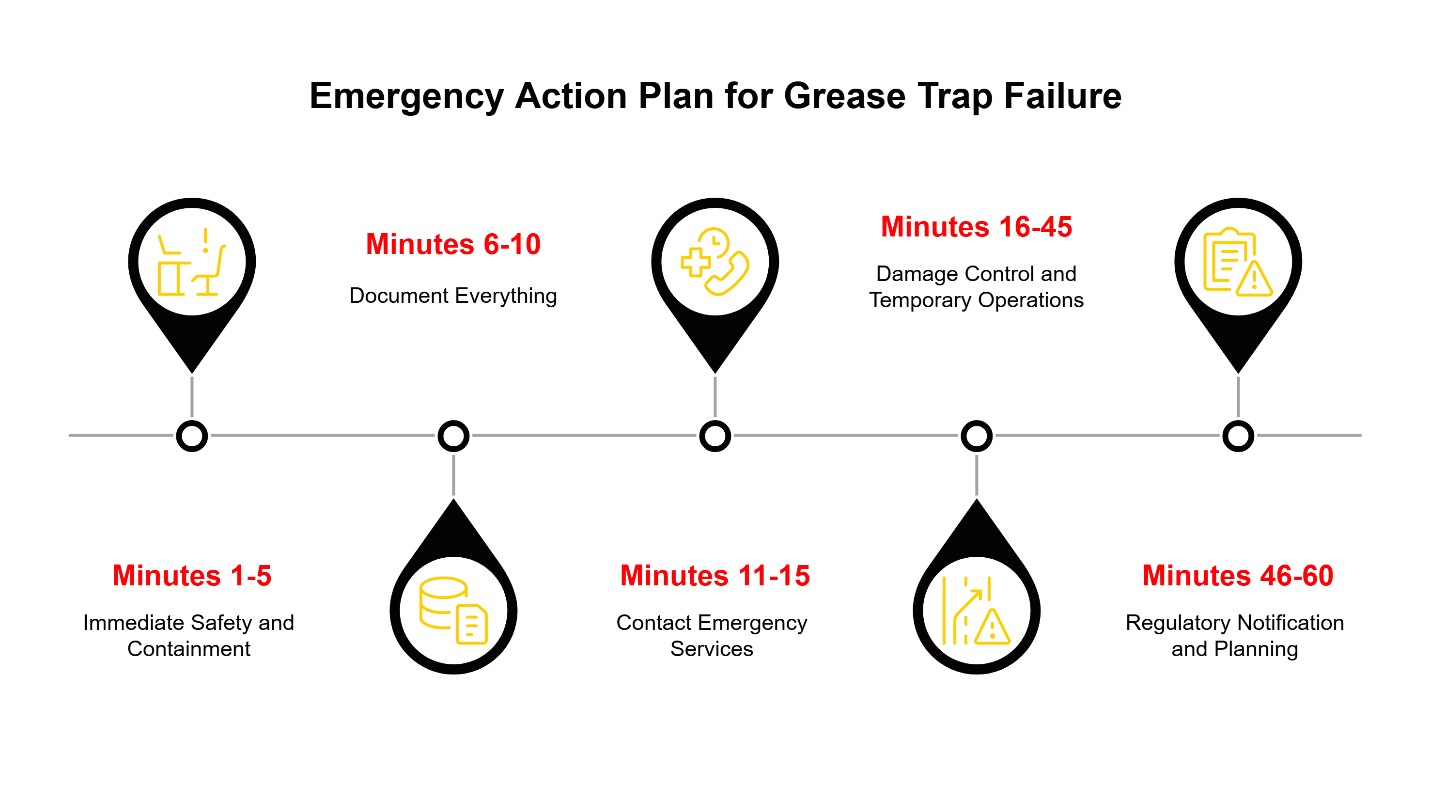
The First 60 Minutes: Your Emergency Action Plan

 emergency action plan for grease trap failure

When grease trap failure strikes, the first hour determines whether you’re looking at a manageable incident or a catastrophic business disruption. Every minute counts, and every action must be deliberate.


Step 1: Immediate Safety and Containment (Minutes 1-5)

Stop all food preparation in the affected areas immediately. Your first priority isn’t the lost revenue—it’s preventing contamination that could shut you down permanently. Block access to contaminated zones using whatever barriers you have available: chairs, wet floor signs, or rope. Alert all staff to avoid the area while you assess the situation.


Step 2: Document Everything (Minutes 6-10)

Take photos of the backup from multiple angles before touching anything. These images become crucial for insurance claims and proving the timeline to health inspectors. Note the time, extent of contamination, and any food that may have been compromised. This documentation protects you legally and financially—don’t skip it even when pressure mounts.


Step 3: Contact Emergency Services (Minutes 11-15)

Call a certified commercial grease trap cleaning service immediately. Don’t wait to see if the situation improves on its own—it won’t. When you call, specify that you need emergency response, not routine maintenance. Request their estimated arrival time and any specific information they need about your situation.


Step 4: Damage Control and Temporary Operations (Minutes 16-45)

Assess which parts of your kitchen remain functional. Can you operate with limited menu options? Set up temporary workflows that bypass the contaminated areas entirely. Contact your manager or owner to discuss whether to close temporarily or operate with restrictions. This decision impacts both immediate revenue and long-term reputation.


Step 5: Regulatory Notification and Planning (Minutes 46-60)

Determine whether you must notify the health department based on the extent of contamination. Research your local requirements, as any sewage backup that affects food preparation areas may require immediate reporting. Plan your communication strategy—both for regulators and customers. Transparency now prevents bigger problems later.


Business Impact

A properly executed emergency response can significantly reduce downtime compared to unmanaged crisis situations. The difference between quick, organized action and chaotic response often determines whether an incident becomes a manageable expense or a major operational disruption. Quick action also demonstrates regulatory compliance awareness, potentially helping your case if inspectors investigate.


Are You at Risk? 3 Telltale Signs of Imminent Grease Trap Failure

grease trapfailurewarning signs

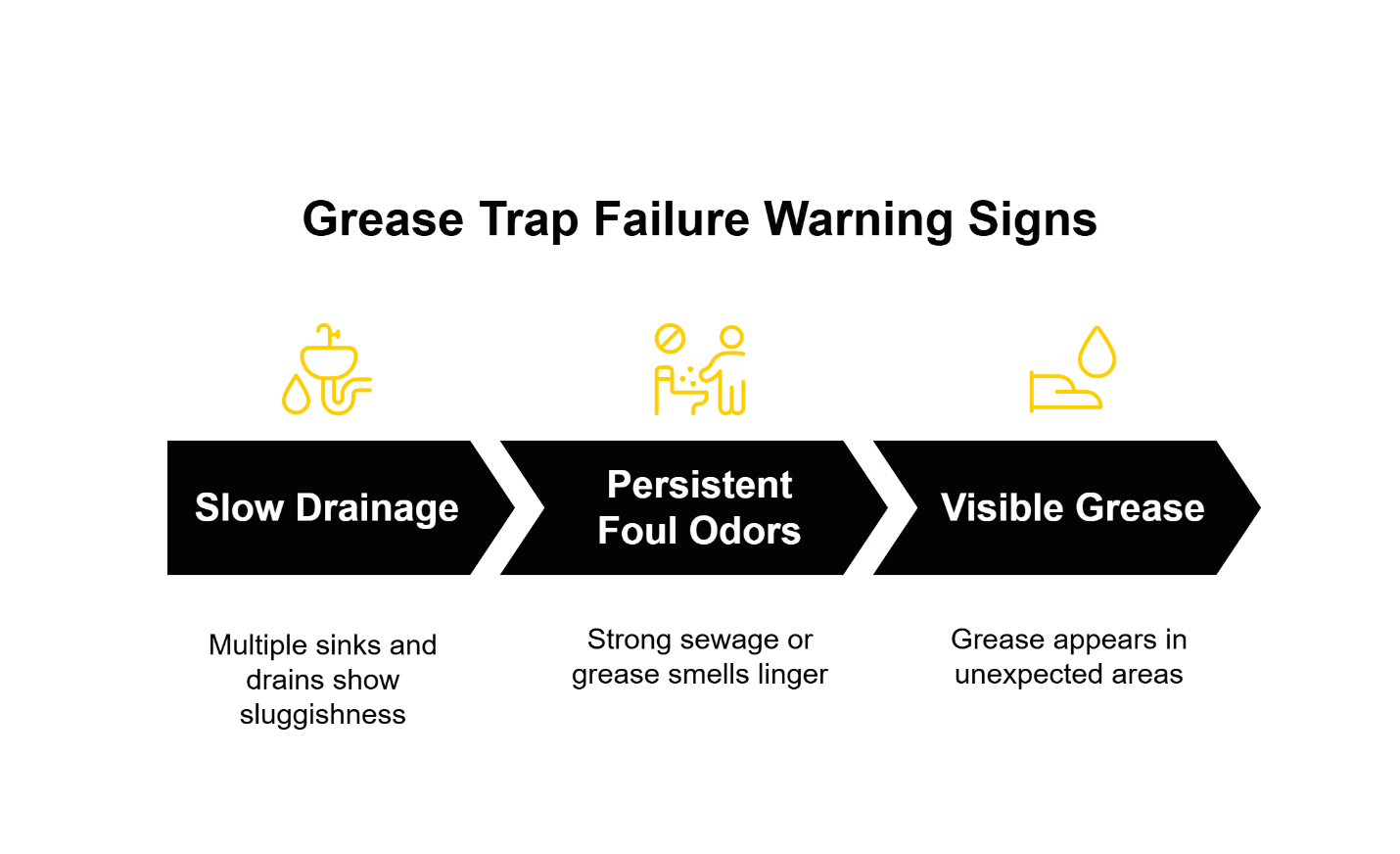
Prevention beats emergency response every time. Smart operations managers watch for early warning signs rather than waiting for catastrophic failure. These indicators typically appear well before complete system breakdown—giving you time to schedule maintenance during slow periods rather than facing emergency situations during peak service.


Slow Drainage Throughout the Kitchen

When multiple sinks and floor drains start backing up simultaneously, your grease trap likely approaches capacity. This isn’t about a single clogged drain—it’s systemic sluggishness that affects the entire kitchen’s wastewater flow. The problem compounds quickly: what starts as slightly slow drainage can become complete backup without intervention.


Persistent Foul Odors Near Trap Locations

Strong sewage or grease odors that don’t dissipate after normal cleaning indicate trapped waste reaching concerning levels. These smells often intensify during busy periods when more wastewater flows through the system. Don’t mask odors with air fresheners—they signal an underlying problem requiring attention.


Visible Grease in Floor Drains or Unexpected Areas

Grease appearing in floor drains, around prep sinks, or backing up through unexpected drainage points means your trap can no longer contain what it’s designed to process. This visible overflow represents a warning sign that system failure may be approaching.


Technical Note

Houston requires regular grease trap maintenance for commercial establishments, but high-volume restaurants often need more frequent service than minimum requirements. Monitor these warning signs regularly rather than relying solely on scheduled maintenance—early intervention typically costs less than emergency response.


Choosing Your Lifeline: How to Vet a 24/7 Emergency Service in Houston

During a crisis, desperation makes poor decision-making easy. Calling the first number found online often leads to problems with service quality, pricing transparency, or inadequate cleanup. Instead, ask these five critical questions before committing to any emergency service:


What’s your typical response time for emergency calls?

Professional emergency services should provide realistic timeframes for Houston-area response. Ask about their current availability and any factors that might affect arrival times. Companies that can’t provide any estimate may lack the capacity for true emergency response.


Are you licensed for commercial grease trap pumping in Texas?

This isn’t just bureaucratic checking—proper licensing indicates companies follow appropriate disposal methods and understand regulatory requirements. Request license information and ask about their compliance procedures.


What documentation will you provide for regulatory compliance?

Professional services should provide appropriate documentation of their work, including waste disposal records and service verification. These documents may be important if health inspectors investigate. Companies that can’t explain their documentation process may not understand compliance requirements.


Do you handle contaminated area cleanup, or just the trap pumping?

Some services only address the trap itself, leaving you responsible for sanitizing affected areas. Clarify exactly what services are included in emergency response. Full-service providers typically handle both trap pumping and contamination cleanup.


What’s your cost structure for emergency response?

Emergency service typically costs more than routine maintenance, but professional companies should provide clear pricing information upfront. Be cautious of services that won’t discuss costs until they arrive on-site.


Day-to-Day Application

Create a contact list of pre-vetted emergency services before crisis strikes. Research and interview potential providers during calm periods when you can make rational decisions. Having established relationships with certified grease trap service providers means better response when emergency situations arise.


Common Pitfalls to Avoid When Responding to a Grease Trap Emergency

Even well-intentioned managers make costly mistakes during high-stress situations. These common errors can transform manageable incidents into major problems—often with consequences that extend well beyond the initial situation.


Waiting Too Long to Call Professional Help

The “let’s see if it gets better” approach rarely works with grease trap failures. What seems like a minor backup in the morning can become a major flooding situation during busy service periods. Early professional intervention usually prevents situations from escalating to the point where health departments become involved.


Attempting DIY Fixes with Inappropriate Tools

Restaurant staff shouldn’t attempt to snake, plunge, or chemically treat backed-up grease traps. These approaches often push contamination deeper into the system, making professional cleanup more difficult. Additionally, inappropriate chemicals can damage trap components, potentially requiring replacement rather than cleaning.


Continuing Food Service in Compromised Areas

The temptation to “work around” contaminated areas during busy periods creates serious health code risks. Cross-contamination between clean and contaminated zones happens easily in commercial kitchens. Temporary closure typically creates fewer problems than extended health department investigations.


Inadequate Documentation of the Incident

Taking insufficient photos or failing to document the timeline creates problems when dealing with insurance claims or regulatory questions. Thorough documentation of contamination extent, affected areas, and response timeline protects you legally and financially.


What If…? Planning for a Catastrophic Backup During Peak Business Hours

Your worst-case scenario probably involves a complete grease trap failure during your busiest service periods—when closure means losing significant revenue and potentially disappointing customers who’ve made advance reservations.

This scenario represents a major operational challenge because it combines substantial financial impact with complex logistical decisions. But having a specific plan for peak-hour failures reduces both the chaos and the potential losses.

First, acknowledge the reality: A significant backup during peak service may require immediate closure of affected areas, and possibly the entire operation. Attempting to continue service around major contamination usually creates bigger problems.

Second, establish clear decision protocols: Determine in advance who has authority to make closure decisions during peak hours. Waiting for ownership approval while contamination spreads typically escalates both cleanup complexity and regulatory response.

Third, prepare stakeholder communication templates: Draft messages for customers, delivery platforms, and staff that explain temporary closure due to “urgent maintenance requirements.” Having professional language ready prevents crisis-driven communication that could damage your reputation.

The Aftermath: Documentation and Moving Forward

Once the immediate crisis passes and professional cleanup concludes, your focus shifts to compliance documentation and preventing recurrence. This phase often determines whether you face ongoing regulatory attention or return to normal operations smoothly.


The Unasked Question:

What Documentation Do I Need from the Emergency Service to Prove Compliance After the Fact?

Most managers focus entirely on getting their operation running again, overlooking the paperwork that protects them from future regulatory challenges. This documentation becomes important if health inspectors investigate or if insurance questions arise about the incident.


Why This Question Matters

Health departments may investigate grease trap incidents after they occur, especially if there are complaints or if the incident appears in municipal service records. Without proper documentation, you’re left trying to reconstruct events from memory while facing potential regulatory questions.


The Expert Answer

According to the DraneRanger.com framework, essential documentation should include: waste disposal records showing proper handling, before-and-after documentation from the service provider, sanitization verification for affected areas, and a timeline of the incident and response. These documents demonstrate both environmental compliance and that contaminated areas have been properly addressed for food service resumption.


Store these documents with your other compliance files—you may need them if questions arise during future inspections.


Myth & Fact

Myth: Grease trap maintenance is just a suggestion, not a strict legal requirement.

Fact: Houston requires regular grease trap cleaning for commercial food service establishments. Violations can result in significant fines and potential operating complications. Regular maintenance represents required compliance that protects both public health and your business operations.


Expert Q&A

Question: What’s the first thing I should do if my grease trap overflows?

Answer: Stop all food preparation immediately and secure the contaminated area. Your priority isn’t minimizing lost sales—it’s preventing cross-contamination that could result in health department complications. Document the situation with photos, then call certified emergency cleanup services. Attempting to continue service around contaminated areas typically escalates both health concerns and cleanup requirements. — DraneRanger.com Insights Team


Conclusion: From Crisis to Control: Building a Resilient Operation

Emergency preparedness transforms restaurant managers from reactive crisis fighters into proactive risk managers. The five-step protocol outlined above gives you the framework to maintain control when systems fail—but the real value lies in building operational resilience that prevents most emergencies from occurring.

Smart managers recognize that grease trap failures represent just one component of comprehensive liquid waste management. While emergency response plans handle crisis situations, preventative maintenance through regular commercial grease trap cleaning helps eliminate most emergency situations entirely. Regular maintenance typically proves more cost-effective than emergency response over time.

Moving forward, use this emergency framework as your baseline for crisis response, but focus your primary energy on prevention. Regular inspections, adherence to Houston’s maintenance requirements, and staff training on proper grease disposal practices create the foundation for reliable operations.

As you advance in your career toward regional management roles overseeing multiple locations, this crisis management experience becomes invaluable. The ability to implement standardized emergency protocols across multiple restaurants—and train location managers to execute them confidently—represents exactly the kind of operational expertise that franchise owners value most. Today’s crisis management knowledge becomes tomorrow’s regional leadership foundation.

Ready to protect your operation with professional emergency response services? Start Your Service Today – Call 281-489-1765


Our Editorial Process

This guide was drafted with AI assistance and has been reviewed, fact-checked, and edited by the humans experts on our Insights Team to ensure accuracy and clarity.
When Grease Traps Create Closure Risks: A Framework for Worry-Free FOG Compliance in Houston Restaurants

📌 Key Takeaways

Emergency Prevention Through Quarterly Compliance: Houston mandates grease trap cleaning every three months for all food service establishments, but proactive maintenance and proper documentation serve as critical safeguards against catastrophic business disruption, regulatory fines, and reputation damage that can occur from unexpected failures.

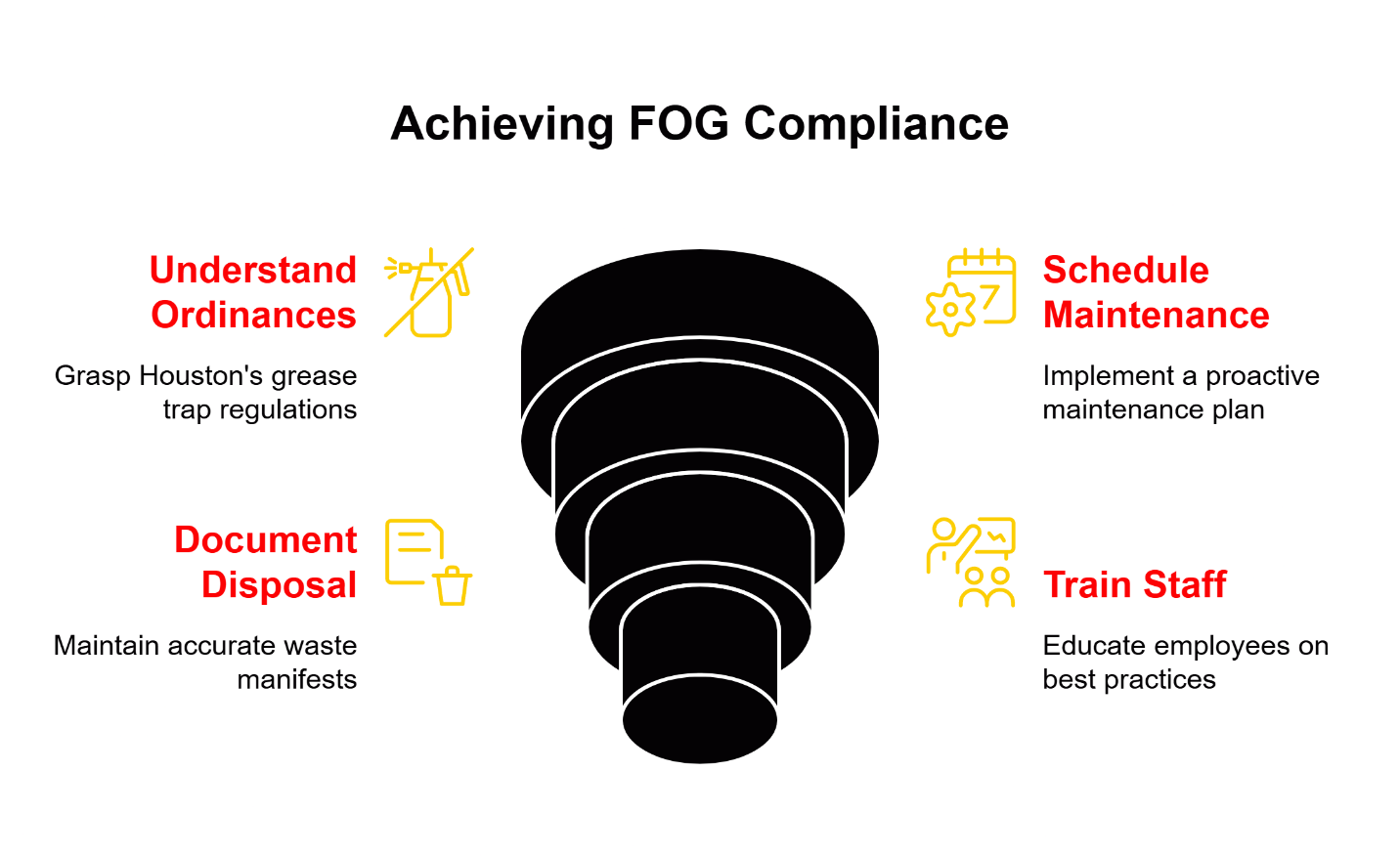
The Four-Pillar FOG Compliance Framework: Mastering Houston ordinances, building proactive maintenance schedules, maintaining proper waste manifests, and implementing staff training transforms grease trap management from a source of constant anxiety into a predictable, controlled operational aspect.

Hidden Costs Beyond Regulatory Fines: Grease trap failures create substantial financial impact through emergency closure revenue loss, premium emergency service rates, ongoing staff costs during downtime, and long-term reputation damage amplified by social media—costs that often exceed the investment in preventive maintenance.

Documentation as Legal Protection: A properly completed waste manifest serves as your legal shield during inspections, providing proof of proper disposal procedures and licensed waste management services, often determining the difference between clean inspection reports and costly violations.

Early Warning System Implementation: Training staff to recognize and immediately report warning signs like slow drainage and unusual odors enables prompt professional assessment before minor issues escalate into operational disruptions that could force emergency closures.

This comprehensive framework transforms restaurant FOG management from reactive crisis control into proactive operational excellence, providing the systematic risk management skills essential for multi-unit franchise success and director-level advancement.

The call comes at 2 AM—your restaurant’s grease trap has backed up, flooding the kitchen with wastewater just hours before the morning rush. This nightmare scenario plays out more often than most restaurant managers care to admit, and the consequences go far beyond a messy cleanup.

For Restaurant Operations Managers in Houston’s fast-paced food service industry, grease trap compliance isn’t just another checkbox on the maintenance list. It’s a critical safeguard against catastrophic business disruption, regulatory fines, and reputation damage. The City of Houston mandates quarterly cleaning of all traps within city limits, but many managers discover that staying compliant requires more than just scheduling a cleaning service.


Key Terminology

  • FOG (Fats, Oils, Grease): Cooking byproducts that solidify in pipes and traps, causing blockages and compliance issues
  • Waste Manifest: Legal documentation proving proper disposal of grease trap waste, required for regulatory compliance
  • City Ordinances: Houston’s specific regulations governing commercial grease trap maintenance and cleaning schedules

The real challenge lies in transforming FOG management from a source of constant anxiety into a predictable, controlled aspect of operations. This framework provides exactly that transformation.


The Worry-Free FOG Compliance Framework: Your 4-Pillar Strategy

achieving fog compliance

Managing grease trap compliance effectively requires a systematic approach that addresses both immediate operational needs and long-term risk mitigation. The following framework eliminates guesswork and provides clear, actionable steps for maintaining worry-free compliance.


Pillar 1: Mastering the City of Houston Ordinances

Houston’s grease trap regulations are non-negotiable, and ignorance provides no protection against fines. The city requires commercial grease trap cleaning every three months for all food service establishments, but understanding the nuances makes the difference between compliance and costly violations.

Key requirements include maintaining proper documentation, using licensed waste haulers, and following established capacity guidelines before cleaning. The ordinances also specify inspection protocols and penalty structures—knowledge that proves invaluable when health inspectors arrive unannounced.

What many managers overlook is that compliance extends beyond just emptying the trap. Proper grease disposal, accurate record-keeping, and staff training all factor into regulatory compliance.


Pillar 2: Building a Proactive, Scheduled Maintenance Plan

Reactive maintenance is expensive maintenance. A well-structured schedule prevents emergencies while ensuring consistent compliance with Houston’s quarterly requirements.

Effective scheduling considers several factors: restaurant volume, menu grease content, and seasonal variations in business. Higher-volume locations may benefit from more frequent cleanings to prevent overflow situations and maintain optimal trap efficiency.

The maintenance plan should include regular inspections between cleanings, monitoring for warning signs like slow drainage or unusual odors. Early detection helps prevent minor issues from escalating into operational disruptions.


Pillar 3: The Power of Proof: How a Waste Manifest Protects Your Business

Documentation serves as your legal shield during inspections and audits. A properly completed waste manifest provides proof that your establishment followed proper disposal procedures and used licensed waste management services.

The manifest details service dates, waste quantities, disposal methods, and hauler certifications. During surprise inspections, this documentation can mean the difference between a clean report and violations. More importantly, it demonstrates due diligence—a factor that inspectors consider when evaluating overall compliance.

Many restaurants maintain digital copies of all manifests, creating an easily accessible compliance history that streamlines inspections and reduces administrative burden.


Pillar 4: Your First Line of Defense: Internal Best Practices & Staff Training

Employee awareness and proper procedures form the foundation of effective FOG management. Staff training on grease disposal practices, drain maintenance, and early warning sign recognition prevents problems before they require professional intervention.

Simple practices make substantial differences: scraping plates thoroughly before washing, using sink strainers to catch food particles, and properly disposing of cooking oil. These seemingly minor habits significantly extend trap life and reduce cleaning frequency requirements.

Regular staff meetings should include FOG management updates, emphasizing how proper practices protect everyone’s job security by preventing shutdowns and maintaining smooth operations.


Business Impact: The True Cost of a Grease Trap Failure

Restaurant owners and franchise operators often view grease trap maintenance as a necessary expense rather than a strategic investment. This perspective changes dramatically when examining the complete cost structure of trap failures.

Regulatory fines represent only one component of the total financial impact. Hidden beneath these obvious penalties lie additional costs that can significantly affect a restaurant’s profitability.


Beyond the Fine: Calculating Restaurant Downtime and Reputation Damage

When grease traps fail during operating hours, the immediate response typically involves emergency closure until the situation resolves. Even a single day of closure in a busy restaurant represents substantial lost revenue, while emergency cleaning services typically charge premium rates above standard maintenance pricing.

Staff costs continue during closures, creating additional financial strain. Employees still require payment despite generating no revenue, and overtime costs can mount as teams work extended hours to restore normal operations.

Customer relationships suffer lasting damage from unexpected closures (or worse, from operating with visible plumbing issues). Social media amplifies negative experiences, and rebuilding reputation requires significant time and marketing investment.


Averting a Crisis: How Proactive Maintenance Justifies Its Cost

Preventive maintenance costs are typically more economical than crisis management expenses. Regular quarterly cleaning provides predictable budget planning and operational stability compared to unpredictable emergency interventions.

Myth: Preventative grease trap maintenance is an unnecessary operational cost.

Fact: Regular maintenance is a high-ROI investment that prevents catastrophic costs from emergency services, fines, and lost revenue, ensuring predictable operational expenses.

The cost-benefit analysis becomes even more compelling when factoring in reduced insurance claims, improved health inspection scores, and enhanced operational reputation with regulatory agencies.


Common Pitfalls to Avoid When Managing FOG Compliance

fog compliance pitfalls

Even well-intentioned restaurant managers can inadvertently create compliance risks through common oversights. Understanding these pitfalls helps develop more robust management practices.


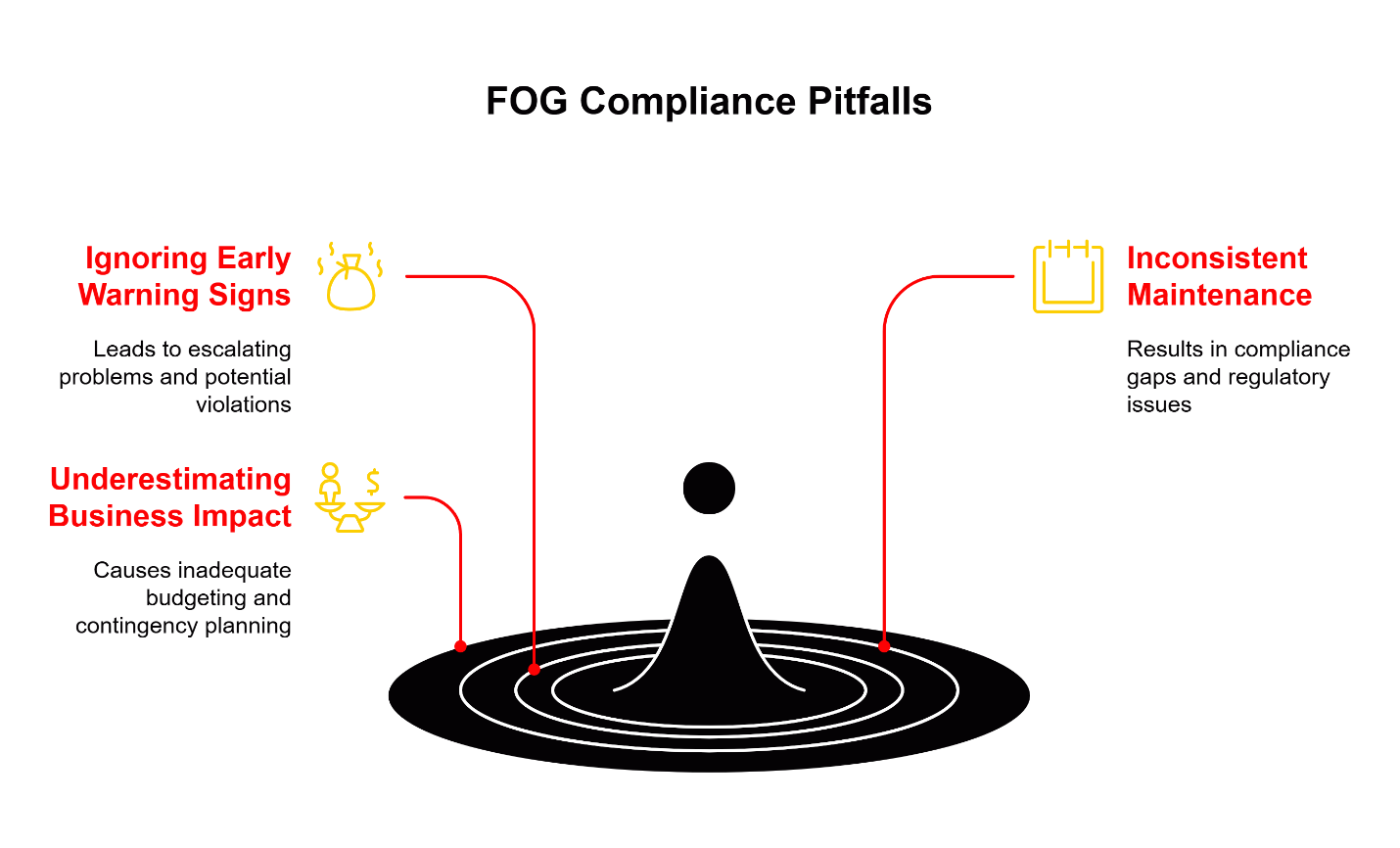
Pitfall #1: Ignoring Early Warning Signs Like Slow Drains and Foul Odors

Grease traps provide clear signals when approaching capacity or experiencing problems. Slow drainage indicates accumulating waste that restricts water flow, while persistent odors suggest bacterial growth or improper ventilation. Managers who dismiss these signs as minor inconveniences often face larger problems later.

The solution involves training staff to recognize and report warning signs immediately, enabling prompt professional assessment before problems escalate.


Pitfall #2: Failing to Maintain a Rigorous Cleaning and Documentation Schedule

Inconsistent maintenance schedules create compliance gaps that regulators notice during inspections. Missing documentation or delayed cleanings can trigger violations, regardless of actual trap condition.

Successful operations maintain detailed cleaning logs, schedule services well in advance of deadlines, and keep backup documentation both digitally and physically.


Pitfall #3: Underestimating the Total Business Impact of a Backup

Many managers focus solely on cleaning costs while overlooking the broader business implications of trap failures. This narrow perspective leads to inadequate budgeting and insufficient contingency planning.

Comprehensive impact assessment includes direct costs (cleaning, fines), indirect costs (lost revenue, overtime), and long-term costs (reputation damage, potential insurance impacts). This complete picture justifies proper maintenance investment and supports budget approval discussions with ownership.


What If…? Planning for a Surprise Health Inspection During a Lunch Rush

The scenario every restaurant manager dreads: health inspectors arrive during peak service hours, demanding immediate access to grease trap areas and compliance documentation. This situation tests both your compliance status and crisis management skills.

Preparation makes this scenario manageable rather than catastrophic. Maintain current documentation in easily accessible locations, ensure staff know inspection protocols, and keep trap areas clean and accessible at all times.

If inspection reveals compliance issues, remain calm and cooperative while documenting all interactions. Quick corrective action and transparent communication often help minimize penalties and demonstrate good faith compliance efforts.


A Question You Should Be Asking

Beyond just cleaning the trap, what documentation is legally required to prove compliance to a health inspector?

This question matters because many restaurants assume that simply having the trap cleaned satisfies all requirements. However, without proper documentation, you may still face penalties even with a recently cleaned trap.

A completed and signed waste manifest is your legal proof of compliance. It details the service performed, the date, and the licensed disposal of the waste. Without it, you may still be liable for violations even if the trap was cleaned.


Conclusion: From Compliance Anxiety to Operational Confidence

The transformation from reactive crisis management to proactive compliance control doesn’t happen overnight, but the Worry-Free FOG Compliance Framework provides the roadmap for this essential shift. By implementing systematic approaches to regulation mastery, maintenance scheduling, documentation, and staff training, restaurant managers can eliminate FOG-related anxiety from their daily operations.

This framework transforms grease trap management from an unpredictable source of stress into a controlled, predictable aspect of restaurant operations. The result is operational confidence that allows managers to focus on core business activities rather than constantly worrying about compliance failures.

For Restaurant Operations Managers advancing toward Director-level roles or multi-unit franchise ownership, mastering this framework establishes the operational excellence and risk management skills essential for larger-scale success. The systematic approach to compliance and documentation developed here becomes invaluable when managing multiple locations and ensuring consistent standards across expanded operations.

Contact us today to implement your customized FOG compliance framework and transform your restaurant’s liquid waste management from a source of stress into a competitive advantage.

By the DraneRanger.com Insights Team

The DraneRanger.com Insights Team is our dedicated engine for synthesizing complex topics into clear, helpful guides. While our content is thoroughly reviewed for clarity and accuracy, it is for informational purposes and should not replace professional advice.