Building a 5-Year Manifest Log: Best Practices for Kitchen Managers

📌 Key Takeaways

A five-year FOG manifest log protects restaurants by keeping signed waste records ready before inspectors ask.

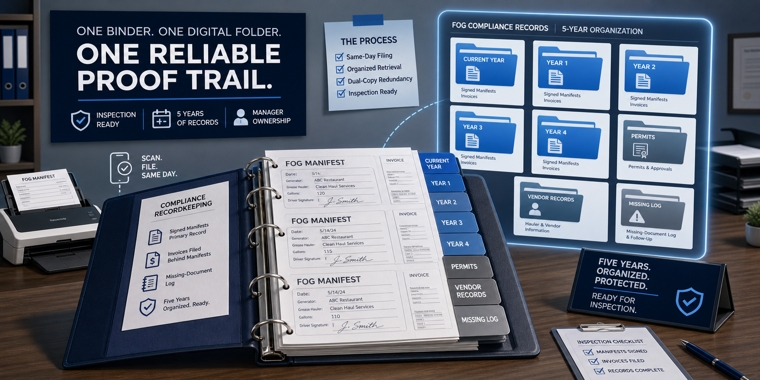
  • Build Two Copies: Keep one physical binder and one digital folder so records survive spills, loss, and turnover.
  • File Manifests First: Invoices prove payment, but signed manifests help prove where grease trap waste went.
  • Use Clear Sections: Sort current records, past years, permits, vendor details, and missing documents in separate places.
  • Scan Every Service: File the signed manifest the same day service happens, before paperwork gets lost.
  • Assign Backup Ownership: One manager and one backup should know where records live and how to fix gaps.

Simple systems beat frantic searches when inspectors ask for proof.

Restaurant owners and kitchen managers will gain a cleaner way to manage FOG records, preparing them for the detailed overview that follows.

~ ~ ~ ~ ~ ~ ~ ~ ~ ~ ~ ~ ~ ~ ~ ~ ~ ~

The binder is missing.

A stained folder sits behind old invoices, service receipts, and a stack of papers from the last manager who “knew where everything was.” You start sorting by date, then by vendor, then by whatever looks official. The uncomfortable thought lands fast: Could we actually produce five years of signed manifests if an inspector asked today?

You don’t need a complicated document system. You need one physical binder, one matching digital folder, and a routine simple enough that the next manager can keep it alive. A manifest log is your proof trail, not just your filing system. It is the practical storage layer for long-term FOG chain-of-custody compliance.

Invoices matter for your accounting records. Manifests matter for your inspection records. Keep both, but do not confuse one for the other.


Start With the FOG Binder Blueprint

Set up the binder first.

A physical binder gives the kitchen manager or GM something fast to open during an inspection. The digital copy protects the business when paper gets stained, misplaced, or buried during an office cleanup.


Five years of manifests should be organized before inspection day, not rebuilt while an inspector is waiting.

Use this structure:

Binder / Folder Section What Goes Inside Why It Matters
Current Year Newest manifests, sorted newest first Fast retrieval during inspection
Prior Years 1–4 Manifests sorted by year and month Supports the 5-year record window
Permit & Inspection Records FOG permit, prior inspection forms, waiver if applicable Keeps related inspection documents together
Vendor Records Provider contact, service schedule, duplicate-record process Helps new managers know who to call
Missing Document Log Missing manifests, dates requested, vendor follow-up Prevents silent gaps from staying hidden

Keep the binder in an office or manager area, not beside a mop sink, prep table, or grease-heavy workspace. Use plastic sleeves for current-year manifests. Put a one-page “How to Use This Binder” sheet at the front.

A manifest log is not a pile of paperwork. It is the proof trail that shows where your kitchen’s waste went.


Mirror the Binder With a Digital Folder System

The digital folder is not optional backup clutter. It is your safeguard against real kitchen-office failure.

Paper gets moved. Managers change jobs. A service receipt can sit in an apron pocket for 2 days before anyone notices. A quick scan or phone photo after service can prevent a small paperwork gap from becoming a frantic search later.

Use the same structure online that you use in the binder:

FOG-Manifests / 2026 / 2026-03-12_Drane-Ranger_Manifest.pdf

Keep it simple. A shared drive or existing business folder is enough if the owner, GM, kitchen manager, and backup manager can access it.

Use this division of roles:

  • Physical binder: Best for fast onsite inspection response.
  • Digital folder: Best for redundancy after spills, misplaced documents, turnover, or office cleanup.
  • Manager handoff sheet: Best for continuity when the kitchen manager or GM changes.
  • Provider follow-up log: Best for tracking missing copies before they become audit-day gaps.

Make scanning part of the service-day closing routine. When the grease trap is serviced, the signed manifest gets filed twice: once in the binder and once in the digital folder. No waiting for “later.” Later is when paperwork disappears.


What Every Manifest Entry Needs to Prove
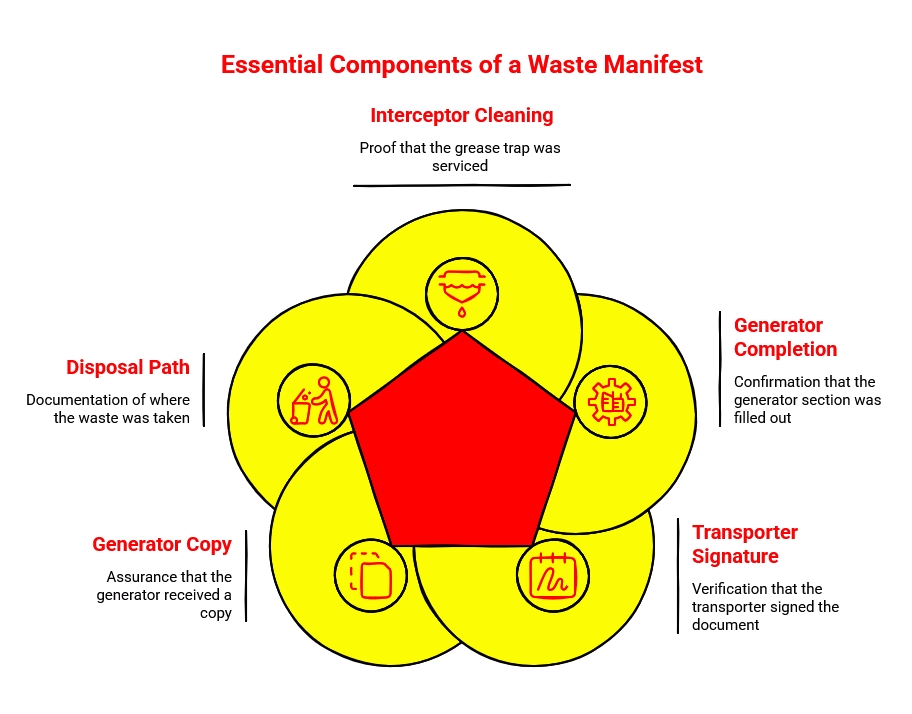
Infographic outlining waste manifest essentials, including interceptor cleaning, disposal path, generator copy, completion confirmation, and transporter signature.

A waste manifest is the official record that follows grease trap waste from your kitchen to its next destination. It is not the same thing as an invoice.

The Houston Health Department Waste Generator FAQ describes waste manifests as inspection documents and notes that inspectors may arrive without prior notification. The same FAQ references that commercial waste manifests—typically retained as authorized physical copies or verifiable digital records—must be kept for the past 5 years as records establishments with interceptors may need to provide..

A complete manifest record should help show:

  • the interceptor was cleaned;
  • the generator portion was completed;
  • the transporter signed the document;
  • the generator received a copy;
  • the disposal path was recorded.

Houston’s municipal code governing commercial waste transporters generally addresses manifest completion details, including generator, transporter, and disposal-site information. Kitchen managers do not need to memorize the specific ordinance numbers, but they do need a system that keeps the relevant paperwork together. For the exact current legal text, use the City’s searchable Code of Ordinances portal to review the most up-to-date liquid waste regulations.


Why Invoices Belong Behind Manifests, Not Instead of Them

Here is the common trap.

Myth: “We paid for service, so the invoice proves we are covered.”

Reality: An invoice shows a transaction. A manifest supports the chain-of-custody record.

That difference matters. Your invoice may show that a vendor charged the restaurant for service. Your manifest helps show what happened to the FOG waste after removal.

File invoices behind the matching manifest. Do not file invoices as the main proof. This keeps accounting records and compliance records connected without treating them as interchangeable.

For a broader look at inspection readiness beyond the manifest log, Drane Ranger’s complete compliance guide for restaurants can help connect documentation habits with maintenance planning.


Build a Manager Handoff Routine That Survives Turnover

A five-year log fails when only one person understands it.

The fix is simple: assign one primary owner and one backup owner. Add the binder review to new manager onboarding. Give the owner or GM access to the digital folder. Review the log monthly or after every service visit.

Use this recovery checklist after each service:

  • Confirm the latest service date is filed.
  • Confirm the manifest copy is scanned.
  • Confirm the invoice, if present, is filed behind the manifest.
  • Confirm any missing document is logged.
  • Confirm the backup manager knows where records are stored.

Put this handoff note at the front of the binder:

“This binder lives in the manager office. Digital copies are stored in the shared FOG-Manifests folder. If a manifest is missing, write the service date in the Missing Document Log, contact the grease trap provider, request a duplicate copy, and file the recovered document in both places.”

That one paragraph can save the next manager from guessing.


When to Ask Your Grease Trap Provider for Duplicate Records
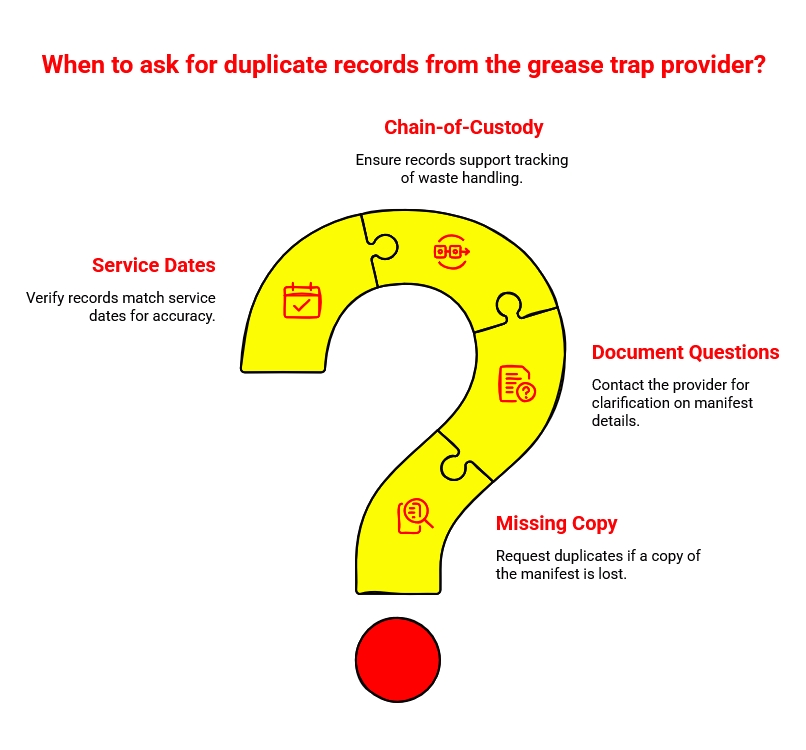
Question mark graphic explaining when to request duplicate grease trap records, including missing copies, service date checks, document questions, and chain-of-custody needs.

Your provider should make documentation easier to manage, not harder to chase.

When evaluating commercial grease trap cleaning in Houston, ask practical questions:

  • Do you leave signed manifests after each service?
  • Can you help recover duplicate records if a copy is missing?
  • Who should the manager contact for document questions?
  • Do the records include details that support chain-of-custody tracking?
  • Can service records be matched clearly to service dates?

These questions are not a sales exercise. They are provider accountability. A kitchen manager needs a visible way to confirm that the right documentation is left after each service.

Drane Ranger provides grease, grit, and lint trap services in the Houston area, and its broader site messaging emphasizes customer service, compliance, and practical liquid waste support. That context is useful, but no provider relationship replaces your own internal log.


FAQs About 5-Year FOG Manifest Logs

How long should Houston restaurants keep FOG manifests?

Houston inspection guidance references waste manifests for the past 5 years among records establishments with interceptors may need to provide. Because requirements can change, confirm current expectations with the Houston Health Department or the Houston Permitting Center.

Are grease trap invoices enough for a FOG audit?

No. An invoice is not the same as a chain-of-custody manifest. Keep invoices as supporting business records behind the matching manifest.

Where should a kitchen keep the manifest binder?

Keep it in an accessible office or manager area, protected from grease, water, and daily kitchen traffic. The goal is fast retrieval without exposing the binder to normal kitchen damage.

Who should own the manifest log?

Assign one primary manager and one backup manager. The owner or GM should also have access to the digital folder.

What should happen if a manifest is missing?

Log the missing service date, contact the provider, request a duplicate, and add the recovered copy to both the binder and digital folder. Do not leave the gap undocumented.

Should digital copies be kept too?

Yes. A dual physical-digital system protects the restaurant from spills, misplaced pages, office cleanouts, and staff turnover.

How does a manifest log fit into overall grease trap inspection readiness?

The manifest log is the documentation layer of inspection readiness. It does not replace physical maintenance, scheduled cleaning, or proper disposal, but it helps prove that records are organized when requested. For inspection-day preparation, Drane Ranger’s guide on surviving a City of Houston FOG audit is a useful next read.


Keep the System Simple Enough to Maintain

A 5-year manifest log does not need fancy software. It needs consistency.

One binder. One matching digital folder. One primary owner. One backup owner. One habit after every service.

That is how a messy back-office pile becomes an inspection-ready proof trail. Not perfect. Reliable.

Use the FOG Binder Blueprint to organize your last five years of manifests before your next inspection. If records are missing or your provider is not leaving signed manifests, contact Drane Ranger through the Contact Us page or call 281-489-1765.

Disclaimer: This article is for general educational purposes only and is not legal advice. Houston FOG and special waste requirements can change, and enforcement details may vary by facility. Confirm current requirements with the City of Houston, the Houston Health Department, or a qualified compliance professional.

Our Editorial Process: 

Our expert team uses AI tools to help organize and structure our initial drafts. Every piece is then extensively rewritten, fact-checked, and enriched with first-hand insights and experiences by expert humans on our Insights Team to ensure accuracy and clarity.

By: About the Drane Ranger Insights Team

The Drane Ranger Insights Team is our dedicated engine for synthesizing complex topics into clear, helpful guides. While our content is thoroughly reviewed for clarity and accuracy, it is for informational purposes and should not replace professional advice.
The 5-Minute Paperwork Audit: Checking Your FOG Manifest Readiness

📌 Key Takeaways

A quick grease trap paperwork check helps managers spot missing proof before an inspection creates bigger stress.

  • Manifests Beat Invoices: An invoice proves payment, but a manifest helps show where the grease waste went.
  • Check Every Pump-Out: Each grease trap service should have a matching manifest, not just a receipt.
  • Missing Details Matter: Blank dates, missing signatures, and unclear disposal records can weaken your paperwork file.
  • Fast Access Helps: A document is not inspection-ready if only one person knows where to find it.
  • Simple Systems Last: A binder, digital backup, and monthly check can keep records easier to manage.

Good paperwork turns inspection panic into a file your manager can open with confidence.

Houston restaurant owners and general managers will gain a simple readiness check here, preparing them for the detailed overview that follows.

~ ~ ~ ~ ~ ~ ~ ~ ~ ~ ~ ~ ~ ~ ~ ~ ~ ~

Open the drawer now.

The grease trap binder is sitting under a stack of vendor invoices, a stained service ticket, and one loose form with a signature you cannot quite read. Then someone says “FOG inspection,” and the question lands fast: Do we actually have the paperwork?

You do not need to solve every compliance issue in the next five minutes. You need to find the obvious red flags. For Houston restaurant owners and general managers, FOG Manifest Readiness starts with one simple distinction: an invoice shows that you paid someone; a manifest helps document where the grease waste went.

Houston sources identify restaurants and food dealer establishments with grease traps as special waste generators, and the Houston Permitting Center states that interceptors in incorporated Houston city limits must generally be fully evacuated at least quarterly, or every 90 days, unless an approved waiver applies. (Houston Permitting Center) The paperwork matters because inspectors may ask for FOG permits, waste manifests, invoices when applicable, waivers when applicable, and previous inspection copies. (Houston Consumer)

Before the paperwork becomes a problem, check it.


Before You Start: Grab the Right Stack of Paper

Pull together the documents you already have. Do not judge the system yet. Just gather the stack.

Start with grease trap service invoices, waste manifests, returned generator copies, FOG permit paperwork, and previous inspection documents if you have them. Check the office drawer, the back-office binder, the email inbox, and any shared digital folder before deciding something is missing.

The first pass is simple: separate proof of payment from proof of disposal. A waste manifest is not just a receipt. The Houston Health Department’s Waste Generator FAQ describes a waste manifest as an official government document completed every time an interceptor is cleaned. (houstonhealth.org)

For a deeper explanation of the broader FOG manifest chain-of-custody requirements, treat that as the next step. Right now, stay with the five-minute check.


The 5-Minute FOG Manifest Readiness Audit

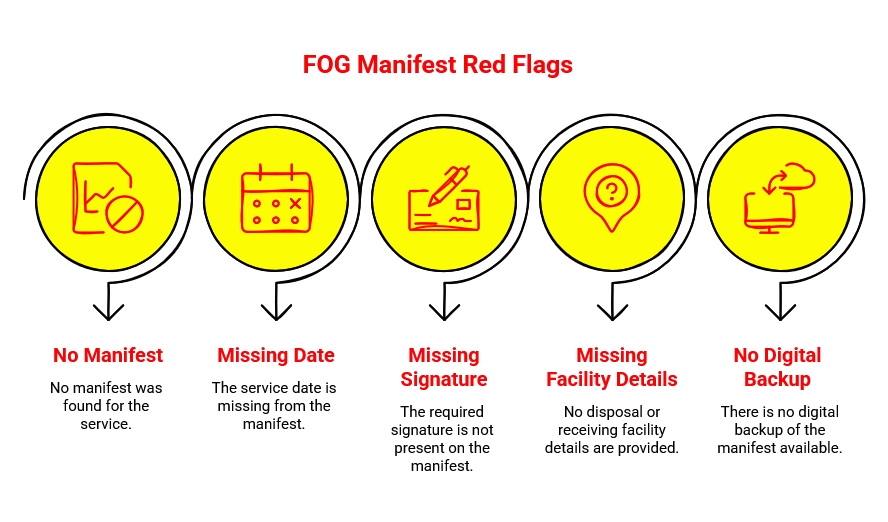
Infographic highlighting FOG manifest red flags, including no manifest, missing service date, missing signature, missing facility details, and no digital backup.

Print this quick scan or copy it into a manager checklist.

  • Red Flag: No manifest found.
  • Red Flag: Missing service date.
  • Red Flag: Missing signature.
  • Red Flag: No disposal or receiving facility details.
  • Red Flag: No digital backup.

Now check the documents one by one.


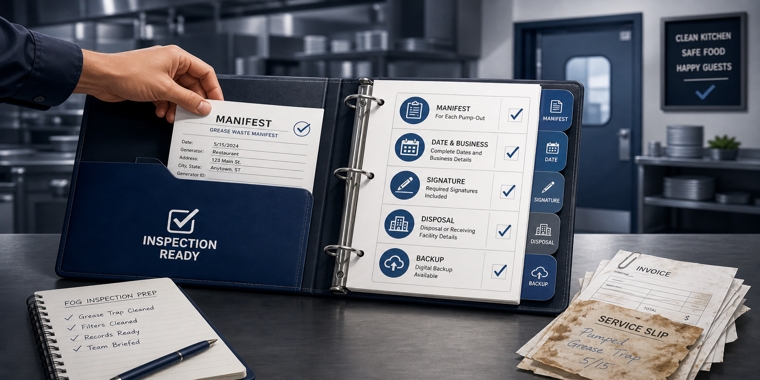
1. Do You Have a Manifest for Each Pump-Out?

Match every grease trap service event to an actual waste manifest. An invoice may show that money changed hands. A manifest documents the waste handling trail.

A useful way to think about it: the manifest works like a certified passport for wastewater. It tracks the journey from the kitchen to the disposal site.

Why it matters: You cannot defend your paperwork position if you do not know what documents you actually have.

Red flag: You have invoices, receipts, or “service completed” slips, but no manifests.

Next action: Ask your vendor for returned generator copies. Then separate invoices from compliance records. If the difference still feels unclear, review manifesting vs. invoicing before your next service visit.


2. Are Dates, Business Details, and Service Details Complete?

Look for the service date, generator information, transporter information, waste type, and amount where available. Manifest formats can vary, but the basic record should tell a clear story.

The TCEQ model standards list common manifest information such as transporter details, generator information, collection date, waste type and amount, disposal location, receiving facility identification, received volume, and tracking information. (tceq.texas.gov)

Why it matters: A partly blank form forces the manager to explain what the document should have shown.

Red flag: The form is generic, partly blank, missing the service date, or missing business details.

Next action: Mark incomplete forms and request corrected documentation from the transporter or service provider.


3. Are Required Signatures Present?

A manifest without the right signatures is not a strong confidence-builder. Houston Health’s FAQ says the generator must sign the top portion of the manifest attesting that the entire content of the trap was removed. (houstonhealth.org)

Missing dates, missing signatures, or generic receipts indicate immediate exposure.

That does not mean one missing mark automatically proves a violation. It means the paperwork needs attention before an inspection turns a small gap into a stressful conversation.

Red flag: No generator signature, no transporter signature, or no returned copy.

Next action: Decide who signs manifests after each clean-out. Then decide who files them the same day.


4. Does the Paperwork Show Where the Waste Went?

This is the chain-of-custody idea in plain language. The paperwork should help show that the waste left your kitchen and went to the proper receiving or disposal facility.

A document that only says “grease trap cleaned” does not tell the full story.

Why it matters: FOG Manifest Readiness depends on proof of proper disposal, not just proof that a truck arrived.

Red flag: No disposal facility, receiving facility, deposit location, or returned generator copy appears in the file.

Next action: Ask the hauler what facility received the waste and whether the returned generator copy documents it.

If repeated paperwork gaps show up, it may be time to compare your current process with a documented commercial grease trap cleaning in Houston service approach.


5. Can You Retrieve Copies Quickly?

A document that exists “somewhere” is not ready. During an inspection, the useful file is the one a manager can produce without searching through three desks and an old inbox.

Houston Health Department materials state that yellow and white manifest copies for the past five years may be requested during inspection, and the special waste generator page says generator and returned generator copies should be kept onsite for five years. (Houston Consumer)

Why it matters: A lost physical binder should not create audit panic.

Red flag: Only one employee knows where the manifests are. Or the only copy is a stained binder in the back office.

Next action: Keep a physical binder and a digital backup. As a general recordkeeping principle, redundancy protects the business when staff changes, a shift gets rushed, or a folder gets misplaced.

For a fuller recordkeeping system, use this separate resource on how to organize your FOG manifests for a 5-year audit. Keep today’s task smaller.


What To Do If You Find a Red Flag

If you find… Do this next
Only invoices, no manifests Request proper manifest copies from the vendor.
Missing signatures Confirm who signed, then request corrected or returned copies.
Missing dates Rebuild the service timeline from records.
No disposal or receiving information Ask for the returned generator copy.
No five-year file Start a current binder now and begin backfilling what you can.
A pattern of incomplete paperwork Reconsider whether your current vendor is protecting your compliance position.

Stay calm. Most operators are not paperwork specialists. The useful move is to identify the gap and fix the system before the next inspection or service visit.


Keep the System Simple So It Survives a Busy Kitchen

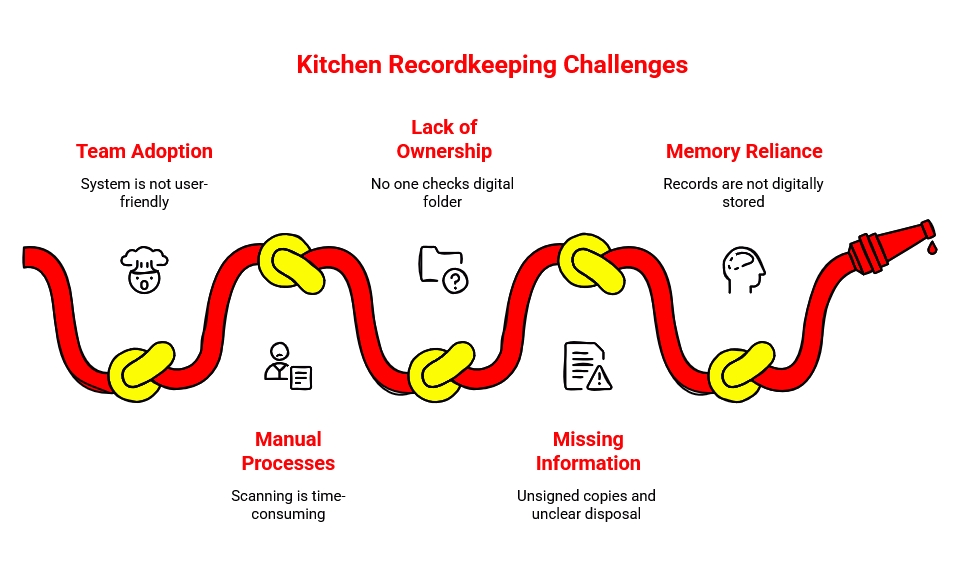
Infographic showing kitchen recordkeeping challenges such as poor team adoption, manual processes, lack of ownership, missing information, and memory reliance.

The best recordkeeping system is the one your team will actually use after a lunch rush.

Put the newest manifest at the front of the binder. Scan or photograph each manifest the same day it is received. Use a shared digital folder named by year. Assign one owner or manager to check the folder once a month.

That is enough for a practical first system.

Drane Ranger’s liquid waste compliance content emphasizes the full service cycle: assessment, removal, proper disposal, and documentation. That matters because good service history should not live only in one person’s memory. If your current records show missing manifests, unsigned copies, or unclear disposal information, schedule your next grease trap cleaning in Houston with documentation in mind.


FOG Manifest Readiness FAQs

Is an invoice the same as a FOG manifest?

No. Treat an invoice as proof of payment. Treat a manifest as documentation of waste handling.

How long should Houston restaurants keep grease trap manifests?

Houston Health Department materials state that generator and returned generator copies should be kept onsite for five years, and inspection document lists include yellow and white copies of waste manifests for the past five years. (Houston Consumer)

What should you check first on a manifest?

Check the date, generator details, transporter details, signatures, waste amount or type where listed, and receiving or disposal information.

What if you only have receipts from your pumper?

Treat that as a red flag. Ask for manifest copies, especially returned generator copies. Do not assume the receipt is enough.

Who is allowed to clean your interceptor in Houston?

Houston Health’s FAQ says an interceptor can be cleaned only by a waste transporter permitted with the Houston Health Department. (houstonhealth.org)

When should you call a professional?

Call when documents are missing, incomplete, unsigned, unclear, or no longer match the kitchen’s real service needs. Print the 5-point checklist first. Then review your current FOG manifest file before the next service visit.

If your paperwork is missing dates, signatures, returned copies, or disposal details, contact Drane Ranger or call 281-489-1765 to discuss compliant grease trap service documentation.

The goal is not perfect paperwork theater. The goal is a file your manager can open with confidence.

Disclaimer: This article is for general informational purposes only and is not legal advice. FOG, grease trap, and waste manifest requirements can vary by jurisdiction, business type, permit status, and inspection circumstances. Restaurant owners and managers should verify current requirements with the City of Houston, Houston Health Department, Houston Permitting Center, or a qualified compliance professional.

Our Editorial Process: 

Our content is developed from a documented content strategy, reviewed against available brand materials, and checked against authoritative sources where regulatory or compliance claims are involved. We prioritize practical usefulness, clear explanations, local relevance, and evidence-supported guidance. When a claim depends on municipal rules, official program pages, or technical standards, writers should cite the relevant authority and avoid unsupported conclusions.

By: Drane Ranger Insights Team

Drane Ranger Vacuum Services has served the Greater Houston area since 1985, providing liquid waste management solutions including grease trap cleaning, grit trap cleaning, lint trap cleaning, septic services, lift station maintenance, vacuum truck services, and non-hazardous wastewater disposal support for local businesses and property owners.

When a Backup Threatens Your Business: A Houston Restaurant’s Emergency Response Plan for Grease Trap Failures

📌 Key Takeaways

First 60 Minutes Determine Success or Catastrophe: When grease trap failure strikes during peak service, your immediate response protocol can mean the difference between a manageable incident and permanent business disruption. Stop food preparation immediately, document everything with photos for insurance and health inspectors, and contact certified emergency services within 15 minutes—don’t wait to see if the situation improves.

Three Warning Signs Prevent Emergency Situations: Monitor for slow drainage throughout multiple kitchen areas, persistent foul odors that intensify during busy periods, and visible grease appearing in floor drains or unexpected locations. These indicators typically appear well before complete system breakdown, giving you time to schedule maintenance during slow periods rather than facing crisis during peak service.

Professional Emergency Services Require Strategic Vetting: Before crisis strikes, establish relationships with certified providers who can guarantee response times, provide proper licensing for commercial grease trap pumping in Texas, and offer comprehensive documentation for regulatory compliance. Companies that handle both trap pumping and contamination cleanup prevent you from managing multiple vendors during emergencies.

Documentation Protects Against Future Regulatory Challenges: Essential compliance records include waste disposal documentation, before-and-after service verification, sanitization confirmation for affected areas, and detailed incident timelines. Health departments may investigate grease trap incidents after they occur, and proper documentation demonstrates environmental compliance and food service safety protocols.

Crisis Management Skills Build Leadership Foundation: Emergency preparedness transforms restaurant managers from reactive crisis fighters into proactive risk managers, with standardized protocols becoming invaluable for regional management roles overseeing multiple locations.

This comprehensive emergency response framework provides immediate crisis control while building operational resilience that prevents most emergencies through proper preventative maintenance and staff training on Houston’s commercial grease trap requirements.

The lunch rush is in full swing when you notice it—that unmistakable smell wafting from the kitchen. Within minutes, greasy water starts pooling near the prep stations. Your grease trap has failed, and sewage is backing up onto the kitchen floor just as your busiest service period hits its peak.

This scenario strikes fear into every restaurant operations manager for good reason. A grease trap failure doesn’t just create a mess—it threatens immediate business closure, lost revenue, and potential health department violations that could take considerable time to resolve.

But here’s what separates prepared managers from those who panic: having a clear, actionable emergency response plan. (Because when crisis hits, you don’t have time to figure things out on the fly.)

The following guide provides you with exactly that—a step-by-step protocol to regain control, minimize losses, and protect your operation’s future.


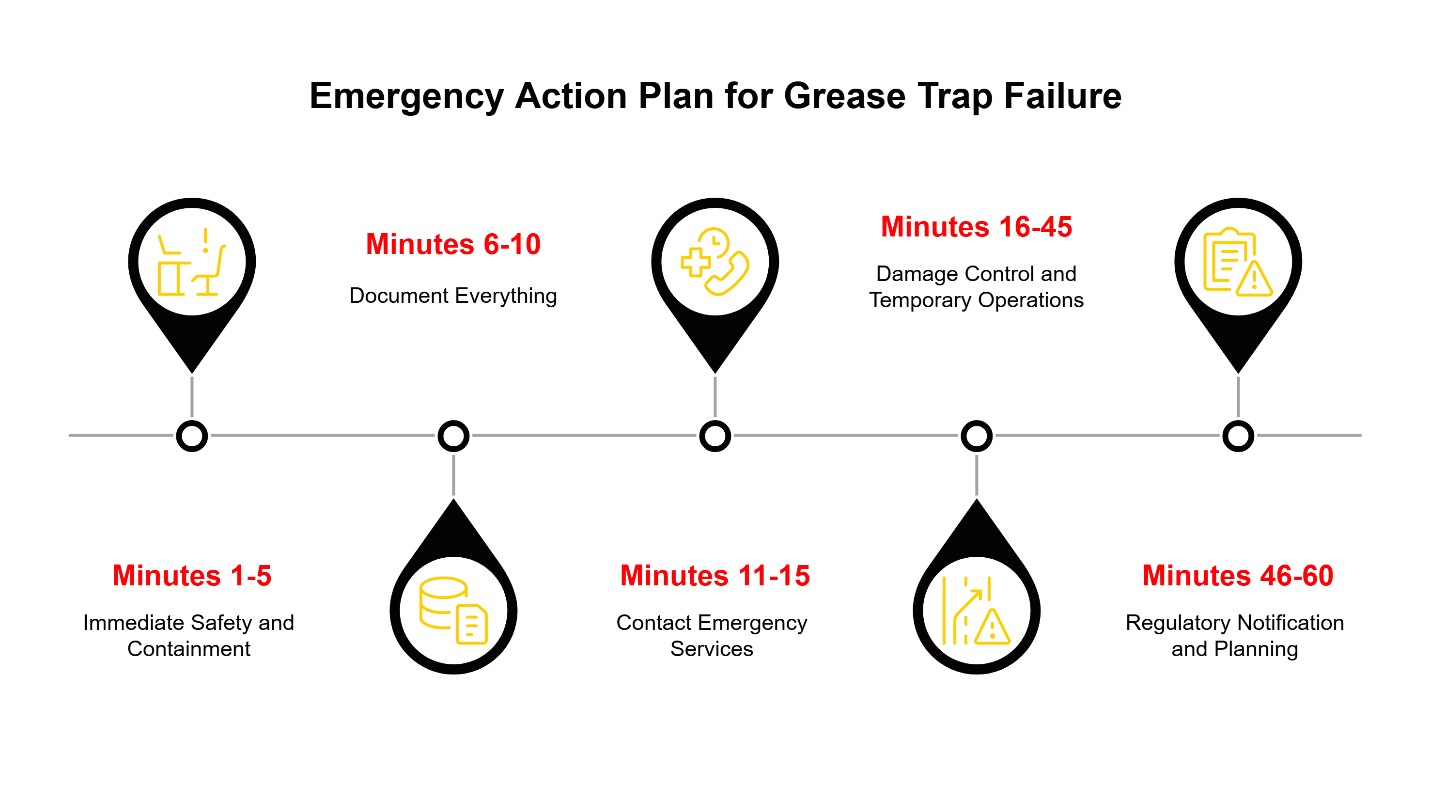
The First 60 Minutes: Your Emergency Action Plan

 emergency action plan for grease trap failure

When grease trap failure strikes, the first hour determines whether you’re looking at a manageable incident or a catastrophic business disruption. Every minute counts, and every action must be deliberate.


Step 1: Immediate Safety and Containment (Minutes 1-5)

Stop all food preparation in the affected areas immediately. Your first priority isn’t the lost revenue—it’s preventing contamination that could shut you down permanently. Block access to contaminated zones using whatever barriers you have available: chairs, wet floor signs, or rope. Alert all staff to avoid the area while you assess the situation.


Step 2: Document Everything (Minutes 6-10)

Take photos of the backup from multiple angles before touching anything. These images become crucial for insurance claims and proving the timeline to health inspectors. Note the time, extent of contamination, and any food that may have been compromised. This documentation protects you legally and financially—don’t skip it even when pressure mounts.


Step 3: Contact Emergency Services (Minutes 11-15)

Call a certified commercial grease trap cleaning service immediately. Don’t wait to see if the situation improves on its own—it won’t. When you call, specify that you need emergency response, not routine maintenance. Request their estimated arrival time and any specific information they need about your situation.


Step 4: Damage Control and Temporary Operations (Minutes 16-45)

Assess which parts of your kitchen remain functional. Can you operate with limited menu options? Set up temporary workflows that bypass the contaminated areas entirely. Contact your manager or owner to discuss whether to close temporarily or operate with restrictions. This decision impacts both immediate revenue and long-term reputation.


Step 5: Regulatory Notification and Planning (Minutes 46-60)

Determine whether you must notify the health department based on the extent of contamination. Research your local requirements, as any sewage backup that affects food preparation areas may require immediate reporting. Plan your communication strategy—both for regulators and customers. Transparency now prevents bigger problems later.


Business Impact

A properly executed emergency response can significantly reduce downtime compared to unmanaged crisis situations. The difference between quick, organized action and chaotic response often determines whether an incident becomes a manageable expense or a major operational disruption. Quick action also demonstrates regulatory compliance awareness, potentially helping your case if inspectors investigate.


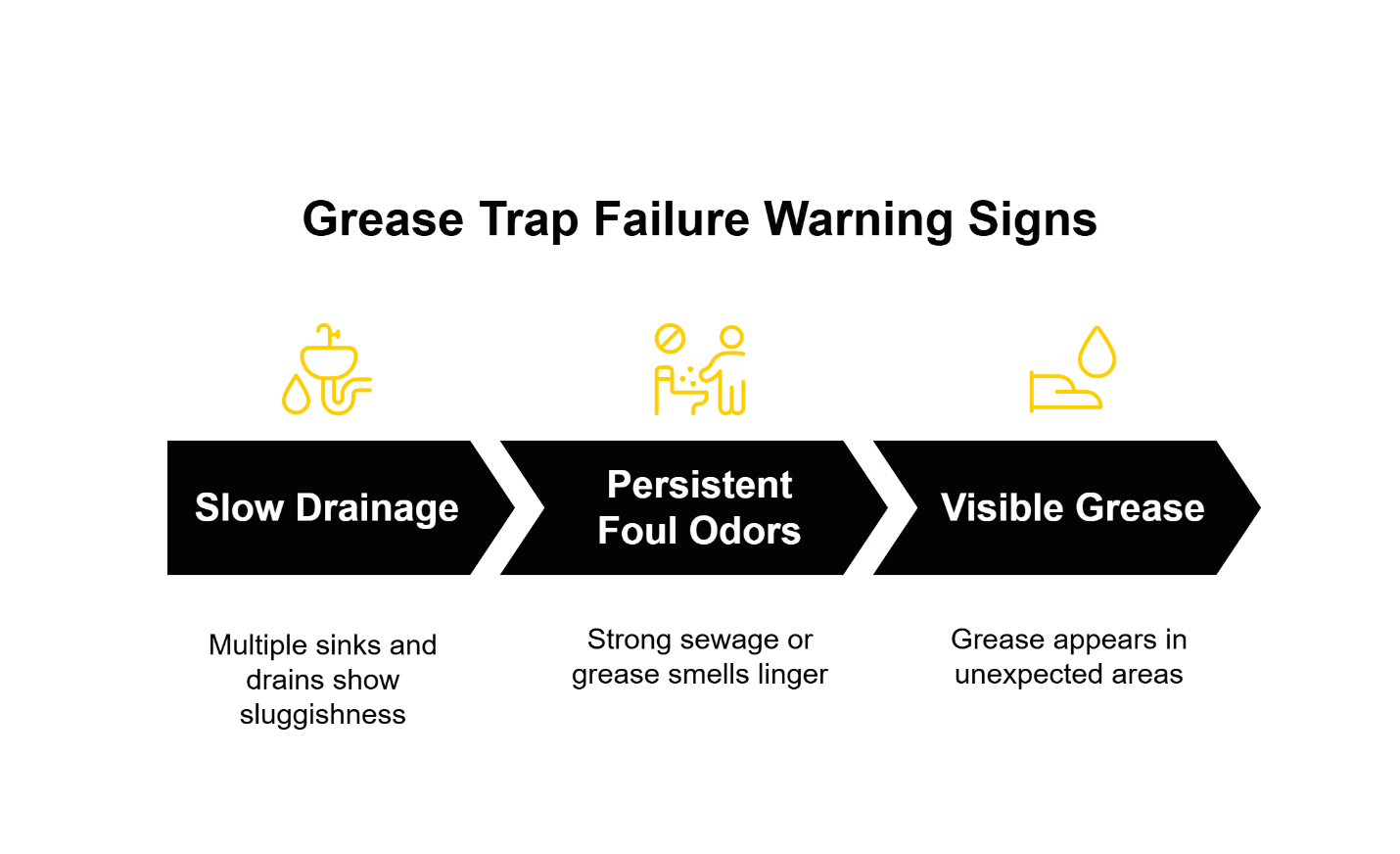
Are You at Risk? 3 Telltale Signs of Imminent Grease Trap Failure

grease trapfailurewarning signs

Prevention beats emergency response every time. Smart operations managers watch for early warning signs rather than waiting for catastrophic failure. These indicators typically appear well before complete system breakdown—giving you time to schedule maintenance during slow periods rather than facing emergency situations during peak service.


Slow Drainage Throughout the Kitchen

When multiple sinks and floor drains start backing up simultaneously, your grease trap likely approaches capacity. This isn’t about a single clogged drain—it’s systemic sluggishness that affects the entire kitchen’s wastewater flow. The problem compounds quickly: what starts as slightly slow drainage can become complete backup without intervention.


Persistent Foul Odors Near Trap Locations

Strong sewage or grease odors that don’t dissipate after normal cleaning indicate trapped waste reaching concerning levels. These smells often intensify during busy periods when more wastewater flows through the system. Don’t mask odors with air fresheners—they signal an underlying problem requiring attention.


Visible Grease in Floor Drains or Unexpected Areas

Grease appearing in floor drains, around prep sinks, or backing up through unexpected drainage points means your trap can no longer contain what it’s designed to process. This visible overflow represents a warning sign that system failure may be approaching.


Technical Note

Houston requires regular grease trap maintenance for commercial establishments, but high-volume restaurants often need more frequent service than minimum requirements. Monitor these warning signs regularly rather than relying solely on scheduled maintenance—early intervention typically costs less than emergency response.


Choosing Your Lifeline: How to Vet a 24/7 Emergency Service in Houston

During a crisis, desperation makes poor decision-making easy. Calling the first number found online often leads to problems with service quality, pricing transparency, or inadequate cleanup. Instead, ask these five critical questions before committing to any emergency service:


What’s your typical response time for emergency calls?

Professional emergency services should provide realistic timeframes for Houston-area response. Ask about their current availability and any factors that might affect arrival times. Companies that can’t provide any estimate may lack the capacity for true emergency response.


Are you licensed for commercial grease trap pumping in Texas?

This isn’t just bureaucratic checking—proper licensing indicates companies follow appropriate disposal methods and understand regulatory requirements. Request license information and ask about their compliance procedures.


What documentation will you provide for regulatory compliance?

Professional services should provide appropriate documentation of their work, including waste disposal records and service verification. These documents may be important if health inspectors investigate. Companies that can’t explain their documentation process may not understand compliance requirements.


Do you handle contaminated area cleanup, or just the trap pumping?

Some services only address the trap itself, leaving you responsible for sanitizing affected areas. Clarify exactly what services are included in emergency response. Full-service providers typically handle both trap pumping and contamination cleanup.


What’s your cost structure for emergency response?

Emergency service typically costs more than routine maintenance, but professional companies should provide clear pricing information upfront. Be cautious of services that won’t discuss costs until they arrive on-site.


Day-to-Day Application

Create a contact list of pre-vetted emergency services before crisis strikes. Research and interview potential providers during calm periods when you can make rational decisions. Having established relationships with certified grease trap service providers means better response when emergency situations arise.


Common Pitfalls to Avoid When Responding to a Grease Trap Emergency

Even well-intentioned managers make costly mistakes during high-stress situations. These common errors can transform manageable incidents into major problems—often with consequences that extend well beyond the initial situation.


Waiting Too Long to Call Professional Help

The “let’s see if it gets better” approach rarely works with grease trap failures. What seems like a minor backup in the morning can become a major flooding situation during busy service periods. Early professional intervention usually prevents situations from escalating to the point where health departments become involved.


Attempting DIY Fixes with Inappropriate Tools

Restaurant staff shouldn’t attempt to snake, plunge, or chemically treat backed-up grease traps. These approaches often push contamination deeper into the system, making professional cleanup more difficult. Additionally, inappropriate chemicals can damage trap components, potentially requiring replacement rather than cleaning.


Continuing Food Service in Compromised Areas

The temptation to “work around” contaminated areas during busy periods creates serious health code risks. Cross-contamination between clean and contaminated zones happens easily in commercial kitchens. Temporary closure typically creates fewer problems than extended health department investigations.


Inadequate Documentation of the Incident

Taking insufficient photos or failing to document the timeline creates problems when dealing with insurance claims or regulatory questions. Thorough documentation of contamination extent, affected areas, and response timeline protects you legally and financially.


What If…? Planning for a Catastrophic Backup During Peak Business Hours

Your worst-case scenario probably involves a complete grease trap failure during your busiest service periods—when closure means losing significant revenue and potentially disappointing customers who’ve made advance reservations.

This scenario represents a major operational challenge because it combines substantial financial impact with complex logistical decisions. But having a specific plan for peak-hour failures reduces both the chaos and the potential losses.

First, acknowledge the reality: A significant backup during peak service may require immediate closure of affected areas, and possibly the entire operation. Attempting to continue service around major contamination usually creates bigger problems.

Second, establish clear decision protocols: Determine in advance who has authority to make closure decisions during peak hours. Waiting for ownership approval while contamination spreads typically escalates both cleanup complexity and regulatory response.

Third, prepare stakeholder communication templates: Draft messages for customers, delivery platforms, and staff that explain temporary closure due to “urgent maintenance requirements.” Having professional language ready prevents crisis-driven communication that could damage your reputation.

The Aftermath: Documentation and Moving Forward

Once the immediate crisis passes and professional cleanup concludes, your focus shifts to compliance documentation and preventing recurrence. This phase often determines whether you face ongoing regulatory attention or return to normal operations smoothly.


The Unasked Question:

What Documentation Do I Need from the Emergency Service to Prove Compliance After the Fact?

Most managers focus entirely on getting their operation running again, overlooking the paperwork that protects them from future regulatory challenges. This documentation becomes important if health inspectors investigate or if insurance questions arise about the incident.


Why This Question Matters

Health departments may investigate grease trap incidents after they occur, especially if there are complaints or if the incident appears in municipal service records. Without proper documentation, you’re left trying to reconstruct events from memory while facing potential regulatory questions.


The Expert Answer

According to the DraneRanger.com framework, essential documentation should include: waste disposal records showing proper handling, before-and-after documentation from the service provider, sanitization verification for affected areas, and a timeline of the incident and response. These documents demonstrate both environmental compliance and that contaminated areas have been properly addressed for food service resumption.


Store these documents with your other compliance files—you may need them if questions arise during future inspections.


Myth & Fact

Myth: Grease trap maintenance is just a suggestion, not a strict legal requirement.

Fact: Houston requires regular grease trap cleaning for commercial food service establishments. Violations can result in significant fines and potential operating complications. Regular maintenance represents required compliance that protects both public health and your business operations.


Expert Q&A

Question: What’s the first thing I should do if my grease trap overflows?

Answer: Stop all food preparation immediately and secure the contaminated area. Your priority isn’t minimizing lost sales—it’s preventing cross-contamination that could result in health department complications. Document the situation with photos, then call certified emergency cleanup services. Attempting to continue service around contaminated areas typically escalates both health concerns and cleanup requirements. — DraneRanger.com Insights Team


Conclusion: From Crisis to Control: Building a Resilient Operation

Emergency preparedness transforms restaurant managers from reactive crisis fighters into proactive risk managers. The five-step protocol outlined above gives you the framework to maintain control when systems fail—but the real value lies in building operational resilience that prevents most emergencies from occurring.

Smart managers recognize that grease trap failures represent just one component of comprehensive liquid waste management. While emergency response plans handle crisis situations, preventative maintenance through regular commercial grease trap cleaning helps eliminate most emergency situations entirely. Regular maintenance typically proves more cost-effective than emergency response over time.

Moving forward, use this emergency framework as your baseline for crisis response, but focus your primary energy on prevention. Regular inspections, adherence to Houston’s maintenance requirements, and staff training on proper grease disposal practices create the foundation for reliable operations.

As you advance in your career toward regional management roles overseeing multiple locations, this crisis management experience becomes invaluable. The ability to implement standardized emergency protocols across multiple restaurants—and train location managers to execute them confidently—represents exactly the kind of operational expertise that franchise owners value most. Today’s crisis management knowledge becomes tomorrow’s regional leadership foundation.

Ready to protect your operation with professional emergency response services? Start Your Service Today – Call 281-489-1765


Our Editorial Process

This guide was drafted with AI assistance and has been reviewed, fact-checked, and edited by the humans experts on our Insights Team to ensure accuracy and clarity.