
📌 Key Takeaways:
Your restaurant’s reputation lives or dies in the back-of-house systems that customers never see—until they fail.
Backstage Problems Become Front-Stage Disasters: A single grease trap overflow during dinner rush can force partial shutdowns, create memorable odors, and generate negative reviews that outlast any operational recovery.
The 25% Rule Prevents Emergency Costs: Schedule immediate service when FOG accumulation reaches 25% of trap volume rather than waiting for the quarterly schedule—emergency repairs cost significantly more than proactive maintenance.
Manifests Function as Inspection Insurance: Organized service records in a dedicated binder create the fastest path to passing surprise health inspections and demonstrate consistent compliance.
Weekly Visual Checks Catch Problems Early: Monitor floor drains for slow movement, track unusual odors during peak service, and log spikes in fryer output to identify issues before they become customer-visible failures.
Documentation Beats Perfection: Clean manifests with sequential filing and quick-reference logs matter more to inspectors than pristine traps without proper paperwork.
Proactive maintenance transforms grease traps from reputation risks into competitive advantages.
Reputation starts backstage.
The dinner rush hums. Plates clatter, the pass is full, and a faint sour odor rides the airflow toward the dining room. Two tables wrinkle their noses. Then a health inspector walks in, and your last manifest isn’t in the binder. Momentum breaks.
That moment is avoidable. With a predictable grease trap maintenance rhythm—and documentation to prove it—restaurants in Houston keep inspectors satisfied, guests comfortable, and operations steady. The goal here is simple: show exactly how proactive service prevents public-facing failures and protects the brand you’ve worked hard to build.
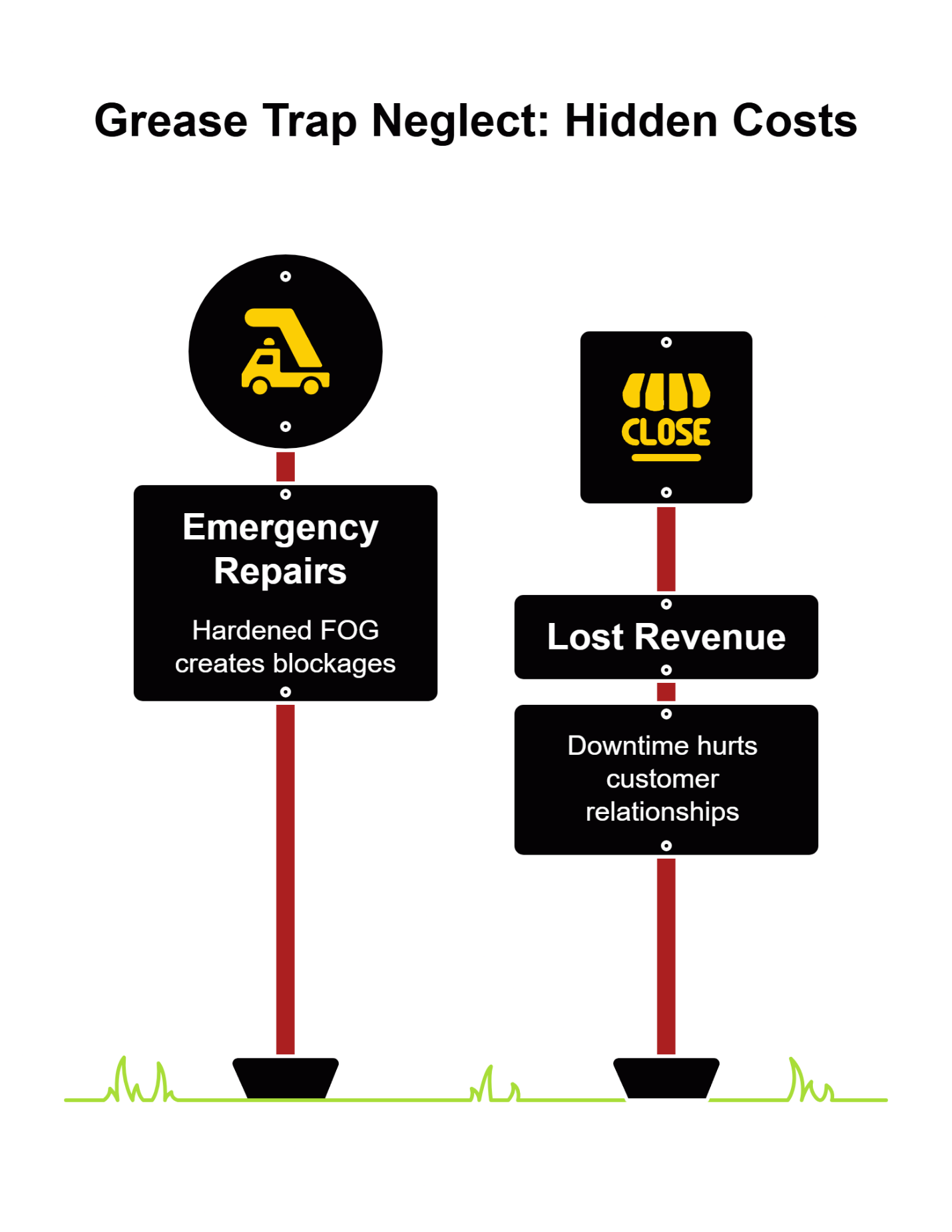
The Four Hidden Costs of Neglect
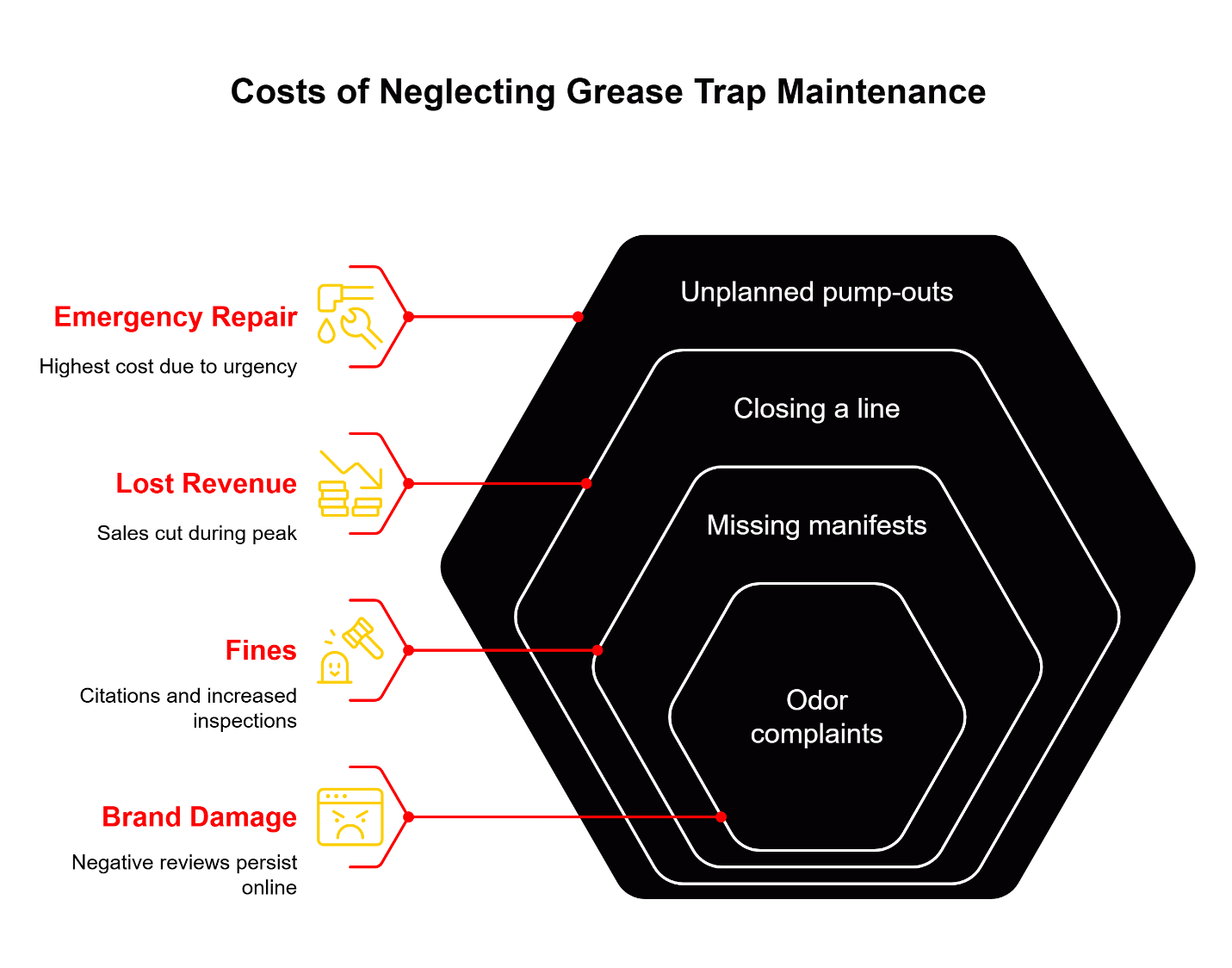
When grease trap maintenance falls behind schedule, the consequences extend far beyond a simple cleaning bill:
- Emergency repair costs – Unplanned pump-outs, line jetting, and remediation after an overflow cost more than routine service, especially during premium timing periods
- Lost revenue from downtime – Closing a line or the dining room during peak periods cuts sales, strands labor, and damages guest trust
- Fines for non-compliance – Missing manifests or evidence of over-threshold accumulation can trigger citations and increased inspection frequency
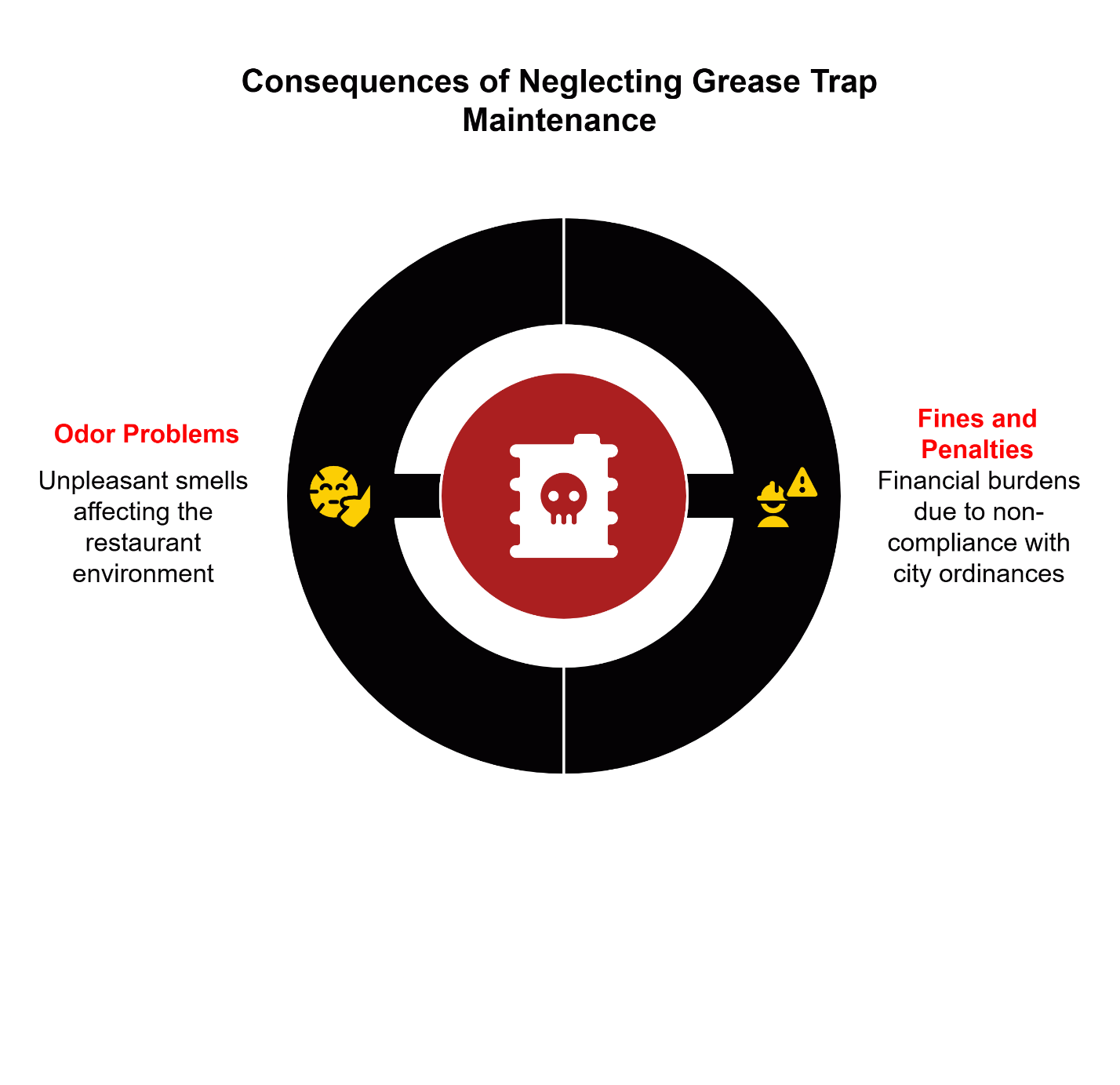
- Damage to brand reputation – Odor complaints and visible backups create memorable negative moments that persist in online reviews
Terminology
FOG (Fats, Oils, Grease): Kitchen byproducts that cause clogs and code violations; they must be intercepted and removed on schedule.
Grease Trap/Interceptor: A device that captures FOG before it enters the sewer; it requires periodic pumping and cleaning.
Manifest: A service and disposal record that proves compliant handling; keep it on file for inspections.
Maintenance Threshold: A trigger (for example, when FOG reaches ≥25% of tank volume) to pump/clean sooner than the default cadence.
Why Reputation Rises or Falls on Back-of-House Maintenance
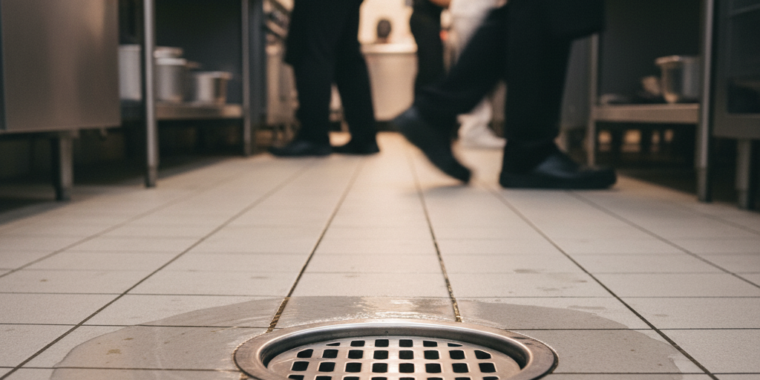
Guests rarely notice a well-run trap. They notice odors, slow drains, and backups—and they mention them in reviews. In busy service, one preventable overflow can force a partial shutdown, strand tickets, and send diners to social media. Even when the kitchen recovers, the search results don’t forget.
Industry practice connects these dots clearly: FOG control reduces clogs and overflows, which reduces customer-visible issues. Federal guidance emphasizes that effective FOG programs protect sewers and reduce enforcement actions, which aligns with a smoother inspection experience for operators.
Houston’s Baseline: Regular Cleaning Cadence
Within Houston city limits, restaurants are expected to keep grease traps on a regular cleaning schedule; quarterly (approximately every 90 days) is typical unless a waiver is approved by local authorities. Keeping manifests current is part of staying inspection-ready.
Certainty note: The 90-day baseline and waiver path are sourced directly from the City’s published guidance. Individual schedules still vary by kitchen volume and trap sizing, which is generally accepted practice.
Exactly What Professional Service Includes: A 5-Step Walkthrough
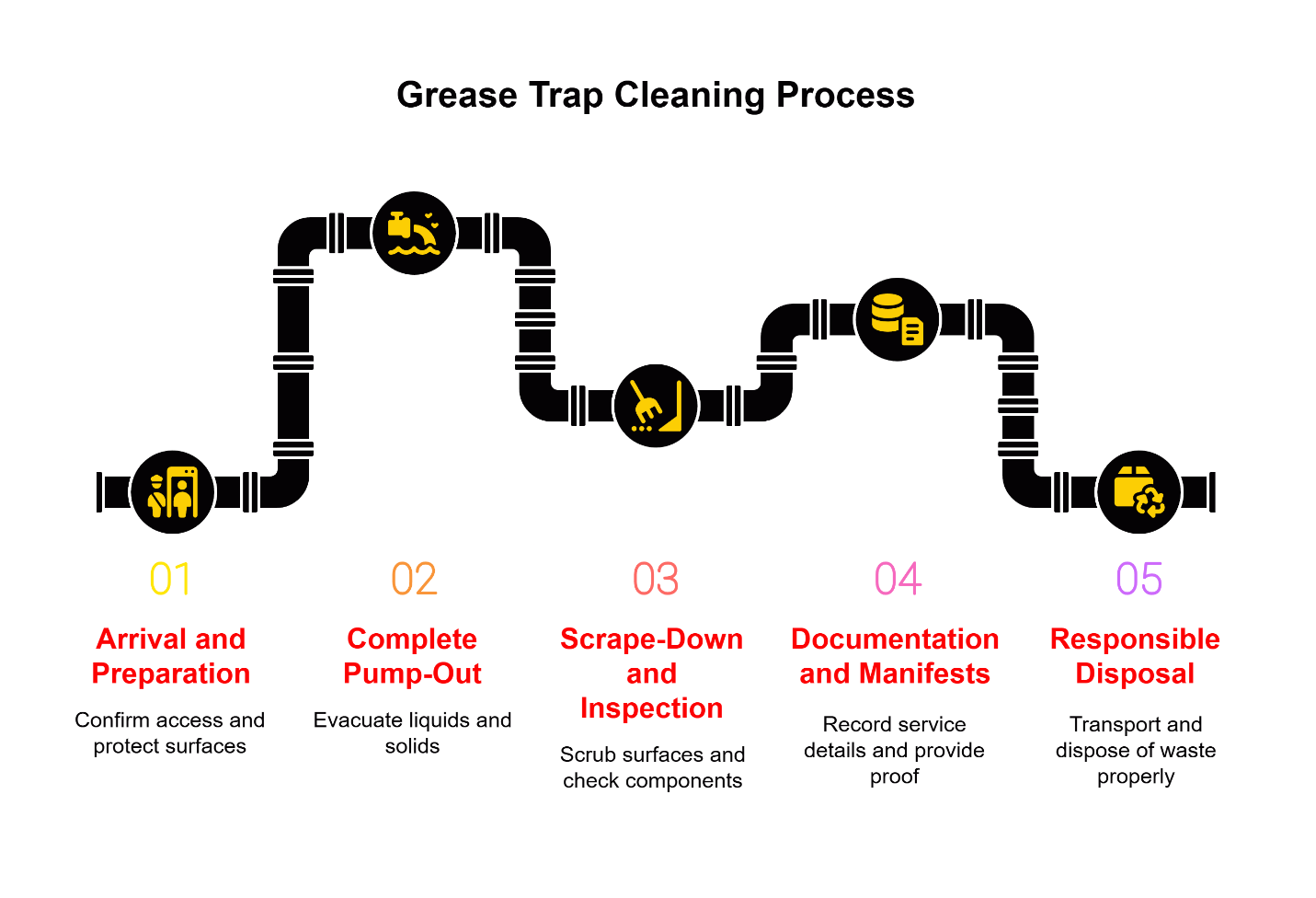
The following process describes standard professional practice and aligns with the scope outlined for grease trap cleaning in Houston:
Step 1: Arrival and Preparation
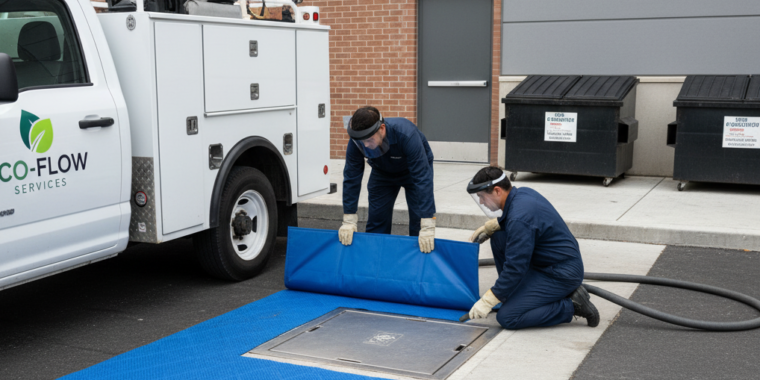
Confirm access, isolate the trap area, and stage hoses and covers to protect kitchen surfaces during the service process.
Step 2: Complete Pump-Out
Evacuate liquids and solids to remove captured FOG and settleable materials using specialized vacuum equipment designed for this purpose.
Step 3: Scrape-Down and Inspection
Scrub internal surfaces, check baffles and inlet/outlet tees, and note any damage or unusual accumulation that could affect future performance.
Step 4: Documentation and Manifests
Record date/time, volume, hauling destination, and necessary notes; leave a copy for your files as proof of compliant service.
Step 5: Responsible Disposal
Transport and dispose via approved facilities; maintain records for inspection requests to demonstrate proper environmental handling.
Certainty note: Steps 1-5 reflect common industry workflow and align with the provider’s published description of services.
Compliance, Simplified: Manifests, Documentation & Passing Inspections
Think of the manifest as your inspection passport. When an inspector visits, the fastest path to “all good” is a clean trap and organized records:
- Keep manifests in a dedicated binder or digital folder that staff can retrieve quickly
- File them sequentially; add a quick-reference log on the inside cover noting date, volume, and provider
- If volume spikes or a slow drain appears, schedule an interim service and file that manifest too
Houston’s public guidance stresses routine cleaning (approximately 90 days) and recognizes waivers for different circumstances. Texas model standards reinforce record-keeping and program design. Reviewing both gives managers the policy context behind day-to-day operations.
Important: This represents a practical approach that helps you comply, but no legal guarantees can be made. Specific permit or utility requirements may differ based on individual circumstances.
Set a Maintenance Rhythm: Cadence, Thresholds & Checklists
A reliable schedule keeps you out of the “surprise problem” zone. Use two anchors:
Default cadence: Plan for quarterly cleanings in Houston unless your operation qualifies for and receives a different cadence via local authority approval.
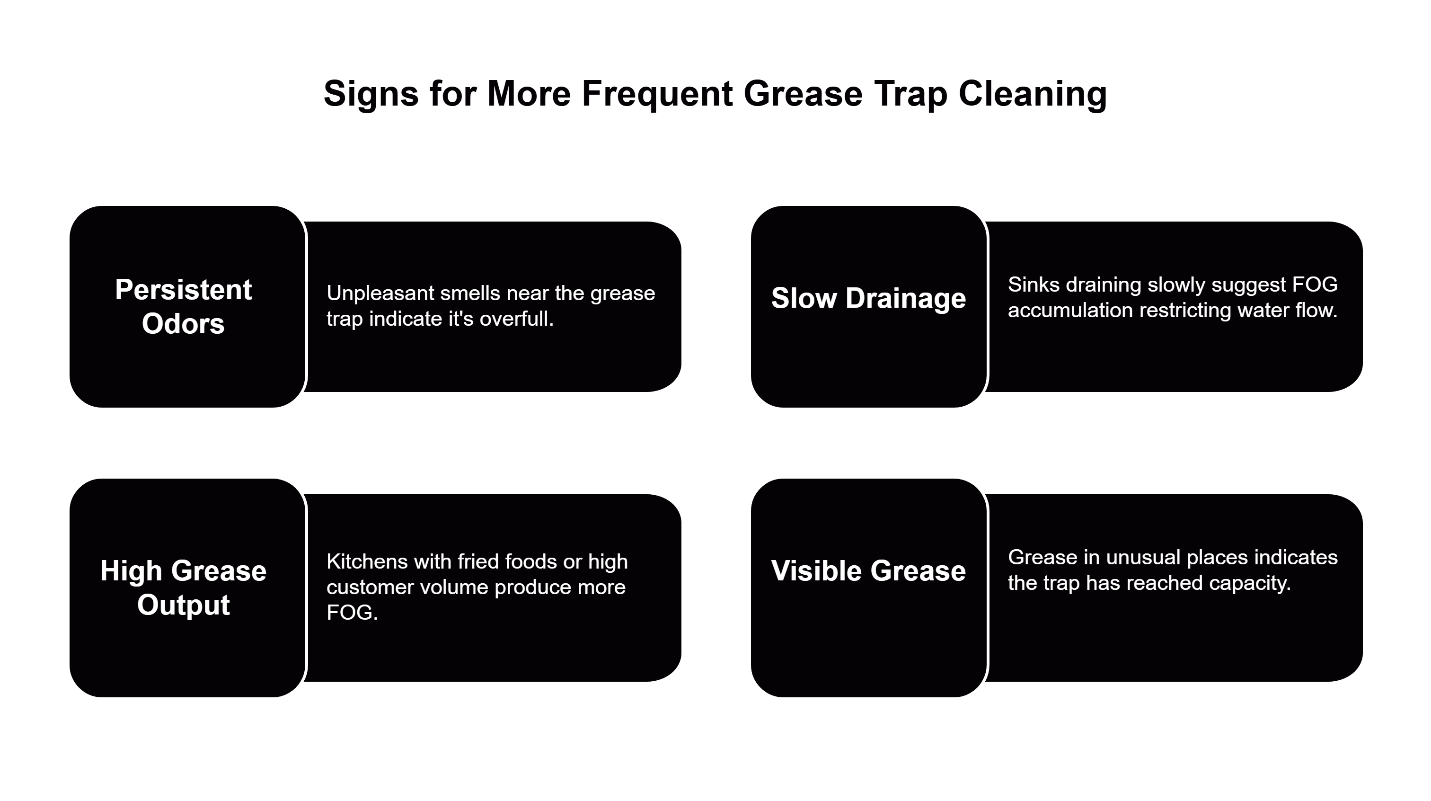
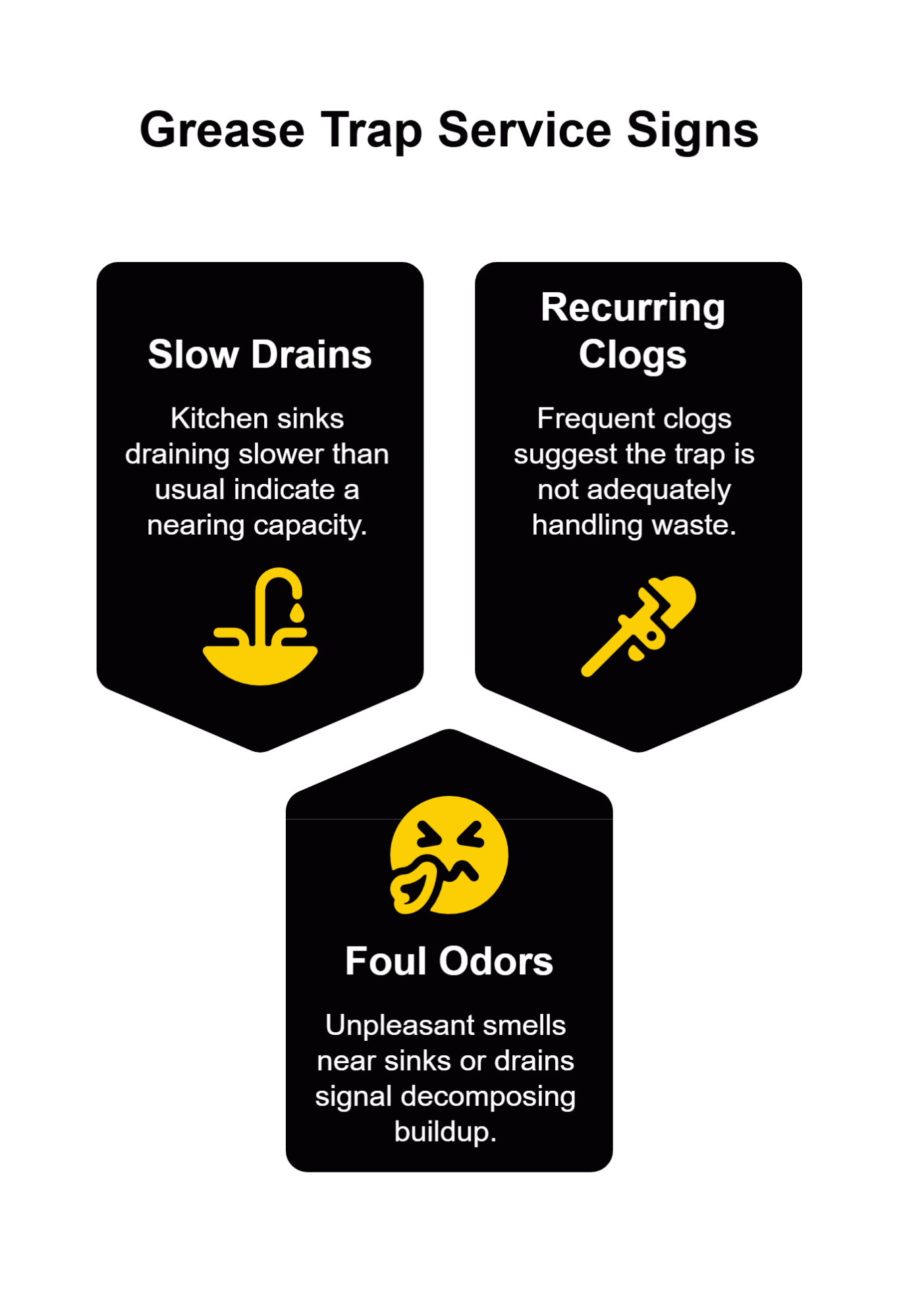
Threshold trigger: If the trap reaches ≥25% FOG by volume—or you notice slow drains, odor, or high-volume periods—service sooner.
Weekly Monitoring Checklist
A simple weekly line check (no tools required) helps catch issues early:
- Look for unusually slow floor drains near the trap area
- Note any recurring odors, especially during peak service periods
- Track recent spikes in fryer output or dish volume that could accelerate FOG accumulation
- Log observations on your kitchen checklist
If anything trends the wrong way, book an earlier pump-out rather than waiting for the scheduled service date.
For facilities with multiple trap types that often share maintenance expectations, see comprehensive liquid waste services.
Choosing a Reliable Partner in Houston
When evaluating a service provider, these factors separate adequate from exceptional:
Proven coverage and tenure: A team serving Greater Houston since 1985 brings process maturity and route flexibility that newer providers may lack.
Complete service area: Coverage across all ZIP codes within 100 miles of Houston simplifies operations if you manage multiple locations and need consistent service quality.
Clear scope and documentation: Look for a published 5-step service process, manifests left on site, and assistance maintaining inspection-ready files.
Responsive scheduling: Online contact options, dependable phone support, and predictable service windows reduce disruption during busy periods.
When you’re ready to establish a maintenance schedule, contact Drane Ranger at 281-489-1765. Multi-trap facilities with broader environmental compliance needs may also benefit from related compliance services.
Service note: All services discussed apply to non-hazardous wastewater; hazardous waste drop-offs are not accepted.
The Friday Night Success Story
Picture that same scenario transformed. The air is clean, drains move freely, and the inspector’s quick review ends with a nod. Guests focus on the food, not the plumbing. That’s the payoff of a steady maintenance rhythm, clear documentation, and a partner who makes service uneventful.
This scenario illustrates why proactive maintenance functions as reputation insurance. The relatively modest cost of regular professional service prevents the exponentially higher costs of emergency repairs, regulatory violations, and customer relationship damage that can take months to repair.
FAQs
How often should Houston restaurants clean grease traps?
Quarterly cleaning is typical for most Houston restaurants, though high-volume kitchens often require more frequent service. The key is maintaining current manifests that document professional service and proper disposal.
What happens during a professional grease trap service?
Professional service involves five key steps: arrival and preparation → complete pump-out → scrape-down and inspection → documentation with manifests → disposal via approved facilities. The entire process typically takes 30-60 minutes depending on trap size and condition.
How does regular maintenance protect our restaurant’s reputation?
Proactive service avoids odors, slow drains, and backups that guests notice, while organized manifests help inspections proceed smoothly. Together, these measures reduce public-facing failures and protect your online reputation.
What should we do if we notice problems between scheduled cleanings?
Contact your service provider immediately when warning signs appear. Early intervention always costs less than emergency service and prevents customer-visible disruptions that can damage your reputation.
Get a maintenance schedule that prevents downtime or schedule compliant grease trap service by calling 281-489-1765.
Drane Ranger Vacuum Services
13911 India St, Houston, TX 77047, United States
Phone: 281-489-1765 • Hours: Mon–Fri, 9am–6pm
Service Area: Greater Houston Area (~100-mile radius)
Trust Links: Google Business Profile • BBB Profile
Our Editorial Process:
The Drane Ranger Insights Team is our dedicated engine for synthesizing complex topics into clear, helpful guides. While our content is thoroughly reviewed for clarity and accuracy, it is for informational purposes and should not replace professional advice.