
📌 Key Takeaways
Houston grease trap compliance depends on what’s actually in your trap—not how long since your last cleaning.
- The 25% Rule Trumps the Calendar: When floating grease plus settled sludge equals one-quarter of your trap’s depth, you fail inspection—even if you cleaned two weeks ago.
- What You Can’t See Still Counts: Sample wells only show the surface; heavy sludge sinks to the bottom and builds up invisibly until you’re already over the limit.
- Busy Kitchens Hit Limits Faster: High-volume restaurants often reach 25% in six to eight weeks, well before the 90-day minimum service deadline arrives.
- Warning Signs Speak Before Inspectors Do: Slow drains, persistent odors near floor drains, and grease appearing in unexpected places all signal your trap is approaching capacity.
- Invoices Don’t Prove Compliance: Inspectors want manifests showing where the waste actually went—a payment receipt alone won’t pass a FOG audit.
Measure your actual accumulation rate, not just your calendar.
Houston restaurant owners and kitchen managers will gain clarity on inspection readiness here, preparing them for the compliance documentation details that follow.
~ ~ ~ ~ ~ ~ ~ ~ ~ ~ ~ ~ ~ ~ ~ ~ ~ ~
An inspector just cited the 25% rule. The paperwork looks official, the terminology sounds technical, and suddenly the kitchen feels like hostile territory.
Here’s what that citation actually means: the combined thickness of floating grease at the top and settled sludge at the bottom of the trap has exceeded 25% of the total liquid depth. That single measurement—not the calendar, not the surface appearance—determines whether a Houston kitchen passes or fails a FOG audit.
The 25% rule is the operational trigger that separates perceived compliance from actual compliance for busy kitchens. Understanding this math levels the playing field between operators and inspectors.
Immediate Takeaway: What the 25% Rule Means for Your Kitchen Right Now

If an inspector says a trap is over the 25% rule, they mean it contains too much combined grease and sludge—even if the surface does not look full.
The Plain-English Version
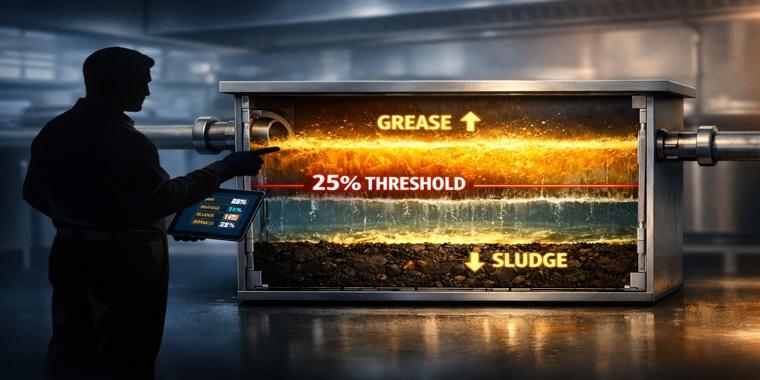
The threshold works like this: inspectors measure the floating grease layer at the top, then measure the settled sludge at the bottom. Those two measurements get added together. When that combined number equals or exceeds 25% of the trap’s total liquid depth, the kitchen has crossed the compliance line.
The water in the middle doesn’t count. Only the top and bottom layers matter.
Why This Matters Even If You’re Still Inside 90 Days
Houston’s FOG regulations require grease trap cleaning at least every 90 days. But that’s a minimum schedule, not a guaranteed safe interval. The 25% threshold operates independently—a high-volume kitchen can hit that limit in six weeks.
When inspectors arrive, they don’t ask when the last pump-out happened. They measure what’s in the trap right now. Think of inspection readiness like a pre-flight checklist for the kitchen’s wastewater system: the calendar might say there’s time remaining, but the actual condition determines whether the operation clears for takeoff.
The Exact Definition: How Houston’s 25% Threshold Works
The 25% rule measures floating grease plus settled sludge against total trap depth. Understanding the calculation removes the mystery. The City of Houston’s regulatory framework establishes this threshold, and the math is straightforward once broken down.
What Counts: Floating Grease Plus Settled Sludge
Two materials accumulate in every grease trap:
Floating FOG (fats, oils, and grease): Lighter material that rises to the surface, forming a cap on top of the water.
Settled sludge: Heavier food particles and solids that sink to the bottom over time.
Both layers count toward the 25% limit. This is the detail that catches many operators off guard.
A Simple Formula in Words
Combined accumulation (top FOG + bottom sludge) ÷ Total liquid depth = Compliance percentage
When that percentage hits 25% or higher, the trap fails inspection. The City of Houston code portal provides the regulatory foundation, but the practical reality is simple: keep combined layers below that quarter-mark.
Why Surface Grease Alone Does Not Tell the Full Story
A quick glance through the sample well creates false confidence. The problem is what remains invisible from above.
Why Visual Checks Fail
Sample wells reveal the floating grease layer and the water beneath it. What they don’t show is sludge accumulating at the bottom. That settled material builds silently until the trap is already over threshold.
An operator who peers through the sample well and sees relatively clear water might assume everything is fine. Meanwhile, inches of dense sludge have compacted below, pushing the combined total past 25%. The article on visual checks vs. core sampling explains exactly how this disconnect creates citation risk.
How Hidden Sludge Creates False Confidence
High-volume kitchens generate significant solid waste—food particles, sediment, organic matter that sinks rather than floats. Over weeks of operation, that material accumulates where nobody looks. By the time slow drains or odors appear, the trap may already exceed the threshold.
Why High-Volume Houston Kitchens Hit 25% Before the 90-Day Minimum
The 90-day rule and the 25% rule operate on different timelines. Calendar compliance and capacity compliance are not identical.
The Difference Between Legal Minimum and Practical Safety
High-volume accumulation often outpaces Houston’s baseline 90-day service mandate. The regulation also requires service whenever accumulation hits 25%, whichever comes first.
For a neighborhood breakfast café running light morning service, 90 days might provide adequate margin. For a high-volume steakhouse or busy fast-casual operation running lunch and dinner rushes, that same interval can leave the trap dangerously full by week six. The EPA’s pretreatment guidance on fats, oils, and grease confirms why accumulation rates vary so dramatically between operations.
Common Patterns That Shorten Safe Intervals
Several operational realities accelerate accumulation: heavy frying operations producing substantial daily grease output, high customer volume generating more food waste, extended operating hours multiplying daily load, and menu items with significant fat content contributing more FOG per plate.
A kitchen matching two or more of these patterns should assume the 90-day minimum won’t provide enough margin. The question becomes how quickly the operation actually reaches threshold—not how long the calendar says remains.
Same city. Same rule. Different accumulation rate.
Operational Signs You May Be Near or Over the Limit
Technical math aside, kitchens often signal when traps approach capacity. These warning signs translate threshold calculations into practical awareness.
Slow drains indicate the trap may be restricting flow. Accumulation reduces effective processing capacity, causing drainage problems before complete blockages occur.
Persistent odors near the trap area or floor drains suggest accumulated waste is decomposing faster than removal. A properly maintained trap shouldn’t smell from across the kitchen.
Recurring patterns during busy periods deserve particular attention. If slow drains or odors consistently appear during peak service and recede when volume drops, the trap is likely hitting functional limits under load. That pattern leaves no margin for unannounced inspections.
How the 25% Rule Fits Into Real Inspection Readiness
Understanding the threshold is one component of a larger grease trap compliance protocol. True inspection readiness means systematic preparation—knowing the current trap condition, maintaining proper service intervals, and holding documentation that proves legal chain of custody.
Why Threshold Knowledge Matters for Audits
When inspectors conduct FOG audits, they measure current accumulation, review service history, and examine chain-of-custody documentation. The governing reality is clear: true kitchen compliance is not just paying an invoice for pumping—it’s holding legal manifests and maintaining real inspection readiness.
An operator who understands the 25% math can make informed decisions about service intervals rather than relying on calendar assumptions. The FOG Compliance Checklist walks through the full preparation process.
What to Review Before Inspectors Arrive
Three questions matter most: What’s the approximate accumulation level right now? Is the pumping schedule based on actual capacity or just calendar minimums? Can the operation produce manifests proving proper disposal—not just invoices showing payment?
That last distinction separates compliant operators from those who discover too late that an invoice alone doesn’t prove legal disposal.
When to Shift From Calendar-Based Pumping to Capacity-Based Scheduling
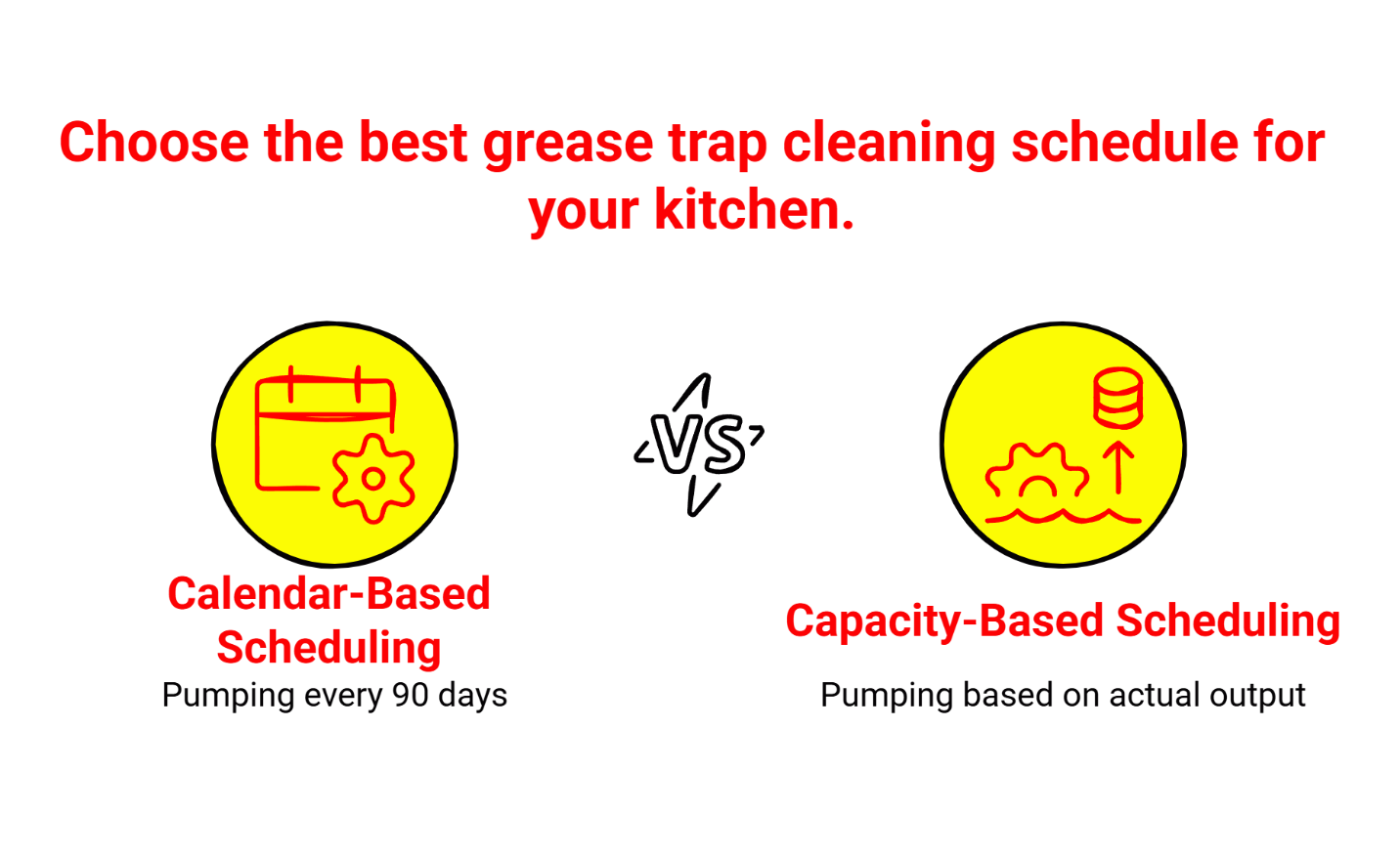
The 90-day schedule was never meant as a set-it-and-forget-it solution. It’s a regulatory backstop, not a strategy for busy kitchens.
Why Custom Intervals Matter
Every kitchen operates differently. Treating a chef-driven independent and a high-volume fast-casual chain identically—pumping both every 90 days—means one likely receives service too frequently while the other risks citation. Capacity-based scheduling matches service intervals to actual output, keeping operations safely below threshold without overpaying for unnecessary service.
What to Discuss With Your Service Provider
A compliant service partner can help determine the right interval based on how quickly a specific kitchen reaches 25% given current volume, what frequency provides adequate margin before inspections, and whether seasonal patterns should adjust the schedule.
The complete compliance guide for Houston restaurants provides additional context, and the article on cleaning frequency addresses how to match intervals to kitchen demands.
Frequently Asked Questions About the 25% Rule
What counts toward the 25% rule in a grease trap?
Both the floating grease layer at the top and the settled sludge layer at the bottom count toward the threshold. The water in the middle does not. Inspectors add top and bottom measurements together and compare that total against the trap’s total liquid depth.
Does the 90-day schedule override the 25% threshold?
No. The requirements operate in parallel. Houston mandates service at least every 90 days or when accumulation reaches 25%—whichever happens first. A kitchen hitting 25% in six weeks cannot wait until the 90-day mark.
Can a sample well visual check miss a violation?
Yes. Sample wells show the surface layer and water beneath, but they don’t reveal sludge at the bottom. An operator can see clear water through the sample well while several inches of settled sludge push the combined total past compliance threshold.
How often do high-volume kitchens need service if they hit 25% early?
Many high-volume operations need service every 30 to 60 days to stay safely below threshold. No universal review schedule applies to every kitchen—the specific interval depends on output volume, menu composition, and operating hours. Audit the actual accumulation rate rather than defaulting to the 90-day minimum.
Take the Next Step Toward Compliance Clarity
The 25% rule doesn’t have to feel like a mystery controlled by inspectors. Once the math makes sense, operators can make informed decisions and approach audits with confidence instead of anxiety.
Drane Ranger has served the Greater Houston area since 1985, helping restaurants maintain the kind of inspection readiness that turns surprise audits into routine confirmations. As one operator noted: “Drane Ranger is very professional and reliable. Basically they can take care of all your grease drain needs.” — Shelley M., Google Reviews
If the current pumping schedule is based on calendar assumptions rather than actual kitchen capacity, it may be time to reassess. For operators who want compliance clarity and operational protection—not just another invoice—the next step is straightforward.
Call 281-489-1765 to discuss whether current service intervals match real accumulation patterns, or visit the contact page to request a grease trap compliance assessment. Additional inspection-readiness resources are available through the Grease Grit & Lint Traps service page.
Drane Ranger maintains BBB accreditation and operates as a compliance-focused partner for Houston kitchens that want reliable protection against municipal penalties—not the cheapest undocumented pump-out available.
Our Editorial Process
Our expert team uses AI tools to help organize and structure our initial drafts. Every piece is then extensively rewritten, fact-checked, and enriched with first-hand insights and experiences by expert humans on our Insights Team to ensure accuracy and clarity.
About the Author
The Drane Ranger Insights Team creates plain-English educational content for businesses that need practical liquid waste compliance guidance in the Greater Houston area. The team publishes under Drane Ranger, the operating brand of Drane Ranger Vacuum Services.