

📌 Key Takeaways
Your septic system gives clear warnings before it fails—learning to read them saves thousands in emergency repairs.
- Four Red Flags Demand Action: Sewage backups, persistent odors, slow drains with gurgling sounds, or mushy lawn patches all signal that your tank has reached critical capacity and needs immediate professional attention.
- The Two-Year Rule Protects Your Investment: Houston-area homes typically need septic pumping every 2-3 years, though garbage disposals, household size, and water usage can shorten that window significantly.
- “Cleaning” Beats “Pumping” Every Time: True septic tank cleaning removes the compacted sludge at the tank bottom that causes most failures—basic pumping only removes liquids and leaves the real problem behind.
- Early Action Prevents Five-Figure Disasters: Catching saturation signs early through professional cleaning costs hundreds, while ignoring them and replacing a damaged drain field costs several thousand dollars.
- Documentation Builds Resale Value: Maintaining service records, inspection reports, and tank location maps proves to buyers that your system has received proper care and functions correctly.
Vigilance plus routine maintenance equals a protected home and preserved property value.
Houston-area homeowners with septic systems will find practical guidance here, preparing them for the detailed maintenance overview that follows.
The toilet gurgles. Again.
You pause mid-flush, listening to that slow, uncertain drain. Later that afternoon, stepping into the backyard after a bone-dry week, you catch it—a faint smell you can’t quite place but definitely shouldn’t be there. Something’s not right, though you’re not entirely sure what or how worried you should be.
For homeowners with septic systems in the Houston area, these quiet warning signs often signal bigger problems developing beneath your property. Your septic tank functions as your home’s hidden immune system, silently processing waste and protecting both your family’s health and your property value. When it stops working properly, small inconveniences can escalate into expensive emergencies.
Here’s what you’ll know in the next seven minutes: whether you need service now, how often Houston homes should schedule pumping, exactly what we do on-site, and the easiest way to book with a local team that’s done this since 1985. You’ll finish with the clarity and confidence to protect your home’s most critical hidden system.
Quick Reference: Do You Need Service Now?
Use this 90-second diagnostic checklist. If you notice any of these signs, call for professional service today:
Septic Health Interval Calculator
Recommended pumping schedule based on household size and tank capacity:
| Household Size | Tank Size (Gallons) | Recommended Interval |
| 1-2 people | 750-900 | Every 3 years |
| 1-2 people | 1,000-1,250 | Every 3-4 years |
| 3-4 people | 750-900 | Every 2 years |
| 3-4 people | 1,000-1,250 | Every 2-3 years |
| 5-6 people | 1,000-1,250 | Every 1-2 years |
| 5-6 people | 1,500+ | Every 2-3 years |
Houston homes commonly schedule every 2–3 years. Call sooner if you notice any warning signs below.
Immediate Warning Signs Checklist
-
☐ Sewage backup or overflow: Wastewater backing up into your home or pooling on your property means your tank has reached critical capacity
-
☐ Persistent foul odors: Strange smells around your yard or from drains indicate waste isn’t being contained properly
-
☐ Slow drains or gurgling sounds: Sluggish kitchen sinks, gurgling toilets, or slow-emptying washing machines signal a tank nearing capacity
-
☐ Soggy lawn or unusually green patch: Mushy, waterlogged areas or suspiciously lush grass suggest your tank is leaking or overflowing
Need urgent service? Call 281-489-1765 for same-day appointments when available.
Do You Need Service Now? (90-Second Diagnostic)
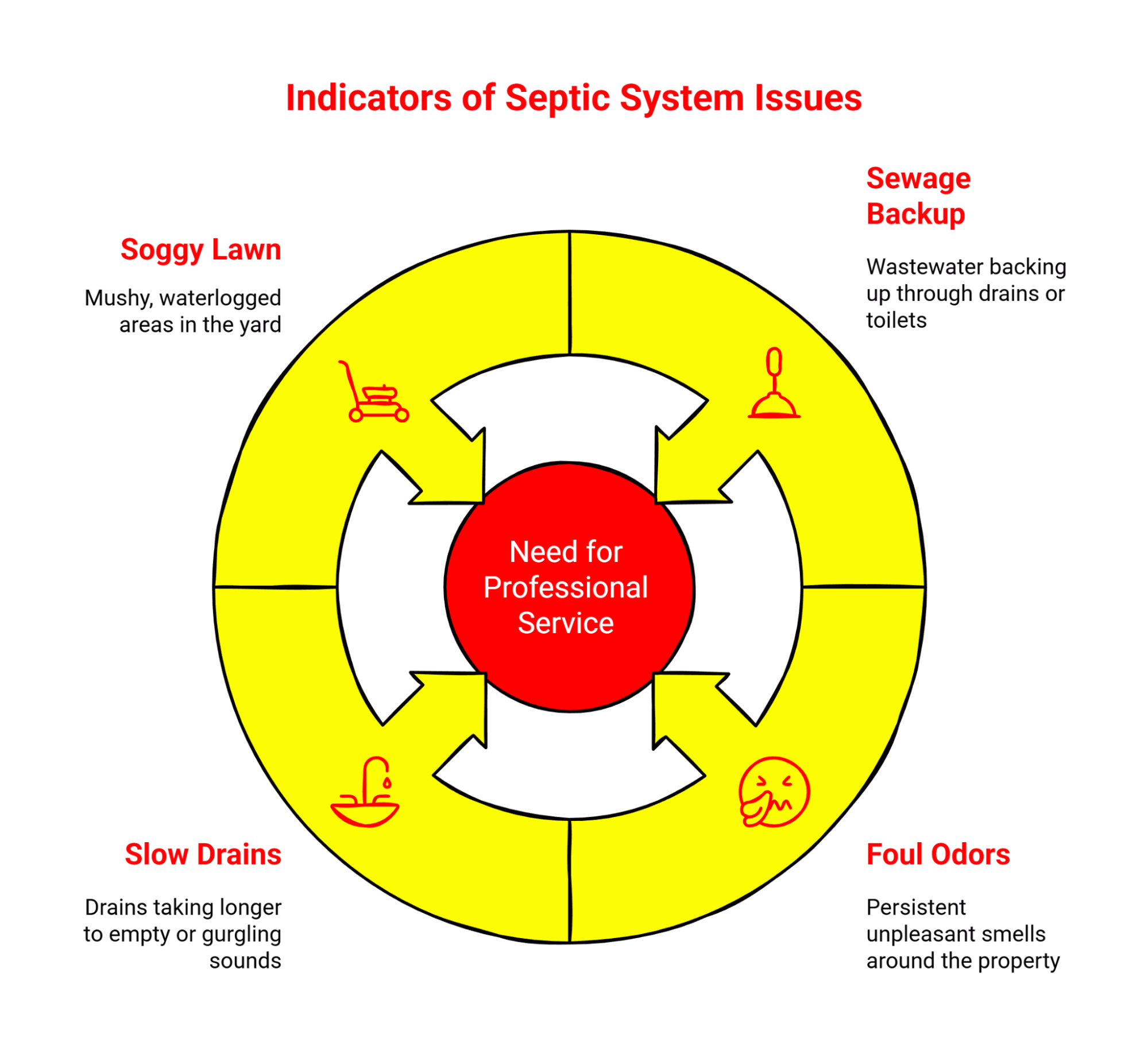
Let’s address the most pressing question first. Run through this checklist—if any apply to your situation, professional service should happen soon.
Sewage backup or overflow represents the most serious warning sign. If wastewater is backing up through drains or toilets, or you see pooling sewage anywhere on your property, this qualifies as an emergency. Your tank has reached absolute capacity. Continuing to use your plumbing will only compound the problem and potentially force contaminated water into your home.
Persistent foul odors around your yard, near the tank location, or emanating from household drains all indicate your system is struggling to contain and process waste properly. These smells signal that gases or liquids are escaping where they shouldn’t. The problem will intensify without intervention.
Slow drains or gurgling sounds serve as your system’s early distress signals. When your kitchen sink drains sluggishly, your toilet makes unusual gurgling noises, or your washing machine takes noticeably longer to empty, these symptoms tell you the tank is filling beyond its safe working capacity. The system is running out of room to handle incoming wastewater.
A soggy lawn or unusually green patch indicates particularly serious trouble. If you notice a mushy, waterlogged area in your yard—especially near the drain field—or if one section of grass suddenly grows greener and lusher than surrounding areas, your tank may be leaking or overflowing. This means untreated wastewater is saturating your soil, creating both health hazards and potential drain field damage.
Why these signs demand immediate attention: Each symptom indicates that accumulated solids in your tank have reached critical levels. Without professional removal, you risk permanent damage to your drain field—a repair that can cost several thousand dollars. You also risk contaminating your property and creating serious health hazards for your family and neighbors.
If you’re experiencing any of these warning signs right now, call 281-489-1765. We often maintain same-day appointment availability for urgent situations throughout the Houston area.
How Often Should Houston Homes Pump a Septic Tank?
The standard recommendation is every 2–3 years for most residential properties in the Houston area. This isn’t an arbitrary interval—it’s based on how quickly solid waste accumulates in a typical household tank under normal use conditions. Your specific situation may require more frequent attention, however, depending on several factors.
Several variables influence how often your particular system needs service. Garbage disposal use significantly increases the solid load entering your tank, potentially cutting your safe interval in half. Running food waste through a disposal sends organic material directly into the septic system, where it must be broken down or removed.
Household size changes also affect your maintenance schedule. If your family has grown, or if you’re hosting long-term guests, your system processes more waste than it was originally designed to handle. More occupants means more wastewater, faster accumulation, and shorter intervals between necessary service calls.
Water softener discharge from older systems that drain into the septic tank can disrupt the bacterial balance your system depends on and reduce overall efficiency. Similarly, frequent large loads of laundry introduce extra water and lint into the system, filling the tank faster than typical use patterns would suggest.
For Houston homes specifically, our humid climate and seasonal rainfall patterns can affect drain field performance. Properties that experience poor natural drainage or yards that stay wet longer after storms may need more frequent professional attention to prevent system strain.
The factors table above provides general guidance, but always schedule service immediately if you notice any of the warning signs mentioned earlier—odors, slow drains, gurgling sounds, or soggy areas in your lawn—regardless of when you last had your tank serviced. For additional guidance on septic system maintenance best practices, the U.S. Environmental Protection Agency provides comprehensive homeowner resources on proper care and maintenance nationwide.
What We Actually Do During a “System Reset” (On-Site Process)
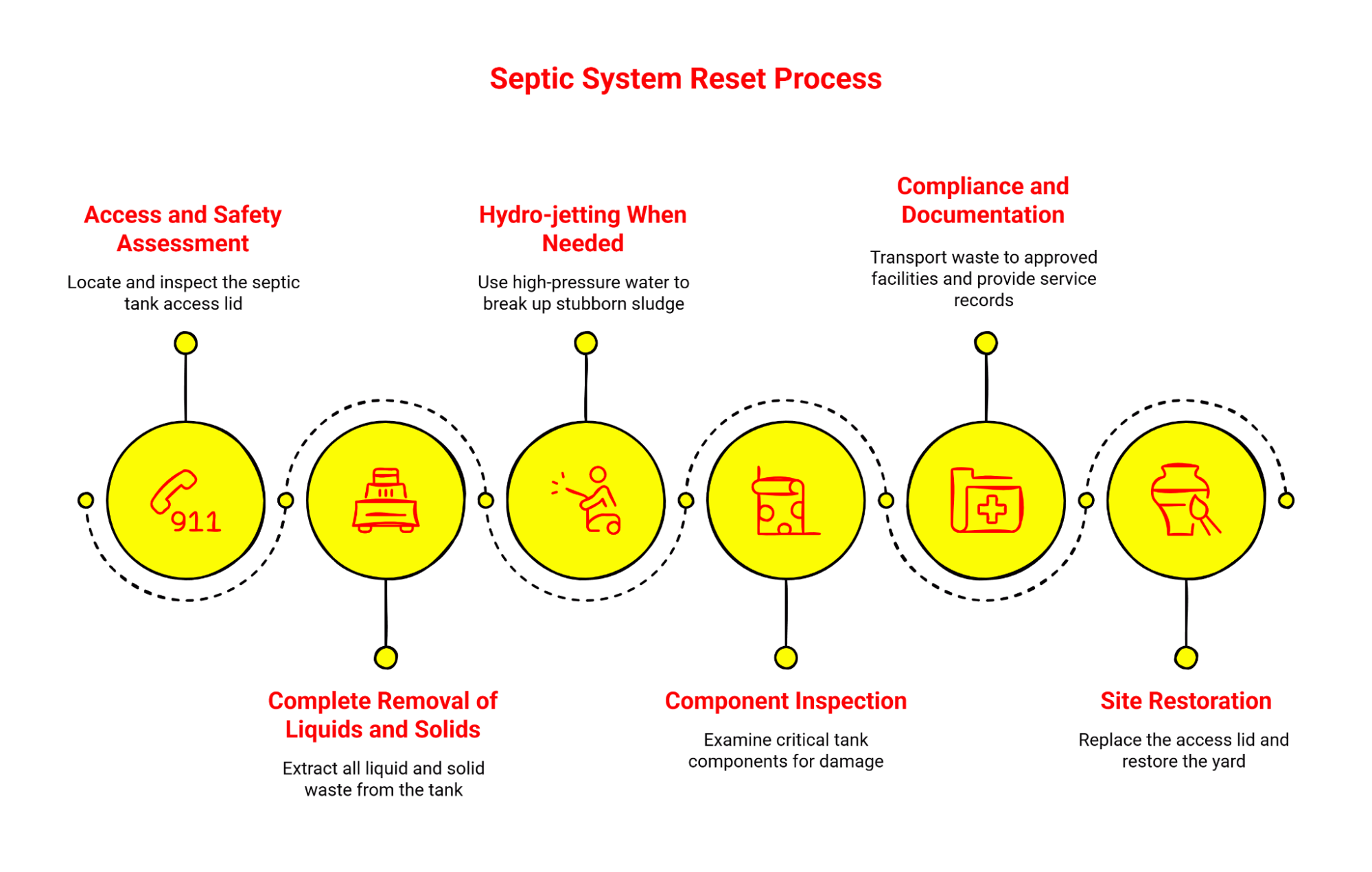
Residential Septic Tank Cleaning represents the physical removal of accumulated solids and often compacted sludge to restore safe function. It’s the practical “system reset” that prevents failure. Many homeowners use the terms “pumping” and “cleaning” interchangeably, but there’s an important distinction. True septic tank cleaning goes beyond simply removing liquids—it’s a complete restoration that removes all accumulated material, including the compacted sludge that settles at the bottom of your tank over time.
Here’s exactly what happens when our team arrives at your property.
Access and safety assessment comes first. We locate your tank’s access lid, which is often buried under a few inches of soil or grass, and carefully remove it. Before starting any work, our technician inspects the current levels and overall condition to determine the best approach for your specific situation.
Complete removal of liquids and solids follows. Using our vacuum truck, we remove all liquid waste from the tank. Then comes the critical step that defines true cleaning—we thoroughly extract the compacted sludge and solid waste that has settled at the tank’s bottom. This sludge causes most system failures. Leaving it behind means you’re only buying a few months before problems return.
Hydro-jetting when needed addresses heavily compacted buildup. For tanks that haven’t been serviced in many years or have particularly stubborn accumulation, we may use high-pressure water jetting to break up sludge adhered to the tank walls. This ensures we’re starting with a truly clean slate.
Component inspection happens while your tank is empty. We inspect critical elements including the inlet and outlet baffles or tees, which prevent solids from escaping into your drain field. We also examine the tank walls for cracks and assess overall structural integrity. These components act as your system’s gatekeepers—even a clean tank won’t function properly if they’re damaged.
Compliance and documentation ensures proper waste handling. We transport all removed material to approved treatment facilities according to Houston-area regulations. You receive complete documentation of the service, including the date, observations about your system’s condition, and our recommendations for your next service interval. This paperwork proves valuable for your records and becomes essential if you sell your home.
Site restoration completes the process. We replace the access lid securely and restore your yard to its original condition, leaving your property exactly as we found it—but with the peace of mind that your system is reset and protected.
This comprehensive process earns the name “system reset.” You’re not just removing today’s waste; you’re restoring your septic system’s full capacity and extending its working life by years.
Preventing the “Silent Failure” (Soggy Yard & Odors)
One of the most dangerous aspects of septic problems is how quietly they develop. Unlike a burst pipe that announces itself immediately, septic system failures often give subtle warnings that homeowners can easily dismiss until they become impossible to ignore.
Understanding why drain fields saturate helps explain the urgency. When your septic tank fills beyond its safe capacity, solid waste starts escaping into your drain field—the underground area where treated wastewater should filter safely into the soil. These solids clog the soil’s natural pores, preventing proper drainage. The result? Wastewater has nowhere to go but up, creating those telltale soggy patches and unmistakable septic odors.
Early sensory cues you shouldn’t ignore:
A section of your lawn that stays damp even during extended dry spells signals potential problems. Grass that suddenly grows faster and greener in one specific area indicates waste acting as fertilizer where it shouldn’t be. A faint odor that you notice when the wind shifts or after sunset suggests gases escaping from your system. Puddling water that doesn’t correlate with recent rain or irrigation patterns points to subsurface saturation.
These serve as your system’s early warning signals. The moment you notice them, you’re looking at a problem actively getting worse. The saturated soil needs time to recover, and the only way to stop further damage is professional tank cleaning and reset. Understanding proper septic system hygiene, as outlined by the Centers for Disease Control and Prevention, helps protect both your family’s health and your community’s groundwater.
Disclaimer: This guide is intended as a comprehensive starting point. For decisions specific to your unique situation, we always recommend consulting a qualified professional.
Our Editorial Process
All content undergoes multi-stage review including technical accuracy verification against TCEQ model standards, local regulation compliance checking, and practical application testing. We distinguish between verified regulatory requirements and generally accepted industry practices to help operators understand certainty levels.
About the Drane Ranger Insights Team
The Drane Ranger Insights Team is our dedicated engine for synthesizing complex topics into clear, helpful guides. While our content is thoroughly reviewed for clarity and accuracy, it is for informational purposes and should not replace professional advice.