
📌 Key Takeaways
A toilet gurgle isn’t background noise—it’s your septic system’s auditory alarm signaling that wastewater flow is restricted and capacity is compromised.
- The Gurgle Decodes System Stress: When air is forced back through your toilet bowl, it means wastewater can’t exit properly due to a full tank, blocked line, or venting issue.
- Three Zones Define Response Speed: Green symptoms (isolated gurgle, normal drains) mean schedule routine service; Yellow (multiple fixtures, faint odors) means call within 48 hours; Red (backup, strong odors, soggy ground) demands immediate emergency pumping.
- Emergency Pumping Functions as First Response: This service stops active backups, restores tank capacity, and prevents sewage from entering living spaces—it’s crisis stabilization, not just maintenance.
- Houston’s Clay Soil Shortens Safe Intervals: Poor drain field absorption in the region’s clay-rich soil puts extra stress on septic systems, typically requiring pumping every 2-3 years instead of the 3-5 year schedule common elsewhere.
- Proactive Cleanouts Transform Risk Into Reliability: Routine pumping every 2-3 years catches problems before symptoms appear, protects property value, and eliminates the health risks and expense of emergency backups.
React to the warning, not the disaster—speed determines whether you face a service call or a sewage cleanup.
Homeowners with residential septic systems in Greater Houston and Alvin will find a practical decision framework here, preparing them for the detailed severity assessment and emergency response guidance that follows.
That unmistakable sound from the bathroom—a low gurgle echoing from the toilet bowl when no one has flushed—stops homeowners in their tracks. It’s the kind of noise that makes you pause mid-conversation, wondering if you really just heard what you think you heard.
When a toilet gurgles, it’s doing more than making an unsettling noise. It’s delivering an auditory warning that something in your septic system needs immediate attention. Think of it as your plumbing clearing its throat, trying to tell you that wastewater isn’t flowing the way it should. For homeowners in Greater Houston and Alvin relying on septic systems, understanding what this sound means—and knowing when it signals an emergency—can be the difference between a quick professional visit and a sewage backup that turns your weekend into a nightmare.
This guide will walk you through exactly what causes toilet gurgling, provide a simple severity scale to assess your situation, and give you the confidence to know when it’s time to contact a professional or call 281-489-1765.
What Your Toilet’s Gurgling Is Really Telling You
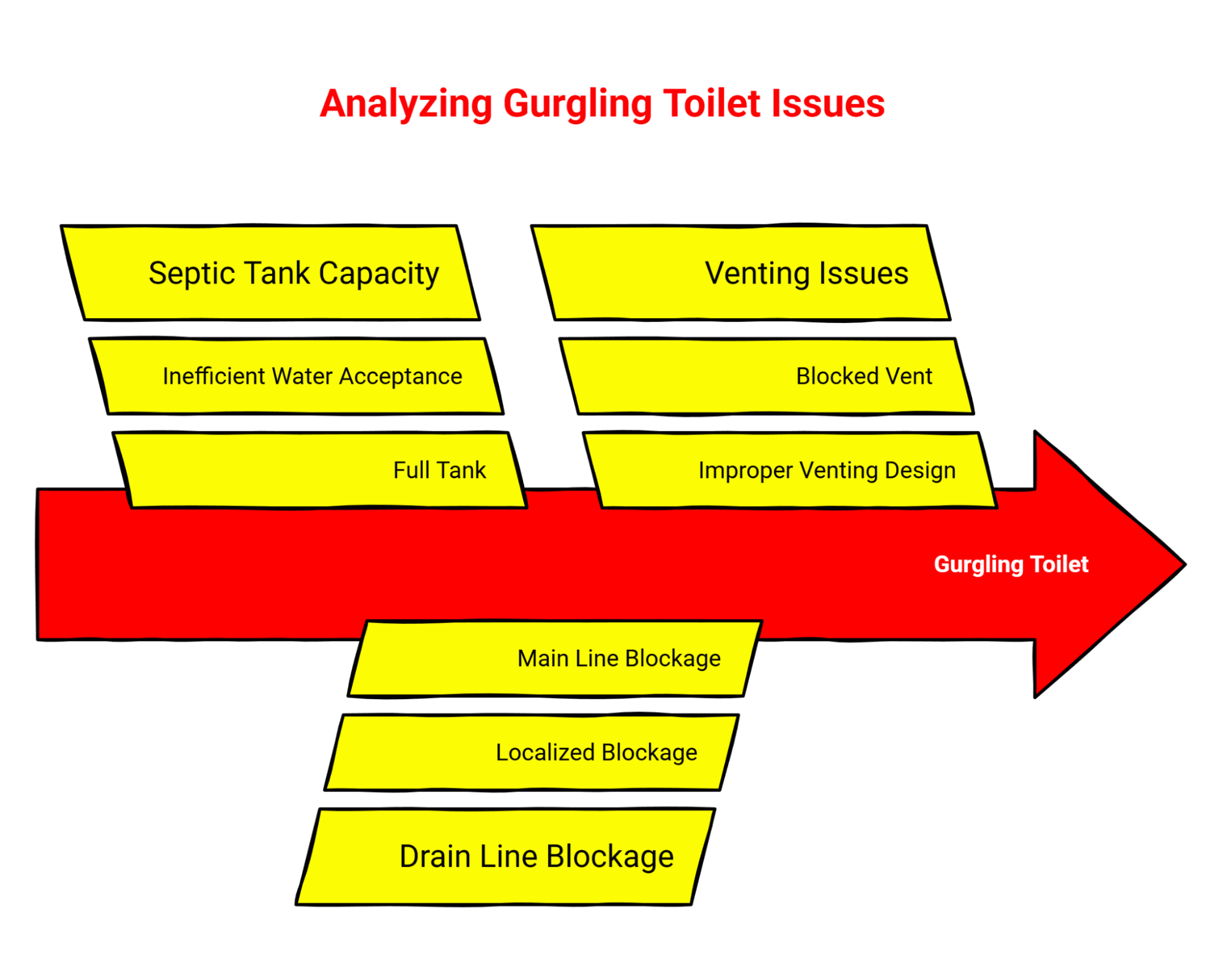
A gurgling toilet is signaling that air is trapped somewhere in your plumbing system and wastewater flow is being restricted. This happens for three primary reasons: your septic tank has reached capacity and can no longer accept water efficiently, a drain line has become blocked, or there’s a venting issue preventing air from escaping properly as water drains.
When wastewater tries to flow into an already-full tank, it creates back-pressure that forces air bubbles up through the nearest fixture—often your toilet. The gurgling sound is literally trapped air being pushed back into your home instead of venting safely outside. The EPA provides detailed information on how residential septic systems work and why proper flow is critical to system health.
Here’s where the situation gets more concerning. If just one toilet in your home gurgles occasionally, it might indicate a localized drain issue. However, when multiple fixtures start gurgling—especially when you run water in the sink or flush a toilet elsewhere in the house—it strongly suggests your septic tank is full or a main line is blocked. This escalates the situation from “keep an eye on it” to “call a professional soon.”
If you’re experiencing gurgling right now, take these immediate safety steps while you assess the severity:
- Reduce non-essential water use until you determine the cause
- Keep children and pets away from any soggy areas of ground near your septic tank or drain field
- Do not attempt to open the tank yourself, add chemical treatments, or use drain snakes on septic system lines
The “Noise Severity Scale”: When a Gurgle Becomes an Emergency
Not every gurgle demands immediate action, but some combinations of symptoms absolutely do. Use this severity scale to quickly assess your situation:
| Severity | Signs You’ll Notice | What’s Likely Happening | How Urgent | What to Do |
| Green Zone | Occasional gurgle from one fixture; normal flushing; no odors; drains working at regular speed | Tank approaching capacity or minor venting irregularity | Low | Schedule routine tank cleanout if you haven’t had one in 2-3 years; monitor for changes |
| Yellow Zone | Multiple fixtures gurgling; faint sewage odors near drains; some drains noticeably slower than usual | Tank is full or nearing capacity; possible partial blockage in main line | Medium | Contact a septic professional within 24-48 hours for evaluation and pumping |
| Red Zone | Gurgling with actual wastewater backup; strong sewage odors throughout home; visible wastewater pooling near tank; toilets won’t flush or water rises in bowl | Septic tank completely full or major blockage preventing drainage | Critical | Call for emergency pumping immediately: 281-489-1765 |
The Houston area’s clay-rich soil reduces how well drain fields can absorb water, which puts extra stress on the entire septic system and often shortens the typical pumping interval to every two to three years rather than the three-to-five-year schedule common in other regions.
If you’re in the Red Zone or concerned about potential health risks from sewage exposure, the CDC provides guidance on wastewater safety that every homeowner should know.
Ready to get help? Start your service today or call 281-489-1765.
When to Call for Emergency Pumping vs. When to Schedule Routine Service
Understanding the distinction between an emergency and routine maintenance helps homeowners respond appropriately without unnecessary panic—or dangerous delays.
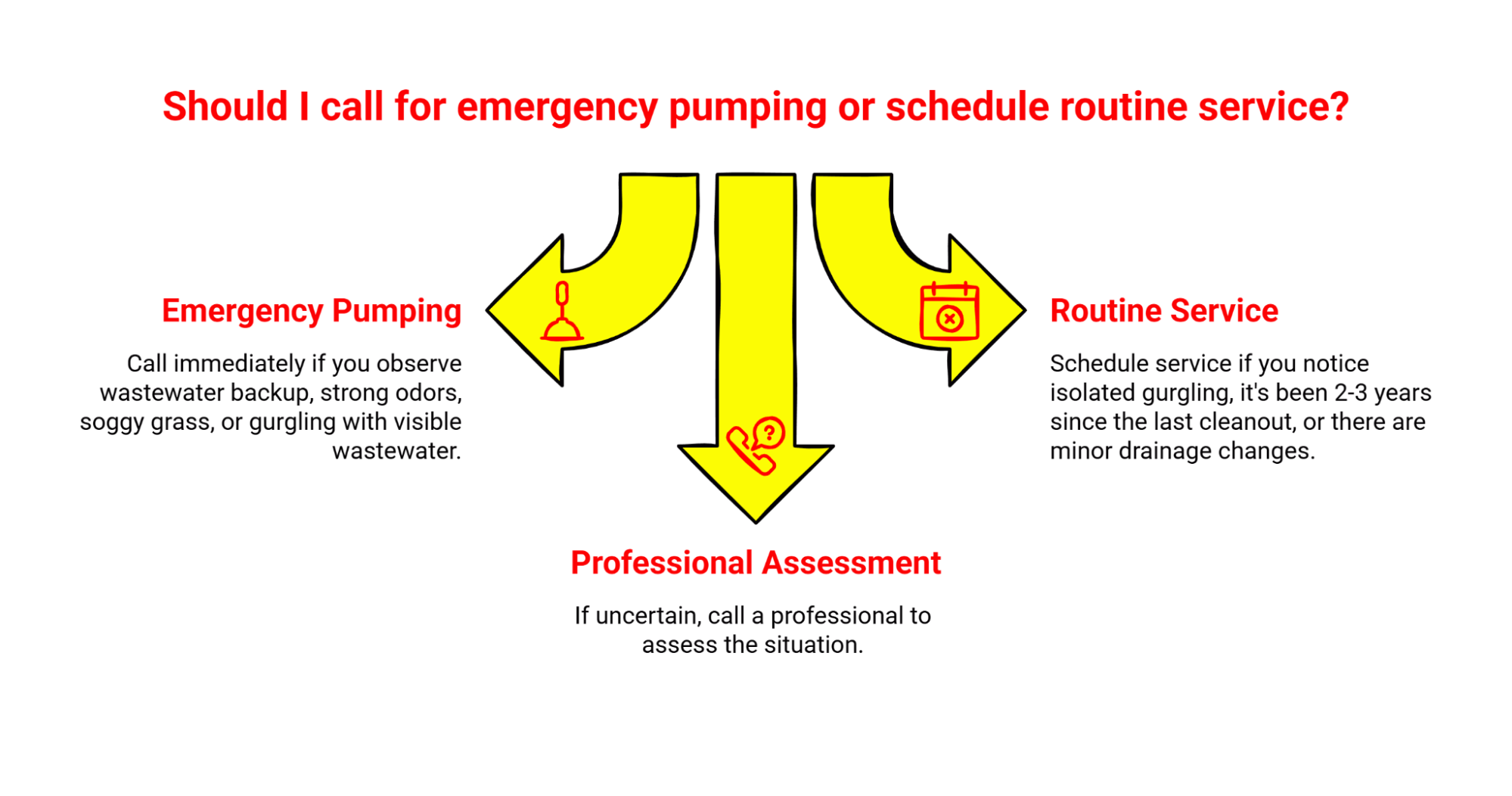
Call for emergency septic pumping when you observe any of these conditions: wastewater backing up into toilets, sinks, or showers; strong sewage odors inside the home; soggy or unusually lush green areas of grass above or near your septic tank or drain field; or the combination of gurgling sounds with visible wastewater or complete drainage failure.
Schedule routine septic service when you notice isolated gurgling without other symptoms, it’s been 2-3 years since your last tank cleanout, or you’re experiencing minor changes in drainage speed across multiple fixtures. In Greater Houston and Alvin, where many homes sit on septic systems, professional septic companies like Drane Ranger recommend proactive scheduling based on household size and tank capacity rather than waiting for warning signs.
Here’s the important part: if you’re uncertain which category your situation falls into, it’s always safer to call and have a professional assess it. A false alarm costs far less than dealing with sewage backup cleanup, potential health risks, and damage to your home’s flooring and walls.
Texas homeowners who want to understand state-specific requirements for septic system maintenance and permitting can reference the Texas Commission on Environmental Quality’s resources on on-site sewage facilities.
What Happens During Emergency Pumping (Step-by-Step “First Responder” Visit)
Many homeowners hesitate to call for emergency service because they don’t know what to expect. Understanding the process helps reduce anxiety during an already stressful situation.
When emergency septic pumping technicians arrive, they first assess the immediate risk and establish safety protocols. This includes locating your tank’s access points—most residential septic tanks in the Houston area have one or two concrete or plastic lids that need to be uncovered. The technician will ask when you last noticed symptoms and whether you’ve continued using water, as this information helps them gauge how critical the situation is.
The actual pumping process uses a vacuum truck equipped with a large hose. The technician inserts this hose into the tank through the access opening and removes the accumulated solids and liquids until the tank’s capacity is restored. This typically takes 30 to 45 minutes for a standard residential tank. While pumping, experienced technicians observe the tank’s condition, checking for structural issues, proper baffles, and whether the drain field is accepting water appropriately.
After pumping, the technician provides clear findings in plain language: whether the tank showed signs of damage, how full it was, and their recommendation for follow-up. If the tank was extremely full but structurally sound, they’ll often recommend scheduling routine maintenance inspections every 2-3 years to prevent future emergencies. If they observed concerning issues—cracks, failed baffles, or drain field saturation—they’ll explain what needs attention and connect you with the right resources.
For a full overview of all septic services available to Houston-area homeowners, visit the Drane Ranger septic services page.
How to Prevent the Next Gurgle: Routine Tank Cleanouts and Inspections
The most effective way to avoid septic emergencies is shifting from reactive crisis management to proactive maintenance. Think of routine septic tank cleanouts as a “home health reset” for your property’s waste management system.
Most residential septic tanks in the Greater Houston and Alvin area require pumping every 2-3 years, though this varies based on tank size, household size, and water usage patterns. A family of four with a 1,000-gallon tank, for example, typically needs service closer to the two-year mark. Waiting until symptoms appear—gurgling, odors, slow drains—means the tank is already working beyond its designed capacity, putting stress on the entire system.
Regular maintenance inspections go beyond simple pumping. Professional technicians examine the tank’s structural integrity, verify that inlet and outlet baffles are functioning correctly, and assess whether the drain field is accepting water as it should. These inspections catch small problems—a deteriorating baffle, early signs of drain field saturation—before they become expensive emergencies. For homeowners planning to sell their property, having documented septic maintenance records adds value and provides buyers with confidence that the system has been properly cared for.
The investment in routine service is modest compared to emergency repairs. More importantly, it protects your family from the health risks and significant inconvenience of a sewage backup inside your home.
What Local Homeowners Are Saying About Fast Septic Help
When septic emergencies strike, homeowners need responsive professionals who arrive quickly and solve the problem right the first time. Harold R. describes his experience with Drane Ranger: “My experience with Drane Ranger was a very organized, professional and on time experience. I was kept informed of what was happening and a suggested time of cleaning again. I will use them again and will definitely recommend them to anyone I speak with.”
For long-term septic care, John S. offers straightforward praise: “He has done all my septic work and is the best!”
Professional septic service should be transparent, punctual, and thorough. Whether handling an emergency pumping situation or routine maintenance, experienced providers take the time to explain what they’re doing and why it matters for your home’s long-term health.
Learn more about the Drane Ranger team and their commitment to the Greater Houston community.
Don’t Ignore What Your Plumbing Is Trying to Tell You
A gurgling toilet isn’t just an annoying sound—it’s your septic system’s early warning system doing exactly what it should. By using the severity scale outlined above, you can quickly assess whether your situation requires immediate emergency pumping or can wait for scheduled service.
The difference between a minor inconvenience and a major crisis often comes down to how quickly homeowners respond to these early warning signs. When multiple fixtures gurgle, when you detect sewage odors, or when you see any wastewater backup, that’s your clear signal to contact Drane Ranger immediately at 281-489-1765.
Beyond handling the immediate emergency, consider this a turning point toward proactive septic maintenance. Regular tank cleanouts every 2-3 years and periodic inspections transform your septic system from a potential liability into a reliable component of your home’s infrastructure—one that protects your property value, your family’s health, and your peace of mind.
Take action now:
- Use the Noise Severity Scale above to check your situation’s urgency
- Bookmark this guide for the next time your plumbing sounds off
- Share this resource with neighbors who rely on septic systems
Our Editorial Process
All content undergoes multi-stage review including technical accuracy verification against TCEQ model standards, local regulation compliance checking, and practical application testing. We distinguish between verified regulatory requirements and generally accepted industry practices to help operators understand certainty levels.
About the Drane Ranger Insights Team
The Drane Ranger Insights Team is our dedicated engine for synthesizing complex topics into clear, helpful guides. While our content is thoroughly reviewed for clarity and accuracy, it is for informational purposes and should not replace professional advice. For specific concerns about your septic system, contact our team directly at 281-489-1765 or visit our website to learn more about our comprehensive septic services throughout the Greater Houston area.
Additional resources: