

📌 Key Takeaways
A septic system that’s maintained on schedule protects both your property value and your family’s health from a crisis that could cost tens of thousands of dollars to resolve.
- Routine Cleanout Costs a Fraction of Replacement: A $300-$700 pump-out every 2-3 years prevents the $12,000-$30,000 disaster of full system replacement.
- Sludge Migration Destroys Drain Fields: When solid waste escapes an overfull tank, it permanently clogs the drain field’s soil pores, forcing expensive excavation and reconstruction.
- Documentation Preserves Home Sale Value: Maintenance records showing regular cleanouts eliminate buyer concerns and prevent last-minute negotiation credits that erase seller equity.
- Additives Cannot Replace Physical Removal: Chemical or biological additives fail to remove accumulated sludge—only professional pumping with a vacuum truck physically clears the tank.
- Neglect Cuts System Lifespan in Half: Properly maintained systems last 20-30 years, while neglected ones fail in just 10-25 years, typically requiring complete replacement rather than repair.
Scheduled maintenance transforms underground anxiety into documented confidence. Suburban homeowners with septic systems will find the practical cost comparisons and action steps here, preparing them for the detailed guidance that follows.
Routine tank cleanout prevents sewage backups, drain field damage, and costly system replacement by removing accumulated sludge every 2-3 years. It’s the single most cost-effective step to protect your home’s value and your family’s health from septic system failure.
The smell hit you first. That faint sewage odor drifting up from the yard. Then you noticed the soggy patch of grass near the back corner of your property, growing greener and wetter by the day. Now you’re standing at your kitchen sink, watching the water drain slower than it should, and a knot of anxiety is forming in your stomach.
You’re not alone in this worry. Homeowners with septic systems face a constant, low-level concern about what’s happening underground—a system they can’t see, doing work they’d rather not think about. The fear of a sudden, expensive failure is real. But here’s the truth that can shift that anxiety into confidence: a routine tank cleanout is not just another home maintenance task you can put off. It’s the single most effective and affordable defense against the catastrophic failure you’re worried about.
A Septic System Maintenance Inspection is a diagnostic assessment of the tank and components to verify function. It’s like a ‘Check Engine’ diagnostic for your yard. Imagine the confidence of handing a potential buyer a certified report saying your septic system is in perfect health. Schedule this before listing your home or if you suspect a problem but don’t see sewage yet.
The True Cost of Waiting: Maintenance vs. Replacement
Let’s talk about money, because that’s often what keeps homeowners from scheduling service. A routine tank cleanout typically costs between $300 and $700 in the Houston area. It’s a straightforward service: a professional pumps out the accumulated solid waste and wastewater, restoring your tank’s capacity to function properly.
Compare that to what happens when you skip this maintenance. A full septic system replacement—including a new tank, drain field, and installation—can easily run between $12,000 and $30,000. That’s not a repair bill. That’s a financial disaster that could have been prevented.
Here’s the comparison laid out clearly:
Cost of Maintenance vs. Repair
| Service Type | Typical Houston-Area Cost* | What It Covers | Frequency | What You Avoid |
| Routine Tank Cleanout | $300 – $700 | Removing solids and scum to restore capacity | Every 2-3 years | System failure, emergency response, drain field damage |
| Emergency Backup Response | $800 – $2,500+ | Urgent pump-out plus basic cleanup | Unplanned crisis | Health hazards, water damage, property contamination |
| Drain Field Rehabilitation | $6,000 – $20,000+ | Restoring or replacing clogged field | When neglect causes failure | Complete yard excavation, extended downtime |
| Full System Replacement | $12,000 – $30,000+ | New tank and drain field installation | When system fails completely | Major capital expense, total property disruption |
Illustrative estimates for budgeting purposes; actual costs vary by tank size, site conditions, and specific requirements.
A routine tank cleanout costs a fraction of a system replacement. The math is simple, but the peace of mind is priceless. When you invest in regular maintenance, you’re not just clearing out sludge—you’re protecting your home’s value and your family’s health from a problem that grows silently until it becomes a crisis.
The hidden cost most homeowners don’t consider is drain field failure. Your septic tank is only part of the system. The drain field—that network of perforated pipes buried in your yard—is where treated wastewater disperses into the soil. When solid waste escapes from an overfull tank, it clogs these pipes. Once your drain field fails, repair costs skyrocket because the entire area must be excavated and rebuilt.
How a Routine Tank Cleanout Protects Your Drain Field and Property Value
Your septic tank works through a simple but critical process. Wastewater enters the tank, where solid waste settles to the bottom as sludge while lighter materials float to the top as scum. The relatively clear water in the middle layer flows out to your drain field. This system works perfectly—until the sludge layer grows too thick.
Regular pumping prevents the sludge layer from escaping into the drain field. When you schedule septic tank cleaning services every two to three years, professionals physically remove that accumulated solid waste before it reaches critical levels. Think of it as an oil change for your home’s plumbing system. Skip it, and the entire engine seizes up.
The sludge doesn’t just disappear or break down completely on its own, despite what some additive products might claim. Over time, it builds up and reduces your tank’s effective capacity. A tank that should hold 1,000 gallons might only have 400 gallons of working space when it’s half full of sludge. At that point, solid particles start flowing out with the liquid, heading straight for your drain field where they create blockages that can’t be easily fixed.
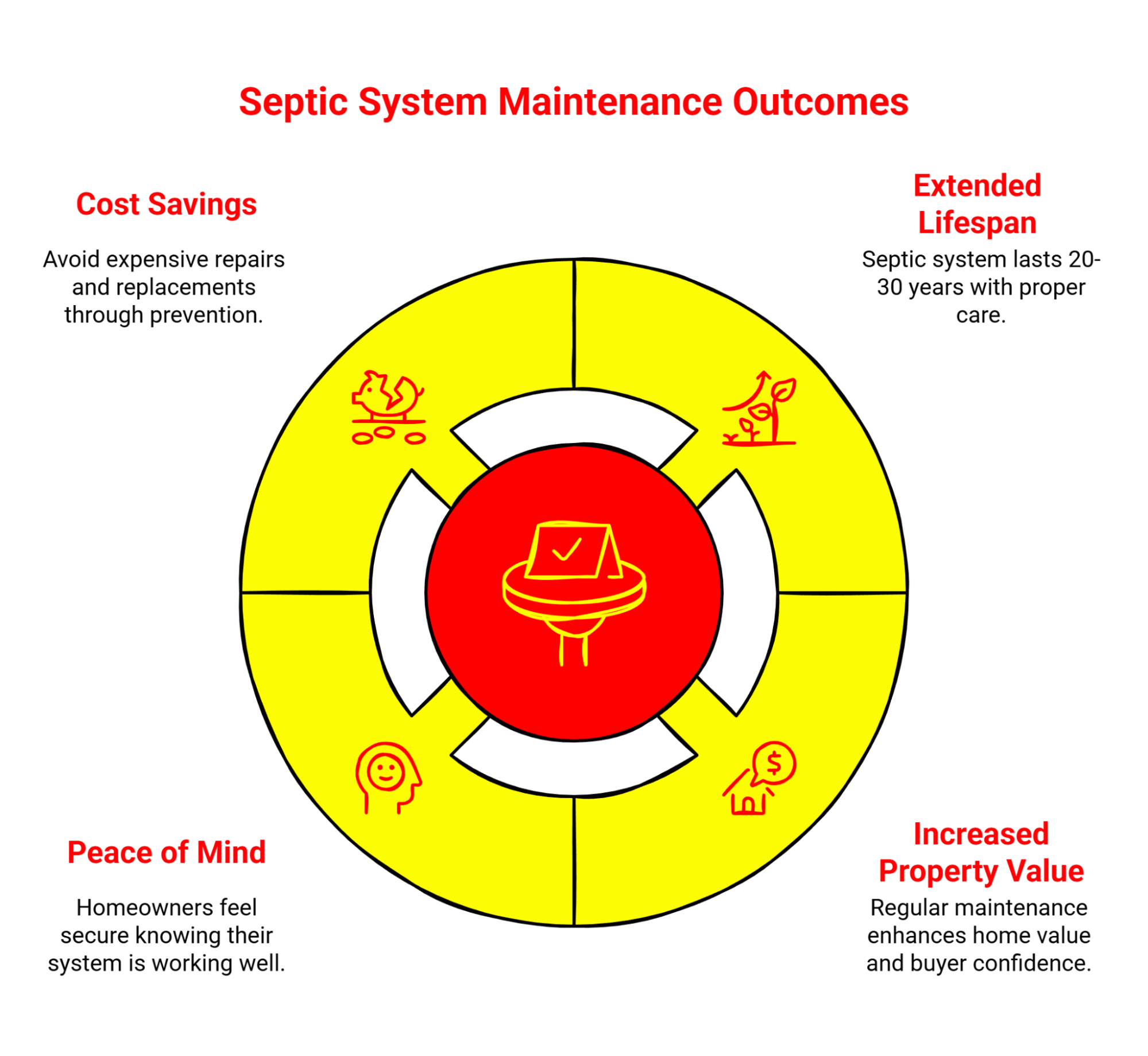
When properly maintained, a septic system can last 20 to 30 years. When neglected, that lifespan drops to just 10 to 25 years, with failures often requiring complete replacement rather than simple repairs. The difference comes down to whether sludge stays in the tank where it belongs or migrates to the drain field where it causes permanent damage.
What does this mean for your property value? Documented maintenance increases home value and buyer confidence. When you’re ready to sell your home, potential buyers will ask about the septic system. Having maintenance records showing regular cleanouts tells them this is a well-cared-for property. It removes a major negotiating point and can prevent deals from falling through during the inspection period.
One homeowner we work with learned this the hard way. After years of putting off maintenance, he listed his home for sale. During the buyer’s inspection, the septic system showed signs of stress. The buyer requested a $15,000 credit to cover potential replacement costs, effectively wiping out much of the seller’s profit. A few hundred dollars spent on routine maintenance would have preserved that equity.
Beyond the financial protection, there’s something deeply reassuring about knowing your system is working properly. That’s the transformation we see repeatedly: homeowners move from that nagging worry about hidden problems to genuine confidence in their home’s essential systems. It’s the peace of mind that comes from a clean bill of health inspection and a freshly emptied tank.
Getting Started: A 5-Minute Setup

As you plan your home maintenance for the season, set aside just five minutes to get your septic system on the right track:
- Check your last pump date. If it’s been two to three years or you can’t remember, you’re in the maintenance window.
- Look for warning signs. Slow drains, gurgling toilets, or wet spots in the yard signal it’s time to act now.
- Gather essential information. Note your tank size if known, locate your tank lid or riser, and ensure yard access is clear.
- Request an inspection and scheduling. An inspection confirms current levels, then you can complete a cleanout if needed.
- Set your next reminder. Ask for a recommended return date so you never have to guess when service is due again.
That’s it. Five minutes of planning protects years of investment.
Key Features for Immediate Value
When you schedule routine tank cleanout, here’s the immediate value you gain:
- Capacity reset: Pumping restores your tank’s working volume so fixtures drain quickly and odors disappear.
- Drain field protection: Keeping sludge contained in the tank keeps your drain field breathing and functioning properly.
- Documentation for resale: Simple service records create a paper trail that improves buyer confidence during home sales.
- Transparent planning: An inspection aligns your pumping schedule with actual tank levels, eliminating guesswork and unnecessary worry.
As one homeowner told us: “My experience with Drane Ranger was a very organized, professional and on time experience. I was kept informed of what was happening and a suggested time of cleaning again. I will use them again and will definitely recommend them to anyone I speak with.”
Being kept informed during service and getting a clear recommended return date reduces stress. That reliability and straightforward communication are hallmarks of effective septic tank cleaning services and a calmer home maintenance routine.
Time-Saving Checklist
Before your scheduled service, take these quick steps to ensure a smooth, efficient visit:
- Note your last pump date and current symptoms to share with the technician.
- Make sure the tank lid or riser is accessible and clear of debris or landscaping.
- Keep pets secured indoors and ensure clear vehicle access for the vacuum truck.
- Run a quick water-use check—consider staggering laundry or dishwashing cycles on service day.
- Plan for a brief post-service walkthrough to review findings and discuss your next maintenance date.
These simple preparations save time and help you get the most value from every service visit.
A Question You Should Be Asking: When Should I Stop Using Septic Additives?
The answer is simple: right now. The septic additive industry has created a persistent myth that you can maintain your system by pouring chemicals or biological agents down your drains. These products promise to break down sludge, eliminate odors, or boost bacterial action in your tank.
Here’s what actually happens. Additives cannot physically remove the solid waste that accumulates in your tank. At best, they’re unnecessary because a healthy septic system already contains the bacteria it needs to function. At worst, some additives can actually harm your system by killing beneficial bacteria or causing solids to stay suspended in the water, which then flow into your drain field.
The only proven method for maintaining a septic system is professional pumping. A vacuum truck removes the physical material that’s built up over years. No chemical can replicate this process. We’ve seen homeowners who religiously used additives for a decade, believing they were protecting their investment, only to discover during an emergency call that their tank was completely full and their drain field was failing.
This connects directly to one of the core principles of proper septic maintenance: transparency over shortcuts. The DIY approach to hazardous biological waste doesn’t just fail to work—it can accelerate the very problems you’re trying to prevent while giving you false confidence that you’re taking care of the issue.
If you’ve been using additives, there’s no harm done as long as you also schedule regular professional cleanouts. But don’t let the monthly cost of additives fool you into thinking you can skip the real maintenance your system needs.
Local Trust & Verification
When you’re researching septic service providers in Houston, these independent resources can help you verify credentials and read unfiltered customer experiences:
- Better Business Bureau: Review our independent BBB profile for accreditation details and customer feedback.
- Location & Directions: Find us on Google Maps or Bing Maps for hours, directions, and community reviews.
These third-party listings provide the transparency that helps you make an informed decision about who you trust with your home’s essential systems.
The Peace of Mind That Comes From a Clean System
Remember that anxiety we talked about at the beginning? The worry about unknown problems lurking underground, the fear of a sudden expensive disaster? That doesn’t have to be your reality.
When you invest in routine tank cleanouts, you’re making a choice that transforms how you experience your home. Instead of hoping everything is fine, you know it is. Instead of wondering if this will be the year your system fails, you have documentation proving it’s functioning properly. Instead of facing a potential five-figure emergency, you’ve spent a few hundred dollars to prevent it entirely.
The money you save compounds over time. Every three years of maintained service adds value that a single major repair would instantly erase. But beyond the financial logic, there’s something more fundamental at stake. Your septic system is your home’s hidden immune system. When it’s healthy and functioning, your entire property maintains the dignity and sanitation that makes a house truly livable.
Proactive protection beats reactive panic every single time. The homeowners who sleep soundest aren’t the ones who hope their system will last another year. They’re the ones who scheduled their maintenance, received their service, and know with certainty that their home’s essential functions are protected.
Request your quote today and move from worry to confidence. Or if you prefer to speak with someone directly, you can contact us today or call 281-489-1765 to schedule your routine tank cleanout.
Your future self—and your bank account—will thank you for making this decision now, before it becomes an emergency.
Disclaimer: This article provides general information about Septic System Maintenance for educational purposes. Individual circumstances vary significantly based on factors like cost-effectiveness, risk of failure, and long-term performance. For personalized guidance tailored to your property’s maintenance and budget needs, it is recommended to consult with a qualified professional.
Our Editorial Process
Our expert team uses AI tools to help organize and structure our initial drafts. Every piece is then extensively rewritten, fact-checked, and enriched with first-hand insights and experiences by expert humans on our Insights Team to ensure accuracy and clarity.
About the Drane Ranger Insights Team
The Drane Ranger Insights Team is our dedicated engine for synthesizing complex topics into clear, helpful guides. While our content is thoroughly reviewed for clarity and accuracy, it is for informational purposes and should not replace professional advice.