📌 Key Takeaways
Septic failures develop silently underground for months before surfacing as expensive emergencies in your yard or home.
Diagnostic Visibility Prevents Reactive Panic: Professional inspections reveal hidden problems like cracked baffles, tank leaks, and root intrusion before they trigger backups or drain field failures.
Real Estate Transactions Demand Documentation: A current inspection report removes buyer uncertainty, speeds closing, and either confirms system health or reveals issues while you still have time to address them.
Surface Observation Misses Critical Failures: Walking your yard and checking for odors only detects problems after they’ve already compromised your system—internal component damage remains invisible without professional evaluation.
The 25% Rule Guides Pumping Timing: EPA guidelines recommend pumping when solids reach roughly one-quarter of your tank’s volume, but household size and usage patterns determine your actual schedule.
Inspection Differs from Routine Pumping: A comprehensive diagnostic assessment includes systematic component evaluation, structural checks, and detailed documentation—not just the quick visual check during a standard pump-out.
Proactive inspection transforms expensive unknowns into manageable maintenance decisions. Houston-area homeowners managing septic systems will find clarity here, preparing them for the detailed diagnostic framework that follows.
The smell hits you first—faint but unmistakable, drifting from somewhere near the back corner of your yard. You stand at the kitchen window, coffee in hand, wondering if you’re imagining it. Then you notice the grass: a patch near the drain field that’s greener, almost unnaturally lush, compared to the rest of your lawn. Your stomach tightens. Something’s wrong, but you have no idea what’s happening beneath your feet.
You’re facing what thousands of Houston-area homeowners deal with every year—the anxiety of not knowing the true condition of your septic system. Unlike the plumbing inside your house, where a leak announces itself immediately, your underground wastewater infrastructure can fail silently for months before you notice. By then, what could have been a minor repair has become an expensive emergency.
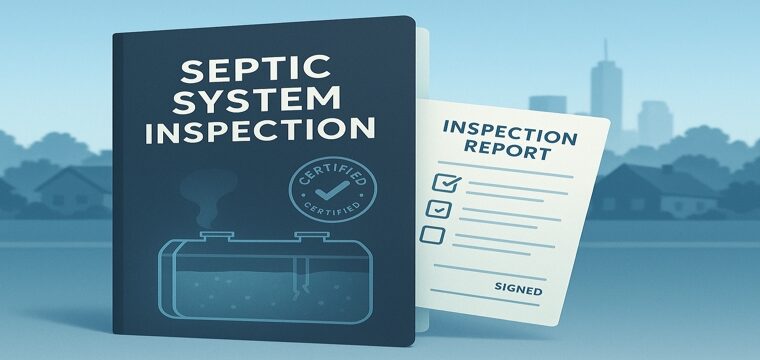
A Septic System Maintenance Inspection is a diagnostic assessment of the tank and components to verify function. It’s like a ‘Check Engine’ diagnostic for your yard. Imagine the confidence of handing a potential buyer a certified report saying your septic system is in perfect health. Schedule this before listing your home or if you suspect a problem but don’t see sewage yet.
An inspection turns unknowns into facts—and facts into confident decisions.
Why Your Septic System’s Hidden Nature Creates Real Risk
Your septic system is your home’s hidden immune system. Just as your body processes waste through organs you can’t see, your property relies on underground tanks and pipes to safely manage every gallon of wastewater from your showers, toilets, and washing machines. When this system works properly, it’s invisible. When it fails, the consequences range from unpleasant to catastrophic.
The challenge is visibility. You can’t simply lift a lid and see whether everything’s functioning correctly. Solid waste accumulates at the bottom of the tank as sludge, while oils and grease float to the top as scum. Between these layers, clarified water flows out to your drain field. Over time, baffles can crack, tees can corrode, and the biological balance inside the tank can shift. None of these problems announce themselves until the day your toilet won’t flush or sewage backs up into your home.
This is where a professional septic system maintenance inspection becomes essential. A comprehensive inspection is the only way to definitively assess the health of your underground infrastructure. While you might walk your yard looking for wet spots or follow your nose toward strange odors, these surface indicators only tell you something has already gone wrong. An inspection reveals what’s happening before it becomes an emergency, helping prevent silent failures like leaks or baffle damage before they cause a backup.
What Happens During a Professional Septic Inspection
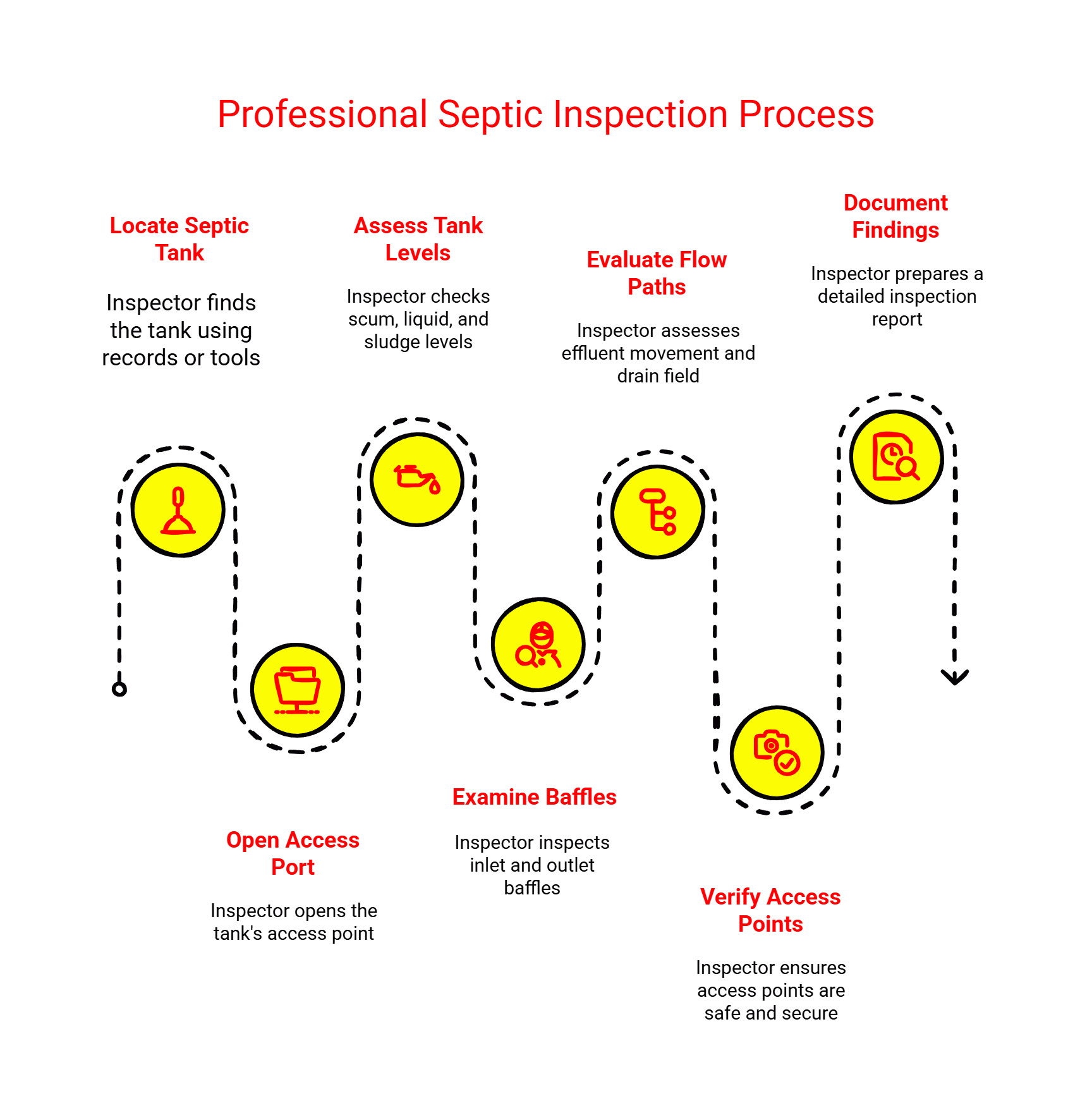
Think of a septic inspection as a complete physical exam for your wastewater system. A qualified technician will systematically evaluate every component to build a complete picture of your system’s condition.
The process starts at the tank itself. The inspector locates your septic tank—not always as straightforward as it sounds, especially in older properties where records are incomplete—and opens the access port. They assess the relative levels of scum, clarified liquid, and sludge to determine whether pumping is needed and help establish a maintenance cadence appropriate for your household.
But the inspection goes beyond just checking levels. The technician examines the inlet and outlet baffles or tees—critical components that control water flow and prevent solids from escaping into your drain field. These parts are particularly vulnerable to damage because they’re constantly exposed to corrosive wastewater. According to guidance from the EPA’s Septic Smart program, your tank typically needs pumping when solids occupy about 25% of its volume.
Next comes an evaluation of flow paths and the drain field. While the inspector can’t see the perforated pipes buried in trenches beneath your yard, they can assess whether effluent is moving as designed, check for unusual wet spots that may indicate problems, and look for signs that wastewater is reaching the surface. The inspector also verifies that access points are safe and secure—lids and risers should be intact to prevent accidental entry into this confined space.
The final component is documentation. A thorough inspection produces a written report detailing the findings, including tank capacity, measured levels, the condition of all components, and specific recommendations for maintenance or repairs. This report becomes your system’s health record and can provide the documentation often requested during real estate transactions.
For homeowners planning routine maintenance after diagnostics, understanding how inspections connect to septic tank cleaning services helps establish a complete care strategy.
The Silent Failures an Inspection Catches Early
Routine inspections can detect problems developing quietly underground—issues you’d never notice until they trigger an expensive crisis. These hidden problems typically develop gradually, giving you no warning until they reach a critical point.
Consider baffle failure. The inlet baffle prevents turbulence from disturbing the settled solids when wastewater enters the tank. The outlet baffle acts as a final barrier, keeping solids from flowing into your drain field. When these components deteriorate—often from age or chemical exposure—solid waste starts escaping the tank. This material can clog the pipes in your drain field, creating a cascade of problems. You might notice your drains running slower than usual, or develop a persistent sewage odor outside. By the time these symptoms appear, your drain field may already be compromised, requiring extensive and expensive repairs.
Tank cracks present another insidious threat. A small crack in the tank wall allows groundwater to seep in, diluting the tank’s contents and disrupting the biological processes that break down waste. Conversely, the crack can allow untreated wastewater to leak into the surrounding soil, creating health hazards and environmental contamination. An inspection reveals these structural issues while they’re still manageable.
Tree root intrusion often surprises homeowners. Roots naturally grow toward water sources, and your septic system provides both water and nutrients. They can penetrate tank seams or invade the pipes leading to your drain field. Once inside, they create obstructions and accelerate system deterioration. An experienced inspector knows the warning signs—unusual tree growth patterns near your system, unexplained lush vegetation, or changes in ground elevation—that suggest root problems developing underground.
Self-Inspection vs. Professional Inspection: Making the Right Choice
Homeowners often wonder whether they can assess their septic system themselves or need to hire a professional. This comparison helps clarify what each approach can accomplish:
| Decision Point | What You Can Check at Home | What Professional Inspection Provides |
| What You Learn | Surface cues only—odors near access points, unusually wet areas, or changes in vegetation | Diagnostic visibility into tank levels, baffle condition, structural integrity, and overall system function |
| Tools & Access | Basic observation from ground level with no tank entry required | Trained technician with proper equipment, safe access protocols, and specialized measurement tools |
| Safety Risk | Low when observing from surface only; never remove lids or enter confined spaces | Managed by trained personnel who follow established safety protocols for confined space entry |
| Detecting Hidden Failures | High risk of missing internal problems like leaks, component damage, or developing clogs | Systematic evaluation designed to catch issues before they cause symptoms |
| Documentation | Personal observations with no formal record | Written report suitable for real estate transactions, insurance purposes, or establishing service history |
| Best Use | Quick monitoring between professional inspections; noticing surface warning signs after storms or heavy use | Selling a home, establishing a maintenance schedule, investigating persistent symptoms, or confirming system health |
| What You Get | A sense that something might be developing | Actionable findings with clear next steps and documented system status |
The most effective approach combines regular homeowner monitoring with periodic professional inspections. You watch for warning signs between evaluations, creating continuous awareness of your system’s performance. When symptoms appear or when your inspection schedule arrives, professional assessment provides the thorough evaluation and documentation you need for informed decision-making.
When Inspections Become Essential: Real Estate Transactions
For real estate transactions, a professional inspection provides the critical documentation needed to close the deal. In many Texas counties, septic system inspections have become standard practice during home sales. Some mortgage lenders require them. Even when not mandated, smart buyers request them to protect their investment.
The inspection serves multiple purposes in a real estate context. For sellers, a passing inspection report removes a major contingency and demonstrates responsible property maintenance. It answers the buyer’s most pressing question: “Am I about to inherit a $15,000 septic system replacement?” For buyers, the inspection provides negotiating leverage if issues are found, and peace of mind if the system checks out.
The timing matters. Schedule your inspection after you’ve accepted an offer but before the option period expires. This gives you time to address any problems the inspection reveals. If the inspector recommends pumping or minor repairs, completing this work before closing shows good faith and can speed up the transaction.
Different counties and municipalities may have varying requirements for what constitutes an acceptable inspection. Some require inspections by licensed professionals; others accept reports from qualified pumping contractors. Working with a local service familiar with your area’s specific requirements prevents delays during closing.
Common Real Estate Questions for Texas Homeowners
Septic Inspection Requirements for Selling House Texas
Requirements can vary by county or city across Texas. A professional maintenance inspection and recent service documentation are commonly requested in real estate transactions, but the specific paperwork or timing may differ based on local jurisdiction. The practical approach is to secure a current inspection report and keep pump-out records organized well before listing your property. Local rules and required forms can change, so confirming current expectations with your real estate agent or title company helps prevent surprises during closing.
Documents Needed for Septic Sale Houston
Expect requests for inspection findings, service history, and any available system details such as tank location and known components. Real estate teams in the Houston area typically prefer clear, dated paperwork from a qualified provider. Having organized records—including previous pump-out dates, any repairs performed, and the most recent inspection report—makes the transaction smoother for all parties. Document formats and specific title requirements may vary between transactions.
Transferring Septic Permit Alvin TX
Permit transfer rules can differ by jurisdiction and may involve county offices in Brazoria County. A professional inspection report showing current system status can make conversations with local authorities simpler during the transfer process. The specific steps, required forms, and processing times may change, so confirming current procedures with the appropriate local office ensures compliance with the most up-to-date requirements.
Deep Dive: Understanding Diagnostic Visibility
Critical Importance
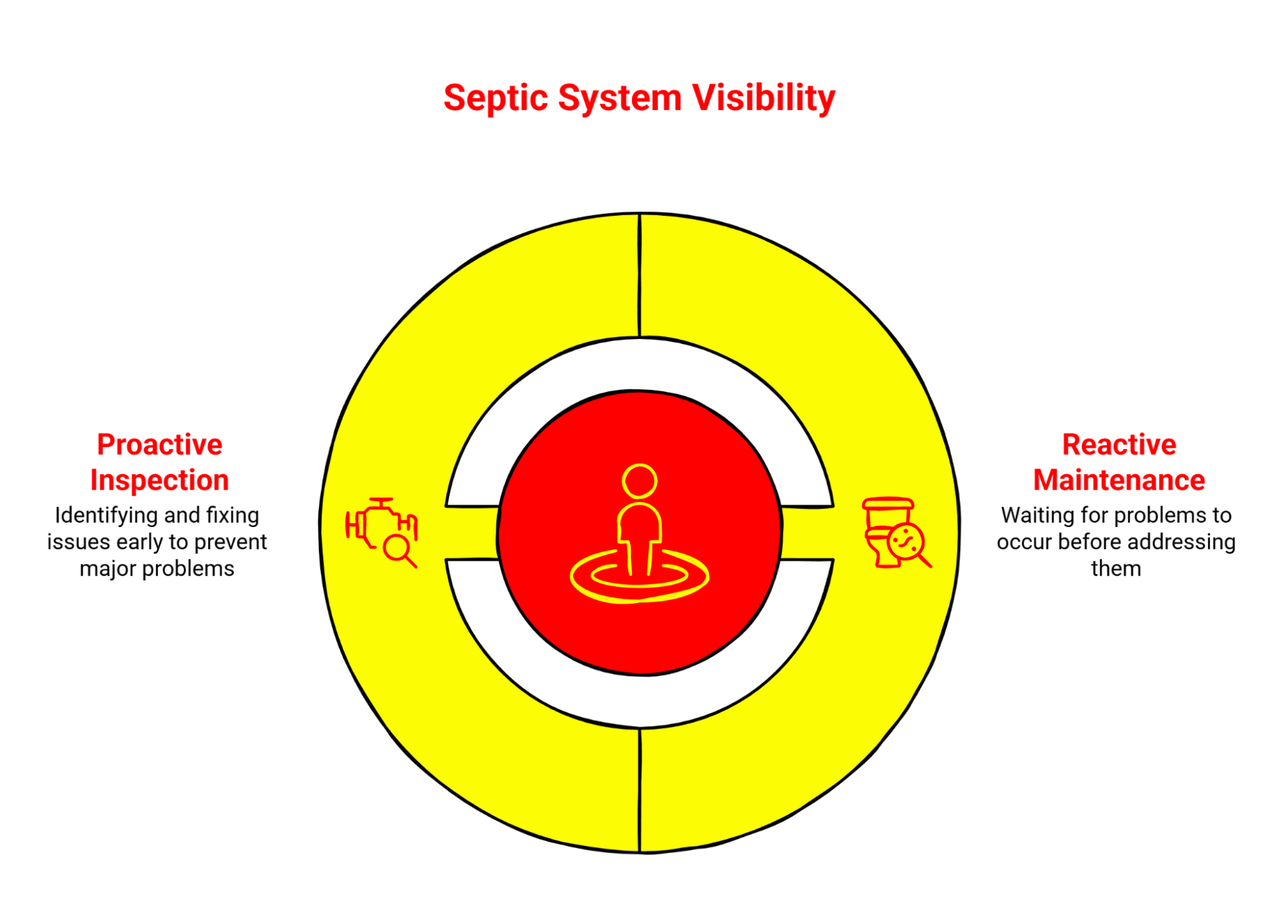
Diagnostic visibility—knowing what you cannot see—represents the fundamental value of a septic inspection. Your underground wastewater system operates continuously, processing hundreds of gallons daily, yet remains completely hidden from view. This invisibility creates a dangerous knowledge gap.
Without visibility, you’re forced into reactive maintenance. You wait for symptoms to appear, and symptoms only appear when something has already failed. The toilet that suddenly won’t flush. The yard that becomes a swamp after rain. The smell that makes your outdoor space unusable. Each of these symptoms indicates that your system crossed from “working” to “broken” days or weeks earlier, but you had no way to know.
An inspection transforms this dynamic. It provides a snapshot of your system’s current condition, revealing problems at the earliest stage when they’re least expensive to fix. A cracked baffle discovered during an inspection might cost $300 to replace. That same baffle, left to fail completely, can lead to drain field contamination requiring thousands of dollars in repairs. The inspection creates visibility, and visibility enables proactive protection.
Common Misconceptions
Many homeowners believe they can assess their septic system’s health through simple observation. They walk their property, look for wet areas, and check for odors. While these surface checks have value, they don’t provide diagnostic visibility.
The first misconception is that a lack of symptoms means a healthy system. Your septic tank could be significantly full of sludge, your baffles could be deteriorating, and tree roots could be invading your drain field pipes—all while your toilets flush normally and your yard looks fine. Problems develop gradually, often taking months or years to manifest as symptoms you can detect.
Another common misunderstanding involves pumping frequency. Some homeowners follow rigid schedules—”pump every three years”—without considering their actual usage or system condition. While regular pumping is essential, the right schedule varies. A household of two adults uses a 1,000-gallon tank very differently than a family of six. An inspection measures your actual accumulation rate, allowing you to optimize your pumping schedule rather than guessing.
The third misconception is that all septic inspections are the same. A comprehensive diagnostic inspection differs significantly from the basic check that occurs during routine pumping. When a technician pumps your tank, they may glance at the components and mention if something looks obviously wrong. A true inspection involves systematic evaluation of every component, specific measurements, and detailed documentation. Understanding this difference helps you request the right service for your needs.
Real-World Implications
The difference between surface knowledge and diagnostic visibility plays out clearly in real-world scenarios. Consider a homeowner planning to sell their property. Without an inspection, they list the house confident that everything works fine. During the buyer’s due diligence, an inspection reveals a cracked tank wall and failed baffles. The seller now faces rushed repairs during the option period, or a price reduction that far exceeds what the repairs would have cost if addressed earlier.
Contrast this with a homeowner who schedules inspections every three years as part of regular maintenance. One inspection reveals early signs of baffle deterioration—not yet critical, but worth monitoring. The next inspection, eighteen months later, shows the deterioration has progressed to where replacement makes sense. The repair is scheduled during a convenient time and completed before any system compromise occurs. The total cost is lower, the stress is minimal, and the system’s overall lifespan is extended.
In emergency situations, the value of diagnostic visibility becomes even clearer. A sudden backup forces you to call for emergency service on a weekend. The technician pumps the tank to relieve the immediate problem, but without a proper inspection, you don’t know why the backup happened. Was it simple neglect—the tank was just too full? Was it a mechanical failure? Is your drain field compromised? You’ve paid for emergency service but still lack the information needed to prevent recurrence. An inspection would have either prevented the emergency entirely or, at minimum, provided the diagnostic information needed to fix the underlying cause.
Separating Myth from Reality
Myth: “If drains are working fine, the system is fine.”
Reality: Early failures often don’t show up at faucets or toilets. A quick visual check can be helpful for catching obvious surface problems, but internal component failures, structural issues, and developing clogs remain invisible until they trigger symptoms. A structured maintenance inspection produces diagnostic visibility that surface observation cannot provide.
Myth: “All vacuum or inspection services are interchangeable.”
Reality: Providers differ significantly in their processes, safety protocols, thoroughness of evaluation, and quality of reporting. Transparency in process and pricing matters when selecting a service provider. Understanding what’s included in an inspection—versus a basic pump-out—helps ensure you’re getting the diagnostic information you need.
Safety and Professional Standards
Septic systems involve biological hazards and confined spaces. Safe access, correct evaluation procedures, and proper handling are essential for protecting both the inspector and the property. Professional maintenance inspections are performed with safety protocols that minimize risk, produce clear findings, and support the decisions homeowners make next—like scheduling septic tank cleaning services at appropriate intervals or addressing component repairs before they escalate.
For homeowners who also manage other waste systems on their property, understanding the full range of maintenance services—including grease trap, grit trap, and lint trap services—helps develop a comprehensive property care strategy.
Your Path to Peace of Mind
Remember that faint smell, the too-green grass, the worry about what’s happening underground? That anxiety doesn’t have to be your reality. A septic system maintenance inspection transforms unknowns into knowns, giving you either confirmation that everything’s working properly or early warning of problems while they’re still manageable.
The inspection isn’t just about the technical details—sludge levels, baffle condition, drain field performance. It’s about restoring the sense of security that comes from knowing your home’s essential systems are functioning properly. It’s about protecting your property value and your family’s health. It’s about avoiding the panic of a weekend sewage backup that ruins your plans and empties your wallet.
Whether you’re preparing to sell your home in Houston or Alvin, responding to warning signs, or simply taking a proactive approach to home maintenance, a professional inspection provides the clarity and confidence you need. After diagnostics, many homeowners establish a routine maintenance plan to keep their system functioning reliably for years to come.
As one Houston-area customer shared: “My experience with Drane Ranger was a very organized, professional and on time experience. I was kept informed of what was happening and a suggested time of cleaning again. I will use them again and will definitely recommend them to anyone I speak with.” — Harold R.
Customers consistently note that the team is professional and reliable, as Shelley M. from the Houston area observed: “Drain Ranger is very professional and reliable. Basically they can take care of all your grease drain needs.”
Proactive protection beats reactive panic. Every time.
Contact us today to schedule your septic system inspection and gain the peace of mind that comes from truly knowing your system’s condition. For additional context about our commitment to quality service, you can review our Better Business Bureau profile.
Disclaimer: This article provides general information about septic system maintenance inspections for educational purposes. Individual circumstances vary significantly based on factors like location, usage patterns, and specific system requirements. For personalized guidance tailored to your property’s needs, it is recommended to consult with a qualified professional.
Our Editorial Process
Our expert team uses AI tools to help organize and structure our initial drafts. Every piece is then extensively rewritten, fact-checked, and enriched with first-hand insights and experiences by expert humans on our Insights Team to ensure accuracy and clarity.
About the Drane Ranger Insights Team
The Drane Ranger Insights Team is our dedicated engine for synthesizing complex topics into clear, helpful guides. While our content is thoroughly reviewed for clarity and accuracy, it is for informational purposes and should not replace professional advice.