More Than a Dirty Job: Why Grease Trap Service is a Critical Risk Management Function for Houston Restaurants

📌 Key Takeaways:

Your grease trap isn’t just plumbing—it’s a business control that prevents shutdowns, fines, and reputation damage.

Treat the 25% Rule as Your Emergency Brake: When grease accumulation reaches 25% of liquid depth, schedule immediate cleaning regardless of your regular timeline to prevent operational disasters.

Quarterly Baseline, Volume-Based Adjustments: Start with 90-day service intervals as your Houston baseline, then shorten the schedule for high-volume kitchens or heavy frying operations.

Documentation Equals Insurance: Keep every manifest and service log organized in one accessible location—this paperwork transforms surprise inspections from potential disasters into routine check-ins.

Planned Downtime Beats Emergency Chaos: Scheduling service during slow periods costs hundreds; emergency repairs during Friday dinner rush cost thousands in lost revenue, staff overtime, and reputation damage.

Assign Clear Ownership for Bulletproof Execution: Make one team member accountable for calendar management, manifest filing, and condition monitoring—scattered responsibility leads to missed services and avoidable crises.

Simple controls, real protection: quarterly rhythm, 25% trigger, tidy manifests.

For a restaurant, grease trap service isn’t just a cleaning task — it’s a control that keeps you open. By pulling FOG before it hits the sewer, documenting every pump-out, and keeping to a predictable schedule, you prevent the shutdowns, fines, and reputational hits that follow backups or inspections gone wrong. Treat the trap like any other risk-critical asset: maintain it on time and keep your paperwork tidy.

What Is a Grease Trap and Why It Matters in Houston

Think of your grease trap as a silent guardian for your restaurant’s operations.

Picture this: It’s 7 PM on a busy Friday. Your kitchen is running at full capacity, turning out orders for a packed dining room. Suddenly, your floor drains start backing up, filling the kitchen with foul water and grease. The health inspector happens to be dining at the table by the window. Your evening — and potentially your permit — just took a devastating turn.

A grease trap prevents exactly this scenario. It’s a specialized container designed to capture fats, oils, and grease (collectively called FOG) before they enter Houston’s sewer system. The trap works by slowing down wastewater flow, allowing FOG to separate and float to the top while solids settle to the bottom. Clean water flows out through the middle, continuing to the municipal treatment system.

Houston’s food service operations generate substantial FOG loads that can create serious problems when they accumulate in sewer lines. FOG hardens as it cools, creating blockages that cause backups, overflows, and expensive infrastructure damage. For restaurant operators, this translates to immediate business disruption, potential health violations, and cleanup costs that far exceed routine maintenance expenses.

The trap serves as your first line of defense against these operational disasters. When properly maintained, it keeps FOG from reaching public sewers while protecting your kitchen from the backups and odors that occur when drainage systems fail.


The Business Risks of Neglect: Downtime, Fines, and Reputation

neglect impacts restaurent operations

Restaurant operators face a stark choice: pay predictable maintenance costs or absorb unpredictable failure costs.

Routine grease trap cleaning in Houston typically costs a few hundred dollars per service. Emergency repairs, lost revenue from shutdowns, and regulatory penalties can easily reach thousands of dollars for a single incident.

Consider the hidden costs of neglect. When a trap overflows during peak service, the immediate priority becomes damage control rather than serving customers. Staff must redirect their focus from food preparation to cleanup, creating delays that compound throughout the evening. Tables remain empty while the kitchen recovers, directly impacting revenue during your most profitable hours.

Beyond immediate financial impacts, backup incidents damage your reputation with both customers and regulators. Diners who witness a sewage incident rarely return, and negative reviews spread quickly through social media. Health inspectors take violations seriously, potentially triggering follow-up inspections that create ongoing operational stress.

The largest cost driver is often unplanned downtime, not the routine cleaning fee. A well-maintained trap allows you to control when and how service occurs, typically during slower periods when kitchen disruption is minimal. Emergency situations offer no such luxury — they demand immediate attention regardless of business impact.


Houston FOG Requirements in Plain English (Non-Legal Overview)

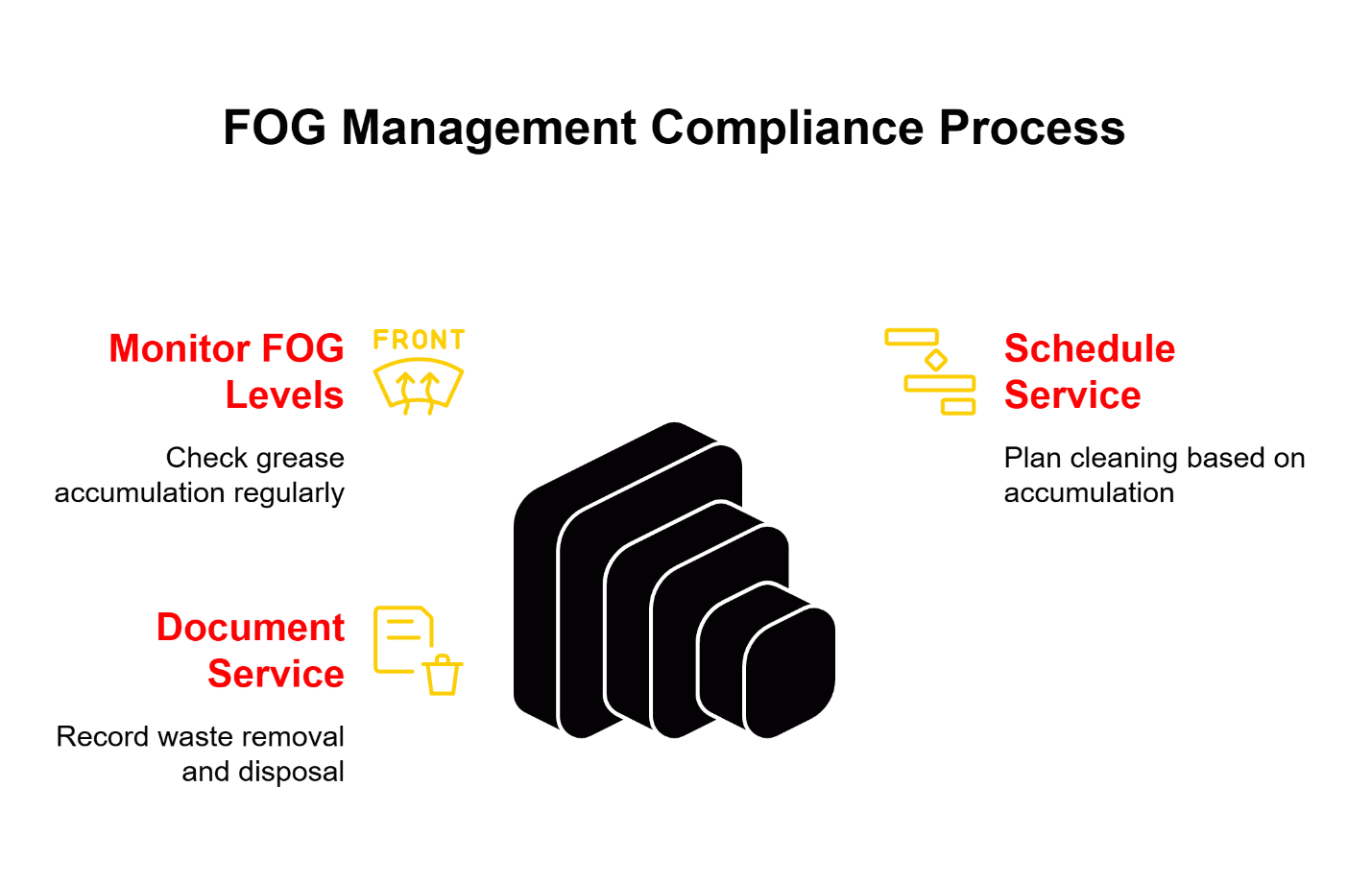
fog management compliance process

Houston’s FOG management requirements follow patterns common to most major cities, though specific details can vary and change over time.


Risk & Compliance Quick-Check

  • Maintain approximately 90-day service intervals; shorten for high FOG output
  • File manifests and service logs together where staff can access them
  • Train staff to spot odors, slow drains, visible grease, and the 25% threshold

Most Houston food service establishments operate on a quarterly baseline, meaning service occurs roughly every 90 days. High-volume kitchens that generate significant FOG loads may require more frequent attention. The key indicator is accumulation rate — if your trap fills quickly, adjust the schedule accordingly.

The “25% rule” provides a practical trigger for immediate service. When grease accumulation exceeds approximately 25% of the total liquid depth in your trap, schedule cleaning regardless of your regular timeline. This threshold indicates the system is approaching capacity and risks operational problems.

Documentation requirements typically include service manifests that track waste removal and disposal, plus maintenance logs that record service dates and trap conditions. These records demonstrate responsible waste management practices and support your compliance efforts during inspections.

We help restaurant operators stay compliant by providing thorough service and proper documentation. However, specific requirements can change, and this overview shouldn’t replace direct consultation with local authorities or qualified professionals who understand current regulations.


What Reliable Service Looks Like in Houston

Professional grease trap service involves more than simply pumping out accumulated waste.

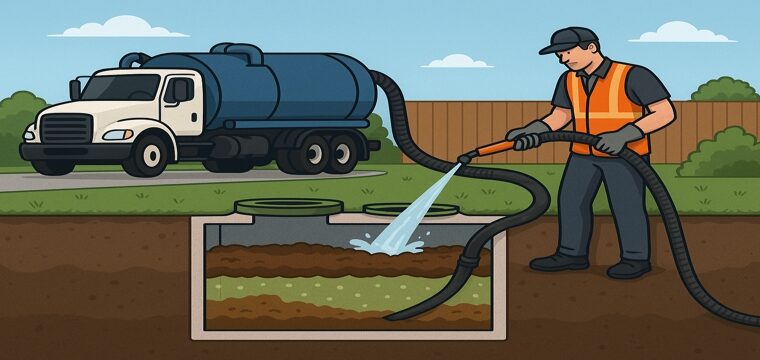
Complete service includes pump-out of all liquid and accumulated FOG, scrape-down of interior surfaces to remove stuck-on grease, and basic condition assessment to identify potential maintenance needs. The waste must be transported to appropriate disposal facilities that can handle FOG materials properly.

Look for reliability signals when evaluating service providers. Punctual arrival and departure times show respect for your operational schedule. Complete manifests and service logs provide the documentation you need for regulatory compliance. Environmental responsibility in waste handling protects both your business and the community.

Communication matters significantly during service. Professional technicians should explain what they find, alert you to any concerns about trap condition, and provide clear guidance about future service needs. They should work efficiently to minimize kitchen disruption while ensuring thorough cleaning.

The service vehicle and equipment should appear well-maintained and appropriate for the job. Professional providers invest in proper tools because they understand that reliable equipment produces consistent results. This investment typically translates to more predictable service outcomes for their customers.


Build a Risk-Proof Service Schedule

Effective scheduling balances operational needs with regulatory compliance and cost control.

Start with the quarterly baseline that most Houston establishments follow. This provides a foundation that meets typical regulatory expectations while spreading costs predictably across the year. Mark these dates prominently on your operational calendar and assign responsibility to a specific team member.

Adjust frequency based on your kitchen’s FOG output and trap capacity. High-volume operations, establishments with heavy frying operations, or locations with smaller traps may need service every 60-75 days. Monitor accumulation rates during the first few service cycles to identify the optimal interval for your specific situation.

Assign clear ownership of the maintenance schedule. Someone on your team should track service dates, monitor trap condition between cleanings, and coordinate with your service provider. This person should understand warning signs like persistent odors, slow drainage, or visible grease accumulation that might indicate early service needs.

Set calendar reminders well in advance of scheduled service. Planning ahead allows you to coordinate timing with your service provider and ensure staff are prepared for the brief operational disruption. Last-minute scheduling often results in less convenient time slots and higher service costs.

Build relationships with reliable service providers before you need emergency help. Establishing working relationships during routine maintenance makes emergency response more predictable when urgent situations arise.


Documentation That Protects You: Manifests & Logs

Proper documentation serves as your operational insurance policy during inspections and regulatory reviews.

Service manifests track each pump-out, including date, volume removed, disposal destination, and basic trap condition notes. These documents create a paper trail that demonstrates responsible waste management and regular maintenance practices. Keep manifests organized in a labeled binder or digital folder that staff can access quickly.

Maintenance logs provide additional detail about trap performance over time. Record service dates, any operational issues between cleanings, and notes about accumulation rates or service provider observations. This information helps you optimize scheduling and identify potential problems before they become emergencies.

Store documentation in an accessible location where multiple team members can retrieve it if needed. During inspections, quick access to organized records demonstrates professionalism and compliance awareness. Consider keeping copies in multiple formats — physical and digital — to protect against loss.

Train key staff members on documentation requirements and storage systems. Multiple people should understand where records are kept and how to interpret basic information. This redundancy ensures someone can always respond to regulatory inquiries even when the primary responsible person isn’t available.

Review documentation periodically to identify patterns or concerns. Increasing service frequency, recurring trap issues, or changes in waste volume can signal operational changes that require attention. Use this information to refine your maintenance approach and prevent future problems.


FAQ

How often should we clean our grease trap? 

Quarterly service provides a common starting point for most Houston restaurants. Increase frequency if your kitchen generates high FOG volumes or if accumulation regularly approaches the 25% threshold between cleanings.

What are signs we’re overdue for service? 

Watch for persistent odors around floor drains, noticeably slow drainage from sinks or floor drains, visible grease accumulation where it shouldn’t appear, or grease layers exceeding 25% of total liquid depth in the trap.

What happens during a professional service call? 

Complete service includes pumping out accumulated liquids and FOG, scraping interior surfaces clean, performing a basic condition check, and providing proper waste transportation and disposal with appropriate manifests.

How long does grease trap service typically take? 

Service duration varies based on trap size, accumulation levels, and access conditions. Most routine cleanings require 30-90 minutes, though heavily loaded traps may take longer. Plan the service window during slower operational periods when possible.

What documentation should we maintain? 

Keep service manifests and maintenance logs together in an organized, accessible format. These records support compliance efforts and provide valuable information for optimizing your maintenance schedule.

What drives service costs? 

Primary cost factors include trap size, accumulation volume, access difficulty, and service frequency. Emergency calls typically cost more than scheduled maintenance. Consistent scheduling often provides better value than reactive service.


Ready to establish a reliable maintenance routine that protects your operations? Get a compliant service plan for your location.

Our Editorial Process

Our expert team uses AI tools to help organize and structure our initial drafts. Every piece is then extensively rewritten, fact-checked, and enriched with first-hand insights and experiences by expert humans on our Insights Team to ensure accuracy and clarity.

About the Drane Ranger Insights Team

The Drane Ranger Insights Team synthesizes complex topics into clear, helpful guides. Our content is reviewed for clarity and accuracy, and is for informational purposes—not legal advice.

When Best Intentions Fail: Three FOG Violation Myths That Can Cost Houston Restaurants

📌 Key Takeaways:

Houston restaurants can avoid costly violations by understanding that compliance isn’t just about calendar dates—it’s about monitoring actual grease levels and maintaining proper documentation.

The 25% Rule Trumps the Calendar: Your grease trap needs service whenever floating grease plus settled solids reach 25% of total liquid capacity, even if it’s only been 30 days since your last pump-out.

Documentation Is Your Defense: Keep five-year records of every trip ticket with transporter registration numbers, waste volumes, and disposal facility details—inspectors will ask for them and missing paperwork triggers violations.

Partial Solutions Create Full Problems: Skimming grease or partial pump-outs don’t reset your compliance clock and can accelerate accumulation patterns that lead to faster violations.

Only Registered Transporters Count: Using an unqualified hauler creates compliance gaps that result in violations even when the physical cleaning was done correctly.

Additives Are Prohibited Shortcuts: Enzyme treatments and grease-eating products that emulsify FOG to pass through your trap violate TCEQ regulations and don’t replace required pump-outs.

Monitor monthly, document everything, and schedule proactively—these three habits prevent surprise violations and keep your kitchen running.

A full grease trap can shut down your kitchen faster than a broken fryer.

Picture this: It’s Friday night, your dining room is packed, and the city inspector walks through your kitchen door. You’ve been diligent about your quarterly pump-outs, kept your receipts organized, and trained your staff on proper grease disposal. You’re confident you’re compliant. Twenty minutes later, you’re staring at a violation notice that could cost thousands in fines and force you to close until corrections are made.

You followed the rules—or so you thought. The reality is that many Houston restaurant operators unknowingly operate under compliance myths that can trigger violations even when they believe they’re doing everything right. These misconceptions about FOG (Fats, Oils, and Grease) regulations don’t stem from negligence but from incomplete understanding of how local enforcement actually works.

Quick Answer: Food-service establishments should fully pump grease traps at least every 90 days—or sooner whenever total grease plus solids reach 25% of the trap’s wetted depth. Each pump-out should be a complete evacuation, performed by a TCEQ-registered transporter, and accompanied by a five-part manifest kept on file for five years.

This guide exposes four persistent myths that trip up well-intentioned restaurant managers and provides the practical knowledge needed to maintain genuine compliance in Houston’s regulatory environment.

In Houston, FOG compliance isn’t just about sticking to a calendar date. The city’s enforcement approach considers both time intervals and actual grease accumulation levels, which means your trap might need attention before your scheduled quarterly service. Understanding the interplay between baseline requirements and threshold-based triggers can help you avoid the surprise violations that catch even careful operators off guard.

undrestanding grease trap compliance myths

Myth #1: “If We Pump Every 90 Days, We’re Automatically Compliant”

The Reality: Quarterly service establishes your baseline compliance schedule, but the 25% rule requires service whenever the combined depth of floating grease and settled solids reaches 25% or more of the trap’s total liquid capacity.

Houston’s FOG ordinance follows Texas statewide TCEQ model standards that set quarterly cleaning as the minimum standard for commercial grease interceptors. However, this 90-day schedule represents a baseline rather than a guarantee of compliance. The 25% rule requires service whenever the combined depth of floating grease and settled solids reaches 25% or more of the trap’s wetted height.

This threshold-based approach reflects operational reality in busy commercial kitchens. High-volume restaurants can exceed the 25% threshold well before their scheduled quarterly service, particularly during peak seasons or after menu changes that increase grease production.

Why This Creates Risk in Houston: City inspectors measure grease accumulation levels during routine checks, regardless of when your last service occurred. A trap that was pumped 60 days ago but has reached 30% capacity will trigger a violation citation, even though you’re technically “ahead of schedule” on your quarterly maintenance. Local pretreatment programs use these statewide TCEQ standards to protect publicly owned treatment works.

What to Do Instead: Set a standing service cadence and measure grease depth monthly using a sludge judge or coordinate with your service provider. If measurements approach 20%, schedule a pump-out proactively rather than waiting for your calendar date. Document these readings alongside your service records.

Regular grease trap cleaning services in Houston can help establish a monitoring routine that accounts for your kitchen’s specific grease production patterns.

Myth #2: “Any Hauler Can Pump Our Trap—The Manifest Is Optional”

The Reality: Only TCEQ-registered transporters can legally haul grease waste, and proper trip tickets serve as your primary compliance documentation during inspections.

Each pump-out must be accompanied by a manifest or “trip ticket”—a five-part form that records generator details, transporter registration number, waste volumes, receiving facility information, and signatures at each handoff. A copy must be returned to the generator within 15 days and retained for five years.

Not all waste haulers maintain the registration and permits required for grease waste transport. Using an unqualified hauler creates a documentation gap that can result in violations even when the physical cleaning was performed correctly. Additionally, some haulers provide minimal or inadequate trip ticket documentation that doesn’t meet regulatory standards.

Why This Matters for Houston Restaurants: City inspectors routinely request trip ticket copies during compliance checks. Missing or incomplete paperwork often triggers violation notices regardless of your actual cleaning frequency. These documents must show generator information, waste volume, transporter TCEQ registration numbers, disposal facility details, and service dates.

What to Do Instead: Verify that your grease trap service provider maintains current TCEQ registration for waste transport. Keep a binder or organized digital folder with all manifests and disposal receipts, indexed by date and location. Train managers on what fields must be present before accepting a service report. Store these documents in an accessible location where they can be quickly retrieved during inspections.

Myth #3: “Skimming or Partial Pump-Outs Are Fine Between Services”

The Reality: Each service must completely evacuate the trap, with additional truck capacity arranged as needed so the trap is fully emptied within 24 hours if necessary.

Full evacuations prevent residue and backups while supporting operational stability. Complete removal ensures that settled solids and grease layers are entirely extracted, preventing the accumulation patterns that lead to premature capacity issues. TCEQ standards require full evacuation of all contents during each service.

Some operators attempt to extend time between full services by having staff skim surface grease or hiring services to perform partial pump-outs. These approaches fail to address settled solids in the trap bottom and don’t generate the proper documentation that regulatory compliance requires.

Why This Creates Problems: Partial removal doesn’t reset your 25% accumulation measurement. Settled solids remain in the trap, and grease layers rebuild on top of existing residue. This creates accelerated accumulation patterns that can trigger violations sooner than normal operational cycles would suggest. Incomplete pump-outs allow solids to harden, reduce effective volume, and push grease downstream—problems inspectors identify quickly.

What to Do Instead: Use a TCEQ-registered transporter and verify that the service was a full evacuation on the manifest and invoice before signing. Schedule full evacuation services that completely empty your grease trap, and ensure each service includes proper waste transport manifests and disposal documentation.

Myth #4: “Grease-Eating Additives Can Replace Regular Pumping”

The Reality: Introducing surfactants, solvents, or enzymes that emulsify grease so it passes through the trap is prohibited under TCEQ regulations.

TCEQ model standards explicitly prohibit additives that emulsify grease and allow it to pass through the interceptor. Bioremediation products require explicit approval and testing that proves they don’t increase downstream loadings to the treatment facility. These products do not replace the 90-day or 25% pumping requirements.

Some suppliers market enzyme treatments or bacterial additives as alternatives to regular pump-outs. While certain approved biological treatments may help with odor control or minor maintenance between services, no additive can substitute for physical removal of accumulated FOG and solids.

Why This Creates Risk: Using prohibited emulsifying agents can result in violations for improper pretreatment and may damage downstream collection systems. Additionally, operators who rely on additives often skip proper monitoring, leading to trap capacity issues that trigger the 25% rule.

What to Do Instead: Focus on source control methods like scraping plates thoroughly, wiping cookware before washing, and installing drain screens. Confirm proper capture with regular 25% rule checks, and maintain the pumping schedule that matches your actual loading patterns.


How to Self-Check the 25% Rule

This four-step process helps restaurant managers monitor grease accumulation between scheduled services:

  1. Allow Trap to Settle Let the trap rest so grease floats to the surface and solids settle to the bottom. This provides the most accurate measurement of accumulated materials.
  2. Measure Wetted Height Measure the total depth from the tank bottom to the outlet pipe invert. This represents your trap’s total liquid capacity.
  3. Gauge Accumulated Layers Use a sludge judge or coordinate with your service provider to measure the combined thickness of the top grease layer plus bottom settled solids.
  4. Calculate and Act If the combined grease and solids equal or exceed 25% of the wetted height, schedule an immediate full pump-out. Don’t wait for the next calendar date.

For comprehensive compliance guidance, reference our Houston restaurant FOG compliance checklist which covers additional operational considerations.


Frequently Asked Questions

How often should a grease trap be pumped in the Houston area?

At minimum, every 90 days, and sooner if the 25% threshold is reached. Waivers to extend frequency are case-by-case and require defensible data showing consistent compliance with all discharge limits.

What must be on a grease trap trip ticket and how long do I keep it?

Complete trip tickets include generator and transporter information (including the transporter’s TCEQ registration number), type and amount of waste, receiving facility details, dates, signatures, and a consecutive tracking number. One copy returns to the generator within 15 days; retain it for five years.

Can staff skim between services to delay pumping?

Surface skimming doesn’t address settled solids or satisfy full evacuation requirements. This approach can accelerate accumulation patterns and doesn’t generate proper compliance documentation.

Who is allowed to haul my grease waste?

Only a TCEQ-registered transporter can legally haul grease waste. This registration status is defined in the model standards and enforced at the state level.

Resources

For regulatory compliance and additional guidance:

Authority Sources:

Trust Indicators:

About the Drane Ranger Insights Team

Our editorial process combines industry expertise with practical field experience to provide restaurant operators with actionable compliance guidance. Content is reviewed by certified waste management professionals familiar with Houston’s regulatory environment and Texas statewide standards.


Our Editorial Process

All content undergoes multi-stage review including technical accuracy verification against TCEQ model standards, local regulation compliance checking, and practical application testing. We distinguish between verified regulatory requirements and generally accepted industry practices to help operators understand certainty levels.

This content is provided for informational purposes and represents current Texas regulatory standards applicable to establishments in the Houston area. Always follow any site-specific directions on permits or from local pretreatment programs.

How Proactive Grease Trap Maintenance Protects Your Restaurant’s Reputation

📌 Key Takeaways:

Your restaurant’s reputation lives or dies in the back-of-house systems that customers never see—until they fail.

Backstage Problems Become Front-Stage Disasters: A single grease trap overflow during dinner rush can force partial shutdowns, create memorable odors, and generate negative reviews that outlast any operational recovery.

The 25% Rule Prevents Emergency Costs: Schedule immediate service when FOG accumulation reaches 25% of trap volume rather than waiting for the quarterly schedule—emergency repairs cost significantly more than proactive maintenance.

Manifests Function as Inspection Insurance: Organized service records in a dedicated binder create the fastest path to passing surprise health inspections and demonstrate consistent compliance.

Weekly Visual Checks Catch Problems Early: Monitor floor drains for slow movement, track unusual odors during peak service, and log spikes in fryer output to identify issues before they become customer-visible failures.

Documentation Beats Perfection: Clean manifests with sequential filing and quick-reference logs matter more to inspectors than pristine traps without proper paperwork.

Proactive maintenance transforms grease traps from reputation risks into competitive advantages.

Reputation starts backstage.

The dinner rush hums. Plates clatter, the pass is full, and a faint sour odor rides the airflow toward the dining room. Two tables wrinkle their noses. Then a health inspector walks in, and your last manifest isn’t in the binder. Momentum breaks.

That moment is avoidable. With a predictable grease trap maintenance rhythm—and documentation to prove it—restaurants in Houston keep inspectors satisfied, guests comfortable, and operations steady. The goal here is simple: show exactly how proactive service prevents public-facing failures and protects the brand you’ve worked hard to build.


The Four Hidden Costs of Neglect

costs of neglecting grease trap maintenance

When grease trap maintenance falls behind schedule, the consequences extend far beyond a simple cleaning bill:

  • Emergency repair costs – Unplanned pump-outs, line jetting, and remediation after an overflow cost more than routine service, especially during premium timing periods 
  • Lost revenue from downtime – Closing a line or the dining room during peak periods cuts sales, strands labor, and damages guest trust 
  • Fines for non-compliance – Missing manifests or evidence of over-threshold accumulation can trigger citations and increased inspection frequency 
  • Damage to brand reputation – Odor complaints and visible backups create memorable negative moments that persist in online reviews


Terminology

FOG (Fats, Oils, Grease): Kitchen byproducts that cause clogs and code violations; they must be intercepted and removed on schedule.

Grease Trap/Interceptor: A device that captures FOG before it enters the sewer; it requires periodic pumping and cleaning.

Manifest: A service and disposal record that proves compliant handling; keep it on file for inspections.

Maintenance Threshold: A trigger (for example, when FOG reaches ≥25% of tank volume) to pump/clean sooner than the default cadence.

Why Reputation Rises or Falls on Back-of-House Maintenance

Guests rarely notice a well-run trap. They notice odors, slow drains, and backups—and they mention them in reviews. In busy service, one preventable overflow can force a partial shutdown, strand tickets, and send diners to social media. Even when the kitchen recovers, the search results don’t forget.

Industry practice connects these dots clearly: FOG control reduces clogs and overflows, which reduces customer-visible issues. Federal guidance emphasizes that effective FOG programs protect sewers and reduce enforcement actions, which aligns with a smoother inspection experience for operators.

Houston’s Baseline: Regular Cleaning Cadence

Within Houston city limits, restaurants are expected to keep grease traps on a regular cleaning schedule; quarterly (approximately every 90 days) is typical unless a waiver is approved by local authorities. Keeping manifests current is part of staying inspection-ready.

Certainty note: The 90-day baseline and waiver path are sourced directly from the City’s published guidance. Individual schedules still vary by kitchen volume and trap sizing, which is generally accepted practice.


Exactly What Professional Service Includes: A 5-Step Walkthrough

grease trap cleaning process

The following process describes standard professional practice and aligns with the scope outlined for grease trap cleaning in Houston:

Step 1: Arrival and Preparation
Confirm access, isolate the trap area, and stage hoses and covers to protect kitchen surfaces during the service process.

Step 2: Complete Pump-Out
Evacuate liquids and solids to remove captured FOG and settleable materials using specialized vacuum equipment designed for this purpose.

Step 3: Scrape-Down and Inspection
Scrub internal surfaces, check baffles and inlet/outlet tees, and note any damage or unusual accumulation that could affect future performance.

Step 4: Documentation and Manifests
Record date/time, volume, hauling destination, and necessary notes; leave a copy for your files as proof of compliant service.

Step 5: Responsible Disposal
Transport and dispose via approved facilities; maintain records for inspection requests to demonstrate proper environmental handling.

Certainty note: Steps 1-5 reflect common industry workflow and align with the provider’s published description of services.

Compliance, Simplified: Manifests, Documentation & Passing Inspections

Think of the manifest as your inspection passport. When an inspector visits, the fastest path to “all good” is a clean trap and organized records:

  • Keep manifests in a dedicated binder or digital folder that staff can retrieve quickly 
  • File them sequentially; add a quick-reference log on the inside cover noting date, volume, and provider 
  • If volume spikes or a slow drain appears, schedule an interim service and file that manifest too

Houston’s public guidance stresses routine cleaning (approximately 90 days) and recognizes waivers for different circumstances. Texas model standards reinforce record-keeping and program design. Reviewing both gives managers the policy context behind day-to-day operations.

Important: This represents a practical approach that helps you comply, but no legal guarantees can be made. Specific permit or utility requirements may differ based on individual circumstances.

Set a Maintenance Rhythm: Cadence, Thresholds & Checklists

A reliable schedule keeps you out of the “surprise problem” zone. Use two anchors:

Default cadence: Plan for quarterly cleanings in Houston unless your operation qualifies for and receives a different cadence via local authority approval.

Threshold trigger: If the trap reaches ≥25% FOG by volume—or you notice slow drains, odor, or high-volume periods—service sooner.


Weekly Monitoring Checklist

A simple weekly line check (no tools required) helps catch issues early:

  • Look for unusually slow floor drains near the trap area 
  • Note any recurring odors, especially during peak service periods
  • Track recent spikes in fryer output or dish volume that could accelerate FOG accumulation 
  • Log observations on your kitchen checklist

If anything trends the wrong way, book an earlier pump-out rather than waiting for the scheduled service date.

For facilities with multiple trap types that often share maintenance expectations, see comprehensive liquid waste services.

Choosing a Reliable Partner in Houston

When evaluating a service provider, these factors separate adequate from exceptional:

Proven coverage and tenure: A team serving Greater Houston since 1985 brings process maturity and route flexibility that newer providers may lack.

Complete service area: Coverage across all ZIP codes within 100 miles of Houston simplifies operations if you manage multiple locations and need consistent service quality.

Clear scope and documentation: Look for a published 5-step service process, manifests left on site, and assistance maintaining inspection-ready files.

Responsive scheduling: Online contact options, dependable phone support, and predictable service windows reduce disruption during busy periods.

When you’re ready to establish a maintenance schedule, contact Drane Ranger at 281-489-1765. Multi-trap facilities with broader environmental compliance needs may also benefit from related compliance services.

Service note: All services discussed apply to non-hazardous wastewater; hazardous waste drop-offs are not accepted.

The Friday Night Success Story

Picture that same scenario transformed. The air is clean, drains move freely, and the inspector’s quick review ends with a nod. Guests focus on the food, not the plumbing. That’s the payoff of a steady maintenance rhythm, clear documentation, and a partner who makes service uneventful.

This scenario illustrates why proactive maintenance functions as reputation insurance. The relatively modest cost of regular professional service prevents the exponentially higher costs of emergency repairs, regulatory violations, and customer relationship damage that can take months to repair.


FAQs


How often should Houston restaurants clean grease traps?

Quarterly cleaning is typical for most Houston restaurants, though high-volume kitchens often require more frequent service. The key is maintaining current manifests that document professional service and proper disposal.

What happens during a professional grease trap service?

Professional service involves five key steps: arrival and preparation → complete pump-out → scrape-down and inspection → documentation with manifests → disposal via approved facilities. The entire process typically takes 30-60 minutes depending on trap size and condition.

How does regular maintenance protect our restaurant’s reputation?

Proactive service avoids odors, slow drains, and backups that guests notice, while organized manifests help inspections proceed smoothly. Together, these measures reduce public-facing failures and protect your online reputation.

What should we do if we notice problems between scheduled cleanings?

Contact your service provider immediately when warning signs appear. Early intervention always costs less than emergency service and prevents customer-visible disruptions that can damage your reputation.

Get a maintenance schedule that prevents downtime or schedule compliant grease trap service by calling 281-489-1765.

Drane Ranger Vacuum Services
13911 India St, Houston, TX 77047, United States
Phone: 281-489-1765 • Hours: Mon–Fri, 9am–6pm
Service Area: Greater Houston Area (~100-mile radius)
Trust Links: Google Business Profile • BBB Profile


Our Editorial Process:

The Drane Ranger Insights Team is our dedicated engine for synthesizing complex topics into clear, helpful guides. While our content is thoroughly reviewed for clarity and accuracy, it is for informational purposes and should not replace professional advice.
 

Five Signs Your Current Grease Trap Service Isn’t Doing the Job Right

📌 Key Takeaways

Poor grease trap service creates expensive operational problems that most restaurant owners don’t recognize until it’s too late.

Watch for the Quick Return of Problems: Odors reappearing within days and drains gurgling during peak hours signal incomplete FOG removal, not normal wear-and-tear. 

Demand Complete Documentation: Quality service providers deliver dated reports with volume measurements, before/after photos, and disposal verification—anything less indicates corner-cutting. 

Match Service Frequency to Your Kitchen’s Reality: High-volume operations need cleaning every 6-8 weeks regardless of “quarterly” contracts, because the 25% FOG accumulation threshold arrives faster in busy kitchens. 

Avoid Masking-Agent Providers: Companies that rely on deodorizers and enzyme treatments instead of complete pump-out create ticking time bombs that lead to expensive emergency shutdowns. 

Use the Two-Minute Self-Audit: A simple checklist of odor persistence, drain performance, documentation quality, and service consistency reveals whether your current provider meets professional standards.

Professional grease trap service prevents costly downtime and compliance issues—the warning signs are obvious once you know what to look for.

Something feels off.

The kitchen hums, tickets stack up, and then it hits: a sour note near the floor drain, a slow gurgle when the dish line spikes, a service “report” with two vague sentences. If that sounds familiar, your grease trap service may be leaving work undone—creating risk for odors, backflow, and downtime.

In Houston, quarterly cleaning is commonly expected inside city limits, with high-volume kitchens often requiring more frequent service based on actual fats, oils, and grease (FOG) output. If any of the five warning signs below show up, it’s time to review your provider’s work and consider making a switch.

Are You Really Getting What You Pay For?

A grease trap sits out of sight but shouldn’t be out of mind. In busy Houston restaurants, FOG accumulates quickly. Cut-corner service looks cheaper until it isn’t: lingering odors during the dinner rush, slow drains when you can least afford them, and thin documentation when inspectors start asking questions.

Two levels of certainty matter here. From verified industry standards: quarterly represents a common minimum inside Houston city limits, with shorter intervals needed for high-volume sites. Complete vacuum truck pump-out to the tank bottom, plus inspection of baffles, lids, and gaskets, defines proper service. Documentation should follow every visit.

From generally accepted practice: service frequency should track FOG volume, not just calendar dates. The 25% rule serves as a helpful rule-of-thumb—when floating FOG and settled solids together approach a quarter of the trap’s capacity, it’s time for service.


The 5 Red-Flag Signs of Poor Grease Trap Service

identifying poor grease trap services

  1. Persistent Odors Return Within Days

When smells reappear near floor drains or the trap area shortly after a “service” visit, it usually signals incomplete removal of FOG and solids. Odor-masking sprays can hide symptoms for a shift, but they don’t address the source. Residual FOG films and settled solids ferment over time, with gases seeping through compromised lids or gaskets.

What good looks like: Complete vacuum truck pump-out to the bottom—not just surface skimming—followed by targeted rinsing or jetting of affected lines as needed. Technicians inspect baffles and lid gaskets, then properly reseal lids to prevent vapor escape. The service log documents scope, volumes, and any odor remediation as source removal rather than masking.

How can you tell if your trap wasn’t fully pumped? Odors returning quickly, visible floating FOG appearing soon after service, and reports lacking volume measurements or photographic evidence represent common indicators.

  1. Slow Drains and Gurgling During Peak Hours

During busy periods, marginal flow becomes obvious. When the dish line gurgles or sinks back up, residual buildup in the trap or missed upstream lines likely causes the problem. This connects directly to the 25% rule—when floating FOG plus settled solids approaches a quarter of tank volume, performance degrades and carryover risk increases.

What good looks like: Pump to the tank bottom and verify minimal residual floating FOG after cleaning. When gurgling persists, lines require assessment and, if warranted, jetting or rinsing to clear residual films. Quality reports state observations like “no visible floating FOG exceeding approximately 25% at completion.”

What is the 25% rule and does it apply to your kitchen? It’s a widely used guideline for triggering service before performance declines. Kitchens with high FOG output hit this threshold sooner and need shorter intervals between cleanings.

  1. “Quarterly” Visits That Slip or Follow One-Size-Fits-All Scheduling

Calendars drift, but when quarterly plans slide to four or five months, red flags should go up. Similarly, providers who apply identical intervals regardless of kitchen volume ignore operational realities. This approach leads to recurring odors, slow drains, or worse—complete backups during service.

What good looks like: Right-sized scheduling based on actual FOG output, considering menu mix, operating hours, seat count, and historical patterns. Professional providers maintain current service logs and help identify when volume changes require interval adjustments. Busy concepts in Greater Houston frequently need more than minimum requirements.

How often do high-volume restaurants in Houston clean traps? More frequently than the minimum quarterly standard. The right answer depends on measured accumulation rates and operational pace specific to each kitchen.

  1. No Service Report, Before/After Photos, or Disposal Documentation

Thin paperwork creates problems when inspectors request records—or when something goes wrong. Without dated reports, volume measurements, and disposal details, proving complete work or proper handling becomes difficult.

What good looks like: Clear, itemized service reports including date and time, volumes removed, technician observations, and disposal practices. Before and after photographs provide valuable transparency. Maintaining disposal manifests and comprehensive service logs supports pretreatment program expectations while simplifying internal audits.

What records should you keep for inspections? Service logs, disposal manifests provided by the hauler, and supporting photographs where available form the foundation of proper documentation.

  1. Odor Control Quick Fixes Instead of Source Removal

Deodorizers and enzyme treatments have legitimate roles in maintenance programs, but they don’t replace thorough evacuation. When providers rely on masking agents without removing accumulated FOG and solids, traps remain ticking problems that can escalate into backups or weekend emergencies.

What good looks like: Complete evacuation to tank bottom, proper handling and disposal, plus inspection of gaskets and baffles to prevent vapor leaks. Odor control complements source removal—it never substitutes for it.

Do you need line jetting or just pump-outs? Pump-outs address the trap itself; jetting or rinsing becomes necessary when upstream lines show residual FOG films or flow restrictions. Requirements vary based on specific site conditions.

What Good Service Looks Like: Professional Standards and Benchmarks

Quality commercial grease trap cleaning providers deliver on three critical areas: process, documentation, and planning.

Process standards: Complete vacuum truck pump-out to tank bottom, with thorough baffle, lid, and gasket inspections. When flow symptoms suggest upstream issues, targeted jetting or rinsing addresses critical lines. These represent standard practices accepted across commercial kitchen operations.

Documentation requirements: Dated service reports documenting volumes removed, technician observations, and disposal practices. Before and after photographs provide helpful transparency while supporting local pretreatment program expectations.

Planning approach: Service frequency tailored to actual FOG output rather than rigid calendar scheduling. The 25% rule provides a practical threshold for preventing performance decline between visits. High-volume kitchens in Greater Houston typically require tighter cycles than minimum quarterly expectations.

For comprehensive service details, explore grease trap cleaning in Houston and broader general wastewater services that coordinate related maintenance needs efficiently.

Why This Matters in Houston: Compliance, Operations, and Environment

Efficient, documented trap service supports smoother operations while aligning with local pretreatment expectations. The City of Houston Public Works department provides municipal-level context for wastewater and FOG management, explaining why proper service logs and FOG handling protect both sewer systems and environmental resources. State-level guidance comes from TCEQ. These sources offer high-level direction, though site-specific requirements vary by jurisdiction.

Operationally, the stakes affect multiple areas:

Guest experience: Odors travel quickly from back-of-house to dining areas, potentially damaging reputation and customer satisfaction.

Operational uptime: Slow drains and backflow risks create line stoppages that can force temporary shutdowns during peak revenue periods.

Documentation readiness: Clean, consistent service records reduce scrambling when regulatory questions arise or inspections occur.


What to Do Next: A Simple 3-Step Action Plan

three step action plan for service improvement

Step 1: Complete a Two-Minute Self-Audit

Use this checklist to evaluate current service quality:

  • Odors near drains and trap areas remain absent after service visits and stay absent for weeks 
  • Drain flow stays normal during peak periods without gurgling or backup symptoms
    • You receive dated service reports documenting volumes removed, ideally with supporting photographs 
  • Next service appointments are scheduled with frequency matching your kitchen’s FOG volume • Trap components receive inspection and maintenance rather than recurring odor-masking treatments

If any items fail this assessment, service improvements are likely needed.

Step 2: Schedule Professional Evaluation and Cleaning

When red flags appear, arrange complete pump-out and line assessment with proper documentation. Contact Drane Ranger to request evaluation, or call 281-489-1765 (Monday through Friday, 9 AM to 6 PM). Avoid hazardous DIY approaches—licensed professionals should handle evacuation and disposal procedures.

Step 3: Establish Volume-Based Maintenance Planning

Move beyond calendar-only scheduling to frequency that matches actual FOG production. Request service reminders and before-and-after documentation for every visit. To understand what professional service includes, review comprehensive grease trap cleaning services and local implementation details for grease trap cleaning in Houston.

Prefer a quick call? 281-489-1765.


Frequently Asked Questions

How often should grease traps be cleaned in Houston?

Quarterly cleaning represents the common minimum inside Houston city limits. High-volume kitchens typically require more frequent service based on FOG accumulation patterns between visits.

What should proper service visits include?

Complete pump-out to tank bottom, removal of all FOG and settled solids, inspection of baffles and gaskets, plus written service documentation. Before and after photographs add valuable transparency.

Can odor control products replace regular cleaning?

No. Odor control without complete removal only masks symptoms while underlying problems worsen. Source removal through evacuation remains necessary, with odor control serving as complement rather than substitute.

What documentation should service providers supply?

Dated service logs documenting volumes removed, technician observations, and disposal practices. Before and after photographs where feasible, plus any disposal manifests supplied by the hauler for comprehensive record-keeping.

How can you determine appropriate service frequency?

Monitor how quickly odors or drainage issues return after service visits. When FOG approaches the 25% threshold between cleanings, shorter intervals become necessary. High-volume operations typically need more frequent service than minimum standards.

Related Reading

For additional guidance on maintaining compliant kitchen operations, explore these resources:

Ready to experience professional, compliant grease trap service? Contact Drane Ranger at 281-489-1765 or schedule a grease trap evaluation online. Since 1985, we’ve helped Houston-area businesses maintain clean, compliant, and odor-free kitchen operations with maintenance plans tailored to each facility’s specific FOG production needs.

Disclaimer: The information in this article is for general guidance. For site-specific requirements, consult local regulations and a licensed professional.


Our Editorial Process:

We rely on recognized authorities (e.g., City of Houston, EPA, TCEQ) and our in-field experience since 1985. Content is fact-checked for accuracy, reviewed by a service professional, and updated for regulatory changes.

By the Drane Ranger Team 

Serving Greater Houston since 1985 with compliant, customer-first liquid waste solutions.

What to Expect from a Professional Grease Trap Cleaning: A Five-Step Houston Service Breakdown

📌 Key Takeaways:

Professional grease trap cleaning delivers compliance confidence, operational efficiency, and cost control through a systematic five-step process that transforms uncertainty into predictable restaurant management.

Complete Interior Cleaning Extends Service Intervals: Scraping walls, baffles, and lids to bare surfaces prevents rapid re-accumulation that pump-only services leave behind, reducing the frequency of required cleanings and associated costs.

The 25% Rule Drives Smart Scheduling: Monitoring combined FOG and solids levels at approximately 25% of liquid capacity provides an objective threshold for cleaning decisions, replacing guesswork with data-driven maintenance planning.

Compliance Documentation Protects Operations: Service manifests with hauler permits, volumes removed, and observed conditions create inspector-ready records that support regulatory compliance and prevent costly violations or shutdowns.

Houston’s 90-Day Baseline Requires Kitchen-Specific Adjustment: High-volume operations and fried food establishments typically need 30-60 day intervals regardless of baseline schedules, making operational loading more important than arbitrary timelines.

Pre-Service Preparation Minimizes Disruption: Clear access routes, staff notifications, and having previous manifests ready reduces service time and protects front-of-house operations during cleaning.

Smart scheduling plus thorough cleaning equals predictable compliance and uninterrupted service.

No surprises. No mess. No headaches.

Here’s a clear, Houston-specific walkthrough of a professional grease trap service—from arrival to documentation—so operations stay compliant and kitchens stay moving.

A professional grease trap cleaning for Houston restaurants typically follows five steps: arrival and site check, complete pump-out, full interior clean to bare surfaces, a compliance review with an inspector-ready manifest, and scheduling based on a 90-day baseline adjusted by the “25% rule.” This sequence minimizes downtime and supports city inspections.

At-a-Glance: What “Professional Grease Trap Cleaning” Covers in Houston

The Goal: Compliance, Hygiene, Uptime

Professional service aims to prevent backups and odors while keeping documentation inspection-ready. In Houston, food service establishments are expected to manage fats, oils, and grease (FOG) responsibly and maintain records for inspectors. The city’s Special Waste (FOG) program provides specific guidance for compliance requirements.

Grease trap cleaning in Houston requires adherence to these regulatory standards while maintaining operational efficiency during service hours.

What “Pump-Only” Misses vs. Full Interior Clean

Pump-only work removes fluids and floating FOG but often leaves deposits on walls, baffles, and the lid. A professional cleaning includes scraping and washing interior surfaces to bare material, then proper reseal—restoring trap efficiency and helping deter rapid re-accumulation.

This thorough approach extends service intervals and prevents the rapid FOG buildup that can lead to compliance issues. For broader interceptor systems across kitchens, review the scope of our grease, grit & lint trap services.


Step 1 — Pre-Service Arrival: Safety, Site Check & Access

ensuring safe and efficient services

Confirm Trap/Interceptor Location & Access Route

The crew confirms the exact trap or interceptor location (indoor or outdoor), measures hose runs from parking, and clears a safe path that avoids customer areas where possible. This planning phase reduces service time and prevents operational disruptions.

Odor Mitigation and Ventilation Considerations

Temporary ventilation is arranged and lids are opened carefully to control odors. This helps keep front-of-house experiences steady during operations, particularly important for restaurants serving customers throughout the day.

Protective Floor-Covering and Splash Control

Absorbent pads and splash guards protect floors and surrounding equipment to avoid slips and cross-contamination concerns. Professional crews carry appropriate materials to maintain sanitary conditions throughout the process.

Why it matters: A controlled setup shortens the service window and protects staff, guests, and equipment.


Step 2 — Pump-Out: Evacuating the Trap/Interceptor

Removing FOG, Solids, and Greywater

Technicians evacuate the full contents—floating grease, settled solids, and water—so the trap can be cleaned properly. Complete evacuation provides access to interior surfaces for the thorough cleaning that follows.

Why Complete Evacuation Matters

Partial pump-outs leave behind sludge on the bottom and grease films on the sides. Those residues reduce capacity and can increase odors or blockages sooner than expected. This incomplete approach often leads to more frequent service calls and potential compliance issues.

Waste Handling and Transport Basics

Captured materials are transported off-site for proper processing in accordance with pretreatment and local program guidance. Professional services maintain appropriate permits and follow established protocols. For a general, nationally recognized overview, see the EPA Pretreatment Program FOG fact sheet.

Why it matters: A complete, well-managed pump-out prepares the trap for a true interior clean and supports compliant disposal.


Step 3 — Interior Clean: Scrape, Wash & Reset to Bare Surfaces

achieving optimal grease trap performance

Scraping Walls, Baffles, and Lid

All interior surfaces—including baffles and underside of the lid—are scraped to remove hardened FOG and solids. This is a key difference between “pump-only” and professional service that directly affects trap performance and service intervals.

Rinse/Wash to Restore Efficiency

Surfaces are rinsed or lightly washed (as site-appropriate) to remove residual film so the trap functions at designed capacity. This restoration to near-original condition helps optimize FOG separation efficiency.

Reassembly and Proper Reseal

Baffles and lids are reinstalled and resealed to prevent leaks and limit odor migration. Proper reassembly ensures the trap operates as designed and maintains sanitary conditions around the service area.

Why it matters: Cleaning to bare surfaces slows re-accumulation and can extend the time before the next service—without risking compliance.

If your operation has multiple collection points, see how the broader grease, grit & lint trap services fit into a full-kitchen plan. When you’re ready, request your quote for scheduling options.


Step 4 — Compliance Check & Documentation

Visual Check of Components & Sample Well

Technicians verify baffle placement, seals, and lid condition. If present, the sample well—a small access point downstream of the trap used by inspectors to take effluent samples—is also checked for accessibility and condition.

Service Manifest/Receipt for Inspectors

You receive a manifest or detailed service receipt containing key fields such as date/time, volumes removed, hauler information, and any observed issues. This supports review by city health/environmental staff and aligns with Houston Health Department requirements for waste generator documentation.

Recording Grease and Solids Levels (25% Rule Context)

Many jurisdictions consider a combined FOG and solids load near 25% of liquid capacity the threshold for cleaning, a widely cited operational benchmark reflected in the TCEQ Model Standards for Grease Management. Actual schedules vary by kitchen loading, menu, and volume.

Post-Service Records (save these):

  • Manifest with date, permit/hauler details, and volumes removed
  • Observed FOG/solids percentage (for trend tracking)
  • Next recommended service window (30/60/90-day based on need)

Why it matters: Clean documentation reduces inspection friction and helps you plan service before capacity becomes a problem.


Step 5 — Post-Service Recommendations & Scheduling

Houston-Baseline Cadence vs. Operational Reality

A 90-day baseline is a common planning marker in Houston; however, cadence should be adjusted to stay below the approximately 25% load level and reflect real-world production. This aligns with generally accepted FOG control practices supported by TCEQ guidance and local program expectations.

Signs You May Need 30/60-Day Service

Faster re-accumulation, recurring odors, slower drains, or records showing load creeping toward the 25% threshold are practical triggers to shorten intervals. High-volume operations or those serving primarily fried foods often require more frequent service regardless of baseline schedules.

Next Appointment + Contact for Changes

Set the next date while the team is on site, and keep the manifest on file. For changes, reach out via grease trap cleaning in Houston or contact us directly.

Why it matters: Right-sized scheduling prevents disruptions, supports compliance, and avoids emergency calls.

Ready to schedule? Start Your Service Today – Call 281-489-1765 or Request Your Quote.

Your Pre-Visit Checklist (Print-Friendly)

  • Ensure clear access from parking to trap location
  • Secure pets/public access in service path
  • Confirm working lights and ventilation near trap
  • Have last service manifest available
  • Notify staff of brief equipment/area access


FAQs

How often should I clean my grease trap in Houston?

Many establishments plan around a 90-day baseline. The more reliable method is to prevent exceeding approximately 25% combined FOG/solids, adjusting for menu and volume. This benchmark aligns with the TCEQ Model Standards and local program expectations.

How long does professional cleaning take?

Service time varies by trap size, access, and buildup. Professional crews plan windows that minimize disruption and coordinate with kitchen operations. Larger outdoor interceptors or difficult access may take longer.

Do I need to shut down during cleaning?

Downtime is minimized. The team coordinates access and safety so production can resume quickly. Some brief area restrictions are typical during lid removal and pump-out for safety and odor control.

Will there be odors?

Short-term odors can occur during lid opening and pump-out. Professionals mitigate this with ventilation and controlled handling to keep front-of-house impacts low. A thorough interior clean and proper reseal help reduce lingering smells.

Do I get documentation for inspectors?

Professional services provide a service manifest/receipt with key details to support compliance checks. This documentation includes dates, volumes, hauler permits, and disposal information required by Houston regulations.

For reputation assurance, view the BBB – Drane Ranger Vacuum Service profile.


Our Editorial Process 

We review every service article against current City of Houston and Texas state guidance and cite authoritative sources. Pages are periodically updated for accuracy and clarity.

Author Byline & Bio 

Written by the Drane Ranger Editorial Team. Since 1985, we’ve helped Houston-area businesses stay clean, compliant, and running smoothly.

A Houston Restaurant’s Guide to Grease Trap Maintenance Schedules

📌 Key Takeaways

Stop reacting to grease trap emergencies and start controlling your kitchen’s compliance.

  • The 90-Day Rule Is a Start, Not a Strategy: Houston’s quarterly minimum is your legal baseline; operational stability requires a schedule based on your kitchen’s actual grease output.
  • Your Drains Signal Your Schedule: Persistent odors and slow drains are direct data points telling you the 90-day minimum is not enough and your service frequency must increase to prevent backups.
  • Documentation Is Your Shield: A consistent log of service manifests is not just paperwork—it is your immediate proof of compliance during a city inspection.
  • Outsource the Hassle, Own the Compliance: A reliable service partner automates your schedule, handles compliant disposal, and converts a recurring operational risk into a managed solution.

A proactive schedule and clear records deliver uninterrupted service.

The Friday night rush is in full swing. The last thing any Houston restaurant manager needs is a slow drain in the dish pit or a foul odor drifting into the dining room. These aren’t just minor annoyances; they are symptoms of a neglected grease trap, a problem that can disrupt service, deter guests, and lead to costly fines. For busy restaurant operators, managing compliance for fats, oils, and grease (FOG) can feel like one more item on an endless checklist. But it doesn’t have to be a source of stress.

Within Houston city limits, the baseline requirement is simple: empty and clean your grease trap at least every three months. That’s the minimum to stay compliant. In practice, many restaurants—especially those with higher FOG output—tighten that cadence to prevent odors, sluggish drains, and mid-service disruptions. Establishing a clear, reliable schedule isn’t just about following rules; it’s about protecting your kitchen’s uptime and your customers’ experience.

Houston Grease Trap Cleaning Frequency at a Glance

For restaurant operators in the Houston area, understanding the baseline requirements is the first step. However, the city ordinance represents a minimum, and operational reality often demands a more frequent schedule.

Type of Establishment Required Cleaning Frequency in Houston (per City Ordinance)
All restaurants (baseline) Every 90 days (minimum) 
High-volume kitchens Tighter than 90 days based on volume/observations

Note: The 90-day frequency is the ordinance minimum. Many operations tighten this cadence to prevent odors and backups that can affect service.

Why Grease Trap Schedules Matter for Houston Restaurants

Staying on top of your grease trap maintenance is about more than just checking a box for a city inspector. A well-maintained trap is a critical component of a smooth-running, profitable restaurant. Poorly managed grease traps can lead directly to foul odors that drive customers away and costly sewage backups that can shut down your entire operation.

Regular, professional grease trap cleaning in Houston is an investment in operational stability. It helps you avoid expensive emergency calls, protect your plumbing from damaging clogs, and ensure your kitchen remains a clean, safe, and pleasant environment for staff and guests alike.

The Houston Minimum: The 90-Day Rule Explained

According to city laws, grease traps, grit traps, and lint traps within the Houston area must be emptied and cleaned every three months7. This quarterly service is the absolute baseline for compliance. Think of it not as an ideal schedule, but as the legal starting point. For some restaurants with lower grease output, a 90-day schedule may be sufficient. However, for many others, it’s not enough to prevent the gradual buildup that causes problems.


When You Should Go More Frequent Than 90 Days


signs for more frequent grease trap cleaning

How do you know if the 90-day minimum isn’t enough for your kitchen? The answer lies in observing your trap’s performance and your kitchen’s output. Several factors can signal the need for a tighter schedule, such as every 30 or 60 days.

Look for these telltale signs:

  • Persistent Odors: If you notice unpleasant smells near your grease trap or drains, it’s a clear sign the trap is overfull and needs service.
  • Slow Drainage: When sinks in the kitchen start draining sluggishly, it often indicates that FOG is accumulating and restricting water flow.
  • High Grease Output: Kitchens with menus heavy on fried foods or those that see a high volume of customers will naturally produce more FOG and require more frequent cleanings.
  • Visible Grease: Seeing grease in unusual places, like floor drains or sinks, is a direct indicator that your trap has reached its capacity.

If you encounter any of these issues well before your next scheduled 90-day cleaning, it’s a definitive sign you need to tighten your maintenance interval.


How to Build and Stick to a Schedule


building a reliable maintenance schedule

Creating a reliable maintenance plan is straightforward. The key is to be proactive rather than reactive.

  1. Set a Recurring Cadence: Start by putting a recurring 90-day service on your calendar. This establishes your compliance baseline.
  2. Partner with a Licensed Houston Provider: Work with a professional service that understands local regulations. A reliable partner can help you assess your needs and adjust your schedule for optimal performance.
  3. Confirm Compliant Disposal: A critical part of professional service is ensuring the waste is disposed of in an environmentally responsible manner that complies with all local regulations.
  4. Keep Records: Maintain a simple log and file every service receipt or manifest. This documentation is essential for demonstrating compliance during an inspection. For a more detailed guide, see The official Houston restaurant FOG compliance checklist.
  5. Review and Adjust: At the end of each quarter, review your log. Did you notice any odors or slow drains between visits? If so, consider moving to a 60-day or even 30-day schedule. For more insights on planning, explore our guide to budgeting for grease trap cleaning.

Reduce Risk Between Services

Even with a great schedule, it’s smart to have a plan for the weeks between professional cleanings.

  • Train back-of-house staff to spot and report early warning signs like odors or slow drainage.
  • Keep a simple log near the dish area to record the date and time of any issues.
  • If problems consistently appear within 60 days of a cleaning, tighten the service interval immediately.
  • Confirm your provider documents compliant disposal after every pump-out.

Proof of Compliance & Record-Keeping

During a health or city inspection, you will likely be asked to provide proof of regular grease trap maintenance. Keeping organized records is simple and effective. Maintain a dedicated folder with all service manifests provided by your cleaning company. These documents serve as official proof that your traps have been professionally serviced and the waste was handled properly. Having these records readily accessible makes inspections go smoothly and demonstrates your commitment to compliance.

Partnering with Drane Ranger for Worry-Free Compliance

For Houston-area restaurants, managing grease traps doesn’t have to be a headache. Since 1985, Drane Ranger has been providing businesses with reliable liquid waste management solutions. Our team understands Houston’s regulations and is committed to excellent customer service. We help you establish a reliable maintenance schedule for your grease, grit & lint traps service, taking this unpleasant but necessary task off your plate.

We pride ourselves on an environmentally responsible system for waste removal that complies with all local laws. Our extensive service area covers the Greater Houston region, including Harris, Fort Bend, Montgomery, Brazoria, and Galveston counties, and cities from Houston and Pearland to Alvin and Sugar Land. Let our experienced team handle your grease trap needs so you can get back to what you do best: running your business.

Frequently Asked Questions

What’s the legal minimum for grease trap cleaning in Houston?

To comply with local regulations, grease traps must be emptied and cleaned at least every three months. However, busier restaurants often require more frequent service to prevent issues like odors and backups.

What are the warning signs that I need service sooner than my schedule?

Persistent foul odors near your drains and sluggish drainage in your kitchen sinks are the two most common signs that your trap is nearing capacity and needs to be serviced before the next scheduled visit.

Why should I hire a professional for grease trap cleaning?

Hiring a professional ensures a complete pump-out and cleaning, compliant and safe waste disposal, and reliable scheduling that keeps you inspection-ready. It provides peace of mind and protects your business from costly disruptions.

Take Control of Your Maintenance Schedule Today

That moment of panic when a drain backs up during peak hours is entirely avoidable. By moving from a reactive approach to a proactive maintenance schedule, you transform grease trap management from a potential crisis into a routine task. You protect your customers, your staff, and your bottom line.

Ready to build a reliable, worry-free maintenance plan for your Houston restaurant? Schedule recurring grease trap service with Drane Ranger and let our experts keep your kitchen compliant and running smoothly.

Disclaimer

This article provides general, Houston-specific information about grease trap maintenance scheduling and is not legal advice. For exact regulatory language, consult official City of Houston resources.

Our Editorial Process

Our expert team uses AI tools to help organize and structure our initial drafts. Every article is then extensively rewritten, fact-checked, and enriched with first-hand insights by our human experts to ensure accuracy and clarity.

About the Drane Ranger Insights Team

The Drane Ranger Insights Team is our dedicated engine for synthesizing complex topics into clear, helpful guides. While our content is thoroughly reviewed for clarity and accuracy, it is for informational purposes and should not be used as a substitute for professional advice.

Beyond the Bill: The Four Hidden Costs of a Neglected Grease Trap in Houston

📌 Key Takeaways

Shift your focus from managing grease trap service costs to eliminating operational risk.

  • Look Beyond the Invoice: The true cost of a neglected grease trap isn’t the service fee you skip, but the emergency repairs, lost revenue, city fines, and reputation damage that follow.
  • The Calendar Is a Baseline, Not a Guarantee: Houston’s 90-day cleaning rule is the bare minimum; your kitchen’s actual output determines the correct service frequency needed to prevent backups.
  • Maintenance Is Revenue Protection: A predictable service rhythm is a strategic investment that directly prevents the significant financial losses caused by unplanned kitchen shutdowns.
  • Small Symptoms Signal Major Failures: Minor issues like slow drains and faint odors are not annoyances to ignore but critical early warnings of a future system backup and costly emergency.

A proactive maintenance schedule eliminates risk and ensures operational stability.

Putting off grease trap service in Houston does more than just risk a fine; it invites hidden costs that can disrupt your entire operation. From emergency shutdowns and lost revenue to lasting reputation damage, the true price of neglect goes far beyond a simple service invoice. A predictable, compliant maintenance rhythm isn’t an expense—it’s the most effective way to protect your kitchen, your customers, and your bottom line.

The real cost of a poorly maintained grease trap isn’t the service bill you’re trying to avoid. It’s the hidden expenses that strike without warning. For Houston restaurant owners, these costs typically fall into four categories:

  1. Emergency Repairs & Cleanup: Sudden backups require expensive, after-hours service calls and messy cleanup.
  2. Lost Revenue from Downtime: A closed kitchen, even for a few hours, means lost sales and disappointed customers.
  3. Fines & Forced Compliance: Non-compliance with Houston’s FOG ordinance can lead to costly penalties and mandated service schedules.
  4. Reputation Damage: Foul odors and unsanitary conditions lead to negative reviews that can deter customers for good.

What “Neglect” Really Means for a Houston Restaurant

It starts small. A drain in the dish pit runs a little slower than usual, or a faint, unpleasant odor hangs in the air near the grease interceptor. It’s easy to dismiss these as minor annoyances during a busy lunch rush. But in Houston, this is what grease trap “neglect” looks like—not a deliberate choice, but a slow creep of overlooked warning signs.

For food service establishments in the Houston area, the city mandates that grease traps be cleaned regularly, with a typical baseline of at least every 90 days. Neglect is simply stretching that service interval too far or ignoring the red flags that your kitchen produces too much fats, oils, and grease (FOG) for that schedule. When you push a service call from 90 days to 120, you’re not just saving a little money. You’re starting a countdown to a much bigger bill.

Hidden Cost #1: Emergency Repairs and Cleanup Nightmares

grease trap neglect hidden costs

The most immediate and jarring cost of a neglected grease trap is the emergency call. FOG doesn’t just sit in the trap; it hardens and builds up, eventually creating a solid blockage in your plumbing. One moment your kitchen is running smoothly, and the next, you have wastewater backing up through your floor drains.

This rarely happens on a quiet Tuesday morning. It’s almost always during a peak service when your plumbing is under maximum strain. Suddenly, you’re not just dealing with a clog; you’re dealing with an operational crisis that requires an after-hours call to a vacuum truck service, premium rates for the emergency response, and a team of staff trying to manage a messy and unsanitary cleanup.

Hidden Cost #2: Lost Revenue from Unplanned Downtime

An emergency backup doesn’t just cost you in repair bills; it costs you in lost revenue. A backed-up drain can force you to close your doors until the issue is resolved3. Shutting down for a Friday night dinner service can cost you thousands of dollars in sales—far more than the price of several routine maintenance visits combined.

Beyond the immediate financial hit, there’s the damage to your customer relationships. Turning away guests with reservations or having to close unexpectedly creates a poor experience that can lead to lost repeat business. A predictable maintenance schedule ensures your business continues to run smoothly, avoiding these costly interruptions.

Hidden Cost #3: Fines and Forced Compliance Actions from the City

consequences of neglecting grease trap maintenance

Houston has a vested interest in keeping FOG out of its municipal sewer system, where it causes massive blockages and expensive damage. As a result, the city enforces a strict FOG ordinance. Failing to comply with the mandated cleaning schedule can result in significant fines and other penalties.

Think of routine cleaning as a proactive investment in compliance. At Drane Ranger, we ensure our customers are in compliance with local laws by providing thorough, documented service. While we are not legal advisors, we provide the reliable service and manifests you need to satisfy inspectors. This helps you avoid fines and forced corrective actions that almost always cost more than a simple, scheduled pump-out. For official regulations, restaurant owners can consult the City of Houston (Official) website.

Hidden Cost #4: Odors, Bad Reviews, and Lasting Reputation Damage

Some of the most damaging costs aren’t financial—at least not at first. A grease trap that is overdue for service will inevitably produce strong, foul odors as the trapped waste decomposes. These smells can permeate your kitchen and even drift into your dining area, creating an unpleasant environment for both staff and customers.

In the age of online reviews, an odor problem is a reputation problem. A single one-star review mentioning a bad smell can deter hundreds of potential customers and stain your restaurant’s reputation for years. This kind of damage is hard to quantify but can quietly erode your business from the inside out.


The Houston Reality Check: Why the 90-Day Rule Isn’t Always Enough

The 90-day cleaning cadence is a baseline, not a one-size-fits-all rule. A busy restaurant in a high-traffic area like Sugar Land or Pearland will produce significantly more FOG than a smaller cafĂ©. For these high-volume kitchens, a 60- or even 30-day schedule might be necessary to prevent problems. A grease trap, or interceptor, is designed to handle a specific load, and exceeding that capacity is what triggers issues. The key is to monitor your trap’s performance and adjust your schedule accordingly.


Quick Scan: Are You Paying the Hidden Costs?

Use this checklist to see if your trap is overdue for service:

  • Are you noticing any slow drains, recurring backups, or gurgling sounds near floor sinks? 
  • Are there noticeable odors near your interceptors or in the dishwashing area? 
  • Does your trap’s FOG layer exceed 25% of its capacity between services? 
  • Do you lack a documented service manifest from within the last 90 days? 

If you answered “yes” to any of these, you’re likely already paying for neglect in the form of operational friction and rising risk.

A Simple Maintenance Rhythm to Protect Your Revenue

Avoiding these hidden costs doesn’t require a complex strategy. It just requires a simple, consistent maintenance rhythm that turns an unpredictable risk into a manageable line item. For more on planning this expense, see our guide on How to Budget for Grease Trap Cleaning.

Drane Ranger helps Houston-area restaurants establish and maintain this rhythm. With over 30 years of experience, our professional technicians provide reliable  grease trap cleaning in Houston, ensuring your business stays compliant and runs without interruption. We handle the unpleasant but necessary work of pumping out your traps and disposing of the waste responsibly so you can focus on your customers. Our services extend beyond just grease to include grease, grit & lint traps and even grit trap cleaning in Houston for other commercial needs. And if the worst happens, our fleet of  general wastewater services (vacuum truck) is ready to handle emergencies.

Houston Maintenance Rhythm


  • Baseline: Schedule service at least every 90 days. Increase this frequency for high-volume kitchens or if you notice any warning signs. 
  • Documentation: Log every pump-out and keep service manifests accessible for health inspections. 
  • Proactive Scheduling: Schedule your next service before peak seasons and holidays to prevent inconvenient surprises.

When you partner with a trusted provider, you’re not just buying a service; you’re protecting your revenue, your reputation, and your peace of mind. As a Better Business Bureau accredited business, we are committed to that partnership. You can view our profile with the Better Business Bureau: Drane Ranger Vacuum Services.

Ready to build a worry-free maintenance rhythm? Explore our complete grease trap cleaning in Houston guide to understand the process, or take the next step to protect your business today.

Get Your Custom Quote

Don’t wait for an emergency. Request a quote from our team to set up a reliable, compliant service schedule. Start your service today – call 281-489-1765.


Frequently Asked Questions

How often does Houston require grease trap service?

As a baseline, you should plan for service at least every 90 days. However, many high-volume restaurants and food service locations require more frequent cleaning depending on their FOG output. 

What are the fastest red flags that my trap is overdue?

Slow drainage in your kitchen sinks, persistent foul odors, and visible grease near floor drains are the most common early warning signs that your trap needs service. 

Will professional service help with compliance?

Yes. Routine cleaning by a professional service with proper, documented disposal is a key part of staying compliant with local FOG ordinances. 

Can emergency pump-outs be avoided?

Absolutely. The vast majority of emergencies are caused by delaying scheduled maintenance. By maintaining a documented service cadence and scheduling ahead of your busiest seasons, you can significantly reduce the risk of an after-hours crisis. 

Of course. Here are the requested sections based on the provided document.

Disclaimer

This article is for general information and does not replace professional or legal advice. We provide services to help you comply with regulations, but we do not offer legal guidance.

Our Editorial Process

Our expert team uses AI tools to help organize and structure our initial drafts. Every article is then extensively rewritten, fact-checked, and enriched with first-hand insights by our human experts to ensure accuracy and clarity.

About the Drane Ranger Insights Team

The Drane Ranger Insights Team is our dedicated engine for synthesizing complex topics into clear, helpful guides. While our content is thoroughly reviewed for clarity and accuracy, it is for informational purposes and should not be used as a substitute for professional advice.

A three-Step Checklist for Guaranteed FOG Compliance in Houston

📌 Key Takeaways

Transform compliance from a threat into a manageable part of your daily operations.

  • Systematize Compliance: A simple, repeatable three-step routine transforms compliance from a source of anxiety into a predictable operational task.
  • Treat Documentation as Your Defense: Your service manifest is the primary evidence an inspector needs; keeping three years of records organized and accessible is your best defense. 
  • Master the 90-Day Cadence: Proactive, recurring scheduling is the foundation of compliance, preventing last-minute scrambles and ensuring you are always inspection-ready. 
  • Make Compliance Visible: Posting your permit is a simple, powerful signal to inspectors that you run an organized, professional operation, which can lead to a faster, smoother visit. 

A simple system ensures operational stability and inspection confidence.

For Houston restaurant managers, Fats, Oils, and Grease (FOG) compliance is the formal process of managing kitchen wastewater to prevent sewer system blockages, as mandated by city regulations. But in practice, it feels less like a process and more like a high-stakes balancing act. Think of it this way: your grease trap is either an insurance policy or a ticking time bomb. When managed correctly, it’s a reliable system that protects your operations from unexpected shutdowns, fines, and costly repairs. When neglected, it’s a disaster waiting to happen, threatening to detonate during the worst possible moment.

Imagine the Friday evening rush. The kitchen is humming, tickets are flying, and every table is full. Suddenly, a city inspector arrives for a spot check on your FOG program. For many managers, this is a moment of pure anxiety. Is the paperwork in order? When was the last service? Is a sudden backup about to derail the most profitable night of the week?

This checklist is designed to eliminate that anxiety. By turning complex FOG regulations into a simple, repeatable routine, you can face any inspection with confidence, knowing your operations are protected. This guide provides the clear, actionable steps you need to shift from a state of compliance-related stress to one of operational control.


How to Use This Checklist

This isn’t another dense manual. It’s a 30-second routine that a General Manager or Kitchen Manager can use to stay inspection-ready at all times. Post a copy in your back-of-house office, save a digital version in your shift log, and run through the 5-minute audit once a month. This simple habit is your key to worry-free compliance.

Step 1 — Schedule Regular Service

grease trap cleaning schedule

The most crucial step is booking professional grease trap cleaning on a predictable schedule. For businesses within Houston city limits, regulations mandate that traps be emptied and cleaned on a quarterly (90-day) basis.

However, some high-volume restaurants may need more frequent attention to prevent backups and maintain efficiency. The best practice is to create a recurring calendar appointment for every 90 days—or sooner if needed—and set a reminder for 10 days before the service date. This proactive approach ensures you never miss a service and always have an up-to-date manifest ready for inspection. Regular, scheduled Grease Trap Cleaning in Houston is the foundation of a defensible FOG compliance program.

Step 2 — Retain Your Manifests

A service manifest is the official record proving that your FOG waste was collected and disposed of in a compliant manner. It’s the primary document an inspector will ask to see.

According to the City of Houston Code of Ordinances, Sec. 47-683, you must keep signed manifests from every service visit, maintaining organized records for a period of three (3) years. For total security, use a dual-system approach: keep a printed binder onsite in the manager’s office and maintain a mirrored digital folder on a secure drive. Name digital files with a clear convention, such as “FOG-Manifest-YYYY-MM-DD,” for instant retrieval. Adding “Manifest Received?” to your vendor sign-off checklist ensures this critical document never gets missed.

Step 3 — Display Your Permit

permit display and maintenance process

While the city ordinance requires your permit to be “readily available for inspection,” the clear best practice is to post the current permit in a visible back-of-house location, such as near the trap or in the main office. This simple step demonstrates organization and expedites the inspection process.

To protect the document, place it in a clear, laminated sleeve. Make checking the permit’s expiration date a standard part of your monthly manager walk-through. When an inspector sees a properly displayed permit alongside a well-organized manifest binder, it creates an immediate impression of professionalism and control, often leading to a quicker, smoother inspection process.


Scenario Walkthrough: Your First Surprise Inspection

Let’s consider a hypothetical scenario where a new manager in Houston has implemented this 3-step system. It’s a busy Friday evening when an inspector from the City of Houston arrives.

Instead of panicking, the manager calmly greets the inspector. When asked for documentation, the manager retrieves the neatly organized FOG manifest binder from the office (Step 2). The inspector sees that the last service was 75 days ago, well within the 90-day requirement (Step 1). The manager also points to the current, valid permit displayed clearly on the wall (Step 3).

The inspector reviews the manifest, finds everything in order, and concludes the visit in minutes. The dinner rush continues without interruption. This is the power of a simple, reliable system: it transforms a moment of high stress into a routine operational check, protecting revenue and providing peace of mind.


Quick Audit — The 5-Minute Monthly Self-Check


Once a month, take five minutes to confirm your inspection readiness with this quick audit:

  • Is the last service date within the last 90 days?
  • Is the next service appointment already scheduled?
  • Are the three most recent service manifests accessible in your binder and digital folder?
  • Is the permit on display, and is it current (not expired)?
  • Does your key staff know where to find the manifest binder?


From Compliance Anxiety to Operational Confidence

That feeling of dread when an inspector walks in doesn’t have to be part of the job. The anxiety comes from uncertainty—not knowing if your systems are truly in order. By implementing this straightforward 3-step routine, you replace that uncertainty with the confidence of preparedness. You’re no longer just hoping to pass an inspection; you’re actively managing a system that guarantees it.

Take the first step toward worry-free operations. Add this checklist to your BOH bulletin board and make it part of your monthly routine.

Ready to put a reliable service schedule in place? Contact us today to ensure your restaurant is always inspection-ready. For immediate assistance, Start Your Service Today — Call 281-489-1765.


Frequently Asked Questions

Is quarterly grease trap cleaning really required in Houston?

Yes—traps located within Houston city limits are expected to be serviced on a quarterly (90-day) cadence. Keep in mind that some higher-volume kitchens may require more frequent service to prevent backups and stay compliant.

What counts as proof of compliant disposal?

The signed manifest from each service visit is your official proof. These documents must be organized and immediately available for an inspector to review upon request.

Can this article provide legal advice?

No. This checklist provides informational guidance for operational best practices. For specific legal requirements, you must follow the official City of Houston FOG ordinance. We help you comply with regulations but do not offer legal guarantees.


Purpose & Scope

This article is intended as an operational checklist for restaurant managers and owners within the City of Houston and is based specifically on the City of Houston’s FOG ordinance. FOG regulations are highly localized; managers in surrounding municipalities (such as Galveston or Sugar Land) and unincorporated areas of Harris, Fort Bend, Montgomery, Brazoria, and Galveston counties must consult their own local authority’s regulations, as requirements for cleaning frequency and record-keeping may differ. This guide is for informational purposes only and does not constitute legal advice. Ultimate responsibility for meeting local legal requirements rests with the business owner.

Disclaimer

This checklist is for informational purposes for Houston restaurants. It is not legal advice. Drane Ranger helps you comply but does not provide legal or permitting guarantees.


Our Editorial Process

Every article published by the Drane Ranger Insights Team is drafted from our service playbooks and publicly available city guidance, then reviewed by an internal subject-matter lead for clarity and accuracy. We update content when our service pages change or when Houston publishes materially relevant updates.

About the Drane Ranger Insights Team

The Drane Ranger Insights Team is our dedicated engine for synthesizing complex topics into clear, helpful guides. While our content is thoroughly reviewed for clarity and accuracy, it is for informational purposes and should not replace professional advice.
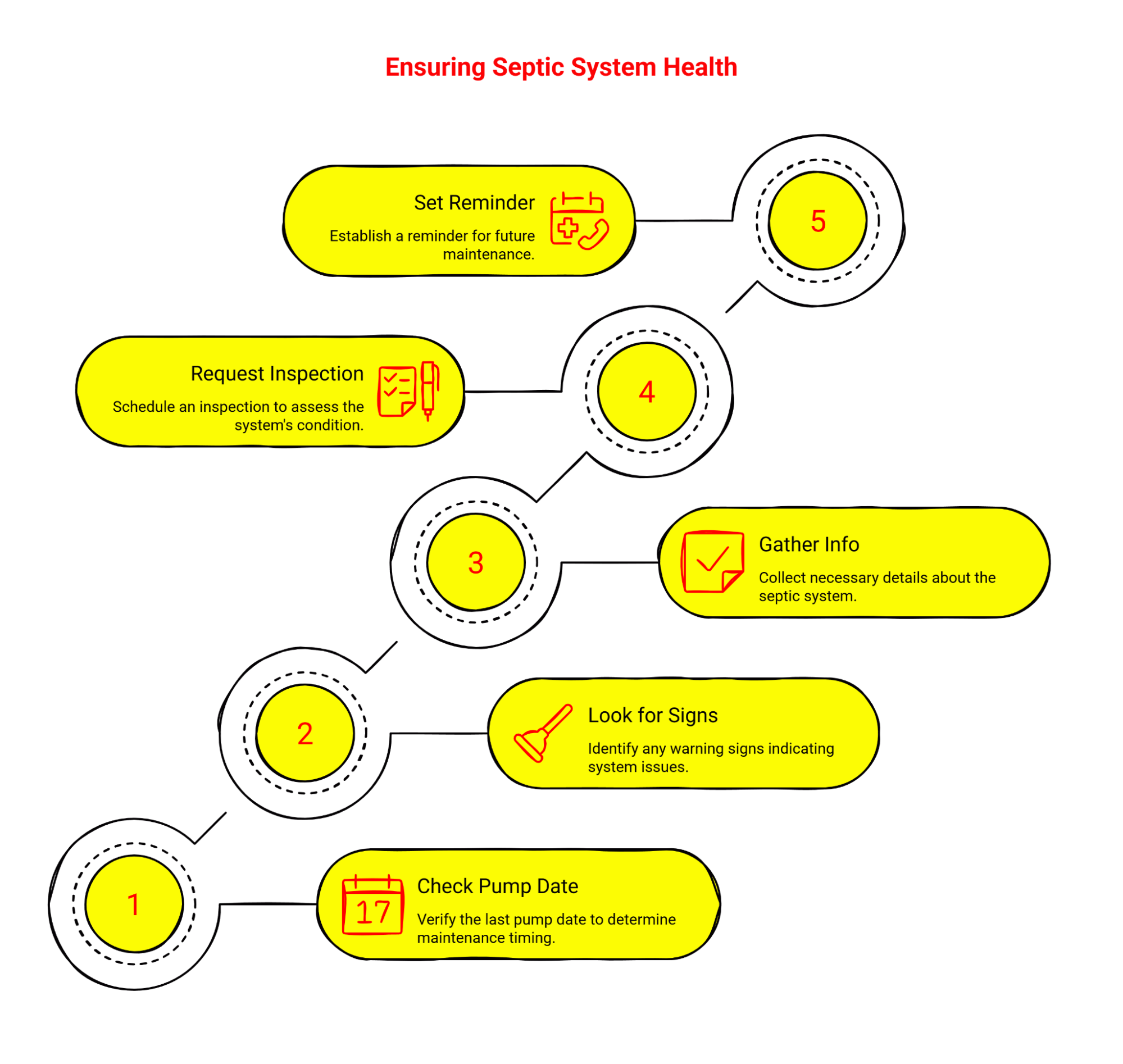
A Plain-English Guide to the Houston FOG Ordinance for Restaurant Managers

📌 Key Takeaways

Transform FOG compliance from a recurring headache into a simple, automated part of your operations.

  • The Calendar Isn’t the Only Clock: Houston’s 25% fill rule is an enforceable standard that can mandate a cleaning before the 90-day mark, making proactive service essential for compliance.
  • Your Binder is Your Best Defense: Inspectors prioritize clear, consistent service manifests over everything else; organized paperwork is your non-negotiable proof of compliance.
  • Match Your Schedule to Your Sizzle: A high-volume kitchen requires a cleaning schedule more frequent than the 90-day baseline to prevent odors, backups, and violations.
  • Automate to Dominate Compliance: Locking in a recurring service schedule is the single most effective strategy to eliminate missed deadlines and ensure year-round peace of mind.

Systematic compliance protects your revenue and your reputation.

Inspection day is coming.

It’s a thought that can add a layer of stress to any Houston restaurant manager’s week. An inspector could walk in during the lunch rush or right before a busy weekend, clipboard in hand, ready to check your compliance with the city’s FOG ordinance. For a busy manager juggling staff, inventory, and customer service, the fear isn’t just about a potential fine; it’s the dread of being caught unprepared, the risk of a shutdown, and the headache of dealing with violations.

You’re likely wondering if your records are in the right place, if your last grease trap service was recent enough, or what, exactly, an inspector is even looking for. This uncertainty can feel like a constant, low-level anxiety. But it doesn’t have to be that way. Imagine that same inspector walks in, and you calmly retrieve a simple, organized binder. They review your service logs, see a clear and consistent maintenance schedule, and are out the door in minutes, leaving you to focus on what you do best.

This guide will get you there. We’re translating the Houston FOG ordinance from dense legal text into a straightforward, scannable playbook for restaurant managers. No jargon, just clear answers and simple checklists to make compliance the easiest part of your job.


What the Houston FOG Ordinance Covers (in simple terms)

Houston’s FOG rules exist to keep fats, oils and grease out of the sewer system. In practice, that means every restaurant must clean its grease trap on a set schedule, keep simple records, and be ready to show those records to inspectors. The easiest way to stay compliant is to lock a 90-day cleaning cadence, adjust to a shorter interval if your kitchen is high-volume, and file each service receipt the same day.

The entire regulation is designed to prevent blockages in the city’s sewer lines, which can cause backups, overflows, and public health issues. For your restaurant, compliance isn’t just about following the rules—it’s about preventing the kind of operational disasters that a clogged grease trap can cause, from foul odors that drive away customers to messy backups that can shut down your kitchen. 


Who Must Comply (and what counts as FOG)

If you run a food service establishment in Houston, these rules apply to you. This includes full-service restaurants, fast-food outlets, school cafeterias, hotel kitchens, and any other business that prepares and serves food. Essentially, if your kitchen produces fats, oils, and grease, you are required to have a system to manage it.

  • Fats, Oils, and Grease (FOG): This is exactly what it sounds like—cooking oils, bacon grease, meat fats, butter, shortening, and food scraps that go down your drains.
  • Grit Traps: While most of the focus is on FOG from kitchens, facilities like car washes or service bays have their own version called a grit trap, which collects sand, dirt, and other solids. According to city laws, these also follow the same 90-day baseline for cleaning to prevent clogs and stay compliant.


The 90-Day Rule & When You Need More Frequent Service

grease trap service signs

The cornerstone of the Houston FOG ordinance is the 90-day cleaning rule. City law requires that your restaurant’s grease traps must be pumped and cleaned at least once every three months (quarterly). This is the absolute minimum frequency to remain compliant.

However, the 90-day schedule is a baseline, not a one-size-fits-all solution. For many busy Houston kitchens, waiting the full 90 days is a recipe for trouble. High-volume restaurants, especially those with busy fryers, grills, or wok stations, often need more frequent service to prevent backups and stay well within legal limits.

Beyond the calendar, there’s a crucial volume-based requirement that can mandate a cleaning sooner: the “25% Rule.” This is not just a guideline but an enforceable standard. If an inspector finds that the combined layer of FOG and solids in your trap exceeds 25% of its total liquid depth, your business could be cited for a violation, even if it hasn’t been 90 days since the last service.

Pay close attention to these telltale signs that you need to service your trap, regardless of the schedule:

  • Slow Drains: Are your kitchen sinks draining more slowly than usual? This is often the first sign that your grease trap is nearing capacity.
  • Foul Odors: A persistent, unpleasant smell near your sinks, floor drains, or outside near the trap itself is a major red flag. This odor is caused by decomposing food solids and grease buildup.
  • Recurring Clogs: If you find your team is frequently dealing with clogs, your trap isn’t keeping up.

Consider this simple framework for proactive scheduling:

Kitchen Output Level Example Suggested Cleaning Interval
Low Volume Cafe with limited fried items Every 90 days
Medium Volume Standard family restaurant Every 60-75 days
High Volume Busy fried chicken or BBQ spot Every 30-60 days


Adjusting your schedule based on your output is the single best way to prevent fines and operational headaches.


Records, Manifests & What Inspectors Ask For

Passing a FOG inspection is less about the trap itself and more about your paperwork. Inspectors need to see a clear, consistent record of maintenance. Keeping good records is your best defense and proof of compliance. It’s simpler than you think.


Here’s what you need to keep on file for every service visit:


  • Service Date: The exact date the cleaning was performed.
  • Volume Removed: The amount of grease and waste pumped from your trap.
  • Hauler Information: The name and contact details of your licensed waste hauler (like Drane Ranger).
  • Disposal Site Confirmation: Proof of where the waste was legally disposed of.

This information is typically included on a service receipt or a “trip manifest” provided by your hauler. Look, the bottom line is this: inspectors want to see a consistent effort. Your goal is to make it easy for them to check the box and move on.


A Simple System for Staying Organized


  1. Create a “FOG Compliance Binder”: Get a simple three-ring binder and label it. This is where every manifest and service receipt will go.
  2. File Immediately: After each service, place the manifest in the binder right away. Don’t let it get lost in a stack of invoices.
  3. Confirm the Official Retention Period: For immediate access during an inspection, keep a rolling 12 months of records in your binder. However, be aware that official regulations often require a longer retention period—typically two years or more. It is a critical best practice to verify the exact record-keeping timeline in the current City of Houston ordinance to ensure full compliance.
  4. Digitize (Optional but Smart): Snap a photo of each manifest with your phone and save it to a dedicated folder in a cloud service like Google Drive. This creates a permanent, searchable backup.

Inspection-Day Prep: What to Expect

With your FOG Compliance Binder in order, inspection day becomes a simple, stress-free event. An inspector’s visit is usually quick and follows a predictable pattern. They’ll want to see your records and ensure your trap is accessible.

Use this checklist to make sure you’re always ready.


FOG Inspection-Day Checklist


  • [ ] Records are Ready: Your FOG Compliance Binder with at least the last 12 months of service manifests is in a known location.
  • [ ] Staff is Aware: Your key staff members (like the assistant manager or head chef) know where the binder is located.
  • [ ] Grease Trap is Accessible: The area around your grease trap is clear of boxes, equipment, or other obstructions. Lids should be easy to access.
  • [ ] Hauler Contact Info is Handy: You have the phone number for Drane Ranger or your service provider readily available in case the inspector has a question.

If an inspector arrives and you realize a receipt is missing, don’t panic. Simply call your hauler and ask them to email a copy right away. Print it, add it to the binder, and show the inspector. Proactive problem-solving demonstrates that you take compliance seriously.


Avoiding Fines & Shutdowns: Common Pitfalls

stepts to prevent compliance issues

Violations and fines almost never happen because of a single bad day. They’re the result of small oversights that snowball over time. The most common pitfalls are entirely preventable with a simple system.

Here are the top three mistakes that lead to trouble:

  1. Waiting for Symptoms: Many managers wait until they notice slow drains or bad odors to schedule a cleaning. By then, you’re already out of compliance and risking a backup. The solution is to get on a recurring schedule and let the calendar, not the symptoms, dictate your service.
  2. Missing a Quarterly Service: Life gets busy, and it’s easy for a 90-day deadline to slip by. Missing even one required cleaning in a year is a red flag for an inspector. A recurring service appointment that you don’t have to think about is the best way to prevent this.
  3. Having No Paper Trail: You might be getting service regularly, but if you can’t prove it, it’s as if it never happened. An inspector cannot verify a verbal confirmation. This is why filing every manifest immediately is non-negotiable.

Ultimately, preventing these issues comes down to one core idea: turning compliance into a routine, not an emergency.


Your Simple Compliance Plan for the Next 12 Months


Let’s put it all together. You don’t need a complicated project management system to stay on top of FOG compliance. All you need is a simple, repeatable plan.

Here is a straightforward 12-month compliance plan you can implement today:

  • This Week: Call your service provider and set up a recurring 90-day schedule for the entire year. Lock in tentative dates for each quarter.
  • Each Quarter:
    • One week before the scheduled service, your provider should call to confirm.
    • On the day of service, ensure the trap is accessible.
    • Immediately after the service is complete, get the manifest and file it in your FOG Compliance Binder.
  • Once a Month: Do a quick spot-check. Are drains running freely? Are there any unusual odors? If you notice issues, consider tightening your service schedule (for example, moving from 90 to 75 days) during your busiest seasons.

That’s it. By putting your grease trap cleaning in Houston on autopilot, you eliminate the primary cause of violations and can focus on running your restaurant. Compliance isn’t complicated. It’s just consistent.


Ready to Make Compliance Effortless

Navigating Houston’s regulations doesn’t have to be a source of stress. With a simple plan and a reliable partner, you can have complete peace of mind. Drane Ranger specializes in providing Houston restaurants with the Grease trap, grit & lint trap service (Houston) needed to stay compliant and operate smoothly.

If you’re ready to put your FOG compliance on autopilot, contact Drane Ranger today. Let us help you request your quote or set up a recurring 90-day schedule that keeps you protected all year long. You can also explore The Official Houston Restaurant FOG Compliance Checklist for more resources.

Preventing the Shutdown: A Restaurant Operator’s Guide to Grease Trap Service in Houston

📌 Key Takeaways:

Avoid shutdowns by turning grease trap care into a predictable, documented routine.

Full Clean-Outs, Not Pump-Only: Removing liquids plus scraping/rinsing walls and baffles, followed by a manifest, prevents rapid re-clogs, odors, and surprise downtime.

Cadence You Can Trust: Start around 90 days and tighten for high volume, fry-heavy menus, or small traps to keep flow steady and inspections smooth.

Documentation = Protection: Keep every wastewater manifest on file to prove responsible haul-off and stay inspection-ready.
Choose Providers for Reliability: Demand written scope, full clean-outs, manifests every visit, and off-hours scheduling to avoid hidden costs and mid-service emergencies.

30-Day Plan Locks Habits: Baseline your setup, schedule service, train staff on daily FOG habits, set reminders, and confirm the next date to maintain momentum.

Predictable service + manifests + daily habits = open doors and a calm dinner rush.

When the dinner rush hits and your kitchen drains start backing up, every second counts. The acrid smell of grease mixed with wastewater can clear a dining room faster than a fire alarm. For Houston restaurant operators, this nightmare scenario represents more than just an unpleasant evening—it’s a direct threat to revenue, reputation, and regulatory standing.

Think of your grease trap system like the foundation of your building. Most of the time, it operates invisibly beneath the surface, handling the steady flow of fats, oils, and grease (FOG) that commercial kitchens inevitably produce. When that foundation fails, however, the entire operation comes to a grinding halt. Picture this: it’s 7 PM on a Friday night, your dining room is packed, and suddenly the kitchen sinks won’t drain. Orders back up, customers grow restless, and what should have been your biggest revenue night of the week transforms into a costly emergency.

The solution lies in treating grease trap maintenance not as an afterthought, but as operational insurance. Professional grease trap service transforms this hidden risk into a predictable, manageable aspect of restaurant operations. Rather than waiting for problems to surface during your busiest moments, a structured approach to grease trap maintenance ensures your kitchen runs smoothly when it matters most.


What’s at Stake: Why Grease Trap Service Prevents Shutdowns in Houston

Restaurant shutdowns due to grease trap failures stem from a straightforward but potentially catastrophic process: FOG accumulation that blocks normal wastewater flow and creates backups throughout the kitchen drainage system.


How Backups Begin: FOG Accumulation Explained

The science behind grease trap problems is relatively simple, but the business consequences are severe. As cooking operations produce fats, oils, and grease, these substances flow into the grease trap where they’re designed to separate from wastewater. Over time, however, these materials solidify and accumulate. When the trap reaches capacity, FOG begins flowing into the main drainage system where it cools, hardens, and creates blockages.

The process accelerates during high-volume periods because increased cooking activity produces more FOG faster than the trap can effectively separate it. Many operators discover this timing creates a cruel irony: the busier and more successful the restaurant, the higher the risk of a grease-related shutdown during peak revenue periods.


The Business Math of Downtime: Revenue, Labor, and Reputation


Consider the financial impact of a single evening shutdown during peak dining hours. A typical full-service restaurant averaging $1,000 per hour in revenue during prime time faces immediate losses that extend far beyond the evening’s sales.

Direct Revenue Loss: A four-hour Friday night shutdown equals $4,000 in immediate lost sales. Weekend closures compound this impact because these represent the highest-margin hours of the week.

Labor Costs Continue: Kitchen and service staff still require payment despite the inability to serve customers. Food prep completed before the shutdown often requires disposal, adding waste costs to labor expenses.

Reputation and Customer Relationships: Perhaps most damaging, customers turned away due to operational failures rarely return immediately. Social media amplifies negative experiences, and recovery requires months of consistent positive service to rebuild damaged reputation.

Emergency Service Premiums: Grease trap failures that occur during peak hours require emergency service calls, typically costing 200-300% more than scheduled maintenance visits.


Quick Definition: What Counts as Professional Grease Trap Service


Professional grease trap service encompasses a complete cleaning process that includes pump-out, physical cleaning, and proper documentation—not simply removing accumulated liquids.

The distinction between basic pump-out and comprehensive service determines whether the maintenance actually prevents future problems. A pump-out removes liquid waste but leaves solidified FOG adhering to trap walls and baffles. This residual buildup accelerates reaccumulation, shortening the effective interval between service calls and increasing the likelihood of operational disruptions.


Pump-Out vs. True Clean-Out: Why the Difference Matters

A complete clean-out process involves several critical steps beyond liquid removal. After pumping out accumulated waste, technicians perform a thorough scrape-down of all internal surfaces, removing hardened FOG deposits that standard pumping cannot address. This physical cleaning process followed by a high-pressure rinse ensures the trap returns to optimal operating condition.

The business impact of this distinction becomes apparent over time. Restaurants relying on pump-only service typically require more frequent visits and experience higher rates of emergency calls due to incomplete cleaning. Complete clean-out service, while requiring slightly more time per visit, extends effective intervals between services and significantly reduces emergency situations.


Documentation and Manifests: What They Are and Why They’re Kept

Professional service includes comprehensive documentation through waste manifests—official records tracking the collection, transportation, and disposal of removed waste. These documents serve multiple critical functions for restaurant operations.

Manifests provide concrete evidence of proper waste handling during regulatory inspections. Houston’s FOG compliance requirements include documentation standards, and manifests demonstrate adherence to proper disposal protocols. Additionally, these records help operators track service intervals and identify patterns that might indicate needed adjustments to cleaning frequency.

The documentation process also protects restaurants from liability issues related to waste disposal. Professional service providers handle all regulatory requirements for waste transportation and processing, but manifests provide restaurants with proof that waste left their facility through proper channels.


Houston’s Rulebook in Plain English (Zero Legal Jargon)


Houston requires regular grease trap maintenance and proper documentation as part of the city’s FOG management program, designed to protect the municipal wastewater system from blockages that can cause environmental damage and infrastructure problems.

The basic requirements center on two main principles: regular cleaning intervals and proper record-keeping. While specific requirements can vary based on factors like restaurant size, trap capacity, and operational volume, most establishments follow quarterly cleaning schedules as a baseline. However, restaurants should consult current city guidelines and work with qualified service providers to ensure compliance with all applicable regulations.

Why These Rules Exist: Houston’s FOG ordinance addresses real infrastructure challenges. When grease enters the municipal sewer system, it causes blockages that can result in sewage overflows, environmental contamination, and expensive repairs to public infrastructure. Restaurant compliance helps prevent these community-wide problems while protecting individual businesses from operational disruptions.

Professional service providers help restaurants navigate compliance requirements by maintaining proper manifests, following approved disposal methods, and providing documentation that demonstrates adherence to regulatory standards. This collaborative approach allows restaurant operators to focus on their core business while ensuring regulatory obligations are met through professional expertise.


Set the Right Cadence: Building a Reliable Service Schedule

Most Houston restaurants establish a baseline service interval of approximately 90 days, then adjust this schedule based on operational factors that affect FOG production and accumulation rates.

The 90-day baseline provides a starting point for most operations, but several factors typically require schedule adjustments. High-volume restaurants, establishments with extensive fried food menus, and operations using smaller grease traps often benefit from shorter intervals. Conversely, restaurants with limited frying, smaller daily covers, or larger trap systems might extend intervals slightly while maintaining effective FOG management.


Common Baselines and When to Shorten


Volume Considerations: Restaurants serving more than 200 covers daily typically require more frequent service due to the sheer quantity of FOG production. Peak season operations, such as those in tourist areas, may need temporary schedule adjustments during high-volume periods.

Menu Impact: Establishments specializing in fried foods, particularly those using solid cooking fats, generate FOG that solidifies more quickly in trap systems. These operations often benefit from 60-75 day intervals rather than the standard 90-day baseline.

Trap Size Relationships: Smaller grease traps reach capacity more quickly, requiring more frequent attention. Restaurants with trap systems below 500-gallon capacity typically need service every 60-90 days, while larger systems may effectively operate on 90-120 day intervals.

Volume, Menu, and Trap Size: Three Drivers of Frequency

Restaurant Profile Typical Interval Key Factors
High-volume fried food 60-75 days Daily covers >200, extensive frying
Standard full-service 90 days Mixed menu, moderate frying
Low-volume/limited frying 90-120 days <100 daily covers, minimal fried items


These intervals serve as starting points for service scheduling. Operators should work with their service provider to monitor trap conditions and adjust frequency based on actual accumulation patterns observed during service visits.


Inside the Visit: A 5-Step Service Breakdown

grease trap service process

Professional grease trap service follows a systematic process designed to restore optimal trap function while ensuring safety and regulatory compliance throughout the procedure.

Understanding this process helps restaurant operators prepare effectively and recognize quality service. Each step serves specific purposes in maintaining trap effectiveness and preventing operational disruptions.

Step 1: Arrival and Safety Prep

Professional technicians begin each service call with safety preparation and site assessment. This includes reviewing access routes, confirming the service window doesn’t conflict with peak kitchen operations, and establishing communication with designated restaurant staff.

Safety protocols require proper ventilation of the trap area, as accumulated FOG can produce hazardous gases. Technicians use gas detection equipment and ensure adequate airflow before beginning work. This preparation phase typically requires 10-15 minutes but prevents dangerous conditions during the service process.

Step 2: Complete Pump-Out

The pump-out process removes all liquid waste from the trap system using specialized vacuum equipment. Professional service includes removing waste from all chambers and ensuring complete liquid extraction before proceeding to physical cleaning phases.

During pump-out, technicians assess the quantity and consistency of removed waste. This evaluation helps determine whether the service interval is appropriate for the establishment’s FOG production patterns. Excessive solid accumulation might indicate the need for more frequent service, while minimal buildup could suggest interval extension possibilities.

Step 3: Scrape-Down and Rinse

Physical cleaning removes solidified FOG deposits that pump-out cannot address. Technicians use specialized tools to scrape accumulated grease from trap walls, baffles, and other internal components. This step distinguishes professional service from simple pump-out procedures.

The scrape-down process typically reveals the trap’s actual condition and effectiveness. Heavy buildup on internal surfaces indicates either inadequate service intervals or potential operational changes that increase FOG production. Following physical cleaning, high-pressure rinsing removes loosened debris and restores proper flow patterns through the system.

Step 4: Visual Check and Notes

Comprehensive inspection identifies potential maintenance needs and operational concerns that could affect future trap performance. Technicians examine structural integrity, inlet and outlet conditions, and overall system function.

This inspection phase often identifies minor issues before they become major problems. Damaged baffles, improper water levels, or unusual wear patterns can indicate needed repairs or operational adjustments. Addressing these concerns during routine service prevents emergency failures and extends overall system life.

Step 5: Manifests, Haul-Off, and Disposal

Professional service concludes with proper documentation and waste disposal through approved facilities. Manifests detail the quantity and type of waste removed, transportation information, and final disposal location.

The documentation process provides restaurants with records demonstrating regulatory compliance and proper waste handling. These manifests become part of the restaurant’s compliance file and serve as evidence of appropriate waste management during inspections or audits.

Provider Selection Checklist: How to Avoid Hidden Costs

Selecting a grease trap service provider requires evaluating factors beyond initial pricing to ensure comprehensive service and avoid unexpected expenses that can exceed initial savings.

Many operators focus primarily on service pricing without considering the total cost of ownership, which includes emergency calls, compliance risks, and operational disruptions caused by inadequate service. A structured evaluation process helps identify providers who deliver genuine value through comprehensive service and reliability.

Proof of Proper Disposal and Manifests

Legitimate service providers maintain all required permits and insurance for waste transportation and disposal. They provide detailed manifests after each service visit and can demonstrate relationships with approved disposal facilities.

Operators should verify that potential providers can show current permits, insurance certificates, and waste disposal facility agreements. Providers unable or unwilling to provide this documentation may create compliance risks for restaurants, potentially resulting in regulatory violations and associated penalties.

Scheduling Reliability and After-Hours Options

Consistent service scheduling prevents emergency situations that disrupt operations and cost significantly more than routine maintenance. Reliable providers offer predictable scheduling, advance notification of service visits, and emergency response capabilities for unexpected problems.

After-hours service availability becomes critical when problems occur during peak operating periods. Providers offering 24-hour emergency response help minimize revenue loss from operational disruptions, though emergency rates typically cost 2-3 times standard service pricing.


Transparent Scope: No ‘Pump-Only’ Surprises

Service agreements should clearly specify what’s included in routine visits to avoid disputes and unexpected charges. Comprehensive service includes pump-out, physical cleaning, documentation, and basic system inspection as standard procedure.

Red Flags to Avoid: Providers offering significantly below-market pricing often exclude essential service components, resulting in hidden costs and inadequate cleaning. Common exclusions include physical cleaning, manifest preparation, or disposal fees presented as separate charges after service completion.

Quality Indicators: Professional providers clearly explain their service process, provide written service agreements detailing included work, and maintain consistent pricing without surprise add-ons. They also demonstrate knowledge of local regulations and compliance requirements relevant to restaurant operations.


30-Day Quick-Start Plan for Houston Operators

30 day quick start plan for grease trap managment

Implementing effective grease trap management requires systematic preparation and team coordination. This structured approach helps restaurants establish reliable maintenance routines while avoiding common implementation mistakes.

The four-week timeline allows gradual implementation without overwhelming daily operations while ensuring all necessary components are properly established before relying on the new maintenance schedule.


Week 1: Baseline Inspection and Manifest File Setup

Begin by documenting current trap conditions and establishing record-keeping systems that will support ongoing compliance and maintenance tracking.

Day 1-2: Locate and photograph your grease trap system, noting trap size, access points, and last service date if available. Create a simple file (physical or digital) for storing service manifests and maintenance records.

Day 3-5: Contact your current service provider (if applicable) to obtain copies of recent manifests and service records. If no recent service has occurred, schedule an immediate baseline service to establish trap condition and appropriate service intervals.

Day 6-7: Research local service providers and request quotes that specify complete service scope, including pump-out, cleaning, and documentation. Compare not just pricing but service components and emergency availability.


Week 2: Book Service and Align Pre-Service Checklist

Establish service relationships and prepare operational procedures that minimize disruption during maintenance visits.

Service Provider Selection: Choose a provider based on comprehensive service offering, manifest provision, and scheduling reliability rather than lowest price alone. Confirm emergency service availability and response times.

Pre-Service Preparation: Develop a simple checklist for service days including access clearance, timing coordination, and staff communication protocols. Designate a point person for service provider coordination to ensure consistent communication.


Week 3: Train Team on Daily FOG Habits

Implement kitchen practices that reduce FOG accumulation and extend service intervals while maintaining food quality and operational efficiency.

Kitchen Staff Training: Review proper disposal procedures for cooking oil, food scraps, and cleaning materials. Emphasize that small daily habits significantly impact trap performance and service frequency requirements.

Practical Measures: Install grease collection containers for used cooking oil, provide scrapers for plate cleaning before washing, and establish protocols for disposing of oil-heavy food waste. These simple measures can extend service intervals and reduce emergency calls.


Week 4: Review Schedule and Phone-Tree for Issues

Finalize ongoing maintenance schedules and establish communication procedures for addressing problems before they become operational emergencies.

Schedule Confirmation: Confirm recurring service appointments with your chosen provider and add these dates to restaurant calendars with prep reminders. Establish procedures for rescheduling service when conflicts arise with special events or peak periods.

Emergency Procedures: Create contact information for after-hours service and establish decision protocols for determining when emergency service is necessary versus manageable until the next scheduled visit.


Pre-Service Kitchen Prep Checklist

Service Day Preparation

  • Clear access path to grease trap location
  • Confirm service timing avoids peak kitchen operations
  • Designate staff member as service provider contact
  • Prepare manifest filing system for new documentation


Provider Selection Mini-Checklist

Essential Service Components

  • Complete pump-out and physical scrape-down included
  • Written manifests provided after each visit
  • Transparent pricing with no hidden disposal fees
  • Emergency service availability with clear rates


FAQ: Straight Answers for Busy Managers


How often should Houston restaurants clean their grease traps?

Most restaurants start with 90-day intervals and adjust based on volume, menu, and trap size. High-volume operations with extensive fried food menus typically require 60-75 day intervals, while smaller operations might extend to 120 days. Your service provider can help determine the optimal frequency based on actual trap conditions observed during visits.

Does cleaning automatically mean compliance?

Regular cleaning is essential for compliance, but restaurants also need proper documentation through manifests and records demonstrating appropriate disposal. Professional service providers help maintain compliance by following proper procedures and providing necessary documentation, but restaurants should understand their role in maintaining records and scheduling appropriate service intervals.

What’s included in a professional service visit?

Complete service includes pump-out of all liquids, physical scraping of solidified deposits, high-pressure rinsing, basic system inspection, and manifest documentation. This comprehensive approach differs from simple pump-out services that may leave residual buildup contributing to faster reaccumulation.

What are signs you need service sooner than scheduled?

Slow drainage throughout the kitchen, persistent odors near the trap area, or visible grease accumulation in sink areas indicate the need for immediate service. Changes in menu offerings, increased customer volume, or extended busy periods may also require temporary schedule adjustments to prevent operational disruptions.

Do you accept hazardous waste or provide drop-off services?

Drane Ranger provides on-site service for non-hazardous wastewater only. We do not accept hazardous materials or provide drop-off facilities. Our grease, grit & lint traps service focuses on scheduled maintenance that keeps restaurant operations running smoothly while ensuring proper waste handling and disposal.


Taking Control of Your Kitchen’s Critical Systems

The difference between reactive and proactive grease trap management often determines whether a restaurant thrives during busy periods or faces costly shutdowns at the worst possible moments. By treating grease trap maintenance as operational insurance rather than deferred expense, Houston restaurant operators transform a hidden risk into a predictable, manageable aspect of successful operations.

Professional service providers like Drane Ranger help restaurant managers focus on what they do best—creating exceptional dining experiences—while ensuring critical infrastructure operates reliably behind the scenes. Our comprehensive approach includes complete cleaning, proper documentation, and ongoing support that helps restaurants maintain compliance and operational stability.

Ready to protect your Houston restaurant from unexpected shutdowns? Contact us today to discuss a maintenance schedule that fits your operation’s specific needs, or call us directly at 281-489-1765 to get started with reliable grease trap service.

Disclaimer This guide is for informational purposes only and does not constitute legal or permit advice. Drane Ranger helps Houston restaurants stay inspection-ready by providing documented, non-hazardous wastewater service.


Our Editorial Process

Every Insights Team article is reviewed for clarity and usefulness to busy operators. We update core guides as standards and best practices evolve.

About the Drane Ranger Insights Team

The Drane Ranger Insights Team is our dedicated engine for synthesizing complex topics into clear, helpful guides. While our content is thoroughly reviewed for clarity and accuracy, it is for informational purposes and should not replace professional advice.