Why Grease Trap Odors Return Soon After Cleaning at a Houston Restaurant

📌 Key Takeaways

Recurring grease trap odors need documented troubleshooting, because another pump-out may repeat the wrong work without finding the true source.

  • Track the Odor Pattern: Record when, where, and during which kitchen activities the odor returns to give providers useful evidence.
  • Review the Service Scope: Check reports and invoices to confirm what technicians cleaned, inspected, accessed, or recommended during the previous visit.
  • Check Other Possible Sources: The smell may come from another drain, a dry water seal, or an improperly sealed trap cover.
  • Note Operating Changes: Higher customer volume, longer hours, or heavier fryer use may affect whether the current maintenance approach still fits.
  • Escalate Warning Signs: Slow drains, gurgling, backflow, multiple affected fixtures, or wastewater need prompt attention from a qualified professional.

Follow the evidence before repeating the service.

Houston restaurant managers will prepare stronger follow-up requests by using the symptom, service, and safety guidance that follows.

~ ~ ~ ~ ~ ~ ~ ~ ~ ~ ~ ~ ~ ~ ~ ~ ~ ~

A grease trap service record may show that the scheduled work was completed, but it does not automatically explain every odor in a restaurant’s drainage system. When the smell returns days or weeks after recent service, a Houston restaurant manager may reasonably question whether the original problem was resolved.

Odor recurrence does not, by itself, prove that the trap is full again or that the previous provider performed inadequate work. The complaint could involve the original source, a different drainage location, a narrower service scope than management expected, limited access, changing kitchen output, or another condition requiring professional evaluation.

Before authorizing another visit, organize the facts. Record when and where the odor returned, compare it with the original complaint, review the previous service documentation, and note any related drainage symptoms or operating changes.


A Cleaning Visit and a Resolved Odor Complaint Are Not Always the Same Thing

A service visit addresses the work performed within an agreed or documented scope. The odor complaint may involve that same work, but it may also extend beyond it.

For example, a pump-out generally refers to removing collected material. The cleaning scope is the specific work the provider says was performed. A service record may include an invoice, work order, technician report, photographs, or follow-up recommendations. An access point is a location the provider uses to reach the trap or another relevant part of the system.

These terms do not describe a universal service standard. The restaurant’s own records remain the best source for determining what occurred during the visit.

While general regulations govern how fats, oils, and grease (FOG) are managed, resolving a specific odor requires site-level troubleshooting. Managers evaluating commercial grease trap cleaning in Houston should describe the exact symptom pattern rather than assuming another identical service is automatically required.

Managers evaluating commercial grease trap cleaning in Houston should therefore describe the current symptom pattern rather than assume that another identical service is automatically required.


What to Record Example Observation Why It Helps the Follow-Up
Date and time odor returned Monday at 11:30 a.m. Establishes the recurrence timeline
Strongest location Floor drain near the prep sink Separates one location from another
Operating activity Heavy dishwashing after lunch Adds operational context
Related symptoms Sink draining more slowly Shows whether odor is isolated
Previous service date Date from the report Establishes chronology
Stated service scope Pump-out, cleaning, inspection, or line work Clarifies what the record says was included
Access limitations Locked area or blocked cover Identifies possible constraints
Operational changes Catering week or longer operating hours Helps compare current and normal conditions
Provider question What did the technician observe? Makes the follow-up more productive


Start With a Post-Cleaning Odor TimelineOdor Complaint Resolution Process: Funnel infographic showing an odor complaint process, from creating an odor timeline and shared observation log to comparing timelines and describing the problem.
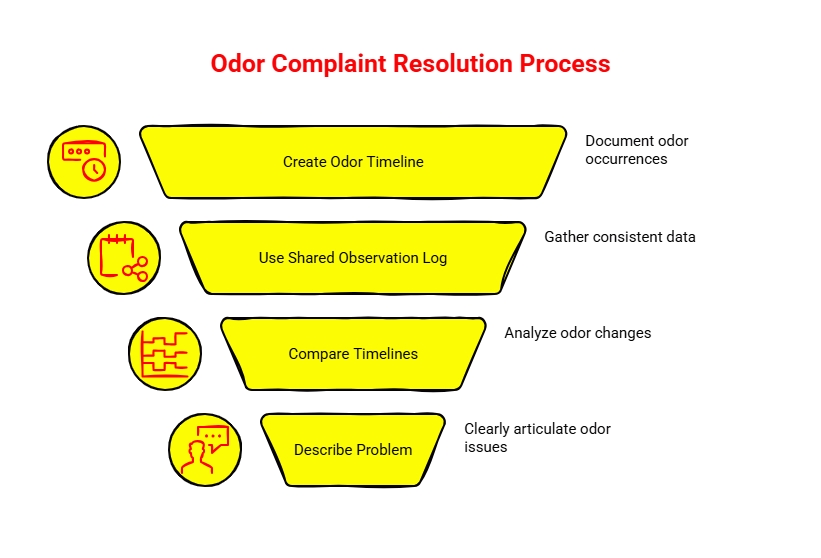
Turn the complaint into a written chronology. Record the date of service, when the odor was first noticed again, and whether it has remained constant or appears intermittently.

Ask staff to use one shared observation log. Separate verbal reports often produce conflicting descriptions, especially when different shifts experience the odor under different conditions. The log should identify the location, time, kitchen activity, affected fixtures, and any related drain behavior.

For example, a restaurant might notice an odor near a prep-area drain only after lunch cleanup, with no odor reported near the outdoor grease-trap access area. This pattern does not identify the cause, but it gives the provider a more useful starting point than simply stating ‘the trap smells again.

Compare the new timeline with the period before service. Did the odor disappear completely and then return? Did it improve without fully disappearing? Is it now stronger in another location? These distinctions help management describe the problem without turning an observation into a diagnosis.


Five Categories to Review When Odor Returns

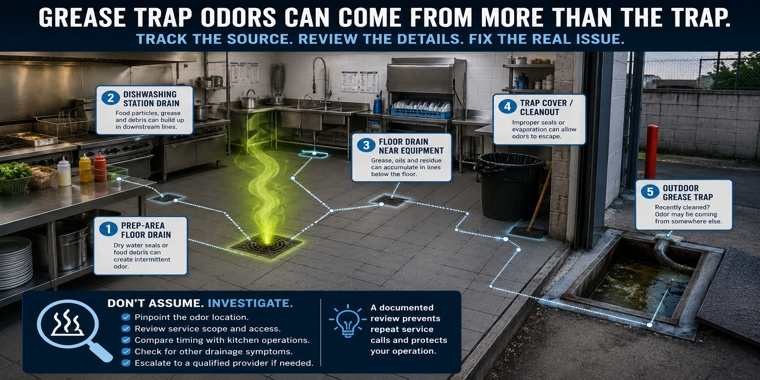
1. The Odor May Not Be Coming From the Same Location

Map the complaint before drawing conclusions. Compare indoor drains, preparation areas, dishwashing stations, outdoor access areas, and waste-handling locations.

A similar smell in a different place may require a broader evaluation. Depending on the system, a qualified professional may review connected drainage areas, residue around an access location, or other components. Additionally, the pumping process can occasionally siphon the water seal out of nearby p-traps. Running a small amount of water down unused floor drains will restore the seal and block sewer gases from entering the kitchen. Staff should not open, dismantle, or physically inspect wastewater equipment to find the source.

2. The Previous Service Scope May Be Unclear

Review the wording on the invoice, work order, and technician report. “Serviced” may not tell management whether the visit included pumping, cleaning, inspection, line-related work, or investigation of an odor complaint.

For instance, if an invoice lists a grease trap pump-out, management might assume that nearby drainage lines and indoor odor sources were also evaluated. The document does not prove that those areas were included or excluded. It shows that management needs to ask what the stated scope covered.

Related information about what a professional grease trap cleaning may include can help managers prepare questions, but an internal article should not replace the property-specific service record or be treated as a universal technical standard.

3. Access Limitations May Have Affected the Visit

Confirm whether every planned access point was available. Parked vehicles, stored materials, locked areas, equipment placement, and active restaurant operations may restrict what can be reached or observed.

Do not assume that a technician skipped an area. You should also verify that the trap’s cover was fully seated after the service. An improperly sealed lid or damaged gasket following a recent pump-out is a frequent cause of localized odor. Look for documented limitations and ask the provider directly. Before the follow-up visit, clear safe access and identify a lower-impact service window so the evaluation is not rushed during peak kitchen activity.

4. Restaurant Output May Have Changed

Compare current operations with the conditions that existed when the maintenance approach was established. Relevant changes may include customer volume, catering, menu mix, fryer use, food preparation, staffing, dishwashing demand, water use, or operating hours.

Illustrative example: A catering week, a new fried-food menu, or longer weekend hours may justify reviewing whether the existing approach still fits actual use. The observation does not establish a new cleaning interval, and the effect can vary by restaurant and system.

Managers can use these records when reviewing the grease trap maintenance schedule. A qualified provider should consider site conditions before recommending changes. Avoid selecting a new interval from an unsupported online rule of thumb.

5. The Complaint May Require a Broader Evaluation

Odor accompanied by slow drainage, gurgling, backflow, a rising wastewater level, or multiple affected fixtures may indicate that the next visit should examine more than the previous service scope. These symptoms do not prove which component or service category is responsible.

The grease-trap provider, plumber, landlord, or facilities professional may need to clarify responsibility. Management should document what is happening and coordinate the appropriate parties rather than instruct staff to attempt repairs or apply chemicals, enzymes, bleach, boiling water, or odor-masking products.


Review the Previous Service Record Before Requesting Another Visit

Gather the invoice, service report, work order, photographs, and relevant messages. Payment documentation confirms a transaction, but it may not describe every task, observation, limitation, or recommendation.

Review the following details:

  1. Date and time of service
  2. Type of service recorded
  3. Areas or components accessed
  4. Amount removed, but only when documented
  5. Technician observations
  6. Photographs, if supplied
  7. Access limitations
  8. Recommended additional work
  9. Suggested future service approach
  10. Relevant waste documentation, when verified and applicable
  11. Whether the odor complaint was discussed before the visit

A vague record does not prove that the work was inadequate. It does, however, make a focused follow-up conversation more important. Managers can also review neutral service concerns worth reviewing without treating a general checklist as evidence against a particular provider.


Prepare Specific Follow-Up Questions
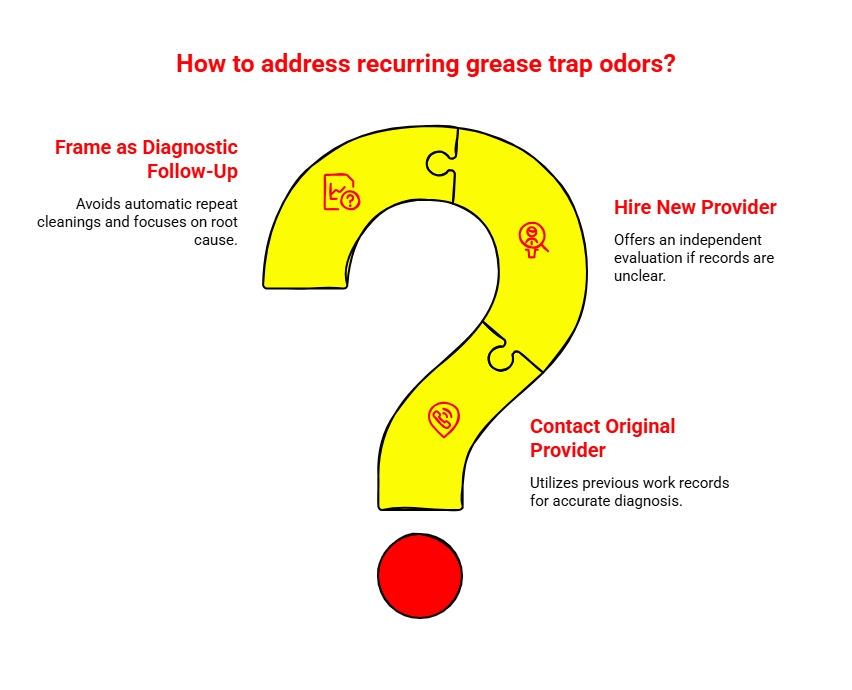
Recurring Grease Trap Odors: Question mark infographic explaining how to address recurring grease trap odors through diagnostic follow-up, original provider review, or independent evaluation.

The provider needs current observations, especially when the odor is intermittent or absent during the appointment. A collaborative conversation is more likely to define the correct next scope than an accusation or automatic request for another pump-out.

Ask:

  • What service scope was completed during the previous visit?
  • What condition did the technician document?
  • Were any areas inaccessible or outside the requested scope?
  • Was buildup, restricted flow, or another concern recorded?
  • Was additional work recommended?
  • Is the current odor in the same location reported before service?
  • Should the next visit repeat the previous work or provide a broader evaluation?
  • What should staff record before the technician arrives?

If ownership questions the need for another visit, frame it as a diagnostic follow-up rather than an automatic repeat cleaning. The purpose is to determine whether the same source remains active, another area requires evaluation, or the restaurant’s operating conditions have changed.

Calling the original provider may be useful because that company has the previous work record. A different qualified provider may be considered when the documented scope remains unclear, responsibilities overlap, or management wants an independent site evaluation.


When Recurring Odor Deserves Prompt Professional Follow-Up

Odor alone does not establish an emergency. A broader warning pattern may justify more prompt evaluation.

Watch for:

  • Odor becoming stronger or spreading
  • Slow drainage appearing with the odor
  • Several fixtures being affected
  • Gurgling or backflow
  • Wastewater or grease appearing in an unexpected area
  • An active overflow or backup
  • Odor materially affecting staff or customer areas

For an active wastewater backup or overflow, restrict access to the affected area and contact an appropriate qualified service provider. Restaurant employees should not be directed to handle wastewater unless they have the proper role, training, equipment, and site-specific procedures. CDC guidance for workers handling sewage emphasizes training, hygiene, protective equipment, and qualified safety planning.


Questions Houston Restaurant Managers Commonly Ask

Can a Grease Trap Still Smell After It Has Been Pumped?

Yes. The odor may persist or return when the source is not limited to the material removed during the visit. The location, service scope, access conditions, kitchen activity, and connected drainage areas may require evaluation. A qualified professional should determine the actual source.

How Soon Is Too Soon for Grease Trap Odor to Return?

There is no universal recurrence period that proves a specific cause. Record the exact service date, when the odor returned, where it appeared, and what the kitchen was doing. A repeatable pattern across operating periods or service cycles gives the provider more useful evidence.

Should the Provider Already Know What Went Wrong?

Not necessarily. An intermittent complaint may require current observations and access to the affected area. A technician cannot reliably evaluate a condition that was not reported, was outside the prior scope, or is absent during the visit.

Does Houston Require Another Cleaning Immediately?

The odor alone should not be treated as proof that a particular regulatory action is required. Current requirements depend on the applicable rule and facility context. Managers should consult the official City of Houston Code of Ordinances or the appropriate city authority rather than rely on an undated vendor article or online summary.


Conclusion and Next Step

Resolving persistent smells requires moving past immediate assumptions about the last cleaning. Start by recording when and where the odor returned. Compare the current complaint with the original symptoms, review the previous scope and access conditions, note operational changes, and prepare specific questions.

Document those findings before requesting follow-up. Houston restaurant managers can also contact Drane Ranger to describe the recurrence, its strongest location, and what the previous service included. The next visit may require a broader assessment rather than an automatic repetition of the same work.

Disclaimer: This article is for general informational purposes only and does not constitute compliance, safety, technical, or professional advice. Requirements, risks, and best practices may vary by context, jurisdiction, system, provider, or use case. Confirm important decisions with the appropriate qualified professional, authority, or technical expert.

Our Editorial Process

Our expert team uses AI tools to help organize and structure our initial drafts. Every piece is then extensively rewritten, fact-checked, and enriched with first-hand insights and experiences by expert humans on our Insights Team to ensure accuracy and clarity.

By Drane Ranger Insights Team

The Drane Ranger Insights Team creates practical guidance for Houston-area businesses that need reliable liquid waste management, grease trap cleaning, septic, lift station, and wastewater compliance support. Drane Ranger Vacuum Services has served the Greater Houston area since 1985, helping customers keep operations running while following applicable waste handling and disposal requirements.
When Several Kitchen Fixtures Act Up at Once: A Grease Trap Warning Pattern for Houston Restaurant Operators

📌 Key Takeaways

Several troubled kitchen fixtures call for documented pattern tracking and professional review, not a quick guess about the grease trap.

  • Track The Whole Pattern: Record each symptom’s location, timing, recurrence, spread, and operational impact across every shift.
  • Escalate Based On Impact: Monitor one isolated event, but schedule an evaluation when symptoms recur, cluster, spread, worsen, or disrupt work.
  • Treat Backups As Urgent: Use facility procedures and seek qualified help promptly when wastewater backs up, overflows, or shuts down a station.
  • Keep Staff Safe: Staff should log observations and leave covers, chemicals, waste, drain clearing, and repairs to qualified professionals.
  • Share Facts With Providers: A shared timeline helps grease trap providers and plumbers assess possible causes without relying on vague reports.

Patterns guide action; single symptoms do not prove causes.

Houston restaurant operators will make faster, safer service decisions using the tracking and response steps that follow below.

~ ~ ~ ~ ~ ~ ~ ~ ~ ~ ~ ~ ~ ~ ~ ~ ~ ~

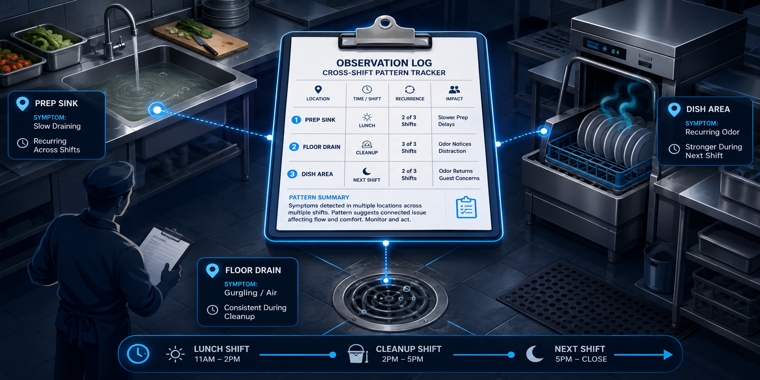
A single slow prep sink can be a localized inconvenience. When the prep sink, floor drain, and dish area begin showing slow drainage, gurgling, or recurring odors during the same operating period, the situation requires a coordinated operational response.

For a Houston restaurant operator, related symptoms across several fixtures deserve coordinated attention. The pattern may involve the grease trap or grease interceptor, but it may also reflect a shared drain line, venting condition, or another plumbing issue. Symptoms alone do not establish the cause.

The practical response is to identify where the changes appear, record when they recur, and note whether they are spreading or disrupting service. That information helps management decide whether to continue monitoring, schedule a professional evaluation, or activate the facility’s urgent-response procedures.


One Fixture Can Be Local; Several Fixtures Create a Pattern

A fixture is an observed kitchen drainage point or connected work area, such as a prep sink, three-compartment sink, hand sink, dishwasher area, or floor drain. One fixture behaving differently once may remain a localized maintenance concern. More than one fixture or work area showing related changes during the same operational period deserves a wider review.

“Several fixtures” is not a rigid number. The useful distinction is whether the report stays confined to one location or appears across separate stations. A hand sink that drains slowly once during cleanup, then returns to normal while every other fixture operates normally, may stay in the monitor-and-document category. A prep sink that slows during lunch, a floor drain that gurgles during cleanup, and an odor that returns near the dish area the next evening form a more meaningful pattern.

The observations do not need to occur at the exact same minute. Restaurant managers often receive reports from different employees and shifts. Overlapping timing, repeated symptoms, and spread to additional work areas can matter more than perfect simultaneity.

Different fixtures may show different changes. Record that distribution without using it to guess where a restriction is located.

While a multi-fixture pattern justifies professional evaluation, site conditions and system designs vary—meaning other plumbing or drainage causes remain possible.


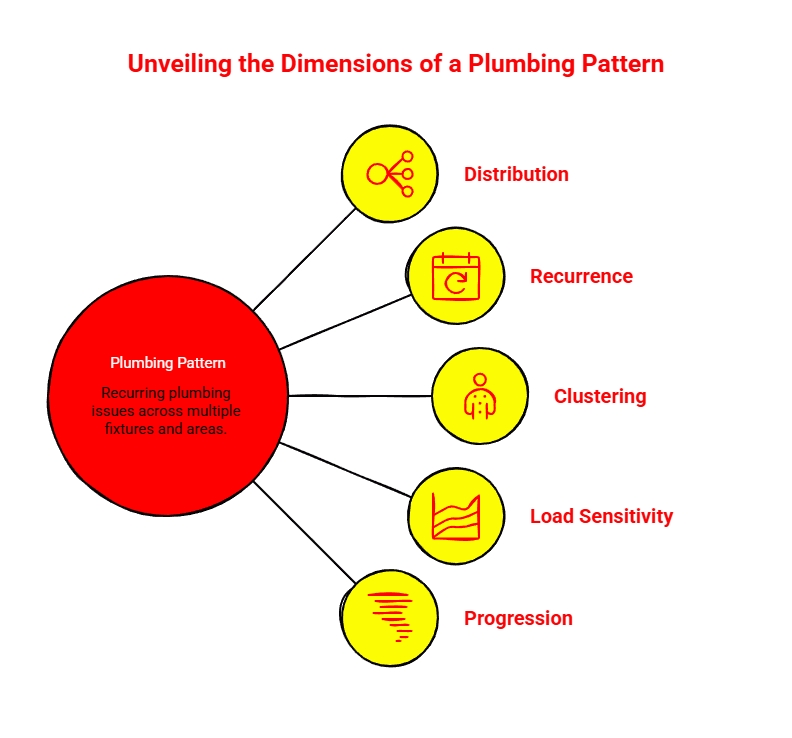
The Five Characteristics That Make the Pattern Worth Escalating

 Plumbing Pattern Dimensions: Infographic explaining how recurring plumbing patterns are evaluated through distribution, recurrence, clustering, load sensitivity, and progression.

  1. Distribution

List every affected fixture and area. Reports from separate stations provide a broader operational picture than repeated complaints about one sink.

Location shows spread; it does not map the plumbing system or identify the source.

  1. Recurrence

Intermittent symptoms still belong in the record. An odor that disappears after cleanup and returns during the next shift has not necessarily resolved. The same applies to slow drainage that improves overnight but reappears during a similar service period.

Record whether the symptom has happened before, how often it returns, and whether the intervals between reports appear to be shortening.

  1. Clustering

Look for several symptom types occurring within the same general period. Slow drainage, gurgling, and odor reported during one shift or across consecutive operating periods may warrant more attention than unrelated incidents spread over several weeks.

  1. Load Sensitivity

Note whether symptoms become more noticeable during prep, peak service, cleanup, or another period of higher water use. That timing can help a qualified provider understand the operating conditions under which the issue appears.

  1. Progression

A pattern becomes harder to dismiss when it lasts longer, returns more often, reaches additional areas, or creates greater disruption. Progression may also appear when localized work improves one fixture but related symptoms continue elsewhere.

Document what changed after any service or maintenance visit. A partial improvement is useful information, but it should not be treated as proof of what caused the wider pattern.


Multi-Fixture Symptom Pattern Log

Use one shared log across shifts. Staff should record normal operational observations rather than technical conclusions.


Field What Staff Should Record
Date and approximate time When the symptom was noticed
Fixture or area Prep sink, three-compartment sink, floor drain, dishwasher area, or another location
Symptom Slow drainage, gurgling, recurring odor, standing water, or backup
Operating condition Prep, normal service, peak service, cleanup, or overnight
Duration Brief, intermittent, or persistent
Other fixtures affected Other locations showing changes during the same period
Change since last report Same, more frequent, spreading, or more disruptive
Operational impact None, workaround required, station slowed, or use stopped
Action taken Logged, manager notified, provider contacted, or facility protocol activated


The log’s purpose is to track distribution, timing, recurrence, progression, and operational effect so management can spot emerging patterns.


Build a Timeline Across Shifts, Not a Collection of Anecdotes

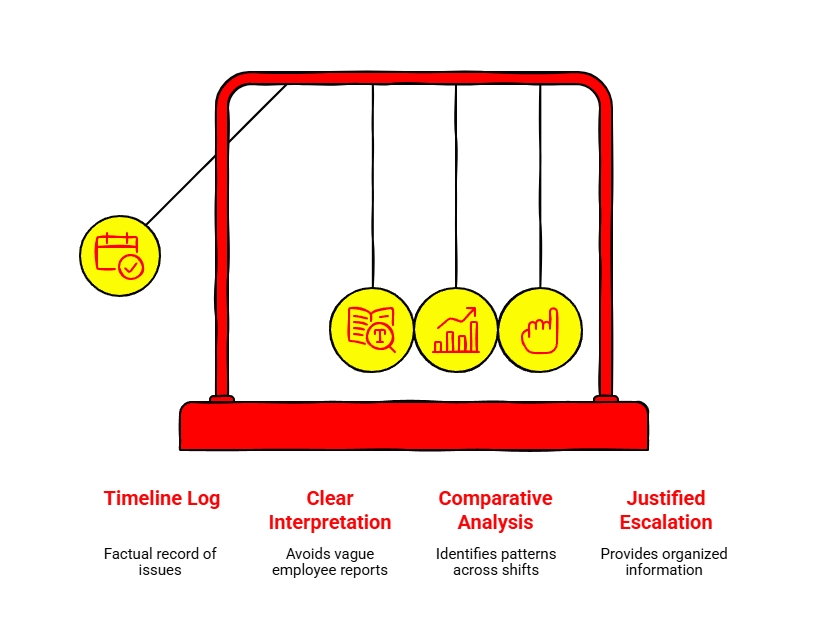
Grease Issue Timeline Log: Graphic showing a structured issue log for grease or plumbing concerns, covering timeline tracking, clear interpretation, comparative analysis, and justified escalation.

Statements such as “the drains are bad again” leave too much open to interpretation. A shared timeline gives management and the service provider a factual record.

Use one central log and assign one manager to consolidate reports. Ask employees to name the fixture, symptom, approximate time, duration, and kitchen activity. They should also note whether another area changed during the same period and whether the issue affected normal work.

Keep the language observational. “The dish-area floor drain gurgled during cleanup” is more useful than “the grease trap is clogged.” The first statement records something witnessed; the second makes a technical conclusion that has not been established.

Compare reports from prep, service, cleanup, and overnight periods. If localized plumbing work was completed, record the date, the fixture involved, and what changed afterward. A recent grease trap service visit should also appear in the timeline, but the service date alone does not confirm or rule out the current cause.

For example, a prep sink may drain slowly during lunch, a floor drain may gurgle during cleanup, and an odor may return in both areas the next evening. This illustrative cluster does not prove grease trap failure. It gives the manager organized information that may justify escalation.

Staff should not remove interceptor covers, measure contents, handle waste, apply chemicals or biological additives, clear lines, or disassemble plumbing. Instruct staff not to pour boiling water down slow drains in an attempt to clear them, as this only pushes melted grease further down the line where it solidifies and worsens the blockage. Inspection and technical work belong to qualified professionals.


Monitor, Schedule an Evaluation, or Treat It as Urgent?

Use the pattern and its effect on operations—not a fixed number of hours or days—to choose the management response.


Level Pattern Recommended Management Response
Monitor and document One brief, isolated symptom with no recurrence, spread, or operational effect Record the event and watch for repetition or changes elsewhere
Schedule professional evaluation Multiple fixtures are affected; symptoms recur, cluster, spread, worsen, or disrupt work without an active backup Consolidate the log and contact a qualified grease trap service provider or commercial plumber
Urgent professional response Active backup or overflow, wastewater entering a work area, or conditions requiring affected fixtures or stations to stop operating Follow the facility’s established safety and operational protocols and seek qualified professional assistance promptly


The urgent category describes the condition in the kitchen, not its cause. An active backup may involve the grease interceptor or another part of the drainage system. Do not ask staff to clean, contain, inspect, or repair the condition unless they are following an approved facility procedure developed for that situation.

Drane Ranger’s article on what happens during a grease trap overflow may provide additional operational context, but site-specific safety decisions should come from facility procedures and qualified professionals.

For local compliance context, the Houston Permitting Center currently states that interceptors within incorporated city limits must be fully evacuated at least quarterly, or every 90 days, unless an approved waiver applies. However, operators must also monitor FOG accumulation to comply with the 25% rule, which requires service whenever floating grease and settled solids reach one-quarter of the trap’s total liquid depth—meaning high-volume kitchens often require service well before the 90-day maximum.. Review the official Houston generator-registration guidance for current details. Always retain the official waste manifest provided after service, as city health and public works inspectors will request it to verify your compliance with this 90-day rule.

The U.S. Environmental Protection Agency also provides broader information about fats, oils, and grease management in wastewater systems. Wastewater guidance commonly shortens fats, oils, and grease to FOG.


What to Tell the Service Provider

Have the following information ready for the provider:

  • Property type and kitchen operating schedule
  • Affected fixtures and work areas
  • Date the first symptom was observed
  • Whether symptoms occur together or during overlapping periods
  • Frequency and recurrence across shifts
  • Changes during higher-volume kitchen use
  • Standing water, backup, or overflow conditions
  • Operational effects and fixtures taken out of use
  • Date and type of recent service, if known
  • Localized plumbing work already performed
  • Access constraints and preferred low-disruption service windows

A grease trap provider can evaluate interceptor-service needs, while a commercial plumber may need to assess drain lines, venting, or other plumbing conditions. Depending on the site and symptoms, one provider may recommend involving the other.

Review Drane Ranger’s commercial grease trap cleaning overview for service context. When contacting any provider, share the completed symptom log rather than relying on a general statement that the kitchen drains are slow.


Frequently Asked Questions

Do Several Slow Drains Mean the Grease Trap Is Full?

No. Several affected fixtures may point to a shared drainage or grease-management issue, but the pattern does not establish the cause or reveal the interceptor’s condition. Record the affected locations, timing, recurrence, and progression. Persistent or widening symptoms may justify professional evaluation.

Is Gurgling a Grease Trap Warning Sign?

Gurgling is an observation worth documenting, particularly when it appears with slow drainage or recurring odors in more than one area. It can occur for different reasons, depending on the system. Treat it as part of the overall pattern rather than proof that the grease trap is responsible.

What If Symptoms Appear Only During the Dinner Rush?

Record that timing. A pattern that becomes more noticeable during higher kitchen water use gives a provider useful operating context, but it does not diagnose the system. Note which fixtures are affected, how long the changes last, whether they recur, and whether normal work is disrupted.

Does a Recent Pump-Out Rule Out a Current Problem?

No. A recent service date is relevant background, not a diagnosis of present conditions. Tell the provider what work was performed, when it occurred, and whether the current symptoms began before or after the visit. Avoid assuming either that the interceptor is responsible or that it cannot be involved.


Turn Observations Into a Defensible Next Step

The strongest management signal is not one odor, one gurgle, or one slow sink. It is the distribution, recurrence, timing, progression, and operational effect of several observations considered together.

Documenting that pattern helps a manager move beyond vague staff reports without attempting a technical diagnosis. Monitor isolated events, arrange an evaluation when symptoms recur or spread, and use established facility procedures when an active backup or overflow affects the work area.

Review Drane Ranger’s Houston grease trap cleaning information to understand the professional service option. When symptoms are recurring, widening, or disrupting operations, share the completed log with a qualified provider.

Disclaimer: This article is for general informational purposes only and does not constitute compliance, safety, technical, plumbing, or professional advice. Grease trap and drainage conditions vary by facility, system design, use, and jurisdiction. Confirm important decisions with the appropriate qualified service provider, plumber, authority, or technical professional.

Our Editorial Process

Our expert team uses AI tools to help organize and structure our initial drafts. Every piece is then extensively rewritten, fact-checked, and enriched with first-hand insights and experiences by expert humans on our Insights Team to ensure accuracy and clarity.

By Drane Ranger Insights Team

The Drane Ranger Insights Team creates practical guidance for Houston-area businesses that need reliable liquid waste management, grease trap cleaning, septic, lift station, and wastewater compliance support. Drane Ranger Vacuum Services has served the Greater Houston area since 1985, helping customers keep operations running while following applicable waste handling and disposal requirements.
More Than a Dirty Job: Why Grease Trap Service is a Critical Risk Management Function for Houston Restaurants

📌 Key Takeaways:

Your grease trap isn’t just plumbing—it’s a business control that prevents shutdowns, fines, and reputation damage.

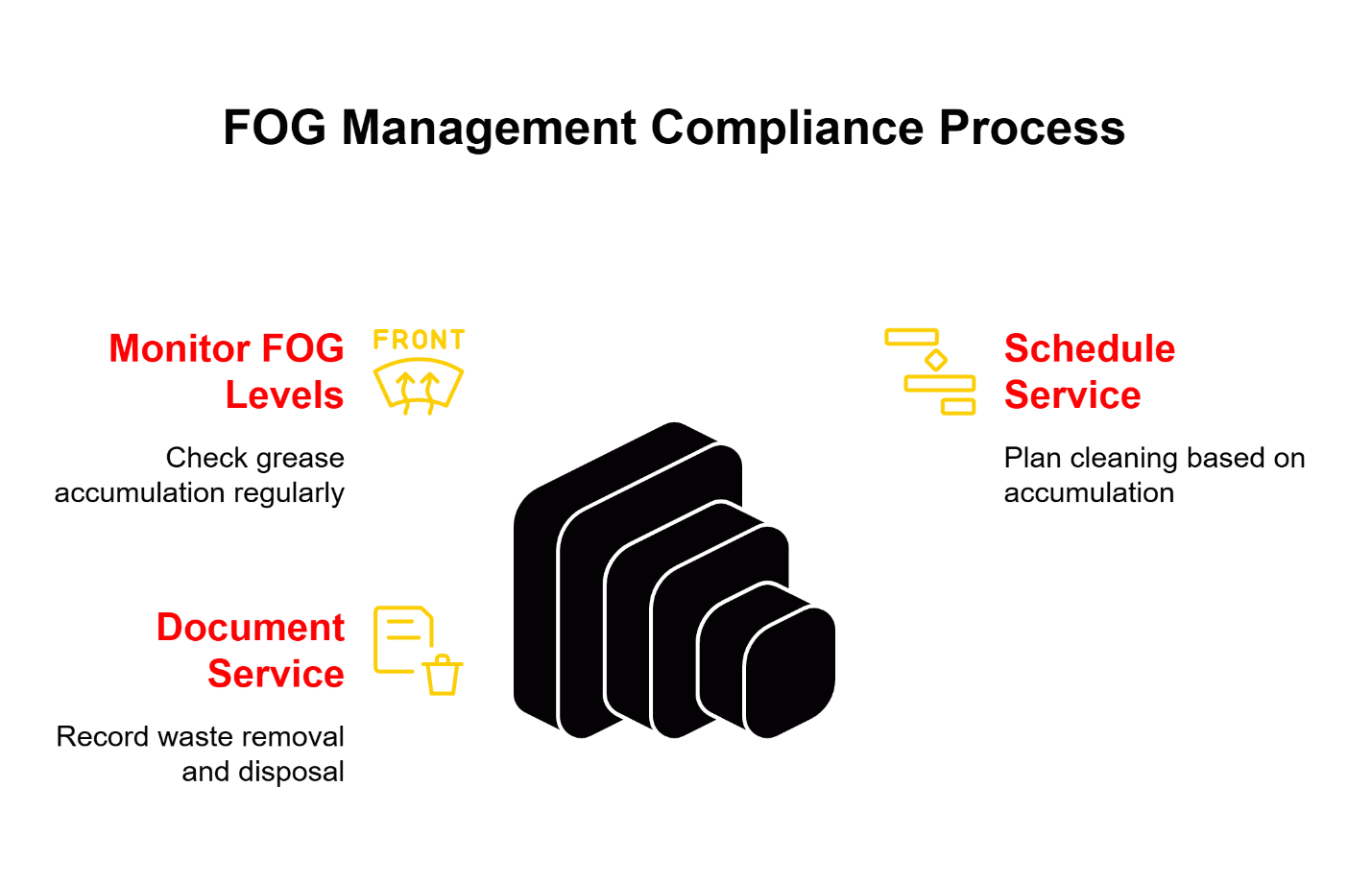
Treat the 25% Rule as Your Emergency Brake: When grease accumulation reaches 25% of liquid depth, schedule immediate cleaning regardless of your regular timeline to prevent operational disasters.

Quarterly Baseline, Volume-Based Adjustments: Start with 90-day service intervals as your Houston baseline, then shorten the schedule for high-volume kitchens or heavy frying operations.

Documentation Equals Insurance: Keep every manifest and service log organized in one accessible location—this paperwork transforms surprise inspections from potential disasters into routine check-ins.

Planned Downtime Beats Emergency Chaos: Scheduling service during slow periods costs hundreds; emergency repairs during Friday dinner rush cost thousands in lost revenue, staff overtime, and reputation damage.

Assign Clear Ownership for Bulletproof Execution: Make one team member accountable for calendar management, manifest filing, and condition monitoring—scattered responsibility leads to missed services and avoidable crises.

Simple controls, real protection: quarterly rhythm, 25% trigger, tidy manifests.

For a restaurant, grease trap service isn’t just a cleaning task — it’s a control that keeps you open. By pulling FOG before it hits the sewer, documenting every pump-out, and keeping to a predictable schedule, you prevent the shutdowns, fines, and reputational hits that follow backups or inspections gone wrong. Treat the trap like any other risk-critical asset: maintain it on time and keep your paperwork tidy.


What Is a Grease Trap and Why It Matters in Houston

Think of your grease trap as a silent guardian for your restaurant’s operations.

Picture this: It’s 7 PM on a busy Friday. Your kitchen is running at full capacity, turning out orders for a packed dining room. Suddenly, your floor drains start backing up, filling the kitchen with foul water and grease. The health inspector happens to be dining at the table by the window. Your evening — and potentially your permit — just took a devastating turn.

A grease trap prevents exactly this scenario. It’s a specialized container designed to capture fats, oils, and grease (collectively called FOG) before they enter Houston’s sewer system. The trap works by slowing down wastewater flow, allowing FOG to separate and float to the top while solids settle to the bottom. Clean water flows out through the middle, continuing to the municipal treatment system.

Houston’s food service operations generate substantial FOG loads that can create serious problems when they accumulate in sewer lines. FOG hardens as it cools, creating blockages that cause backups, overflows, and expensive infrastructure damage. For restaurant operators, this translates to immediate business disruption, potential health violations, and cleanup costs that far exceed routine maintenance expenses.

The trap serves as your first line of defense against these operational disasters. When properly maintained, it keeps FOG from reaching public sewers while protecting your kitchen from the backups and odors that occur when drainage systems fail.


The Business Risks of Neglect: Downtime, Fines, and Reputation

Routine grease trap cleaning costs hundreds; neglect risks shutdowns, fines, lost revenue, and reputation damage.

Restaurant operators face a stark choice: pay predictable maintenance costs or absorb unpredictable failure costs.

Routine grease trap cleaning in Houston typically costs a few hundred dollars per service. Emergency repairs, lost revenue from shutdowns, and regulatory penalties can easily reach thousands of dollars for a single incident.

Consider the hidden costs of neglect. When a trap overflows during peak service, the immediate priority becomes damage control rather than serving customers. Staff must redirect their focus from food preparation to cleanup, creating delays that compound throughout the evening. Tables remain empty while the kitchen recovers, directly impacting revenue during your most profitable hours.

Beyond immediate financial impacts, backup incidents damage your reputation with both customers and regulators. Diners who witness a sewage incident rarely return, and negative reviews spread quickly through social media. Health inspectors take violations seriously, potentially triggering follow-up inspections that create ongoing operational stress.

The largest cost driver is often unplanned downtime, not the routine cleaning fee. A well-maintained trap allows you to control when and how service occurs, typically during slower periods when kitchen disruption is minimal. Emergency situations offer no such luxury — they demand immediate attention regardless of business impact.


Houston FOG Requirements in Plain English (Non-Legal Overview)

Houston FOG rules: quarterly service, monitor 25% fill, track logs/manifests, and adjust for high-volume kitchens.

Houston’s FOG management requirements follow patterns common to most major cities, though specific details can vary and change over time.

Risk & Compliance Quick-Check

  • Maintain approximately 90-day service intervals; shorten for high FOG output
  • File manifests and service logs together where staff can access them
  • Train staff to spot odors, slow drains, visible grease, and the 25% threshold

Most Houston food service establishments operate on a quarterly baseline, meaning service occurs roughly every 90 days. High-volume kitchens that generate significant FOG loads may require more frequent attention. The key indicator is accumulation rate — if your trap fills quickly, adjust the schedule accordingly.

The “25% rule” provides a practical trigger for immediate service. When grease accumulation exceeds approximately 25% of the total liquid depth in your trap, schedule cleaning regardless of your regular timeline. This threshold indicates the system is approaching capacity and risks operational problems.

Documentation requirements typically include service manifests that track waste removal and disposal, plus maintenance logs that record service dates and trap conditions. These records demonstrate responsible waste management practices and support your compliance efforts during inspections.

We help restaurant operators stay compliant by providing thorough service and proper documentation. However, specific requirements can change, and this overview shouldn’t replace direct consultation with local authorities or qualified professionals who understand current regulations.


What Reliable Service Looks Like in Houston

Professional grease trap service involves more than simply pumping out accumulated waste.

Complete service includes pump-out of all liquid and accumulated FOG, scrape-down of interior surfaces to remove stuck-on grease, and basic condition assessment to identify potential maintenance needs. The waste must be transported to appropriate disposal facilities that can handle FOG materials properly.

Look for reliability signals when evaluating service providers. Punctual arrival and departure times show respect for your operational schedule. Complete manifests and service logs provide the documentation you need for regulatory compliance. Environmental responsibility in waste handling protects both your business and the community.

Communication matters significantly during service. Professional technicians should explain what they find, alert you to any concerns about trap condition, and provide clear guidance about future service needs. They should work efficiently to minimize kitchen disruption while ensuring thorough cleaning.

The service vehicle and equipment should appear well-maintained and appropriate for the job. Professional providers invest in proper tools because they understand that reliable equipment produces consistent results. This investment typically translates to more predictable service outcomes for their customers.


Build a Risk-Proof Service Schedule

Effective scheduling balances operational needs with regulatory compliance and cost control.

Start with the quarterly baseline that most Houston establishments follow. This provides a foundation that meets typical regulatory expectations while spreading costs predictably across the year. Mark these dates prominently on your operational calendar and assign responsibility to a specific team member.

Adjust frequency based on your kitchen’s FOG output and trap capacity. High-volume operations, establishments with heavy frying operations, or locations with smaller traps may need service every 60-75 days. Monitor accumulation rates during the first few service cycles to identify the optimal interval for your specific situation.

Assign clear ownership of the maintenance schedule. Someone on your team should track service dates, monitor trap condition between cleanings, and coordinate with your service provider. This person should understand warning signs like persistent odors, slow drainage, or visible grease accumulation that might indicate early service needs.

Set calendar reminders well in advance of scheduled service. Planning ahead allows you to coordinate timing with your service provider and ensure staff are prepared for the brief operational disruption. Last-minute scheduling often results in less convenient time slots and higher service costs.

Build relationships with reliable service providers before you need emergency help. Establishing working relationships during routine maintenance makes emergency response more predictable when urgent situations arise.


Documentation That Protects You: Manifests & Logs

Proper documentation serves as your operational insurance policy during inspections and regulatory reviews.

Service manifests track each pump-out, including date, volume removed, disposal destination, and basic trap condition notes. These documents create a paper trail that demonstrates responsible waste management and regular maintenance practices. Keep manifests organized in a labeled binder or digital folder that staff can access quickly.

Maintenance logs provide additional detail about trap performance over time. Record service dates, any operational issues between cleanings, and notes about accumulation rates or service provider observations. This information helps you optimize scheduling and identify potential problems before they become emergencies.

Store documentation in an accessible location where multiple team members can retrieve it if needed. During inspections, quick access to organized records demonstrates professionalism and compliance awareness. Consider keeping copies in multiple formats — physical and digital — to protect against loss.

Train key staff members on documentation requirements and storage systems. Multiple people should understand where records are kept and how to interpret basic information. This redundancy ensures someone can always respond to regulatory inquiries even when the primary responsible person isn’t available.

Review documentation periodically to identify patterns or concerns. Increasing service frequency, recurring trap issues, or changes in waste volume can signal operational changes that require attention. Use this information to refine your maintenance approach and prevent future problems.


FAQ

How often should we clean our grease trap? 

Quarterly service provides a common starting point for most Houston restaurants. Increase frequency if your kitchen generates high FOG volumes or if accumulation regularly approaches the 25% threshold between cleanings.

What are signs we’re overdue for service? 

Watch for persistent odors around floor drains, noticeably slow drainage from sinks or floor drains, visible grease accumulation where it shouldn’t appear, or grease layers exceeding 25% of total liquid depth in the trap.

What happens during a professional service call? 

Complete service includes pumping out accumulated liquids and FOG, scraping interior surfaces clean, performing a basic condition check, and providing proper waste transportation and disposal with appropriate manifests.

How long does grease trap service typically take? 

Service duration varies based on trap size, accumulation levels, and access conditions. Most routine cleanings require 30-90 minutes, though heavily loaded traps may take longer. Plan the service window during slower operational periods when possible.

What documentation should we maintain? 

Keep service manifests and maintenance logs together in an organized, accessible format. These records support compliance efforts and provide valuable information for optimizing your maintenance schedule.

What drives service costs? 

Primary cost factors include trap size, accumulation volume, access difficulty, and service frequency. Emergency calls typically cost more than scheduled maintenance. Consistent scheduling often provides better value than reactive service.

Ready to establish a reliable maintenance routine that protects your operations? Get a compliant service plan for your location.


Our Editorial Process

Our expert team uses AI tools to help organize and structure our initial drafts. Every piece is then extensively rewritten, fact-checked, and enriched with first-hand insights and experiences by expert humans on our Insights Team to ensure accuracy and clarity.

About the Drane Ranger Insights Team

The Drane Ranger Insights Team synthesizes complex topics into clear, helpful guides. Our content is reviewed for clarity and accuracy, and is for informational purposes—not legal advice.