
📌 Key Takeaways
Stop reacting to grease trap emergencies and start controlling your kitchen’s compliance.
- The 90-Day Rule Is a Start, Not a Strategy: Houston’s quarterly minimum is your legal baseline; operational stability requires a schedule based on your kitchen’s actual grease output.
- Your Drains Signal Your Schedule: Persistent odors and slow drains are direct data points telling you the 90-day minimum is not enough and your service frequency must increase to prevent backups.
- Documentation Is Your Shield: A consistent log of service manifests is not just paperwork—it is your immediate proof of compliance during a city inspection.
- Outsource the Hassle, Own the Compliance: A reliable service partner automates your schedule, handles compliant disposal, and converts a recurring operational risk into a managed solution.
A proactive schedule and clear records deliver uninterrupted service.
The Friday night rush is in full swing. The last thing any Houston restaurant manager needs is a slow drain in the dish pit or a foul odor drifting into the dining room. These aren’t just minor annoyances; they are symptoms of a neglected grease trap, a problem that can disrupt service, deter guests, and lead to costly fines. For busy restaurant operators, managing compliance for fats, oils, and grease (FOG) can feel like one more item on an endless checklist. But it doesn’t have to be a source of stress.
Within Houston city limits, the baseline requirement is simple: empty and clean your grease trap at least every three months. That’s the minimum to stay compliant. In practice, many restaurants—especially those with higher FOG output—tighten that cadence to prevent odors, sluggish drains, and mid-service disruptions. Establishing a clear, reliable schedule isn’t just about following rules; it’s about protecting your kitchen’s uptime and your customers’ experience.
Houston Grease Trap Cleaning Frequency at a Glance
For restaurant operators in the Houston area, understanding the baseline requirements is the first step. However, the city ordinance represents a minimum, and operational reality often demands a more frequent schedule.
| Type of Establishment | Required Cleaning Frequency in Houston (per City Ordinance) |
|---|---|
| All restaurants (baseline) | Every 90 days (minimum) |
| High-volume kitchens | Tighter than 90 days based on volume/observations |
Note: The 90-day frequency is the ordinance minimum. Many operations tighten this cadence to prevent odors and backups that can affect service.
Why Grease Trap Schedules Matter for Houston Restaurants
Staying on top of your grease trap maintenance is about more than just checking a box for a city inspector. A well-maintained trap is a critical component of a smooth-running, profitable restaurant. Poorly managed grease traps can lead directly to foul odors that drive customers away and costly sewage backups that can shut down your entire operation.
Regular, professional grease trap cleaning in Houston is an investment in operational stability. It helps you avoid expensive emergency calls, protect your plumbing from damaging clogs, and ensure your kitchen remains a clean, safe, and pleasant environment for staff and guests alike.
The Houston Minimum: The 90-Day Rule Explained
According to city laws, grease traps, grit traps, and lint traps within the Houston area must be emptied and cleaned every three months7. This quarterly service is the absolute baseline for compliance. Think of it not as an ideal schedule, but as the legal starting point. For some restaurants with lower grease output, a 90-day schedule may be sufficient. However, for many others, it’s not enough to prevent the gradual buildup that causes problems.
When You Should Go More Frequent Than 90 Days
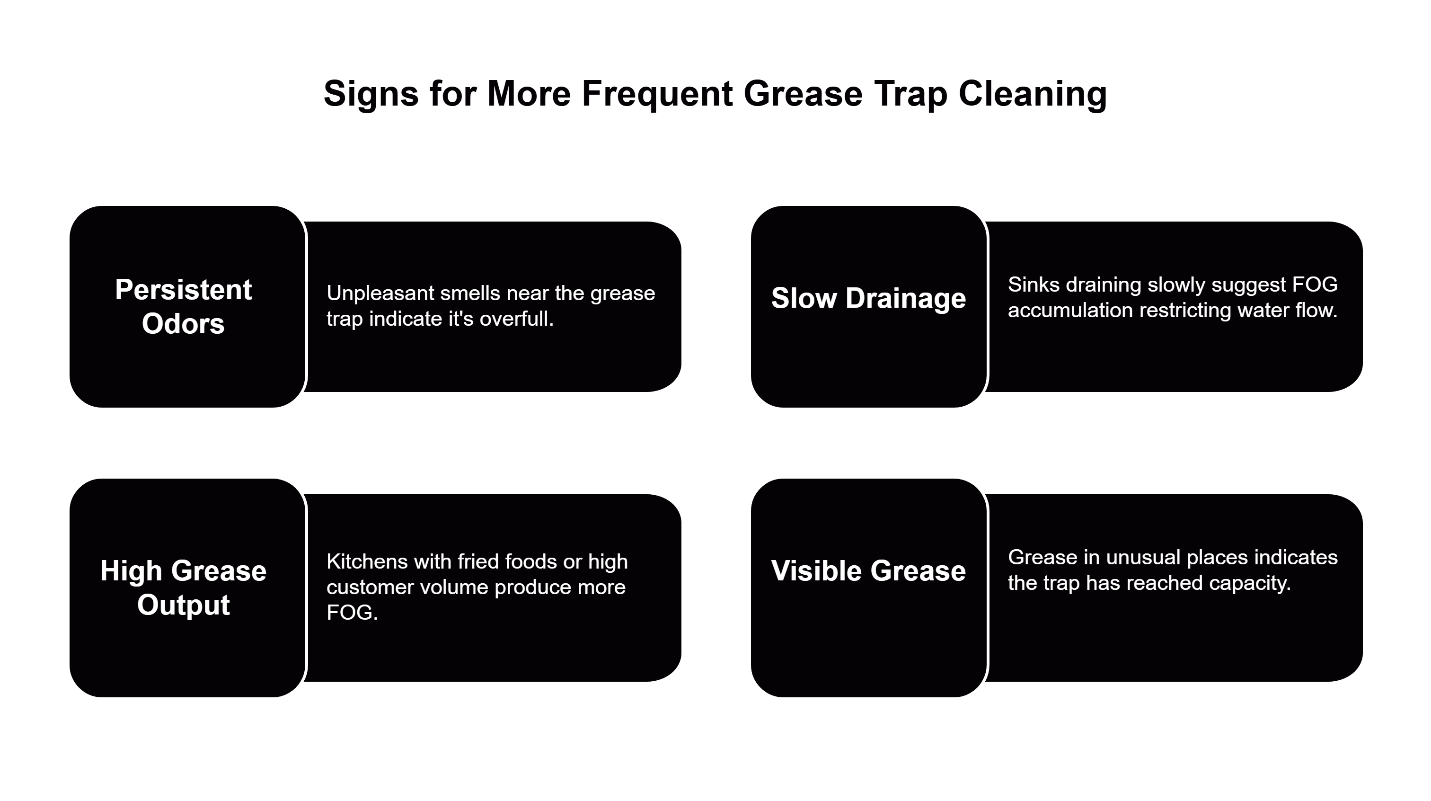
How do you know if the 90-day minimum isn’t enough for your kitchen? The answer lies in observing your trap’s performance and your kitchen’s output. Several factors can signal the need for a tighter schedule, such as every 30 or 60 days.
Look for these telltale signs:
- Persistent Odors: If you notice unpleasant smells near your grease trap or drains, it’s a clear sign the trap is overfull and needs service.
- Slow Drainage: When sinks in the kitchen start draining sluggishly, it often indicates that FOG is accumulating and restricting water flow.
- High Grease Output: Kitchens with menus heavy on fried foods or those that see a high volume of customers will naturally produce more FOG and require more frequent cleanings.
- Visible Grease: Seeing grease in unusual places, like floor drains or sinks, is a direct indicator that your trap has reached its capacity.
If you encounter any of these issues well before your next scheduled 90-day cleaning, it’s a definitive sign you need to tighten your maintenance interval.
How to Build and Stick to a Schedule

Creating a reliable maintenance plan is straightforward. The key is to be proactive rather than reactive.
- Set a Recurring Cadence: Start by putting a recurring 90-day service on your calendar. This establishes your compliance baseline.
- Partner with a Licensed Houston Provider: Work with a professional service that understands local regulations. A reliable partner can help you assess your needs and adjust your schedule for optimal performance.
- Confirm Compliant Disposal: A critical part of professional service is ensuring the waste is disposed of in an environmentally responsible manner that complies with all local regulations.
- Keep Records: Maintain a simple log and file every service receipt or manifest. This documentation is essential for demonstrating compliance during an inspection. For a more detailed guide, see The official Houston restaurant FOG compliance checklist.
- Review and Adjust: At the end of each quarter, review your log. Did you notice any odors or slow drains between visits? If so, consider moving to a 60-day or even 30-day schedule. For more insights on planning, explore our guide to budgeting for grease trap cleaning.
Reduce Risk Between Services
Even with a great schedule, it’s smart to have a plan for the weeks between professional cleanings.
- Train back-of-house staff to spot and report early warning signs like odors or slow drainage.
- Keep a simple log near the dish area to record the date and time of any issues.
- If problems consistently appear within 60 days of a cleaning, tighten the service interval immediately.
- Confirm your provider documents compliant disposal after every pump-out.
Proof of Compliance & Record-Keeping
During a health or city inspection, you will likely be asked to provide proof of regular grease trap maintenance. Keeping organized records is simple and effective. Maintain a dedicated folder with all service manifests provided by your cleaning company. These documents serve as official proof that your traps have been professionally serviced and the waste was handled properly. Having these records readily accessible makes inspections go smoothly and demonstrates your commitment to compliance.
Partnering with Drane Ranger for Worry-Free Compliance
For Houston-area restaurants, managing grease traps doesn’t have to be a headache. Since 1985, Drane Ranger has been providing businesses with reliable liquid waste management solutions. Our team understands Houston’s regulations and is committed to excellent customer service. We help you establish a reliable maintenance schedule for your grease, grit & lint traps service, taking this unpleasant but necessary task off your plate.
We pride ourselves on an environmentally responsible system for waste removal that complies with all local laws. Our extensive service area covers the Greater Houston region, including Harris, Fort Bend, Montgomery, Brazoria, and Galveston counties, and cities from Houston and Pearland to Alvin and Sugar Land. Let our experienced team handle your grease trap needs so you can get back to what you do best: running your business.
Frequently Asked Questions
What’s the legal minimum for grease trap cleaning in Houston?
To comply with local regulations, grease traps must be emptied and cleaned at least every three months. However, busier restaurants often require more frequent service to prevent issues like odors and backups.
What are the warning signs that I need service sooner than my schedule?
Persistent foul odors near your drains and sluggish drainage in your kitchen sinks are the two most common signs that your trap is nearing capacity and needs to be serviced before the next scheduled visit.
Why should I hire a professional for grease trap cleaning?
Hiring a professional ensures a complete pump-out and cleaning, compliant and safe waste disposal, and reliable scheduling that keeps you inspection-ready. It provides peace of mind and protects your business from costly disruptions.
Take Control of Your Maintenance Schedule Today
That moment of panic when a drain backs up during peak hours is entirely avoidable. By moving from a reactive approach to a proactive maintenance schedule, you transform grease trap management from a potential crisis into a routine task. You protect your customers, your staff, and your bottom line.
Ready to build a reliable, worry-free maintenance plan for your Houston restaurant? Schedule recurring grease trap service with Drane Ranger and let our experts keep your kitchen compliant and running smoothly.
Disclaimer
This article provides general, Houston-specific information about grease trap maintenance scheduling and is not legal advice. For exact regulatory language, consult official City of Houston resources.
Our Editorial Process
Our expert team uses AI tools to help organize and structure our initial drafts. Every article is then extensively rewritten, fact-checked, and enriched with first-hand insights by our human experts to ensure accuracy and clarity.
About the Drane Ranger Insights Team
The Drane Ranger Insights Team is our dedicated engine for synthesizing complex topics into clear, helpful guides. While our content is thoroughly reviewed for clarity and accuracy, it is for informational purposes and should not be used as a substitute for professional advice.