📌 Key Takeaways
Houston requires grease trap service every 90 days maximum, but most commercial kitchens need more frequent cleaning based on the 25% accumulation rule.
- 90 Days Is Your Compliance Ceiling: Houston city code mandates quarterly evacuation as the maximum interval—waiting beyond this violates the baseline requirement.
- The 25% Rule Overrides the Calendar: Service is required when grease and solids reach 25% of trap depth, which often happens before 90 days in busy kitchens.
- Kitchen Volume Dictates Real Frequency: High-FOG menus, extended hours, and shared plumbing accelerate accumulation, requiring service every 30-60 days for many operations.
- Documentation Protects Against Violations: Inspector-ready records with service dates, quantities removed, and disposal confirmation prevent citations even when you’re maintaining proper schedules.
- Waiting for Odors Costs More: Smell signals severe overload—by then, you’re risking backups during service hours and emergency calls at premium rates.
Prevention through consistent scheduling beats reactive emergency service every time.
Houston restaurant owners and foodservice managers will gain clear compliance guidance here, preparing them for the frequency calculator and scheduling framework that follows.
In Houston, most commercial kitchens should plan on grease trap cleaning at least every 90 days—and many need more frequent service based on kitchen volume and the 25% accumulation rule.
This isn’t just about compliance. It’s about keeping your kitchen operational, avoiding backups during your dinner rush, and preventing the kind of odor that sends customers straight to your competitors.
The Houston Baseline: The 90-Day (Quarterly) Standard
The City of Houston Code of Ordinances requires grease interceptors and holding tanks to be fully evacuated at least once every 90 days (quarterly), unless a waiver is approved. The code also requires more frequent evacuation under certain conditions. (Houston Health Department)
This quarterly maximum is your compliance ceiling—the longest you should ever wait between cleanings. If a kitchen runs to day 110, the schedule isn’t “a little late”—it’s beyond the stated baseline. (Municode Library)
This 90-day standard applies to commercial kitchens within Houston city limits, though surrounding jurisdictions may have different requirements. For an overview of what a full visit should include, see commercial grease trap cleaning.
Why Many Kitchens Need More Than the Minimum
The 25% Rule (The Real Trigger)
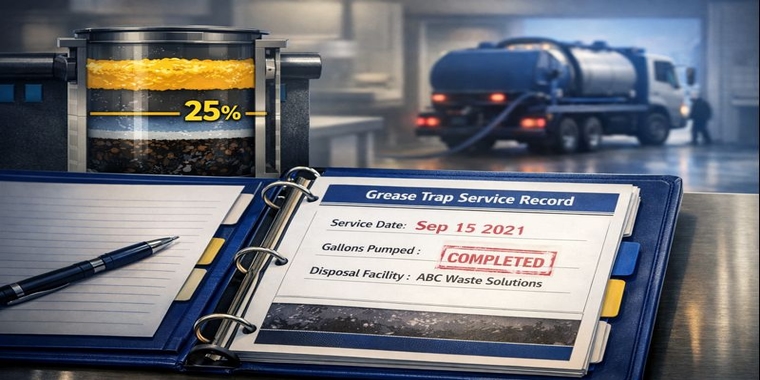
Service is required when grease and solids accumulation reaches 25% of your trap’s total liquid depth, regardless of when your last cleaning occurred. This threshold includes both the floating grease layer on top and the settled solids at the bottom. When these combined accumulations hit one quarter of your trap’s depth, it’s time for service—even if you cleaned it six weeks ago.
This 25% trigger is the standard benchmark for grease interceptors in Texas, derived from the state’s environmental model codes. (TCEQ) A grease trap works because it has room to separate wastewater from grease and solids. When grease and sludge take up roughly a quarter of the working volume, the unit starts losing separation efficiency, and the odds of downstream problems rise.
What’s certain versus what varies:
- Certain: The 25% threshold is the commonly stated trigger in FOG guidance documents and municipal programs.
- Variable: How quickly you reach 25% depends on your menu, volume, hours, and kitchen practices.
For high-volume kitchens, this means the 90-day compliance window becomes irrelevant. You’ll hit the 25% mark much sooner, and waiting for the calendar will guarantee problems.
Operational Factors That Shorten the Interval
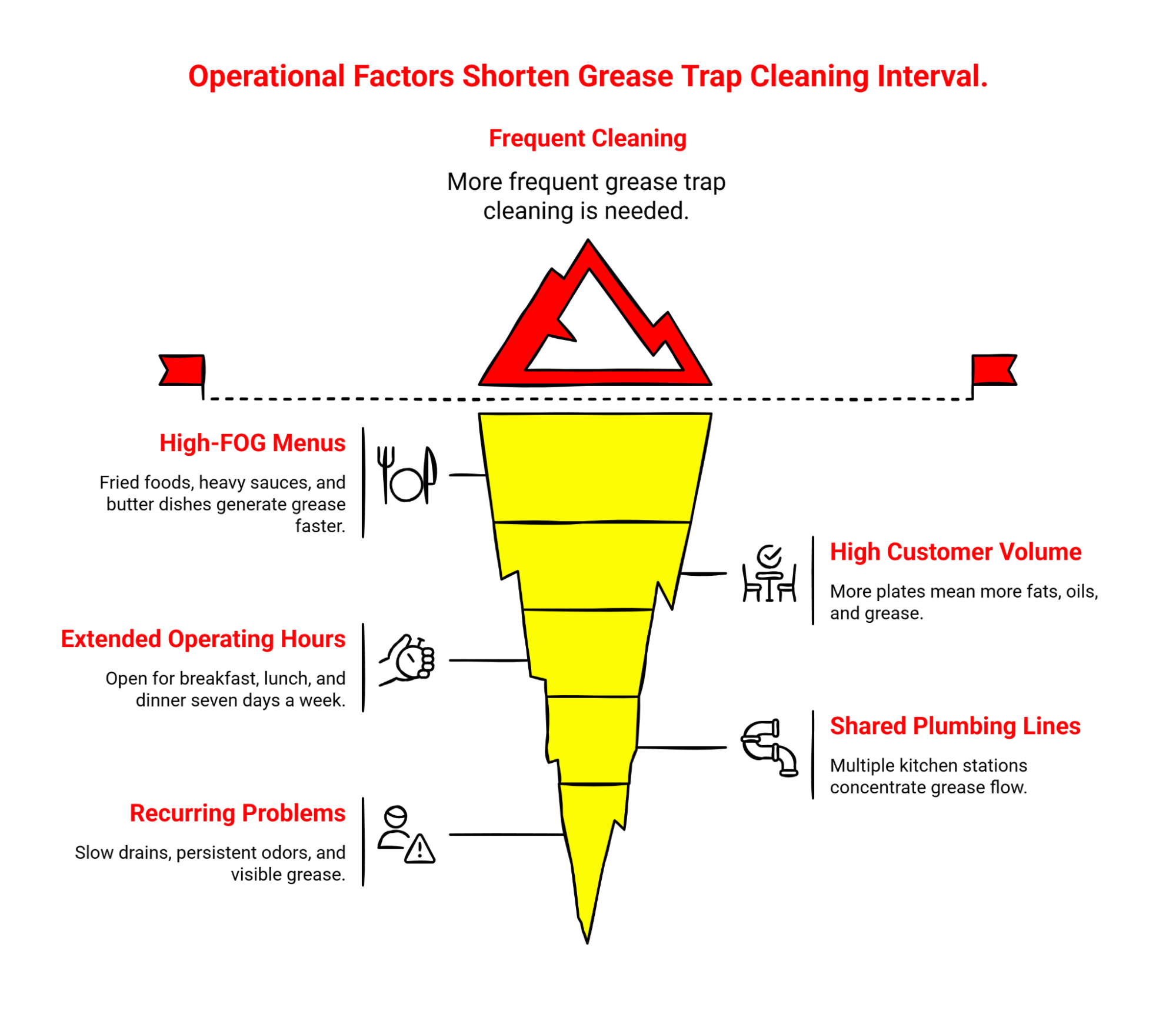
Several kitchen characteristics push you toward more frequent cleaning. High-FOG menus featuring fried foods, heavy sauces, and butter-based dishes generate grease faster than lighter cooking styles. A fryer-heavy operation will fill a trap much faster than a restaurant focused on grilled proteins.
High customer volume means more plates going out, which translates directly to more fats, oils, and grease going down your drains. Extended operating hours compound the volume issue—if you’re open for breakfast, lunch, and dinner seven days a week, your trap is working considerably harder than a dinner-only operation.
Shared plumbing lines connecting multiple kitchen stations can concentrate grease flow into your trap, accelerating accumulation beyond what a single prep area would generate. This is particularly common in larger kitchens or facilities with multiple tenants.
Recurring problems like slow drains, persistent odors, or visible grease where it shouldn’t be are clear signals your current schedule isn’t frequent enough. These aren’t isolated incidents—they’re your trap telling you it’s overwhelmed.
For broader context on why FOG control matters to plumbing and sewer systems, the U.S. EPA provides comprehensive guidance on food-service grease management. (US EPA)
Grease Trap Cleaning Frequency Calculator
Use this table as your starting point, then adjust based on the warning signs below:
| Kitchen Volume Signal | Example Operation | Suggested Starting Interval | Why |
| Low | Light cooking / limited fry | Up to 90 days (max) | Slower FOG accumulation |
| Medium | Standard single-location restaurant | 60–90 days | Often reaches 25% before 90 days |
| High | High-volume fryer-heavy kitchen | 30–60 days | Faster grease/solids buildup |
| Very High | Extended hours / heavy throughput | 30–45 days | 25% threshold hits quickly |
Compliance guardrail: The 90-day maximum is your legal baseline in Houston city limits. (Houston Health Department)
Operational override: If your trap reaches the 25% threshold sooner, schedule service sooner. The kitchen’s actual production sets the pace, not just the calendar.
Not sure if you’re on the right interval? Schedule a quick compliance assessment. Call 281-489-1765 to have your trap evaluated and get a customized schedule recommendation based on your actual kitchen volume.
Since 1985, Drane Ranger has served the Greater Houston area with a reputation built on reliable scheduling and documentation.
Signs You’re Past Due (Don’t Wait for an Emergency)
Watch for these warning signals that your cleaning interval is too long:
- Slow drainage in kitchen sinks often indicates that grease buildup is restricting water flow through your lines
- Persistent unpleasant odors near the trap indicate decomposing organic matter and excessive accumulation
- Visible grease in unusual places like floor drains or appearing where it shouldn’t be shows your trap is overflowing its boundaries
- Grease accumulation exceeding 25% of total liquid depth requires immediate service regardless of your last cleaning date
These aren’t problems you want to discover during your Saturday dinner rush. By the time you smell it, your customers already have too.
Local service context is available at grease trap cleaning in Houston.
What Professional Cleaning Should Include (So You Stay Inspector-Ready)
Not all grease trap cleaning is created equal. This isn’t about waste removal—it’s about risk management and compliance protection. A service visit should protect two things at once: flow and documentation.
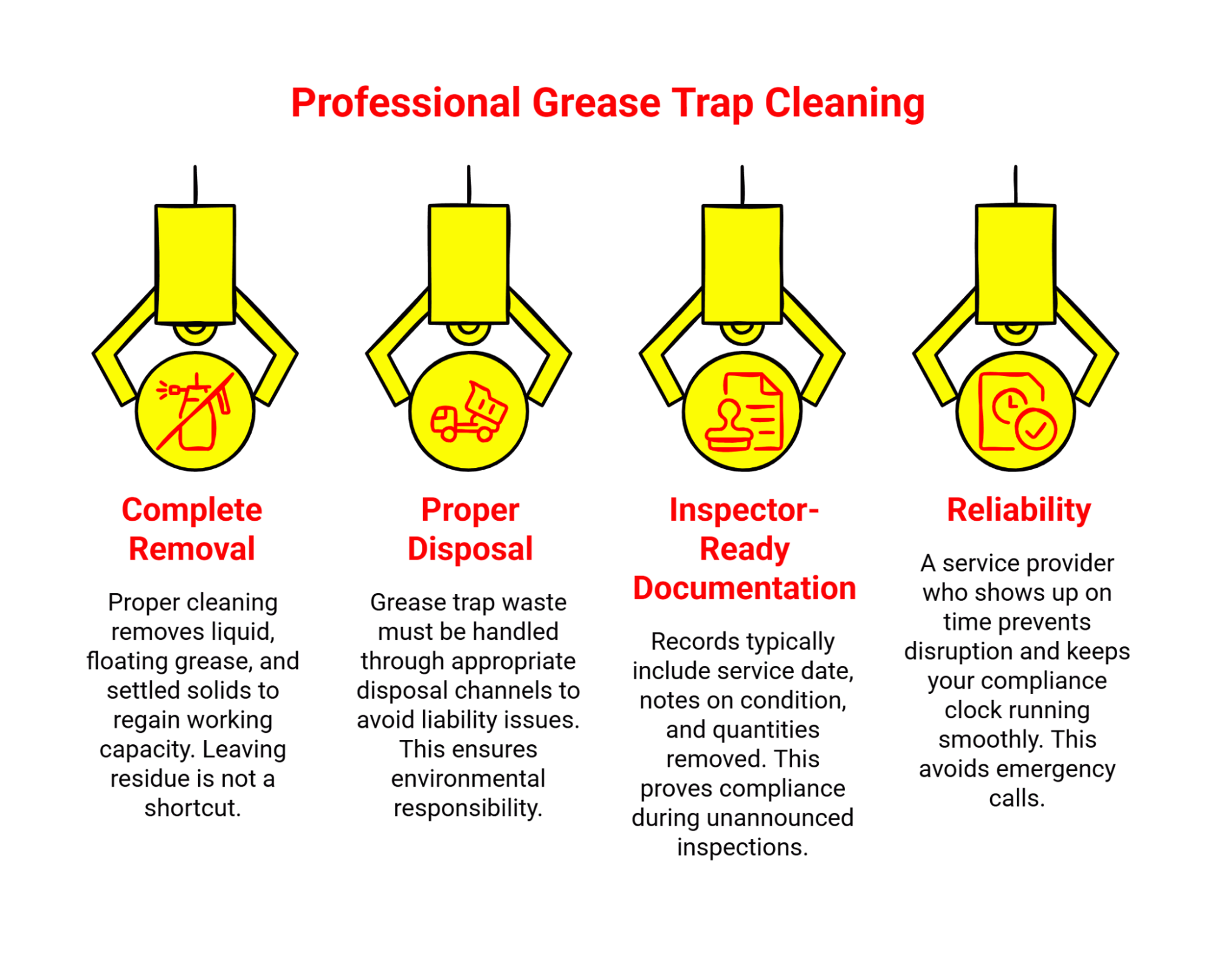
Complete removal, not residue left behind. A proper cleaning removes liquid, floating grease, and settled solids so the unit regains working capacity. Leaving “a little behind” is not a harmless shortcut—capacity is exactly what prevents backups.
Proper transportation and disposal. Grease trap waste must be handled through appropriate disposal channels. This isn’t just about environmental responsibility—improper disposal can create liability issues for your operation.
Inspector-ready documentation. Records typically include service date, notes on condition, and quantities removed. When an inspector shows up unannounced, you need records proving you’ve maintained compliance. Missing documentation can result in violations even if you’ve been cleaning regularly, and those records must show both the service performed and proper disposal.
Reliability that respects your operational needs. A service provider who shows up on time and doesn’t miss appointments prevents the disruption that comes from emergency calls and keeps your compliance clock running smoothly.
The cheapest option isn’t cheap if you end up paying for emergency service, lost revenue from downtime, or fines from a failed inspection. Professional grease trap cleaning service protects your operation by treating maintenance as operational continuity insurance—keeping the kitchen running, preventing customer-facing issues, and reducing regulatory exposure.
“Drane Ranger is very professional and reliable. Basically they can take care of all your grease drain needs.” — Shelley M.
Setting Up a Schedule That Doesn’t Disrupt the Kitchen
The best grease trap cleaning is the one that happens without disrupting service. A workable maintenance plan should feel predictable and low-friction:
Start with the Houston ceiling. Default to quarterly service at minimum—that’s the verified baseline. (Municode Library)
Pick an initial interval using the calculator table. Choose from the 30, 45, 60, or 90-day starting points based on your kitchen volume signal.
Confirm with early checks. If odors or slow drainage appear before your next scheduled visit, shorten the interval rather than waiting for the calendar.
Lock a recurring cadence. Schedule service during off-peak hours—most restaurants benefit from late-night or early-morning service when the kitchen isn’t in full production. Consistent timing keeps you ahead of problems.
File documentation in one place. Maintain a simple log of service dates, accumulation levels noted by your technician, and any observations about your trap’s condition. Keep records organized so they’re available when needed, not when remembered.
For sites that benefit from heavy-duty removal capabilities or have additional liquid waste management needs, see vacuum truck services Houston TX.
Resources
For deeper guidance on grease trap compliance and maintenance:
- The 25% Rule Explained: When to Schedule Your Pump-Out to Stay Compliant
- A Houston Restaurant’s Guide to Grease Trap Maintenance Schedules
- What to Expect from a Professional Grease Trap Cleaning: A Five-Step Houston Service Breakdown
Frequently Asked Questions
Is grease trap cleaning required every 90 days in Houston?
Within Houston city limits, the City of Houston code requires grease interceptors and holding tanks to be evacuated at least once every 90 days (quarterly), with more frequent evacuation required under certain conditions. (Houston Health Department) Outside city limits, requirements can vary by local jurisdiction. Many kitchens need more frequent service based on the 25% accumulation rule, but you should never exceed 90 days between cleanings within Houston city limits.
What is the 25% rule for grease traps?
The 25% rule is a widely used maintenance trigger: when floating grease plus settled solids reaches about 25% of the trap’s effective depth or capacity, cleaning is due to restore separation performance and reduce backup risk. (TCEQ) This threshold can occur well before 90 days in high-volume kitchens. When you hit 25%, you must clean regardless of your calendar schedule.
Can I wait until the trap smells before cleaning it?
No. Odor is a late-stage warning sign indicating your trap is severely overloaded and may already be operating with reduced capacity. By the time you smell it, customers likely smell it too, and you’re already past the point where you should have scheduled service. Waiting for odor guarantees you’re operating in reactive mode rather than maintaining proper compliance and operational continuity.
Does grease trap size change how often it needs cleaning?
Trap size affects capacity, but volume and menu composition drive accumulation rate. A larger trap holds more, but a high-volume kitchen with a large trap may still hit the 25% threshold as quickly as a smaller operation with a smaller trap. Size is one factor in the equation, not the determining factor. Your menu’s FOG content and customer volume matter more than trap dimensions alone.
What happens if I skip grease trap service?
Skipping service leads to backups during service hours, persistent odors that affect the dining experience, potential health code violations during inspections, and the need for emergency service at premium rates. At the extreme, backups can disrupt service and create a shutdown-risk scenario if plumbing fails during operating hours. The operational disruption and compliance risk far exceed the cost of maintaining your schedule.
What records should I keep after service?
Maintain documentation of service dates, the volume of grease and solids removed, observations about trap condition, and confirmation of proper disposal. Keep these records organized and readily accessible. When an inspector requests proof of compliance, you need to produce documentation immediately. Many operators keep a simple binder with signed service receipts and disposal manifests organized by date.
How quickly can Drane Ranger respond if we’re backing up?
We understand that grease trap emergencies don’t follow a schedule. While we always recommend staying ahead of problems through regular maintenance, our team prioritizes emergency calls and works to minimize your downtime when urgent situations arise. The fastest resolution, however, is always prevention through consistent scheduling that keeps you ahead of the 25% threshold.
Get Started with Reliable Grease Trap Maintenance
Your grease trap schedule isn’t just about compliance—it’s about protecting your operation from preventable disruptions that cost you revenue and reputation.
Since 1985, Drane Ranger has helped Houston restaurants maintain reliable grease trap service with consistent scheduling, complete documentation, and proper disposal. We understand that your kitchen can’t afford downtime, which is why our service is designed to be thorough, reliable, and invisible to your operations.
“My experience with Drane Ranger was a very organized, professional and on time experience. I was kept informed of what was happening and a suggested time of cleaning again. I will use them again and will definitely recommend them to anyone I speak with.” — Harold R.
Call 281-489-1765 to set up a quarterly maintenance plan or schedule a compliance assessment. We serve Houston and the surrounding areas with the reliable, documented service you need to stay operational and inspector-ready.
Disclaimer: This article provides general guidance on grease trap cleaning requirements in Houston. Local codes and enforcement practices may vary by jurisdiction. For specific compliance requirements, consult your local health department or municipal authorities.
By: The Drane Ranger Team
Drane Ranger has served the Greater Houston Area since 1985, providing reliable liquid waste management services including grease trap cleaning, lift station maintenance, and septic tank service. Our commitment is to help businesses stay compliant while maintaining smooth operations through dependable, documented service.