Visual Checks vs. Core Sampling: Why Your ‘Clean’ Trap Might Still Fail an Inspection

📌 Key Takeaways

A grease trap that looks clean from the sample well can still fail an inspection if the hidden sludge layer pushes total accumulation over 25%.

  • Surface Checks Hide Compliance Risk: Visual inspection of the sample well only reveals the middle layer, completely missing the floating grease cap and bottom sludge that inspectors measure to determine compliance.
  • The 25% Rule Is Performance-Based: When combined grease and sludge layers reach 25% of liquid depth, the trap’s effective working volume shrinks, allowing FOG to escape downstream—this performance threshold triggers required pump-outs regardless of appearance.
  • Measurement Drives Smart Scheduling: Monthly core sampling with documented percentages enables service timing based on actual accumulation rates rather than arbitrary calendar intervals, preventing both premature pump-outs and costly violations.
  • Manifests Prove Compliance: Cleaning records without signed waste manifests showing disposal facility and date leave restaurants vulnerable to fines during audits, even when traps are currently within limits.
  • Documentation Creates Audit Confidence: A compliance binder combining core sampling logs, manifests, and photos transforms scattered paperwork into organized proof that satisfies Houston pretreatment inspections.

Core sampling turns guesswork into evidence—measure like an inspector, schedule by data, document everything.

Houston restaurant operators managing commercial kitchen compliance will find a practical framework here, preparing them for the step-by-step implementation guidance that follows.

Friday lunch rush. The health inspector walks into your Houston restaurant with a clipboard and a measuring rod. Your kitchen manager assures you the grease trap looks fine—after all, they checked the sample well just last week and the water looked clear. But when the inspector pulls a core sample, the news isn’t good. The combined grease cap and bottom sludge put you over the 25% threshold. You’ve failed, and now you’re facing violations, mandatory pump-outs, and potential fines.

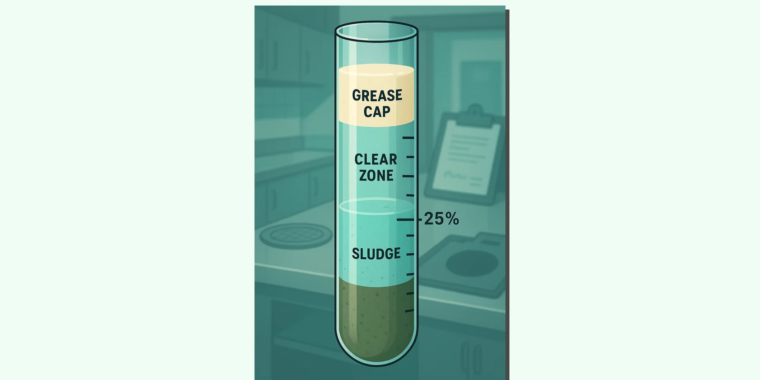
Here’s what happened: Visual checks only show you the surface. A core sample reveals the full story—the floating grease layer at the top and the settled solids at the bottom. Think of it like judging a latte by looking at the foam. You might see beautiful microfoam on top, but you have no idea how much heavy sediment has settled at the bottom of the cup. That hidden layer is exactly what gets restaurant operators into compliance trouble.

Core sampling isn’t just a best practice. It’s the inspector’s standard measurement method, and it’s the only way to know whether your trap is approaching Houston’s 25% accumulation limit (Source: City of Nacogdoches FOG Manual). When you rely on quick glances through the sample well, you’re essentially guessing. The practical application is straightforward: adopt monthly core sampling as part of your maintenance routine, schedule pump-outs when readings approach the threshold, and keep organized manifests that prove both the work and the legal disposal.


The “Eyeball Test” Problem—What Visual Checks Miss

Visual checks give you a false sense of security. When staff members peer into the sample well and see relatively clear water in the middle layer, they assume everything is fine. The problem is that grease floats and solids sink, creating a misleading “clean zone” in the middle that hides the real accumulation happening at both ends of the tank.

The top grease cap can be several inches thick but barely visible from above, especially if recent hot water from dishwashing has temporarily liquefied some of the fats. Meanwhile, the bottom sludge layer—a dense mix of food particles, oils, and settled solids—is completely invisible from a top-down view. This matters because when grease traps become overloaded, they can allow fats, oils, and grease to pass into the public sewer system, contributing to blockages and sanitary sewer overflows that wastewater agencies take very seriously (Source: EPA FOG Program Guidance).

Inspectors know this. That’s why they don’t trust visual assessments, and neither should you. The solution is simple: use a core sampler through the sample well to capture a complete vertical cross-section of your trap’s contents. This inexpensive tool (essentially a clear tube with a check valve) allows you to see and measure total accumulation—top grease plus bottom solids—in one reading. Document each measurement with the date, percentage, and staff initials, then schedule your next service based on those numbers rather than calendar dates alone.


What Inspectors Actually Measure

City inspectors and pretreatment personnel don’t guess. They follow a standardized protocol that involves taking a core sample at the sample well or inlet/outlet baffles, depending on your trap’s design. The measurement captures everything: the thickness of the floating grease layer, the depth of the clear middle zone, and the height of the settled solids at the bottom (Source: Houston Public Works FOG Program).

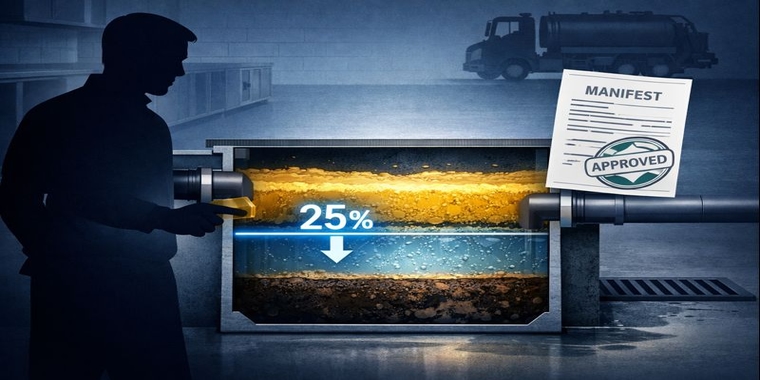
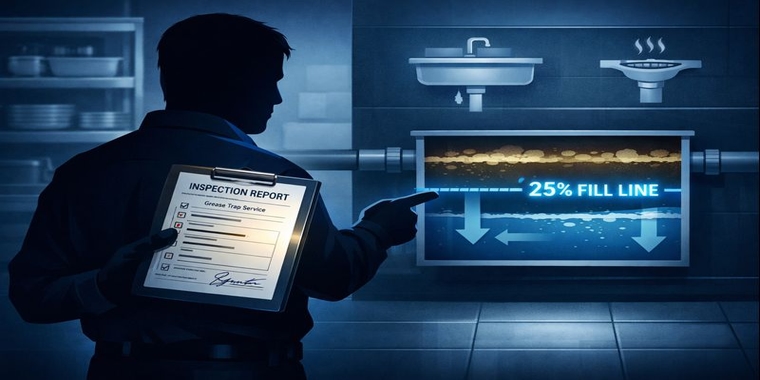
Here’s what matters for compliance: inspectors assess your trap’s performance by calculating total FOG (fats, oils, grease) accumulation as a percentage of the trap’s working volume. If that combined figure exceeds 25%, your trap has failed its performance standard, regardless of how recently it was cleaned or how clear the middle layer looks.

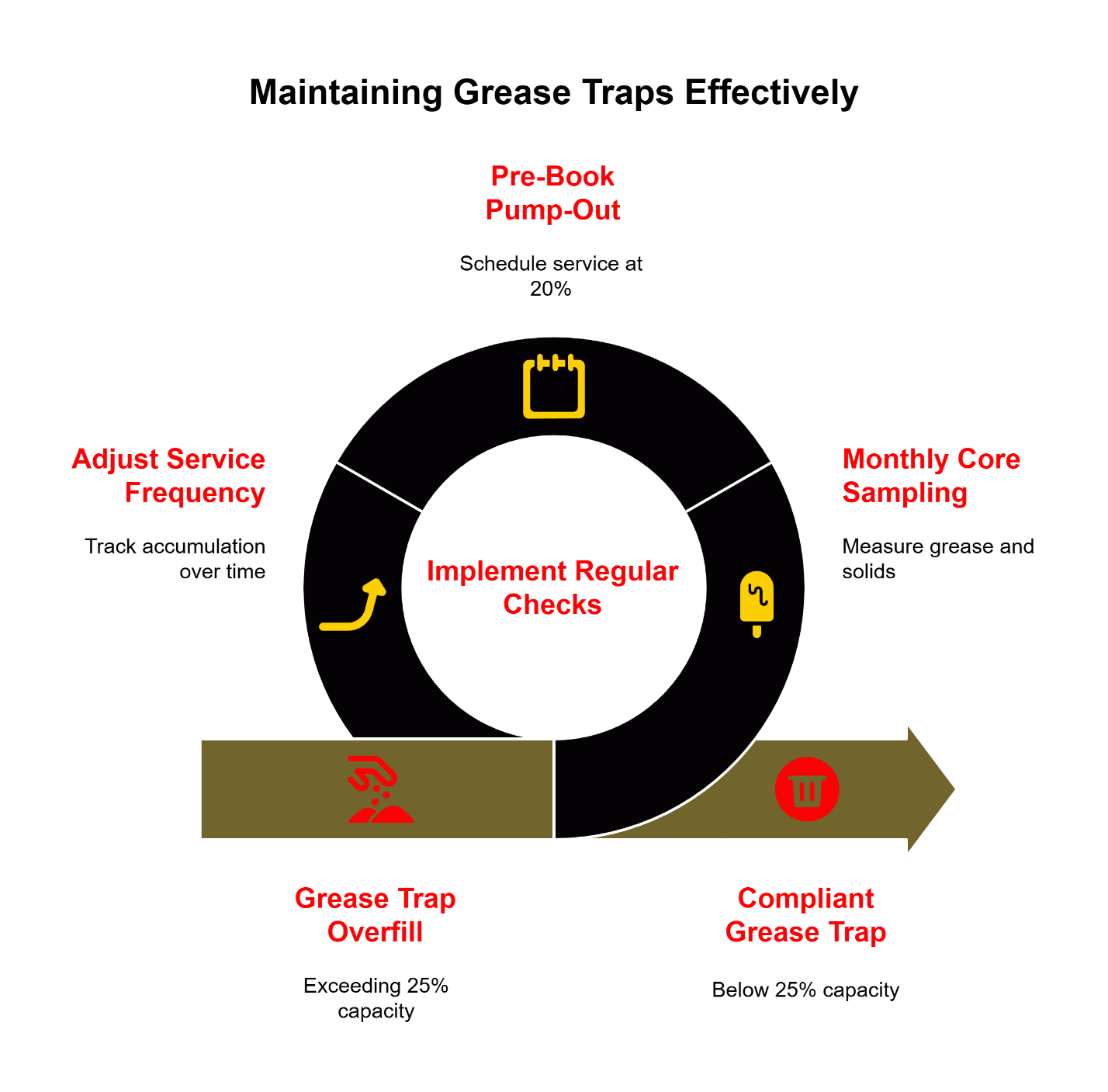
To mirror this method in your own maintenance checks, lower a core sampler to the tank bottom, capture the full column, then measure and record both the grease cap depth and the sludge depth. Calculate the percentage by adding those two measurements and dividing by total liquid depth. Log this reading in a simple notebook or tracking sheet, and you’ll be able to predict exactly when you need to schedule service—before an inspector shows up and finds you out of compliance.


The 25% Rule—When Your “Clean” Trap Isn’t Compliant

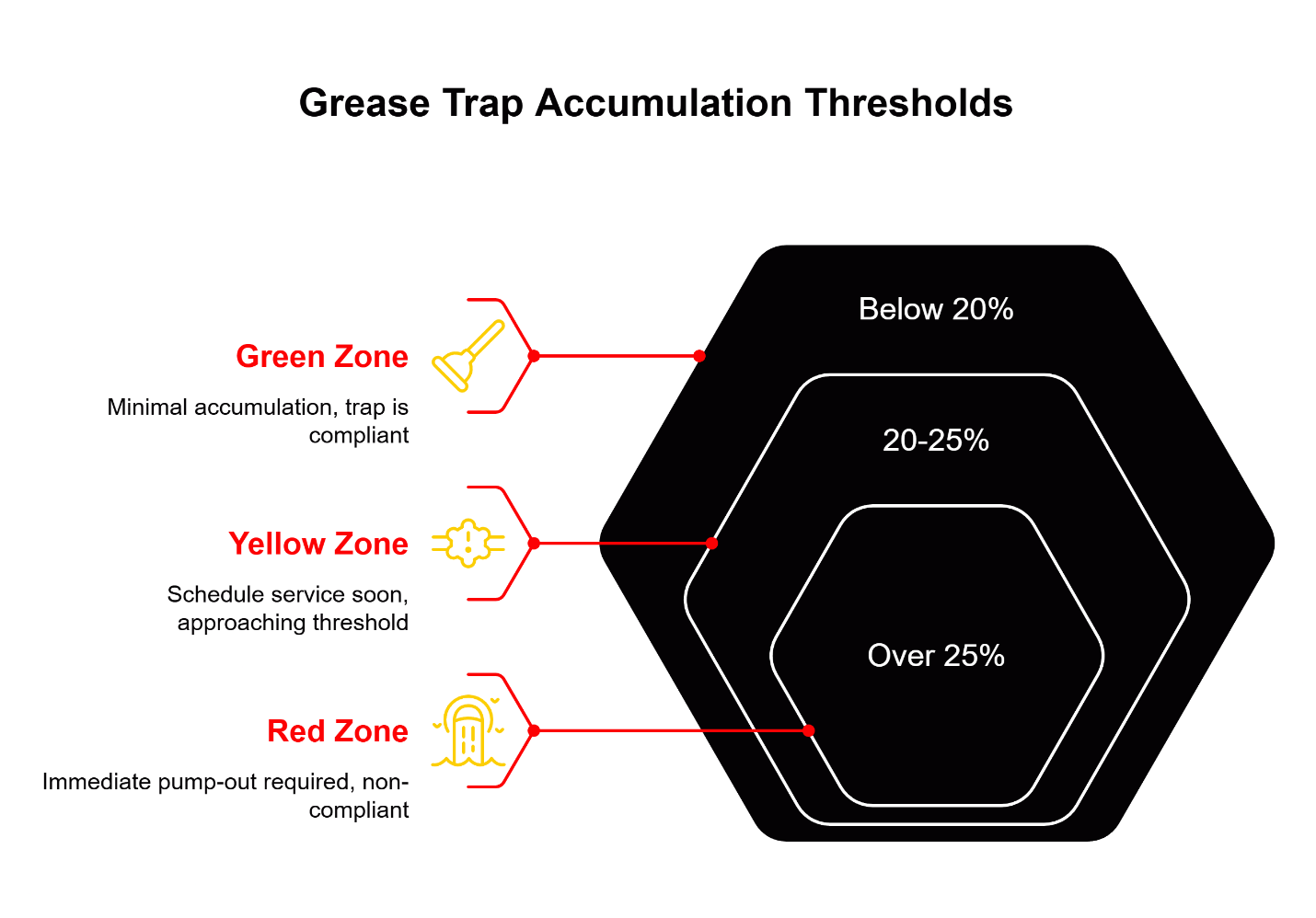
Grease trap accumulation thresholds diagram showing green, yellow and red zones with below 20%, 20–25% and over 25% grease levels and compliance status.


The 25% threshold isn’t arbitrary. It represents the point at which grease traps lose their effectiveness. When the combined thickness of floating grease and settled solids equals or exceeds 25% of the liquid depth, the trap’s effective working volume shrinks. Incoming wastewater has less time for FOG to separate properly, and more grease and solids can escape downstream into the public sewer system—exactly what the regulations are designed to prevent (Source: City of Nacogdoches FOG Manual).

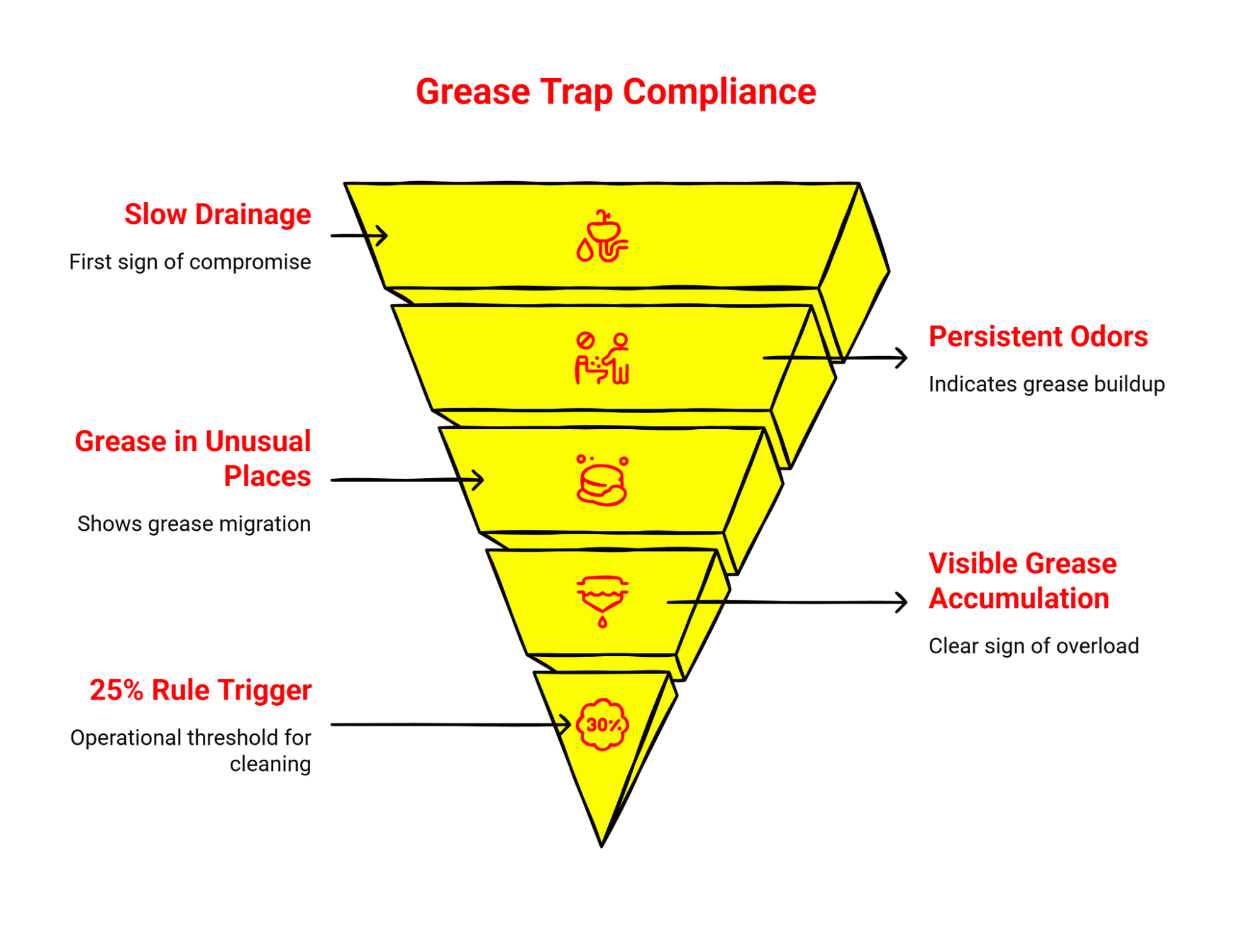
What confuses many operators is that “25% full” doesn’t mean the trap looks obviously dirty. A busy kitchen can hit this threshold in as little as four to six weeks, especially during high-volume periods. The accumulation is happening continuously, but it’s hidden from casual observation. By the time you smell problems or notice slow drainage, you’re likely well past the compliance threshold and dealing with a more urgent—and expensive—situation.

Create a simple visual reference for your team: Green zone (below 20% accumulation), Yellow zone (20-25%, schedule service soon), and Red zone (over 25%, immediate pump-out required). Train kitchen managers to check monthly and to call for grease trap cleaning when readings move into the yellow zone. This proactive approach prevents emergency calls, compliance violations, and the operational disruptions that come with backed-up traps.


Step-by-Step: How to Take a Core Sample Through the Sample Well

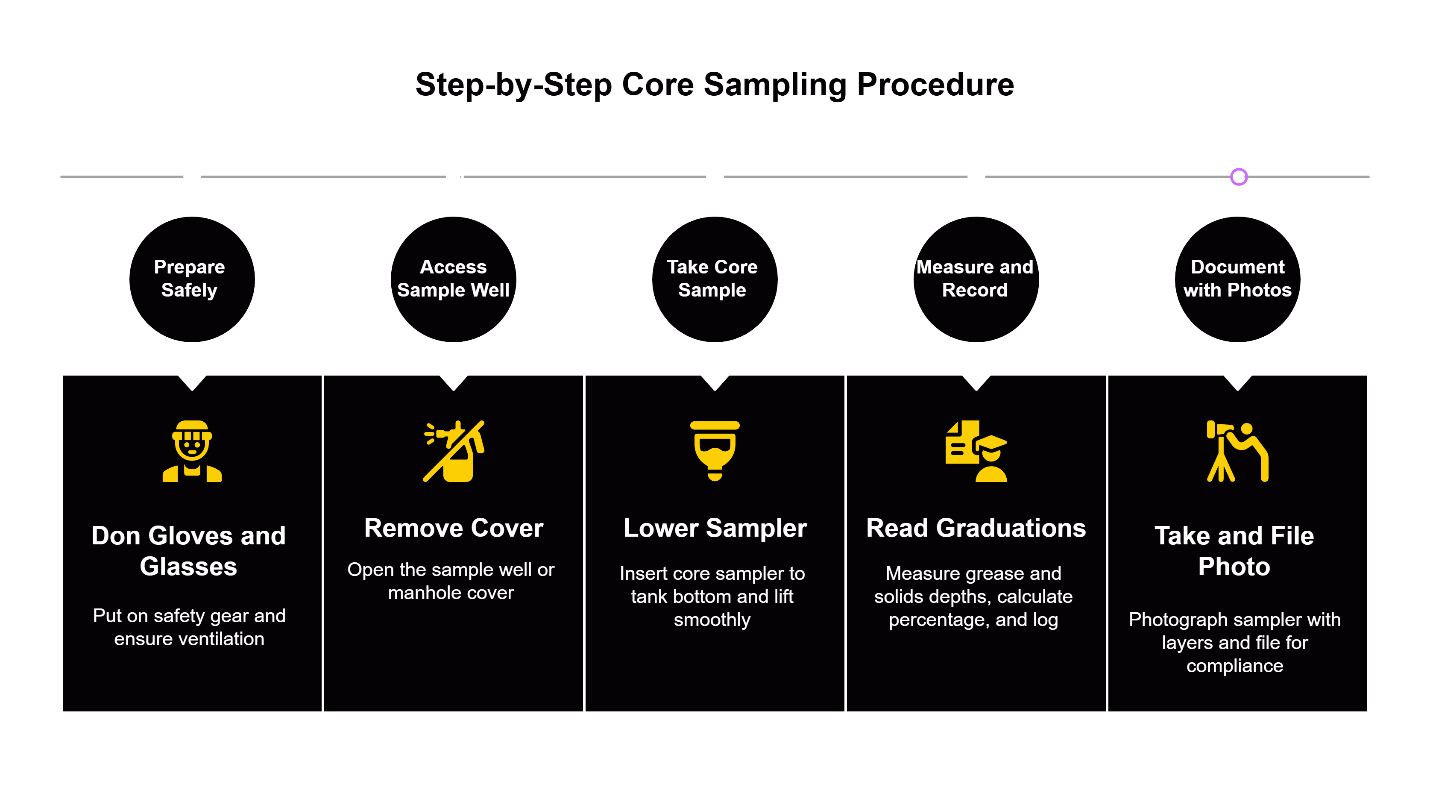
Step-by-step core sampling procedure infographic showing five stages: prepare safely, access sample well, take core sample, measure and record grease and solids, and document with photos for compliance.


Measuring your trap correctly takes about five minutes once you know the process. Here’s the sequence:

  1. Prepare safely. Put on gloves and safety glasses. Ensure adequate ventilation—grease traps produce hydrogen sulfide gas, which is both toxic and flammable. Clear the area of foot traffic and open nearby doors or activate exhaust fans.
  2. Access the sample well. Remove the sample well cover (typically a 4-inch PVC cap on top of the trap). If your trap doesn’t have a dedicated sample well, you’ll need to access through the main manhole, though this is less convenient for routine checks.
  3. Take the sample. Lower your core sampler (a clear graduated cylinder with a bottom check valve) straight down to the tank bottom. Once it touches, lift it smoothly to capture a complete column showing all three layers—grease cap, clear zone, and bottom sludge.
  4. Measure and record. Using the graduations on the sampler, measure the depth of the top grease layer and the bottom solids layer. Add these together, then divide by the total liquid depth to get your percentage. Write this in your log with the date and staff initials.
  5. Document with photos. Take a quick photo of the sampler with visible layers and the measurement. File this in your compliance binder alongside service manifests. If questioned during an audit, this photo proves you were monitoring conditions and taking appropriate action.

Compare today’s reading to your last measurement. If the percentage is climbing faster than expected, shorten your service interval rather than waiting for the next scheduled pump-out.


From Measurement to Paperwork—Passing the Audit

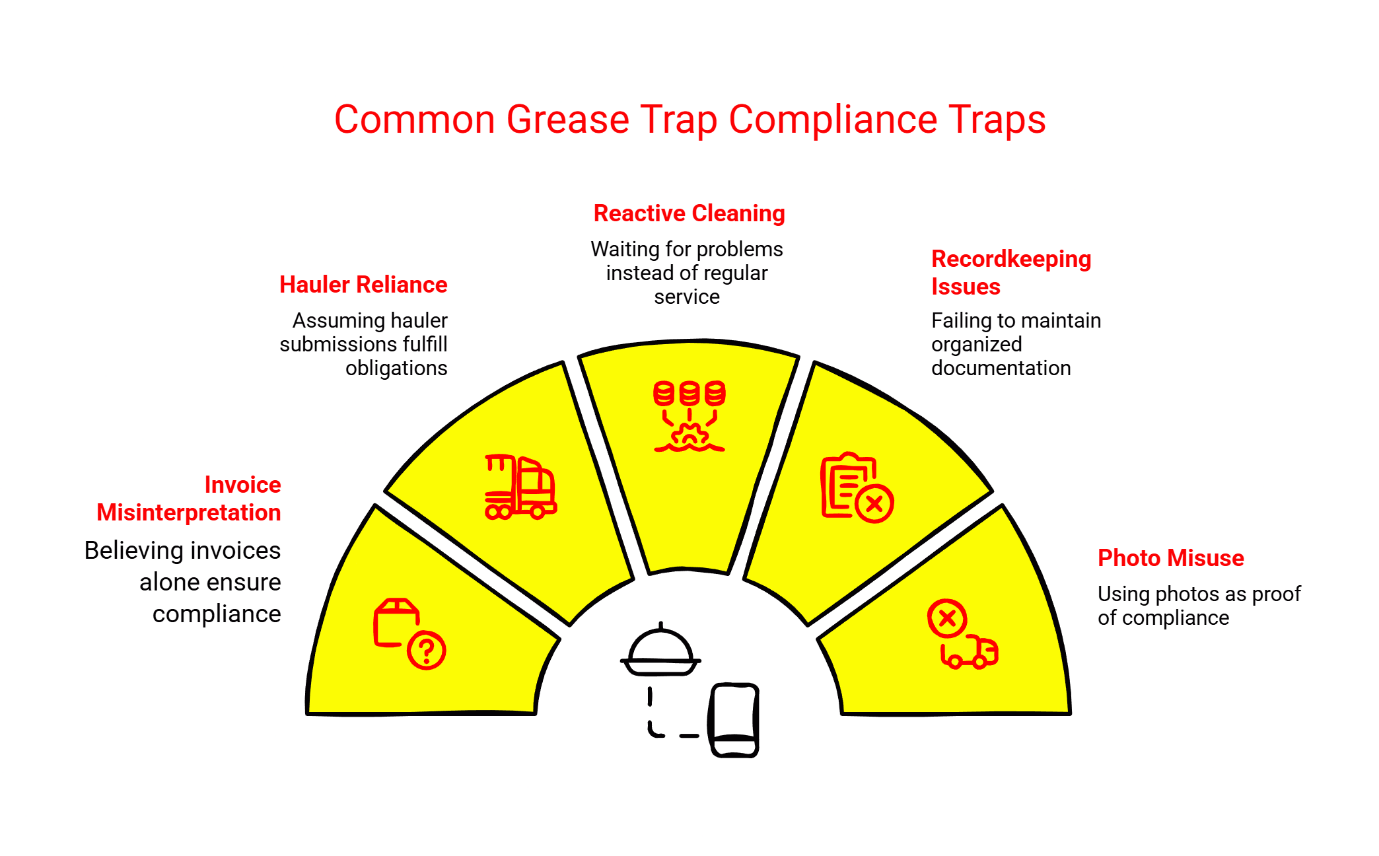
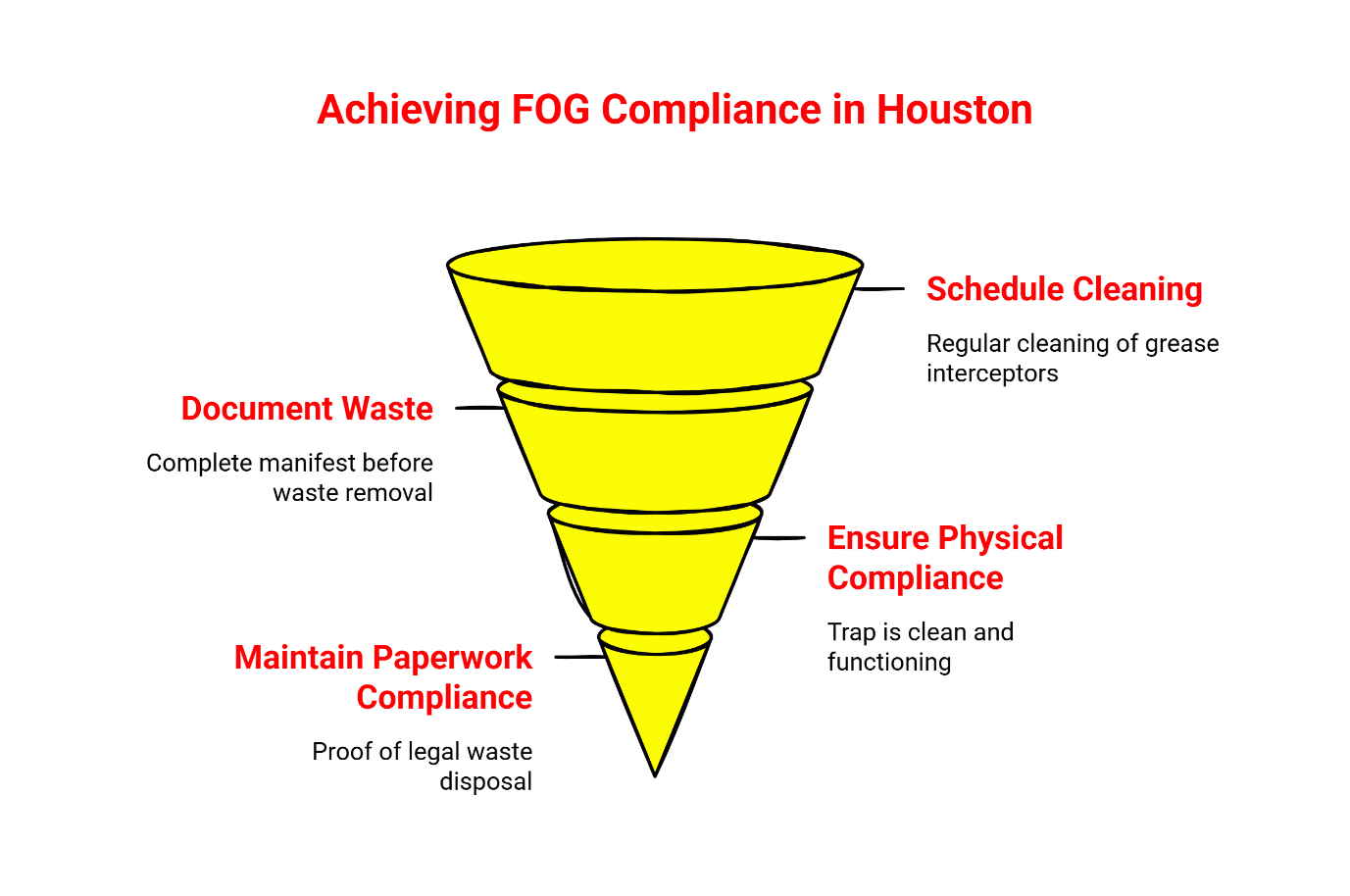
Cleaning your trap is only half of compliance. The other half is proving it happened—and proving the waste was disposed of legally. This is where many operators run into trouble, especially those who choose the cheapest available service to save a few dollars.

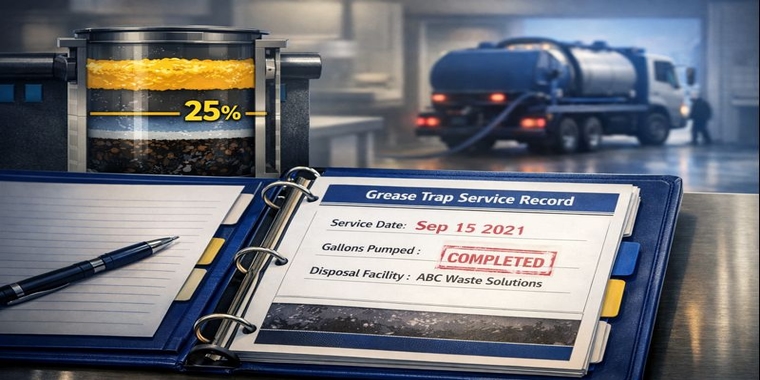
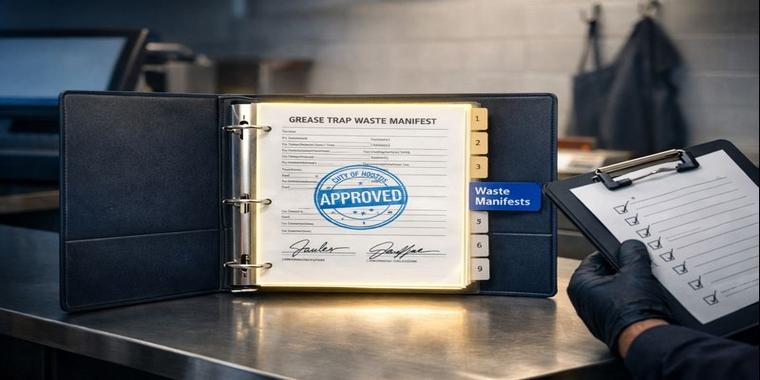
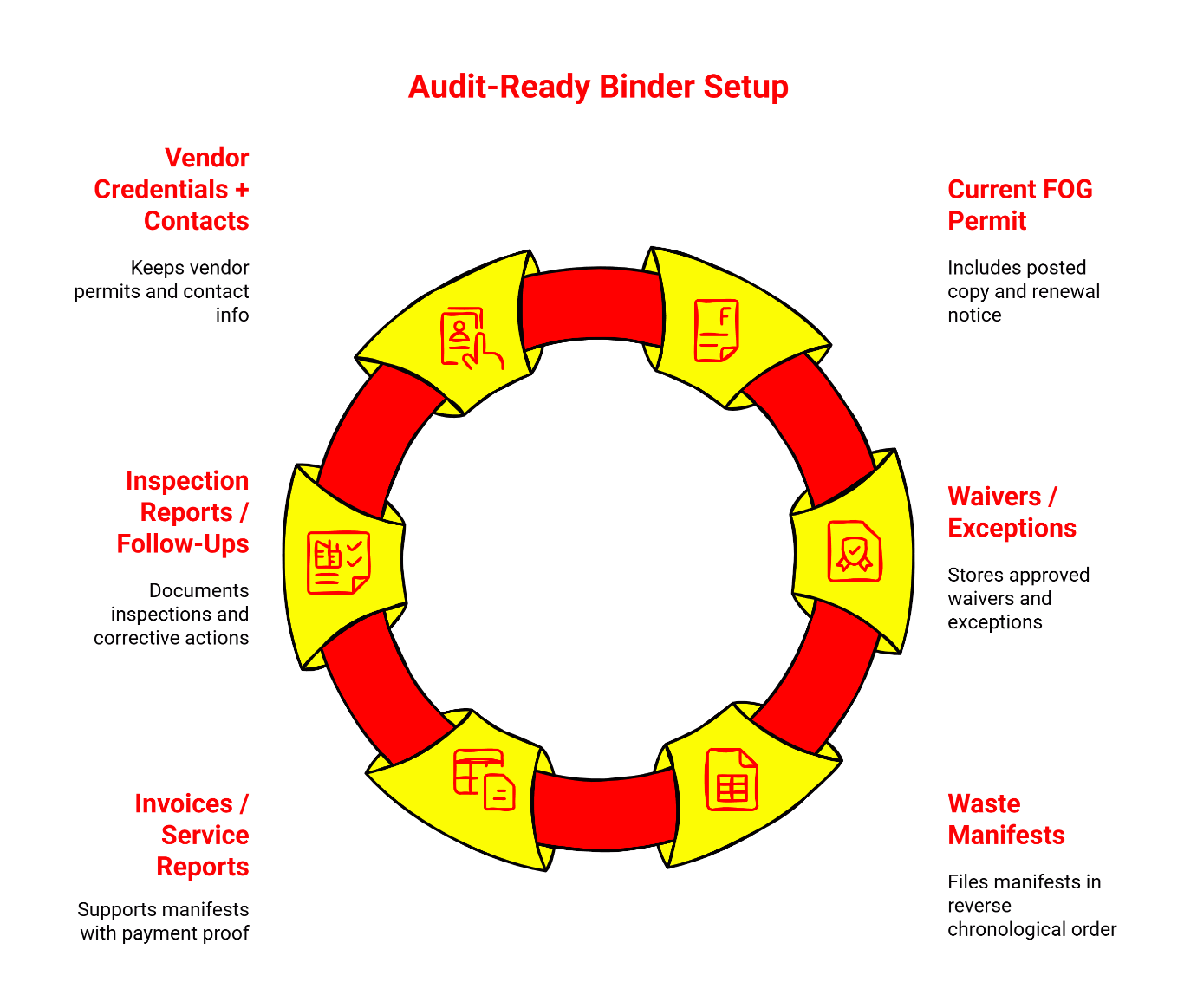
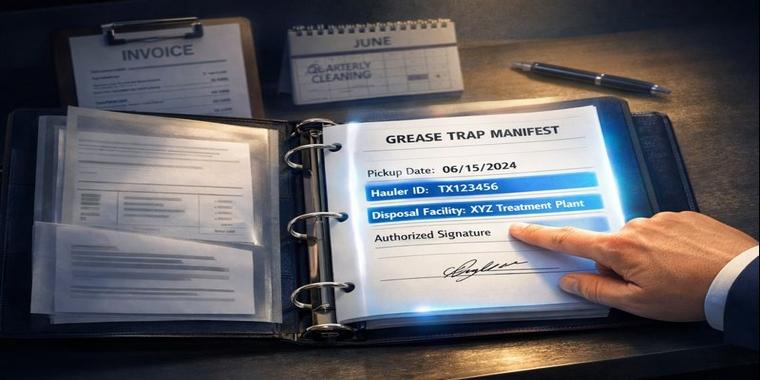
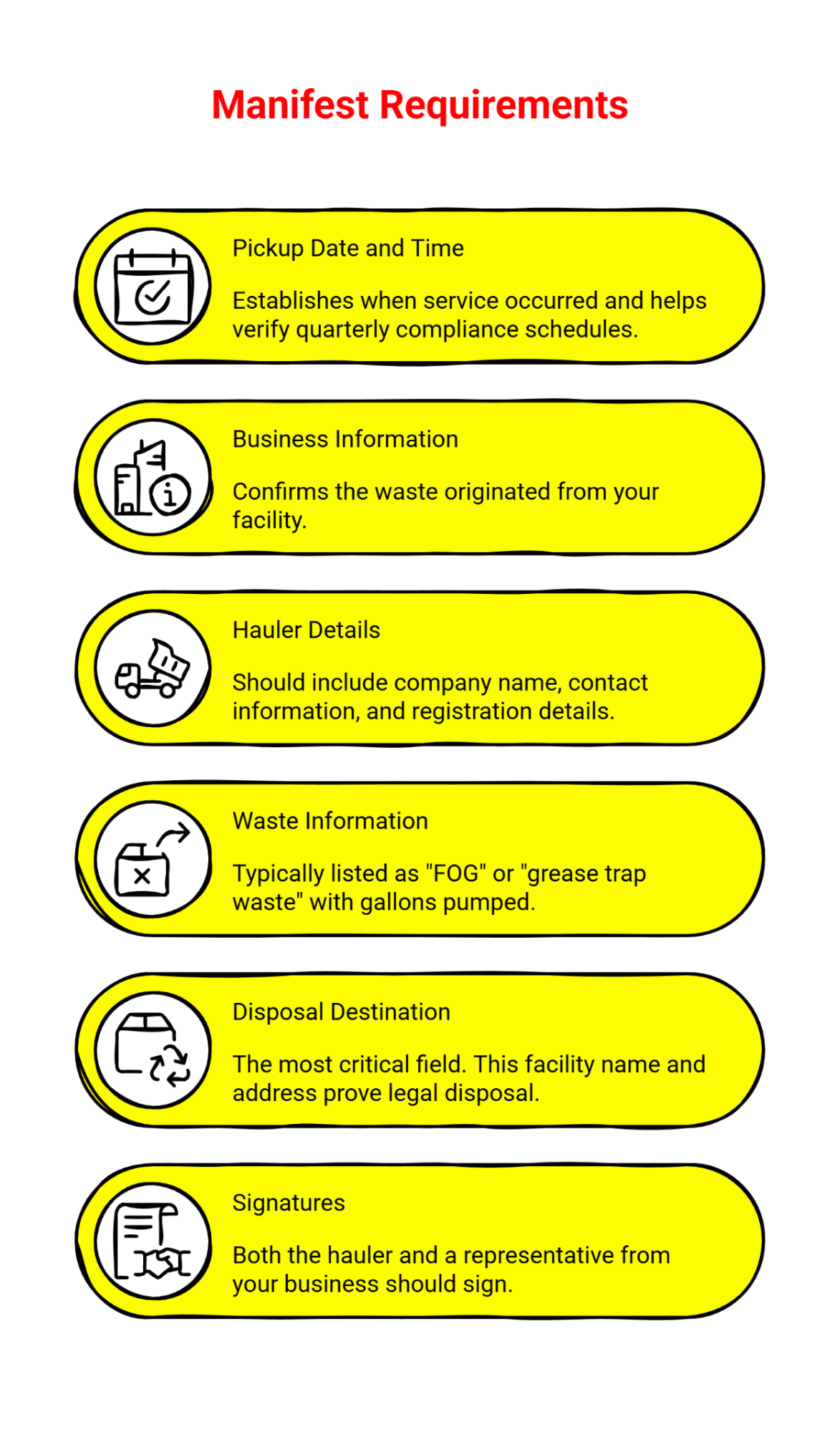
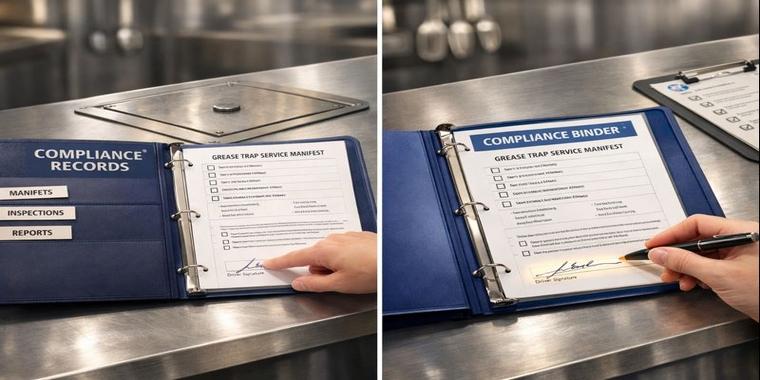
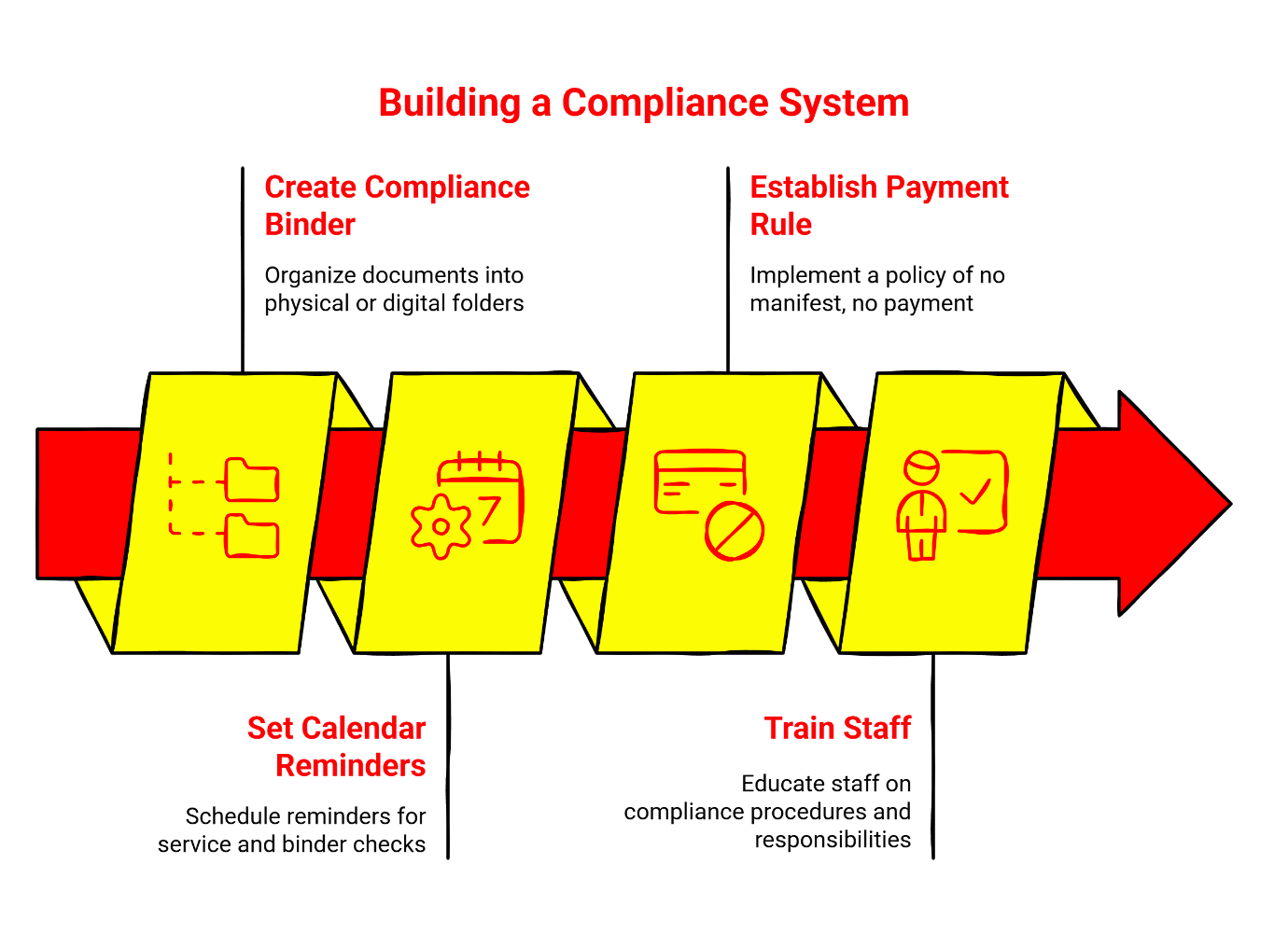
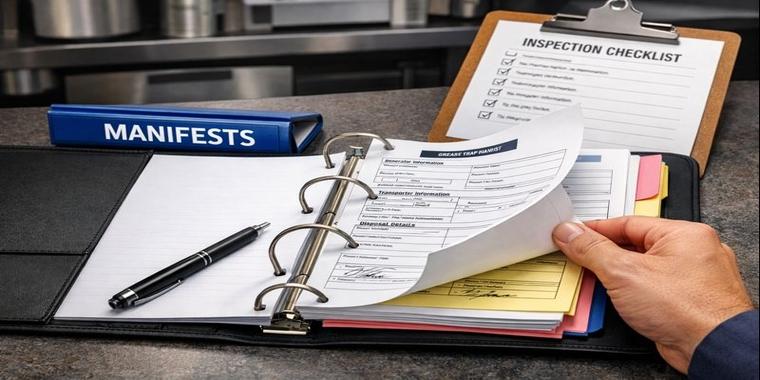
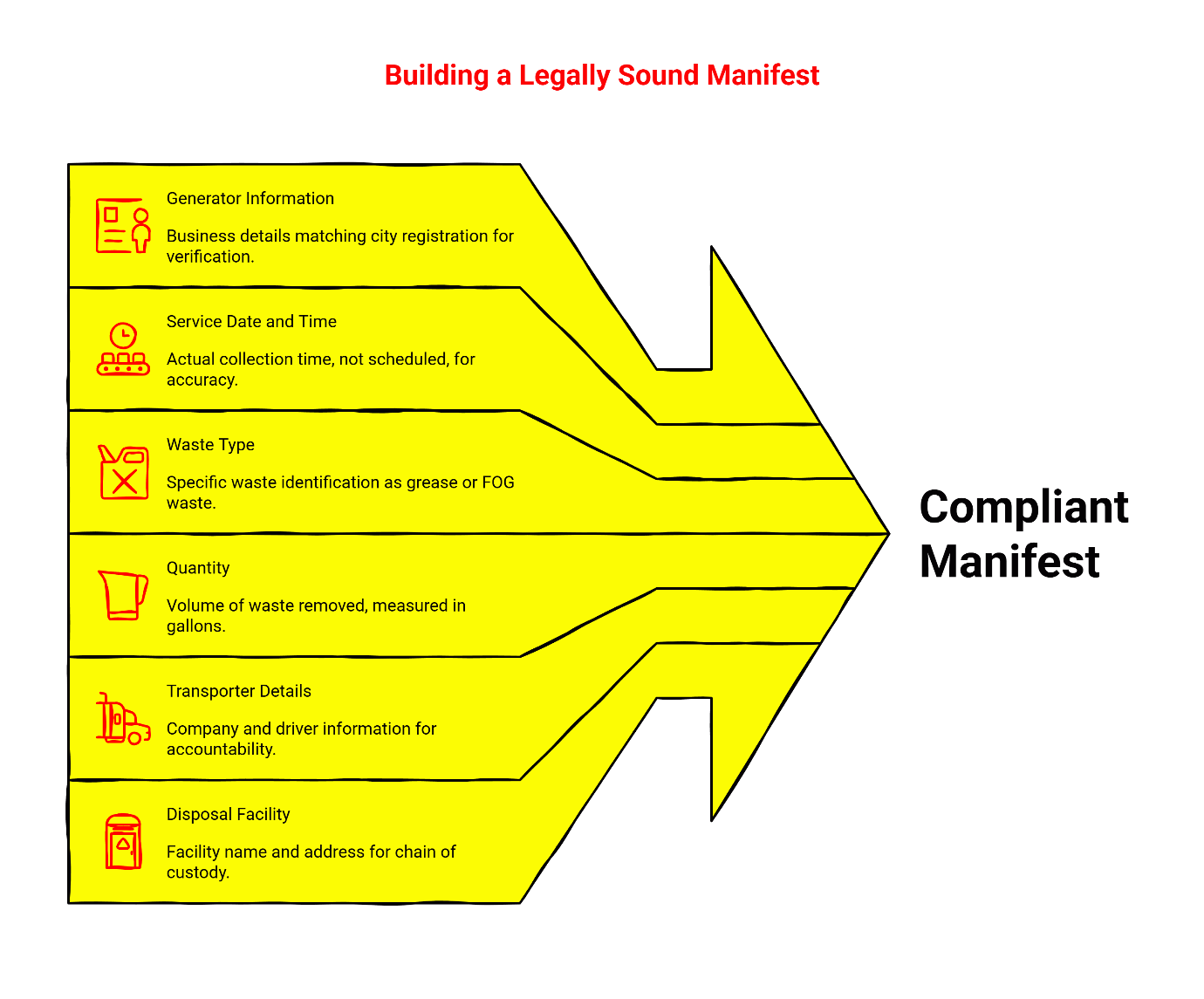
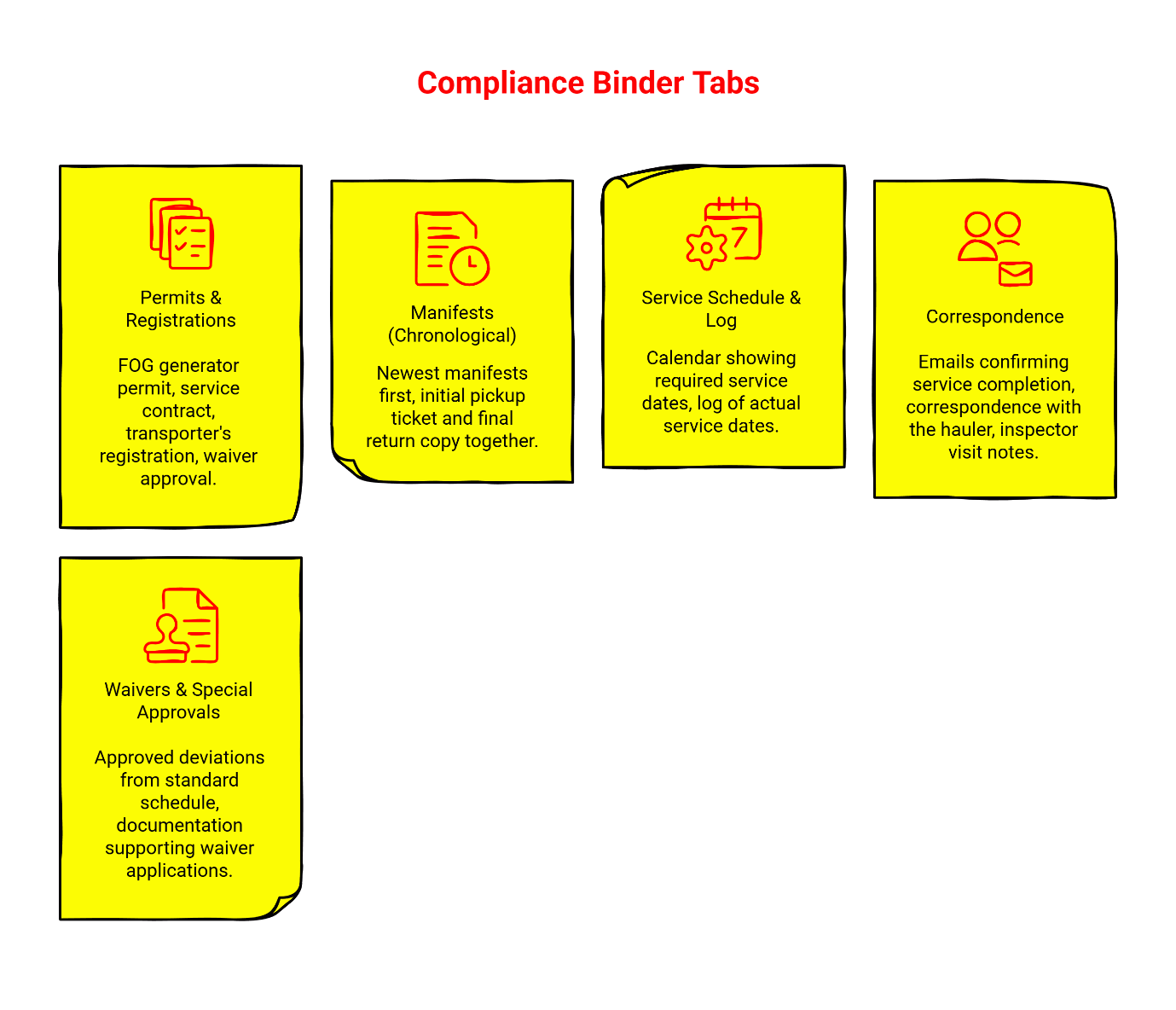
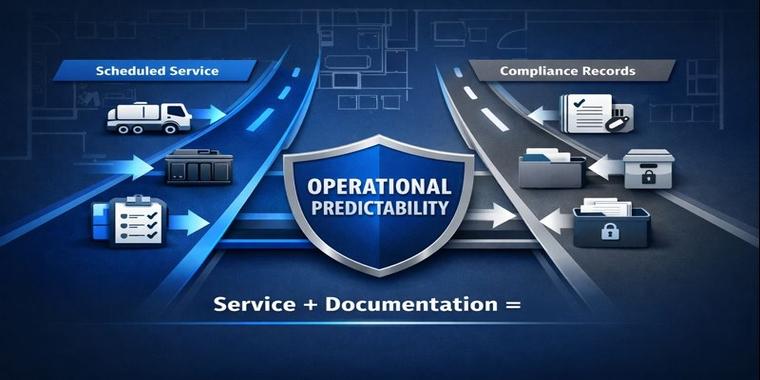
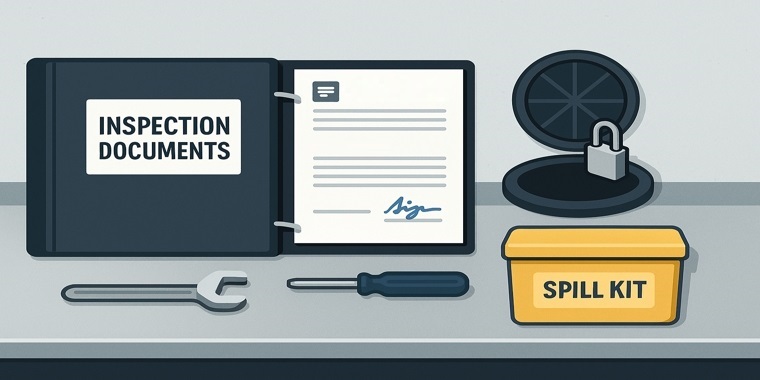
Every time your trap is pumped, you should receive a signed waste manifest showing the date, volume removed, hauler information, and most importantly, the disposal facility where the waste was taken. This manifest is your legal proof that FOG waste didn’t end up in a storm drain, vacant lot, or other illegal dumping site. Keep these documents organized in a dedicated compliance binder, along with your core sampling logs and any inspection reports.

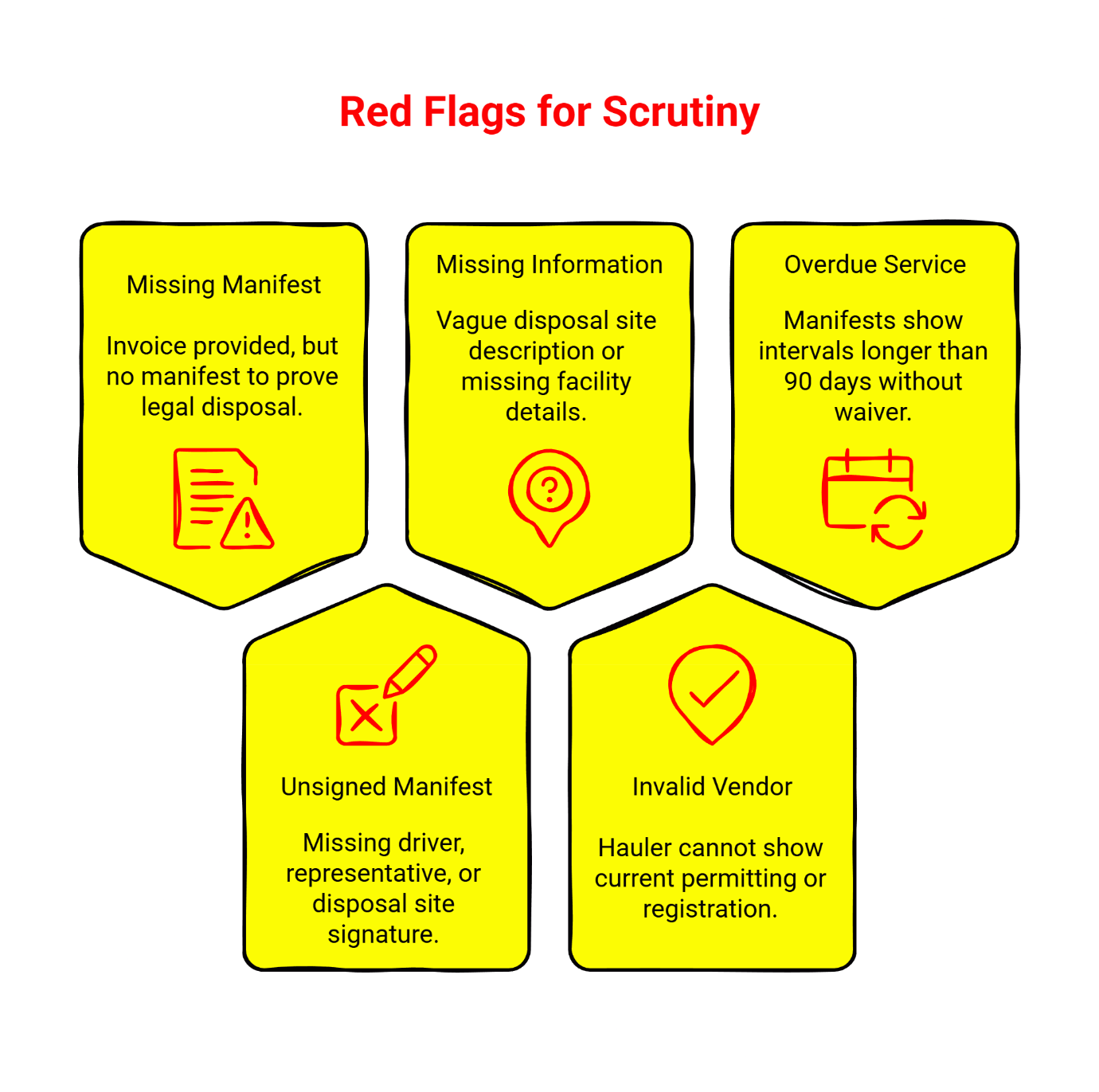
Many municipal codes require restaurants to retain these manifests on site and make them available during inspections, often for a minimum of three years (Source: City of Dallas Code of Ordinances). Missing manifests can result in fines even if your trap is currently clean, because you can’t prove past compliance (Source: Municipal FOG Record-Keeping Guidance).

When evaluating grease trap cleaning in Houston, ask specifically about manifesting procedures and whether the company provides copies after every service. The few dollars saved with a bargain hauler aren’t worth the risk of using an unregistered operator who cuts corners on documentation.


Houston Reality Check—Why “Quarterly” Isn’t Always Enough

Within Houston city limits, restaurants are expected to maintain grease traps frequently enough to protect the public sewer system. In practice, quarterly pumping has become a common baseline interval for many facilities, but this is only a starting point. High-volume restaurants, facilities with undersized traps, or operations that use a lot of fryer oil often hit the 25% threshold well before 90 days.

This is why measurement-based scheduling makes more sense than calendar-based service. If your monthly core samples show you’re consistently reaching 20-22% by week eight, shortening your interval to every two months prevents violations and keeps your trap performing as designed. Conversely, lower-volume locations might find they can safely extend to every 14-16 weeks without exceeding the threshold.

Work with a service provider who understands this principle and bases recommendations on your specific accumulation rate rather than pushing everyone onto the same generic schedule. The right approach saves you money over time—you’re not pumping unnecessarily early, but you’re also not risking fines or backups by waiting too long.


Vendor Checklist: “Pit Crew” Criteria for Your Kitchen

Not all grease trap services are equal. When comparing providers, look for these markers of professionalism:

Trained and certified technicians who understand both the mechanical process and the regulatory requirements. The person pumping your trap should be able to explain the 25% rule and show you how to read a core sample.

Punctual and organized service that respects your business hours and cleans up thoroughly. Spills, lingering odors, or equipment left blocking your back door are signs of a careless operation.

Core sampling before and after service on request. Good operators measure before pumping to document your pre-service condition, then again afterward to confirm complete removal.

Manifesting every visit with copies provided automatically. You shouldn’t have to chase down paperwork. Disposal site information should be clearly noted on each manifest.

Proactive schedule management with advance reminders and suggested timing adjustments based on your accumulation trends. This partnership approach helps you stay ahead of compliance issues rather than reacting to emergencies.

Since 1985, our team has focused on delivering this level of service to Houston-area restaurants, backed by Better Business Bureau accreditation and a commitment to thorough documentation. The feedback we consistently hear is appreciation for the organized approach and the advance notice we provide for next cleaning dates.


Frequently Asked Questions

Is a clear sample well good enough to prove compliance?

No. A clear middle layer only shows you what’s happening in one narrow section of the trap. Inspectors require core sampling because it’s the only way to measure total accumulation including the hidden grease cap and bottom sludge.

Do I really have to keep copies of every manifest?

Yes. These documents are your legal proof of proper disposal. Many municipal FOG programs require restaurants to retain manifests and produce them during audits, often for three years or more. Missing paperwork can trigger violations even if your current trap condition is acceptable.

When should I actually call for service?

The safe answer is when your core sample readings approach or reach 20-25% accumulation. Don’t wait for odors or slow drainage—by that point, you’re likely already past the threshold and dealing with a more serious problem that could have been prevented with regular measurement.


Schedule Core Sample-Based Maintenance

Stop guessing and start measuring. Our team provides Houston restaurants with compliant grease trap cleaning backed by proper manifesting after every pump-out. We can set up a measurement-based maintenance schedule that keeps you ahead of the 25% threshold and audit-ready year-round.

Call us at 281-489-1765 (Monday through Friday, 9 AM to 6 PM) to schedule an initial assessment and receive a customized service plan based on your kitchen’s actual accumulation rate.

Visit us: 13911 India St, Houston, TX 77047

For more information about our full range of services, visit our contact page.

About the Drane Ranger Insights Team

The Drane Ranger Insights Team is our dedicated engine for synthesizing complex topics into clear, helpful guides. While our content is thoroughly reviewed for clarity and accuracy, it is for informational purposes and should not replace professional advice.

Preventing the Shutdown: A Restaurant Operator’s Guide to Grease Trap Service in Houston

📌 Key Takeaways:

Avoid shutdowns by turning grease trap care into a predictable, documented routine.

Full Clean-Outs, Not Pump-Only: Removing liquids plus scraping/rinsing walls and baffles, followed by a manifest, prevents rapid re-clogs, odors, and surprise downtime.

Cadence You Can Trust: Start around 90 days and tighten for high volume, fry-heavy menus, or small traps to keep flow steady and inspections smooth.

Documentation = Protection: Keep every wastewater manifest on file to prove responsible haul-off and stay inspection-ready.
Choose Providers for Reliability: Demand written scope, full clean-outs, manifests every visit, and off-hours scheduling to avoid hidden costs and mid-service emergencies.

30-Day Plan Locks Habits: Baseline your setup, schedule service, train staff on daily FOG habits, set reminders, and confirm the next date to maintain momentum.

Predictable service + manifests + daily habits = open doors and a calm dinner rush.

When the dinner rush hits and your kitchen drains start backing up, every second counts. The acrid smell of grease mixed with wastewater can clear a dining room faster than a fire alarm. For Houston restaurant operators, this nightmare scenario represents more than just an unpleasant evening—it’s a direct threat to revenue, reputation, and regulatory standing.

Think of your grease trap system like the foundation of your building. Most of the time, it operates invisibly beneath the surface, handling the steady flow of fats, oils, and grease (FOG) that commercial kitchens inevitably produce. When that foundation fails, however, the entire operation comes to a grinding halt. Picture this: it’s 7 PM on a Friday night, your dining room is packed, and suddenly the kitchen sinks won’t drain. Orders back up, customers grow restless, and what should have been your biggest revenue night of the week transforms into a costly emergency.

The solution lies in treating grease trap maintenance not as an afterthought, but as operational insurance. Professional grease trap service transforms this hidden risk into a predictable, manageable aspect of restaurant operations. Rather than waiting for problems to surface during your busiest moments, a structured approach to grease trap maintenance ensures your kitchen runs smoothly when it matters most.


What’s at Stake: Why Grease Trap Service Prevents Shutdowns in Houston

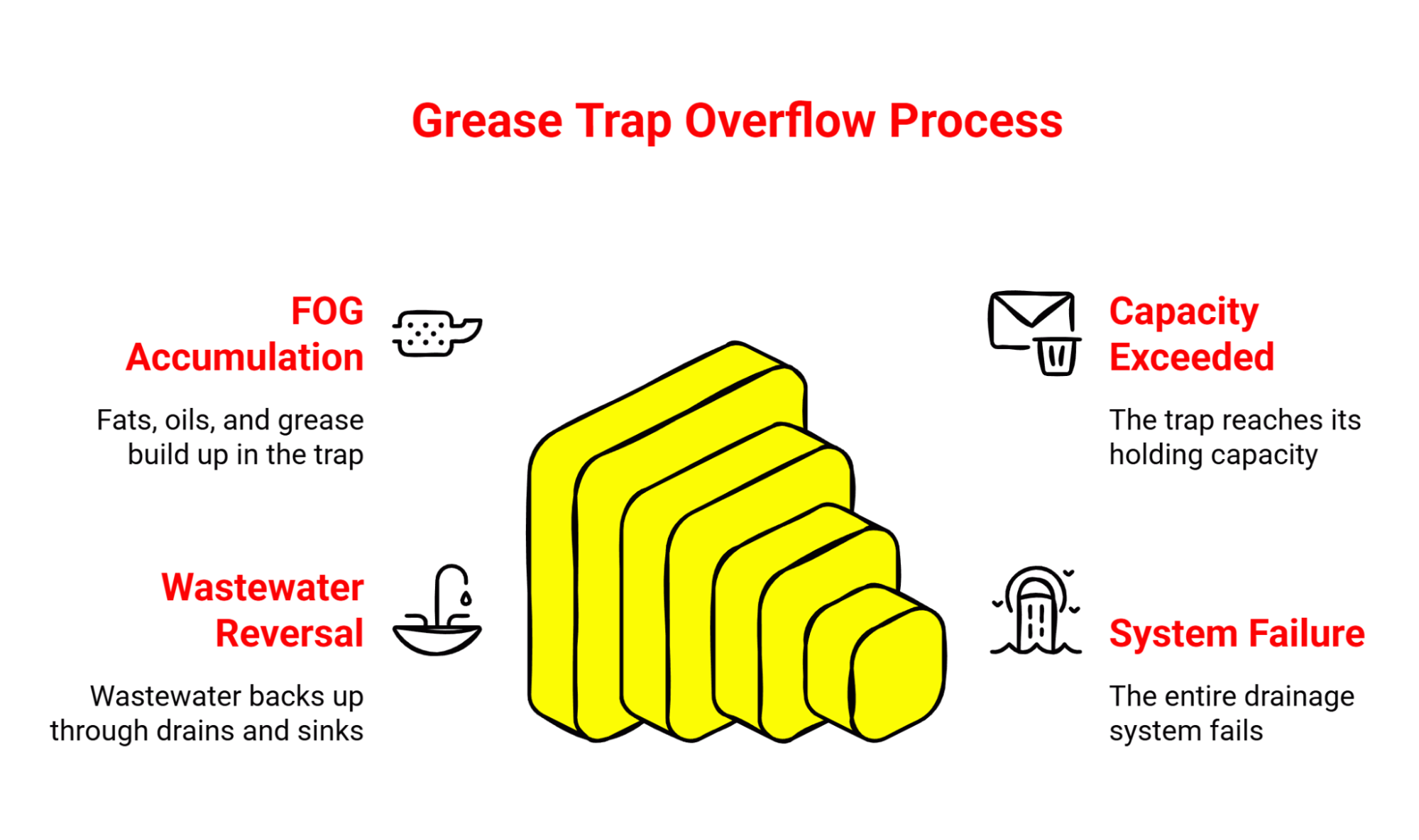
Restaurant shutdowns due to grease trap failures stem from a straightforward but potentially catastrophic process: FOG accumulation that blocks normal wastewater flow and creates backups throughout the kitchen drainage system.


How Backups Begin: FOG Accumulation Explained

The science behind grease trap problems is relatively simple, but the business consequences are severe. As cooking operations produce fats, oils, and grease, these substances flow into the grease trap where they’re designed to separate from wastewater. Over time, however, these materials solidify and accumulate. When the trap reaches capacity, FOG begins flowing into the main drainage system where it cools, hardens, and creates blockages.

The process accelerates during high-volume periods because increased cooking activity produces more FOG faster than the trap can effectively separate it. Many operators discover this timing creates a cruel irony: the busier and more successful the restaurant, the higher the risk of a grease-related shutdown during peak revenue periods.


The Business Math of Downtime: Revenue, Labor, and Reputation

Consider the financial impact of a single evening shutdown during peak dining hours. A typical full-service restaurant averaging $1,000 per hour in revenue during prime time faces immediate losses that extend far beyond the evening’s sales.

Direct Revenue Loss: A four-hour Friday night shutdown equals $4,000 in immediate lost sales. Weekend closures compound this impact because these represent the highest-margin hours of the week.

Labor Costs Continue: Kitchen and service staff still require payment despite the inability to serve customers. Food prep completed before the shutdown often requires disposal, adding waste costs to labor expenses.

Reputation and Customer Relationships: Perhaps most damaging, customers turned away due to operational failures rarely return immediately. Social media amplifies negative experiences, and recovery requires months of consistent positive service to rebuild damaged reputation.

Emergency Service Premiums: Grease trap failures that occur during peak hours require emergency service calls, typically costing 200-300% more than scheduled maintenance visits.


Quick Definition: What Counts as Professional Grease Trap Service

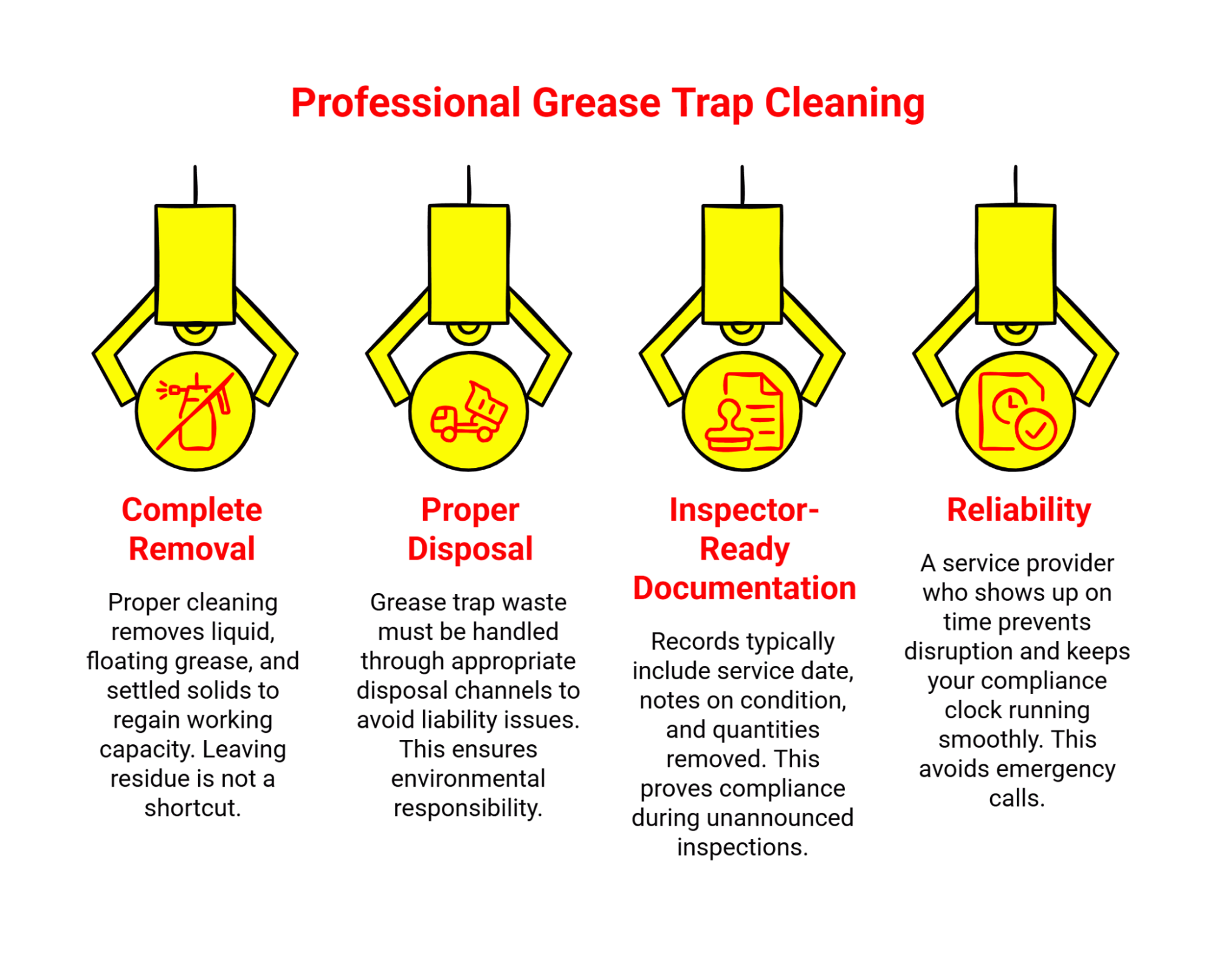
Professional grease trap service encompasses a complete cleaning process that includes pump-out, physical cleaning, and proper documentation—not simply removing accumulated liquids.

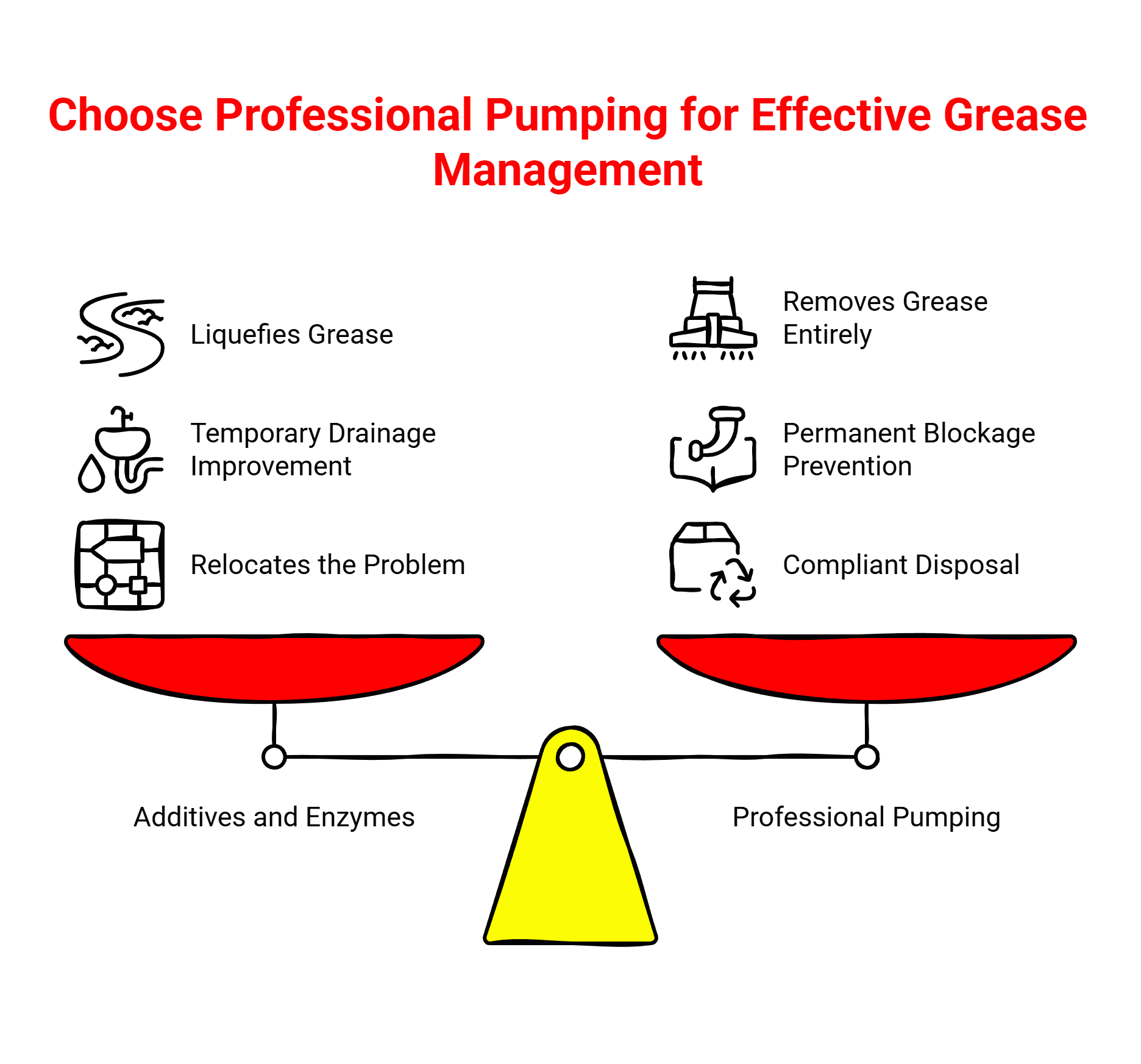
The distinction between basic pump-out and comprehensive service determines whether the maintenance actually prevents future problems. A pump-out removes liquid waste but leaves solidified FOG adhering to trap walls and baffles. This residual buildup accelerates reaccumulation, shortening the effective interval between service calls and increasing the likelihood of operational disruptions.


Pump-Out vs. True Clean-Out: Why the Difference Matters

A complete clean-out process involves several critical steps beyond liquid removal. After pumping out accumulated waste, technicians perform a thorough scrape-down of all internal surfaces, removing hardened FOG deposits that standard pumping cannot address. This physical cleaning process followed by a high-pressure rinse ensures the trap returns to optimal operating condition.

The business impact of this distinction becomes apparent over time. Restaurants relying on pump-only service typically require more frequent visits and experience higher rates of emergency calls due to incomplete cleaning. Complete clean-out service, while requiring slightly more time per visit, extends effective intervals between services and significantly reduces emergency situations.


Documentation and Manifests: What They Are and Why They’re Kept

Professional service includes comprehensive documentation through waste manifests—official records tracking the collection, transportation, and disposal of removed waste. These documents serve multiple critical functions for restaurant operations.

Manifests provide concrete evidence of proper waste handling during regulatory inspections. Houston’s FOG compliance requirements include documentation standards, and manifests demonstrate adherence to proper disposal protocols. Additionally, these records help operators track service intervals and identify patterns that might indicate needed adjustments to cleaning frequency.

The documentation process also protects restaurants from liability issues related to waste disposal. Professional service providers handle all regulatory requirements for waste transportation and processing, but manifests provide restaurants with proof that waste left their facility through proper channels.


Houston’s Rulebook in Plain English (Zero Legal Jargon)

Houston requires regular grease trap maintenance and proper documentation as part of the city’s FOG management program, designed to protect the municipal wastewater system from blockages that can cause environmental damage and infrastructure problems.

The basic requirements center on two main principles: regular cleaning intervals and proper record-keeping. While specific requirements can vary based on factors like restaurant size, trap capacity, and operational volume, most establishments follow quarterly cleaning schedules as a baseline. However, restaurants should consult current city guidelines and work with qualified service providers to ensure compliance with all applicable regulations.

Why These Rules Exist: Houston’s FOG ordinance addresses real infrastructure challenges. When grease enters the municipal sewer system, it causes blockages that can result in sewage overflows, environmental contamination, and expensive repairs to public infrastructure. Restaurant compliance helps prevent these community-wide problems while protecting individual businesses from operational disruptions.

Professional service providers help restaurants navigate compliance requirements by maintaining proper manifests, following approved disposal methods, and providing documentation that demonstrates adherence to regulatory standards. This collaborative approach allows restaurant operators to focus on their core business while ensuring regulatory obligations are met through professional expertise.


Set the Right Cadence: Building a Reliable Service Schedule

Most Houston restaurants establish a baseline service interval of approximately 90 days, then adjust this schedule based on operational factors that affect FOG production and accumulation rates.

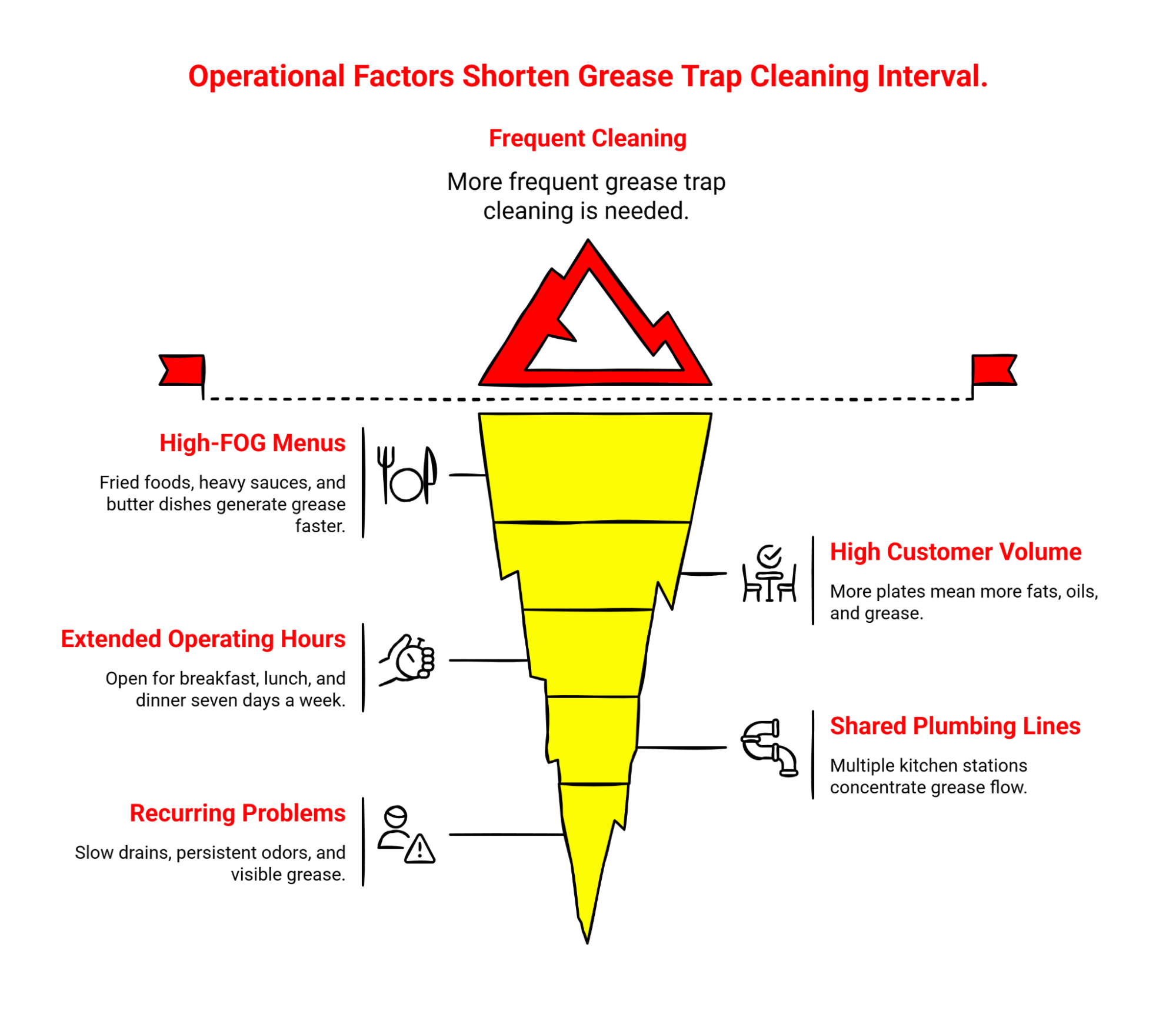
The 90-day baseline provides a starting point for most operations, but several factors typically require schedule adjustments. High-volume restaurants, establishments with extensive fried food menus, and operations using smaller grease traps often benefit from shorter intervals. Conversely, restaurants with limited frying, smaller daily covers, or larger trap systems might extend intervals slightly while maintaining effective FOG management.

Common Baselines and When to Shorten

Volume Considerations: Restaurants serving more than 200 covers daily typically require more frequent service due to the sheer quantity of FOG production. Peak season operations, such as those in tourist areas, may need temporary schedule adjustments during high-volume periods.

Menu Impact: Establishments specializing in fried foods, particularly those using solid cooking fats, generate FOG that solidifies more quickly in trap systems. These operations often benefit from 60-75 day intervals rather than the standard 90-day baseline.

Trap Size Relationships: Smaller grease traps reach capacity more quickly, requiring more frequent attention. Restaurants with trap systems below 500-gallon capacity typically need service every 60-90 days, while larger systems may effectively operate on 90-120 day intervals.

Volume, Menu, and Trap Size: Three Drivers of Frequency

Restaurant Profile Typical Interval Key Factors
High-volume fried food 60-75 days Daily covers >200, extensive frying
Standard full-service 90 days Mixed menu, moderate frying
Low-volume/limited frying 90-120 days <100 daily covers, minimal fried items


These intervals serve as starting points for service scheduling. Operators should work with their service provider to monitor trap conditions and adjust frequency based on actual accumulation patterns observed during service visits.


Inside the Visit: A 5-Step Service Breakdown

Professional grease trap service ensures safety, cleaning, inspection, and waste disposal for optimal system function.

Professional grease trap service follows a systematic process designed to restore optimal trap function while ensuring safety and regulatory compliance throughout the procedure.

Understanding this process helps restaurant operators prepare effectively and recognize quality service. Each step serves specific purposes in maintaining trap effectiveness and preventing operational disruptions.

Step 1: Arrival and Safety Prep

Professional technicians begin each service call with safety preparation and site assessment. This includes reviewing access routes, confirming the service window doesn’t conflict with peak kitchen operations, and establishing communication with designated restaurant staff.

Safety protocols require proper ventilation of the trap area, as accumulated FOG can produce hazardous gases. Technicians use gas detection equipment and ensure adequate airflow before beginning work. This preparation phase typically requires 10-15 minutes but prevents dangerous conditions during the service process.

Step 2: Complete Pump-Out

The pump-out process removes all liquid waste from the trap system using specialized vacuum equipment. Professional service includes removing waste from all chambers and ensuring complete liquid extraction before proceeding to physical cleaning phases.

During pump-out, technicians assess the quantity and consistency of removed waste. This evaluation helps determine whether the service interval is appropriate for the establishment’s FOG production patterns. Excessive solid accumulation might indicate the need for more frequent service, while minimal buildup could suggest interval extension possibilities.

Step 3: Scrape-Down and Rinse

Physical cleaning removes solidified FOG deposits that pump-out cannot address. Technicians use specialized tools to scrape accumulated grease from trap walls, baffles, and other internal components. This step distinguishes professional service from simple pump-out procedures.

The scrape-down process typically reveals the trap’s actual condition and effectiveness. Heavy buildup on internal surfaces indicates either inadequate service intervals or potential operational changes that increase FOG production. Following physical cleaning, high-pressure rinsing removes loosened debris and restores proper flow patterns through the system.

Step 4: Visual Check and Notes

Comprehensive inspection identifies potential maintenance needs and operational concerns that could affect future trap performance. Technicians examine structural integrity, inlet and outlet conditions, and overall system function.

This inspection phase often identifies minor issues before they become major problems. Damaged baffles, improper water levels, or unusual wear patterns can indicate needed repairs or operational adjustments. Addressing these concerns during routine service prevents emergency failures and extends overall system life.

Step 5: Manifests, Haul-Off, and Disposal

Professional service concludes with proper documentation and waste disposal through approved facilities. Manifests detail the quantity and type of waste removed, transportation information, and final disposal location.

The documentation process provides restaurants with records demonstrating regulatory compliance and proper waste handling. These manifests become part of the restaurant’s compliance file and serve as evidence of appropriate waste management during inspections or audits.

Provider Selection Checklist: How to Avoid Hidden Costs

Selecting a grease trap service provider requires evaluating factors beyond initial pricing to ensure comprehensive service and avoid unexpected expenses that can exceed initial savings.

Many operators focus primarily on service pricing without considering the total cost of ownership, which includes emergency calls, compliance risks, and operational disruptions caused by inadequate service. A structured evaluation process helps identify providers who deliver genuine value through comprehensive service and reliability.

Proof of Proper Disposal and Manifests

Legitimate service providers maintain all required permits and insurance for waste transportation and disposal. They provide detailed manifests after each service visit and can demonstrate relationships with approved disposal facilities.

Operators should verify that potential providers can show current permits, insurance certificates, and waste disposal facility agreements. Providers unable or unwilling to provide this documentation may create compliance risks for restaurants, potentially resulting in regulatory violations and associated penalties.

Scheduling Reliability and After-Hours Options

Consistent service scheduling prevents emergency situations that disrupt operations and cost significantly more than routine maintenance. Reliable providers offer predictable scheduling, advance notification of service visits, and emergency response capabilities for unexpected problems.

After-hours service availability becomes critical when problems occur during peak operating periods. Providers offering 24-hour emergency response help minimize revenue loss from operational disruptions, though emergency rates typically cost 2-3 times standard service pricing.


Transparent Scope: No ‘Pump-Only’ Surprises

Service agreements should clearly specify what’s included in routine visits to avoid disputes and unexpected charges. Comprehensive service includes pump-out, physical cleaning, documentation, and basic system inspection as standard procedure.

Red Flags to Avoid: Providers offering significantly below-market pricing often exclude essential service components, resulting in hidden costs and inadequate cleaning. Common exclusions include physical cleaning, manifest preparation, or disposal fees presented as separate charges after service completion.

Quality Indicators: Professional providers clearly explain their service process, provide written service agreements detailing included work, and maintain consistent pricing without surprise add-ons. They also demonstrate knowledge of local regulations and compliance requirements relevant to restaurant operations.


30-Day Quick-Start Plan for Houston Operators

Effective grease trap management involves a 4-week plan: inspection, service booking, staff training, and scheduling maintenance.

Implementing effective grease trap management requires systematic preparation and team coordination. This structured approach helps restaurants establish reliable maintenance routines while avoiding common implementation mistakes.

The four-week timeline allows gradual implementation without overwhelming daily operations while ensuring all necessary components are properly established before relying on the new maintenance schedule.

Week 1: Baseline Inspection and Manifest File Setup

Begin by documenting current trap conditions and establishing record-keeping systems that will support ongoing compliance and maintenance tracking.

Day 1-2: Locate and photograph your grease trap system, noting trap size, access points, and last service date if available. Create a simple file (physical or digital) for storing service manifests and maintenance records.

Day 3-5: Contact your current service provider (if applicable) to obtain copies of recent manifests and service records. If no recent service has occurred, schedule an immediate baseline service to establish trap condition and appropriate service intervals.

Day 6-7: Research local service providers and request quotes that specify complete service scope, including pump-out, cleaning, and documentation. Compare not just pricing but service components and emergency availability.

Week 2: Book Service and Align Pre-Service Checklist

Establish service relationships and prepare operational procedures that minimize disruption during maintenance visits.

Service Provider Selection: Choose a provider based on comprehensive service offering, manifest provision, and scheduling reliability rather than lowest price alone. Confirm emergency service availability and response times.

Pre-Service Preparation: Develop a simple checklist for service days including access clearance, timing coordination, and staff communication protocols. Designate a point person for service provider coordination to ensure consistent communication.

Week 3: Train Team on Daily FOG Habits

Implement kitchen practices that reduce FOG accumulation and extend service intervals while maintaining food quality and operational efficiency.

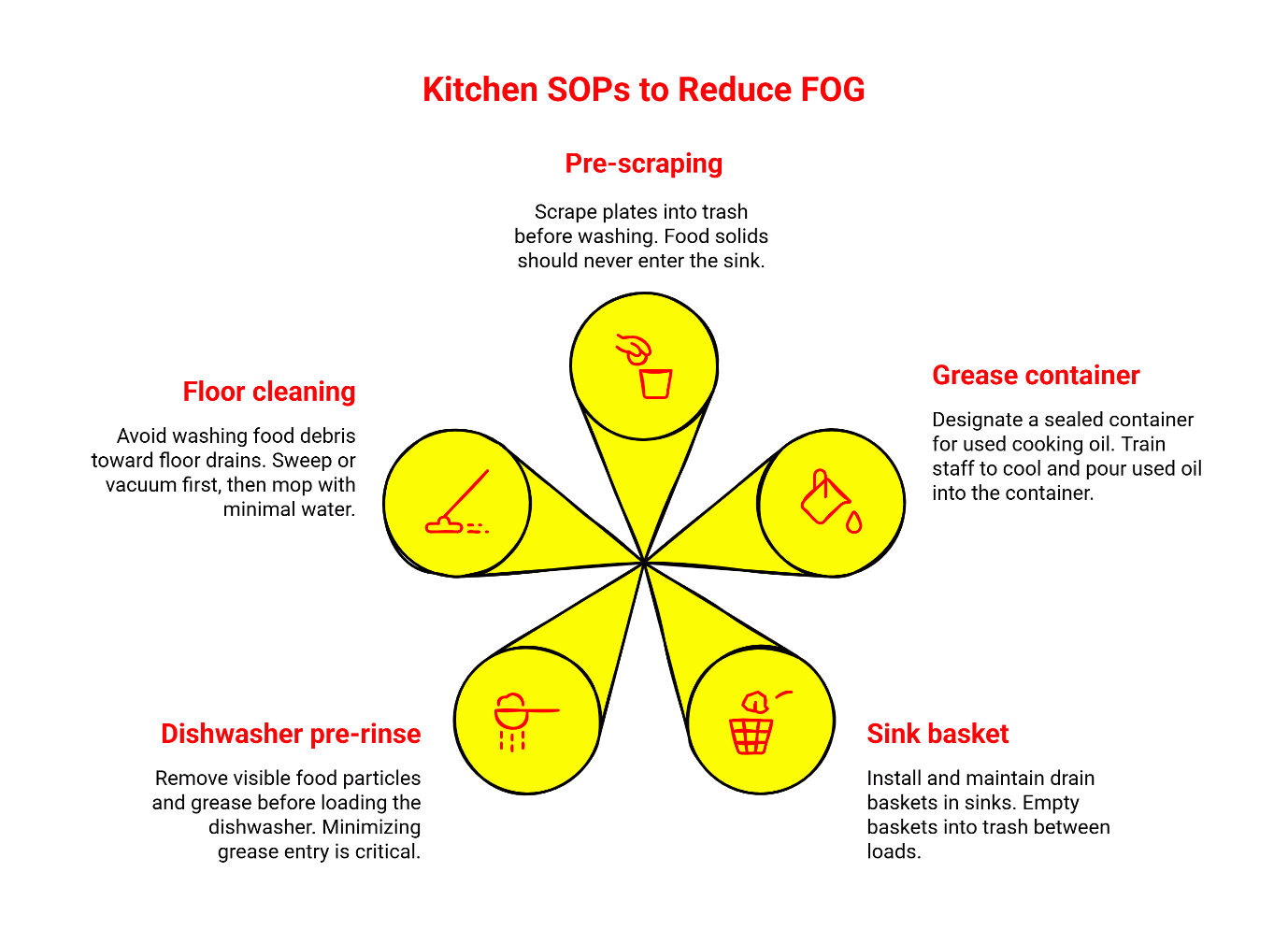
Kitchen Staff Training: Review proper disposal procedures for cooking oil, food scraps, and cleaning materials. Emphasize that small daily habits significantly impact trap performance and service frequency requirements.

Practical Measures: Install grease collection containers for used cooking oil, provide scrapers for plate cleaning before washing, and establish protocols for disposing of oil-heavy food waste. These simple measures can extend service intervals and reduce emergency calls.

Week 4: Review Schedule and Phone-Tree for Issues

Finalize ongoing maintenance schedules and establish communication procedures for addressing problems before they become operational emergencies.

Schedule Confirmation: Confirm recurring service appointments with your chosen provider and add these dates to restaurant calendars with prep reminders. Establish procedures for rescheduling service when conflicts arise with special events or peak periods.

Emergency Procedures: Create contact information for after-hours service and establish decision protocols for determining when emergency service is necessary versus manageable until the next scheduled visit.

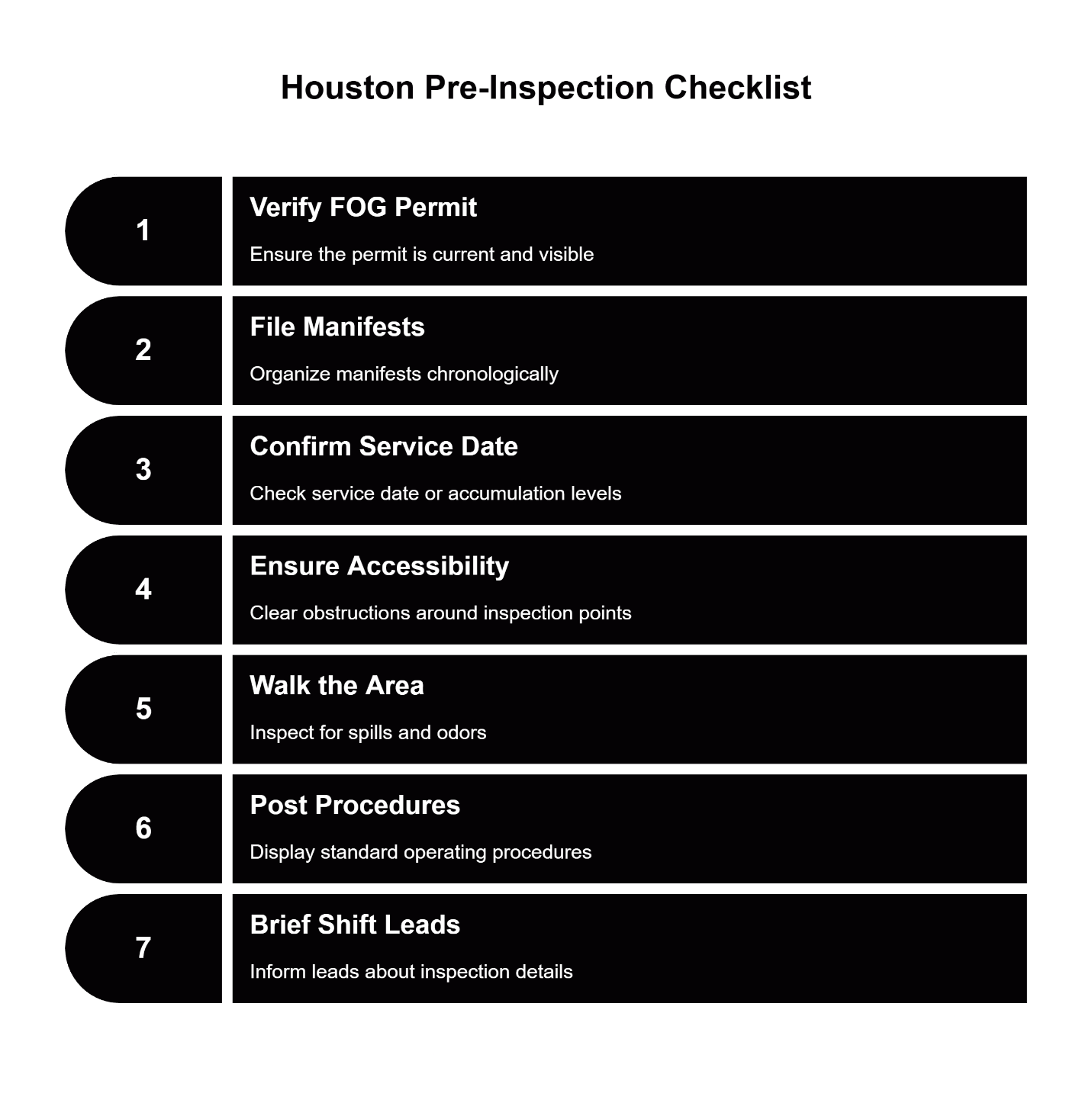
Pre-Service Kitchen Prep Checklist

Service Day Preparation

  • Clear access path to grease trap location
  • Confirm service timing avoids peak kitchen operations
  • Designate staff member as service provider contact
  • Prepare manifest filing system for new documentation

Provider Selection Mini-Checklist

Essential Service Components

  • Complete pump-out and physical scrape-down included
  • Written manifests provided after each visit
  • Transparent pricing with no hidden disposal fees
  • Emergency service availability with clear rates


FAQ: Straight Answers for Busy Managers

How often should Houston restaurants clean their grease traps?

Most restaurants start with 90-day intervals and adjust based on volume, menu, and trap size. High-volume operations with extensive fried food menus typically require 60-75 day intervals, while smaller operations might extend to 120 days. Your service provider can help determine the optimal frequency based on actual trap conditions observed during visits.

Does cleaning automatically mean compliance?

Regular cleaning is essential for compliance, but restaurants also need proper documentation through manifests and records demonstrating appropriate disposal. Professional service providers help maintain compliance by following proper procedures and providing necessary documentation, but restaurants should understand their role in maintaining records and scheduling appropriate service intervals.

What’s included in a professional service visit?

Complete service includes pump-out of all liquids, physical scraping of solidified deposits, high-pressure rinsing, basic system inspection, and manifest documentation. This comprehensive approach differs from simple pump-out services that may leave residual buildup contributing to faster reaccumulation.

What are signs you need service sooner than scheduled?

Slow drainage throughout the kitchen, persistent odors near the trap area, or visible grease accumulation in sink areas indicate the need for immediate service. Changes in menu offerings, increased customer volume, or extended busy periods may also require temporary schedule adjustments to prevent operational disruptions.

Do you accept hazardous waste or provide drop-off services?

Drane Ranger provides on-site service for non-hazardous wastewater only. We do not accept hazardous materials or provide drop-off facilities. Our grease, grit & lint traps service focuses on scheduled maintenance that keeps restaurant operations running smoothly while ensuring proper waste handling and disposal.

Taking Control of Your Kitchen’s Critical Systems

The difference between reactive and proactive grease trap management often determines whether a restaurant thrives during busy periods or faces costly shutdowns at the worst possible moments. By treating grease trap maintenance as operational insurance rather than deferred expense, Houston restaurant operators transform a hidden risk into a predictable, manageable aspect of successful operations.

Professional service providers like Drane Ranger help restaurant managers focus on what they do best—creating exceptional dining experiences—while ensuring critical infrastructure operates reliably behind the scenes. Our comprehensive approach includes complete cleaning, proper documentation, and ongoing support that helps restaurants maintain compliance and operational stability.

Ready to protect your Houston restaurant from unexpected shutdowns? Contact us today to discuss a maintenance schedule that fits your operation’s specific needs, or call us directly at 281-489-1765 to get started with reliable grease trap service.

Disclaimer This guide is for informational purposes only and does not constitute legal or permit advice. Drane Ranger helps Houston restaurants stay inspection-ready by providing documented, non-hazardous wastewater service.


Our Editorial Process

Every Insights Team article is reviewed for clarity and usefulness to busy operators. We update core guides as standards and best practices evolve.

About the Drane Ranger Insights Team

The Drane Ranger Insights Team is our dedicated engine for synthesizing complex topics into clear, helpful guides. While our content is thoroughly reviewed for clarity and accuracy, it is for informational purposes and should not replace professional advice.

How to Budget for Grease Trap Cleaning in Your Annual Restaurant Maintenance Plan

Key Takeaways:

  • Budget Beyond Basic Service: Grease trap cleaning costs include service frequency, labor complexity, disposal fees, equipment factors, and mandatory documentation requirements – making comprehensive budget planning essential for avoiding cost overruns.
  • Compliance Drives Costs: Regulatory requirements mandate specific cleaning schedules and documentation that aren’t optional budget considerations, with emergency cleaning services costing substantially more than scheduled maintenance when compliance lapses occur.
  • Strategic Budget Framework: Effective budgeting requires baseline service costs plus seasonal adjustments plus meaningful contingency reserves, organized into clear categories that align with organizational accounting practices for management approval.
  • Vendor Relationships Matter: Service reliability and compliance support should weigh heavily in vendor selection, with contract structures balancing cost predictability and operational flexibility while including performance monitoring for long-term cost control.

This comprehensive approach to grease trap maintenance budgeting helps facility managers avoid costly surprises while maintaining regulatory compliance and demonstrating professional competence in maintenance planning.

That single grease trap emergency just cost you several times your annual cleaning budget.

Now you get it. The importance of proper maintenance planning hits differently when you’re explaining budget variances to senior management while dealing with regulatory fines and operational disruptions that could have been avoided.

You’re not just managing costs anymore. You’re protecting your professional reputation.

The real challenge? It’s not simply knowing what grease trap cleaning costs. Anyone can get a quote. The complexity lies in understanding every factor that influences those costs – from shifting regulatory requirements to emergency situations that seem to appear out of nowhere.

This guide walks you through building a comprehensive budget framework that ensures compliance, controls costs, and demonstrates your competence in maintenance planning. We’ll cover the essential cost components you need to account for. The regulatory compliance implications that directly affect your budget. Practical frameworks for creating accurate annual maintenance plans.

By the end, you’ll have the tools to develop vendor relationships that support budget predictability and justify your maintenance expenses to senior management with confidence.


Understanding Grease Trap Cleaning Cost Components
Grease trap cleaning costs vary by size, frequency, labor, disposal, and regulatory documentation needs.

Grease trap cleaning costs extend far beyond that basic service fee on the invoice.

Understanding these components helps you build more accurate budgets. More importantly, it helps you avoid those surprises that can completely derail your financial planning.


Service Frequency Requirements

Different jurisdictions establish grease trap cleaning schedules that vary considerably. Your local health department regulations and environmental requirements drive these decisions. The specific intervals depend on multiple factors.

Facility characteristics matter. Usage patterns matter. Local regulatory frameworks definitely matter.

A busy restaurant kitchen needs more frequent service compared to a corporate cafeteria with lighter usage. But here’s what you need to know: the exact requirements should always be verified with your local health department. Always.

Trap size influences both cleaning frequency and cost considerations in ways that might surprise you. Larger traps cost more per cleaning session, true. But they could potentially allow for longer intervals between services due to their capacity.

Smaller traps? They require more frequent attention but generally involve lower costs per individual service. The relationship between size and frequency varies significantly depending on your specific jurisdiction’s regulations and your facility’s usage patterns.


Labor and Disposal Cost Factors

Labor costs fluctuate based on accessibility and complexity factors. Traps located in hard-to-reach areas command higher rates. Basements. Areas requiring special equipment access. Some facilities require after-hours service to avoid disrupting operations.

That typically adds a substantial premium to standard rates.

Disposal fees constitute a notable portion of total service costs, though the exact proportion varies considerably by region and local market conditions. The waste must be transported to approved facilities. Disposal rates fluctuate based on local regulations, facility capacity, and regional environmental requirements.

These costs can differ substantially depending on your location and the availability of approved disposal facilities in your area. Substantially.

[ILLUSTRATIVE EXAMPLE]

Consider a mid-sized restaurant with a grease trap requiring regular cleaning. The base service might be priced at one rate. But factors like ground-level accessibility (reducing labor time), standard business hours availability, and proximity to disposal facilities all contribute to the final cost structure.

Additional considerations include waste volume variations based on seasonal business fluctuations and menu changes that affect grease production.

[END EXAMPLE]


Equipment and Documentation Factors

Cleaning services may include documentation components for regulatory compliance. The way these costs are structured varies among providers. Some include administrative requirements within their standard pricing. Others itemize these services separately.

This documentation provides essential protection during health department inspections, regardless of how it’s billed.

Equipment factors also influence pricing structures significantly. Vacuum trucks, pumping systems, and specialized cleaning tools all impact service costs. Providers with newer, more efficient equipment may charge premium rates.

But they often complete work faster and with less disruption to your operations. That’s worth considering.

+——————————————————————————————————-+

đź’ˇ Quick Takeaways

  • Frequency Variations: Cleaning requirements vary significantly by jurisdiction and should be verified locally
  • Multiple Cost Factors: Accessibility, timing, and disposal considerations impact total expenses beyond basic service rates
  • Documentation Approaches: Compliance support may be bundled or separate, but remains essential for regulatory protection

+——————————————————————————————————-+


Regulatory Compliance and Budget Implications

Compliance represents a fundamental budget consideration that protects your operation from costly violations.

And potential shutdowns.

Understanding how regulatory requirements affect your specific situation helps you plan accurately and avoid emergency expenses that can devastate your budget.


Mandatory Cleaning Requirements and Associated Costs

Health departments establish minimum cleaning requirements that function as legal mandates. With specific financial implications.

These requirements typically consider various factors that may include facility characteristics, usage volume, waste generation patterns, and local environmental conditions. The specific criteria used to determine cleaning frequencies should be confirmed with your local regulatory authority.

These can vary substantially between jurisdictions. Substantially.

Failure to maintain required cleaning schedules results in violations. Fines. In severe cases, temporary closure orders. The costs extend beyond cleaning services to include documentation requirements such as cleaning certificates, waste disposal manifests, and maintenance logs.

These administrative components are essential for demonstrating compliance during inspections. The cost structure may vary among service providers, but the necessity doesn’t.

Emergency cleaning situations arise when regular maintenance schedules are missed or when unexpected issues occur. These emergency services typically cost substantially more than scheduled maintenance.

Making contingency planning essential for accurate budget development.


Documentation and Reporting Considerations

Compliance documentation requires systematic record-keeping that involves varying cost structures depending on your service provider and local requirements.

Digital tracking systems. Certified disposal receipts. Inspection preparation. All contribute to your total compliance expenses.

The specific documentation requirements and associated costs should be verified with both your local health department and potential service providers. Both sources matter.

This documentation serves multiple purposes beyond regulatory compliance. These records help you track performance trends. Identify potential issues before they become emergencies. Provide historical data for budget planning.

When properly maintained, documentation can support more predictive maintenance approaches.

[ILLUSTRATIVE EXAMPLE]

A facility manager discovers during an annual review that their cleaning service hasn’t been providing proper documentation for waste disposal certificates. Retroactively obtaining these certificates involves additional administrative processes. The gap in documentation raises questions during the next health inspection.

This situation demonstrates how inadequate documentation planning can create unexpected budget pressures and compliance risks.

[END EXAMPLE]

Facilities must comply with applicable regulations that may include state requirements, local health department standards, and environmental regulations specific to their region.

The complexity and cost implications of these requirements can vary considerably based on your geographic location and should be researched thoroughly during budget planning.

+——————————————————————————————————-+

đź’ˇ Quick Takeaways

  • Local Verification Required: Compliance schedules must be confirmed with your specific regulatory authority
  • Emergency Cost Premium: Missed maintenance typically results in substantially higher costs for urgent services
  • Geographic Variability: Local regulations create specific budget considerations that require area-specific research

+——————————————————————————————————-+


Building Your Annual Maintenance Budget Framework
Build grease trap budgets by factoring regular service, seasonal shifts, cost trends, and emergency reserves.

Creating an accurate grease trap cleaning budget requires a systematic approach. One that accounts for regular maintenance, compliance costs, and contingency planning.

This framework helps you develop credible projections that gain management approval.


Cost Estimation Methodologies

Begin with your baseline service requirements by researching the specific cleaning frequency required in your jurisdiction. Calculate initial annual projections by multiplying your required cleaning frequency by estimated per-service costs obtained from local providers.

However, this represents only the starting point for comprehensive budget planning.

Consider seasonal variations that might affect both service needs and costs. Restaurant operations often experience increased activity during holidays and peak seasons, potentially requiring adjustments to standard cleaning schedules. These seasonal considerations might influence your annual calculations.

The specific impact depends on your local regulations and operational patterns.

Plan for reasonable annual cost increases in multi-year budget development. Service costs typically increase due to various factors including labor, fuel, and disposal fee inflation.

Researching historical cost trends with local providers helps maintain budget accuracy over time. This research pays dividends.


Emergency Reserve Planning and Contingency Development

Emergency situations occur regularly in facility management.

Grease trap failures. Unexpected blockages. Compliance violations requiring immediate attention. These can quickly exceed regular maintenance budgets.

Establishing an appropriate contingency reserve above your regular maintenance costs provides protection against these scenarios. Protection you’ll eventually need.

Contingency planning should account for different types of potential emergencies. Minor issues might require additional cleaning services. Major problems could necessitate equipment repairs or replacements involving coordination with multiple vendors.

[ILLUSTRATIVE EXAMPLE]

A corporate facility with multiple kitchen areas develops a tiered budget approach. Their base budget covers regular cleaning for all locations based on local regulatory requirements.

A secondary tier accounts for high-usage locations that might require additional services during peak periods. The third tier represents their emergency reserve, calculated as a substantial percentage of total regular maintenance costs.

This structure provides flexibility while maintaining cost control across different operational scenarios.

[END EXAMPLE]


Budget Allocation Strategies

Organize your budget into clear categories that align with organizational accounting practices.

Separate regular maintenance costs from compliance-related expenses and emergency reserves. This categorization helps justify expenses to management and provides better cost tracking throughout the year.

Consider whether to spread costs evenly throughout the fiscal year or concentrate them during specific periods based on your organization’s cash flow patterns. Some facilities prefer quarterly payments to service providers. Others opt for annual contracts with monthly billing arrangements.

Document your methodology and assumptions for management review. Clear explanations of how you calculated costs, what factors influenced your projections, and what risks your budget addresses demonstrate professional competence.

And support approval processes.

+——————————————————————————————————-+

đź’ˇ Quick Takeaways

  • Research-Based Foundation: Base costs on local provider quotes and jurisdiction-specific requirements plus seasonal considerations
  • Emergency Preparation: Reserve substantial funds above regular costs for unexpected maintenance situations
  • Clear Organization: Separate regular, compliance, and emergency costs for effective management communication

+——————————————————————————————————-+


Vendor Selection and Contract Management for Budget Control

Effective vendor relationships directly impact budget predictability and service quality.

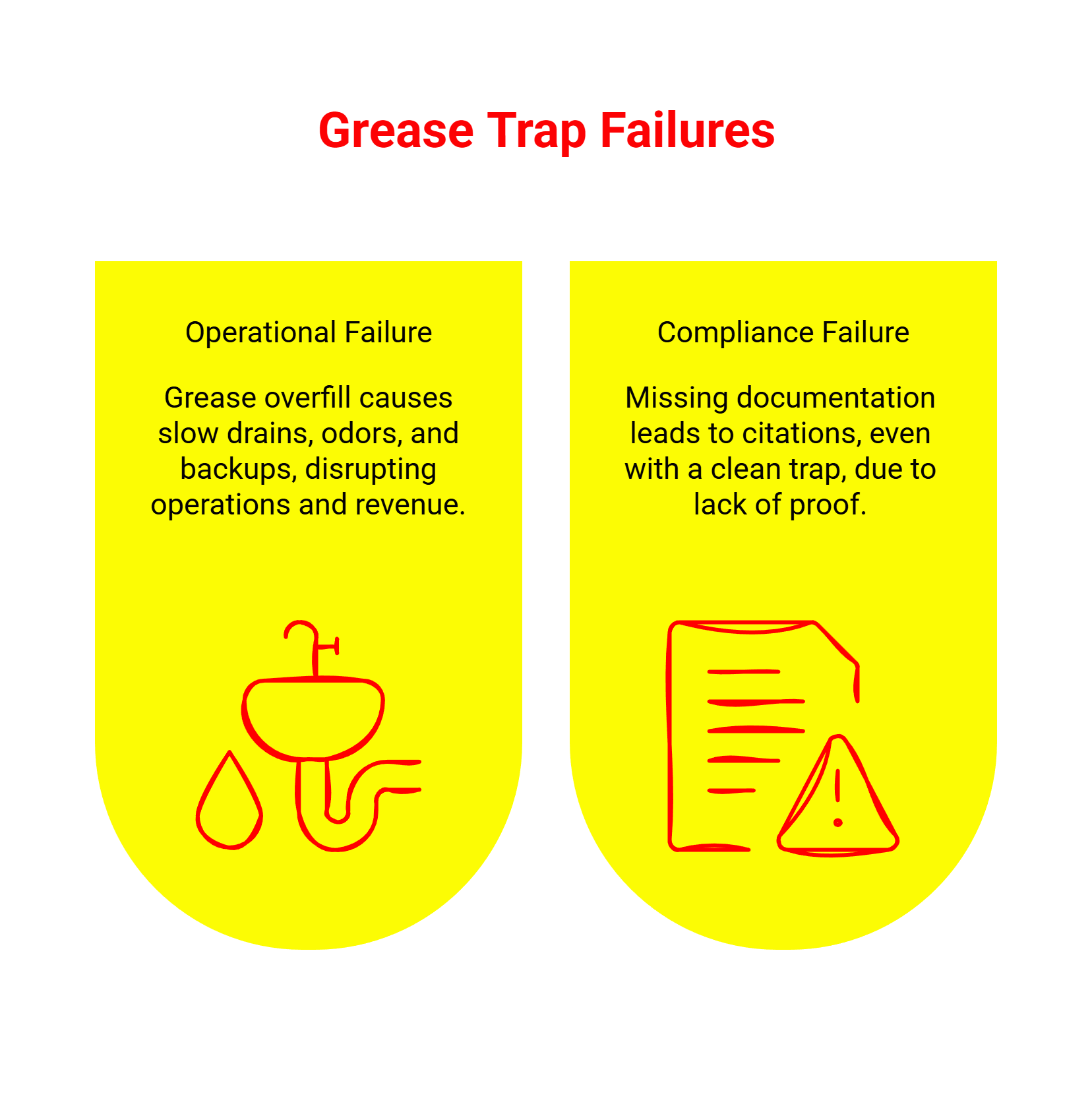
The right partnerships provide cost stability while ensuring reliable compliance support. The wrong ones create expensive headaches.
 

Evaluation Criteria for Service Providers

When evaluating grease trap cleaning vendors, cost represents an important consideration but shouldn’t be the only factor.

Reliable service prevents emergency situations that can far exceed any savings from choosing the lowest bidder. Look for providers with proper licensing, insurance, and established local presence.

Service capability assessment should include their equipment quality, disposal facility relationships, and documentation systems. Providers with modern equipment often complete work more efficiently, reducing operational disruption.

Those with established disposal partnerships typically offer more predictable pricing for waste management.

Response time for emergency situations represents a critical evaluation factor. Vendors who can provide emergency service within reasonable timeframes help minimize operational disruptions and potential compliance violations.

This capability often justifies premium pricing through risk reduction.


Contract Structuring for Budget Predictability

Fixed-price annual contracts provide budget certainty. They may include higher per-service costs to account for vendor risk.

Variable pricing based on actual service needs offers potential savings but requires more complex budget planning with contingency reserves.

Consider contracts that include service level agreements for response times, documentation requirements, and quality standards. These agreements protect your operations while establishing clear expectations for vendor performance.

Multi-year contracts can provide cost stability through agreed-upon pricing. Ensure they include reasonable escalation clauses that reflect actual cost increases rather than arbitrary percentage increases.

[ILLUSTRATIVE EXAMPLE]

A facility manager negotiates a hybrid contract structure with their grease trap cleaning vendor. The agreement includes fixed pricing for regularly scheduled cleanings, with predetermined rates for additional services that might be needed during peak periods.

Emergency service rates are also established upfront, eliminating pricing surprises during urgent situations. This approach provides budget predictability while maintaining flexibility for operational needs.

[END EXAMPLE]


Performance Monitoring and Cost Control

Establish metrics for tracking vendor performance that align with your budget objectives.

On-time service delivery. Accurate documentation. Consistent pricing. All contribute to effective cost management.

Regular performance reviews help identify issues before they impact your budget or compliance status.

Monitor costs against your budget projections throughout the year. Tracking actual expenses versus planned costs helps you identify trends and adjust future budgets accordingly. This data also supports contract negotiations and vendor management decisions.

Document vendor performance for contract renewal discussions. Detailed records of service quality, cost variations, and compliance support provide objective criteria for evaluating contract terms and vendor relationships.

+——————————————————————————————————-+

đź’ˇ Quick Takeaways

  • Comprehensive Evaluation: Consider service reliability and compliance support alongside cost factors
  • Contract Flexibility: Fixed pricing provides budget certainty while hybrid approaches offer operational flexibility
  • Performance Documentation: Track vendor performance systematically for better contract management and cost control

+——————————————————————————————————-+


Implementing Your Grease Trap Cleaning Budget Successfully

Proper grease trap cleaning budgeting requires understanding cost components, regulatory compliance implications, and vendor management strategies.

Your budget should account for regular maintenance based on local requirements. Seasonal variations. Emergency reserves. Documentation needs.

The key to successful implementation lies in systematic planning that addresses both routine operations and unexpected situations. Emergency cleaning services typically cost substantially more than scheduled maintenance.

Making contingency planning essential for budget accuracy.

Remember that regulatory compliance represents a fundamental budget requirement that protects your operation and supports your professional reputation. Proper documentation and systematic record-keeping contribute to long-term cost control while ensuring regulatory compliance.

Effective vendor relationships provide the foundation for budget predictability and service reliability.

Contracts that balance cost control with service quality help maintain operational continuity while supporting your maintenance objectives.


Frequently Asked Questions


Q: How often should commercial grease traps be cleaned to meet regulatory requirements?

A: Cleaning frequency requirements vary significantly by jurisdiction and are typically based on multiple factors including facility characteristics and local health department regulations. Contact your local health department for specific requirements applicable to your facility.


Q: What factors most significantly impact grease trap cleaning costs?

A: Primary cost drivers include trap size, required cleaning frequency, waste disposal requirements, site accessibility, and local service provider rates, though the relative importance of these factors varies by region.


Frequently Unasked Questions


Q: How should emergency grease trap cleaning costs be factored into annual budgets?

A: Emergency services typically cost substantially more than scheduled maintenance, making contingency planning with appropriate reserve funds essential for budget accuracy.


Q: What documentation requirements affect grease trap maintenance budgeting?

A: Compliance documentation, service records, and waste disposal certificates may involve additional costs that should be researched with local providers and regulatory authorities during budget planning.

Disclaimer: This content is for informational purposes only and not intended as business advice. No business relationship is formed through this content. The information provided does not replace professional consultation. Please consult qualified business advisors for guidance specific to your organization’s situation.


Simplify Maintenance and Save with Professional Grease Trap Cleaning

Effective grease trap cleaning is essential to prevent costly emergencies and ensure regulatory compliance—giving you peace of mind and protecting your bottom line. With DraneRanger’s proven expertise and trusted service across Houston and surrounding areas, you can count on consistent, hassle-free maintenance that supports your operational goals.

Ready to take the stress out of grease trap maintenance? Contact us today to learn how our tailored cleaning solutions can help you control costs and stay compliant year-round.

Interested in more ways to optimize your facility’s wastewater management? Browse our website for detailed information on all our services and how they can work for you.