📌 Key Takeaways
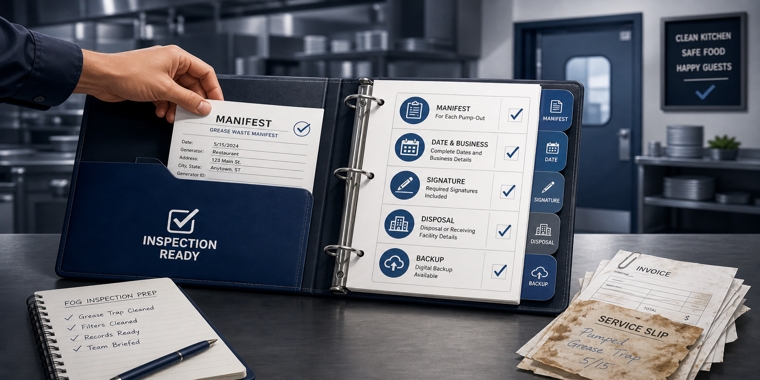
A quick grease trap paperwork check helps managers spot missing proof before an inspection creates bigger stress.
- Manifests Beat Invoices: An invoice proves payment, but a manifest helps show where the grease waste went.
- Check Every Pump-Out: Each grease trap service should have a matching manifest, not just a receipt.
- Missing Details Matter: Blank dates, missing signatures, and unclear disposal records can weaken your paperwork file.
- Fast Access Helps: A document is not inspection-ready if only one person knows where to find it.
- Simple Systems Last: A binder, digital backup, and monthly check can keep records easier to manage.
Good paperwork turns inspection panic into a file your manager can open with confidence.
Houston restaurant owners and general managers will gain a simple readiness check here, preparing them for the detailed overview that follows.
~ ~ ~ ~ ~ ~ ~ ~ ~ ~ ~ ~ ~ ~ ~ ~ ~ ~
Open the drawer now.
The grease trap binder is sitting under a stack of vendor invoices, a stained service ticket, and one loose form with a signature you cannot quite read. Then someone says “FOG inspection,” and the question lands fast: Do we actually have the paperwork?
You do not need to solve every compliance issue in the next five minutes. You need to find the obvious red flags. For Houston restaurant owners and general managers, FOG Manifest Readiness starts with one simple distinction: an invoice shows that you paid someone; a manifest helps document where the grease waste went.
Houston sources identify restaurants and food dealer establishments with grease traps as special waste generators, and the Houston Permitting Center states that interceptors in incorporated Houston city limits must generally be fully evacuated at least quarterly, or every 90 days, unless an approved waiver applies. (Houston Permitting Center) The paperwork matters because inspectors may ask for FOG permits, waste manifests, invoices when applicable, waivers when applicable, and previous inspection copies. (Houston Consumer)
Before the paperwork becomes a problem, check it.
Before You Start: Grab the Right Stack of Paper
Pull together the documents you already have. Do not judge the system yet. Just gather the stack.
Start with grease trap service invoices, waste manifests, returned generator copies, FOG permit paperwork, and previous inspection documents if you have them. Check the office drawer, the back-office binder, the email inbox, and any shared digital folder before deciding something is missing.
The first pass is simple: separate proof of payment from proof of disposal. A waste manifest is not just a receipt. The Houston Health Department’s Waste Generator FAQ describes a waste manifest as an official government document completed every time an interceptor is cleaned. (houstonhealth.org)
For a deeper explanation of the broader FOG manifest chain-of-custody requirements, treat that as the next step. Right now, stay with the five-minute check.
The 5-Minute FOG Manifest Readiness Audit
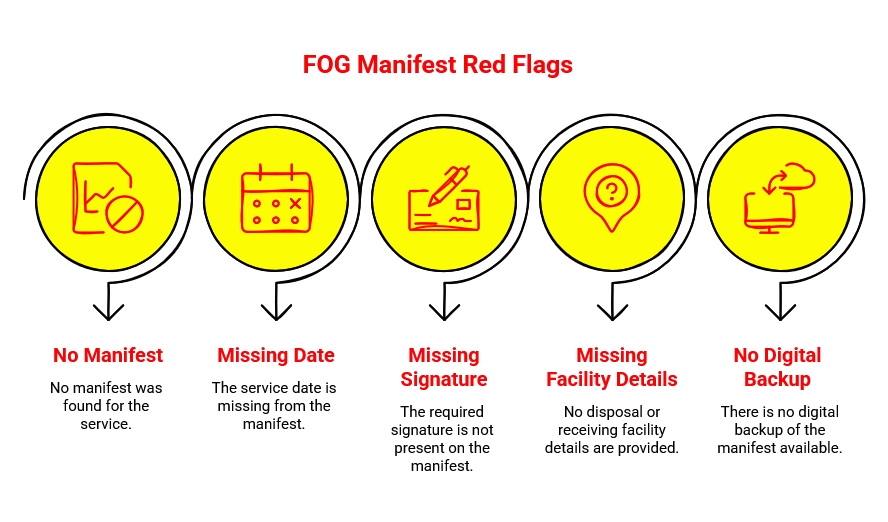
Print this quick scan or copy it into a manager checklist.
- Red Flag: No manifest found.
- Red Flag: Missing service date.
- Red Flag: Missing signature.
- Red Flag: No disposal or receiving facility details.
- Red Flag: No digital backup.
Now check the documents one by one.
1. Do You Have a Manifest for Each Pump-Out?
Match every grease trap service event to an actual waste manifest. An invoice may show that money changed hands. A manifest documents the waste handling trail.
A useful way to think about it: the manifest works like a certified passport for wastewater. It tracks the journey from the kitchen to the disposal site.
Why it matters: You cannot defend your paperwork position if you do not know what documents you actually have.
Red flag: You have invoices, receipts, or “service completed” slips, but no manifests.
Next action: Ask your vendor for returned generator copies. Then separate invoices from compliance records. If the difference still feels unclear, review manifesting vs. invoicing before your next service visit.
2. Are Dates, Business Details, and Service Details Complete?
Look for the service date, generator information, transporter information, waste type, and amount where available. Manifest formats can vary, but the basic record should tell a clear story.
The TCEQ model standards list common manifest information such as transporter details, generator information, collection date, waste type and amount, disposal location, receiving facility identification, received volume, and tracking information. (tceq.texas.gov)
Why it matters: A partly blank form forces the manager to explain what the document should have shown.
Red flag: The form is generic, partly blank, missing the service date, or missing business details.
Next action: Mark incomplete forms and request corrected documentation from the transporter or service provider.
3. Are Required Signatures Present?
A manifest without the right signatures is not a strong confidence-builder. Houston Health’s FAQ says the generator must sign the top portion of the manifest attesting that the entire content of the trap was removed. (houstonhealth.org)
Missing dates, missing signatures, or generic receipts indicate immediate exposure.
That does not mean one missing mark automatically proves a violation. It means the paperwork needs attention before an inspection turns a small gap into a stressful conversation.
Red flag: No generator signature, no transporter signature, or no returned copy.
Next action: Decide who signs manifests after each clean-out. Then decide who files them the same day.
4. Does the Paperwork Show Where the Waste Went?
This is the chain-of-custody idea in plain language. The paperwork should help show that the waste left your kitchen and went to the proper receiving or disposal facility.
A document that only says “grease trap cleaned” does not tell the full story.
Why it matters: FOG Manifest Readiness depends on proof of proper disposal, not just proof that a truck arrived.
Red flag: No disposal facility, receiving facility, deposit location, or returned generator copy appears in the file.
Next action: Ask the hauler what facility received the waste and whether the returned generator copy documents it.
If repeated paperwork gaps show up, it may be time to compare your current process with a documented commercial grease trap cleaning in Houston service approach.
5. Can You Retrieve Copies Quickly?
A document that exists “somewhere” is not ready. During an inspection, the useful file is the one a manager can produce without searching through three desks and an old inbox.
Houston Health Department materials state that yellow and white manifest copies for the past five years may be requested during inspection, and the special waste generator page says generator and returned generator copies should be kept onsite for five years. (Houston Consumer)
Why it matters: A lost physical binder should not create audit panic.
Red flag: Only one employee knows where the manifests are. Or the only copy is a stained binder in the back office.
Next action: Keep a physical binder and a digital backup. As a general recordkeeping principle, redundancy protects the business when staff changes, a shift gets rushed, or a folder gets misplaced.
For a fuller recordkeeping system, use this separate resource on how to organize your FOG manifests for a 5-year audit. Keep today’s task smaller.
What To Do If You Find a Red Flag
| If you find… | Do this next |
|---|---|
| Only invoices, no manifests | Request proper manifest copies from the vendor. |
| Missing signatures | Confirm who signed, then request corrected or returned copies. |
| Missing dates | Rebuild the service timeline from records. |
| No disposal or receiving information | Ask for the returned generator copy. |
| No five-year file | Start a current binder now and begin backfilling what you can. |
| A pattern of incomplete paperwork | Reconsider whether your current vendor is protecting your compliance position. |
Stay calm. Most operators are not paperwork specialists. The useful move is to identify the gap and fix the system before the next inspection or service visit.
Keep the System Simple So It Survives a Busy Kitchen
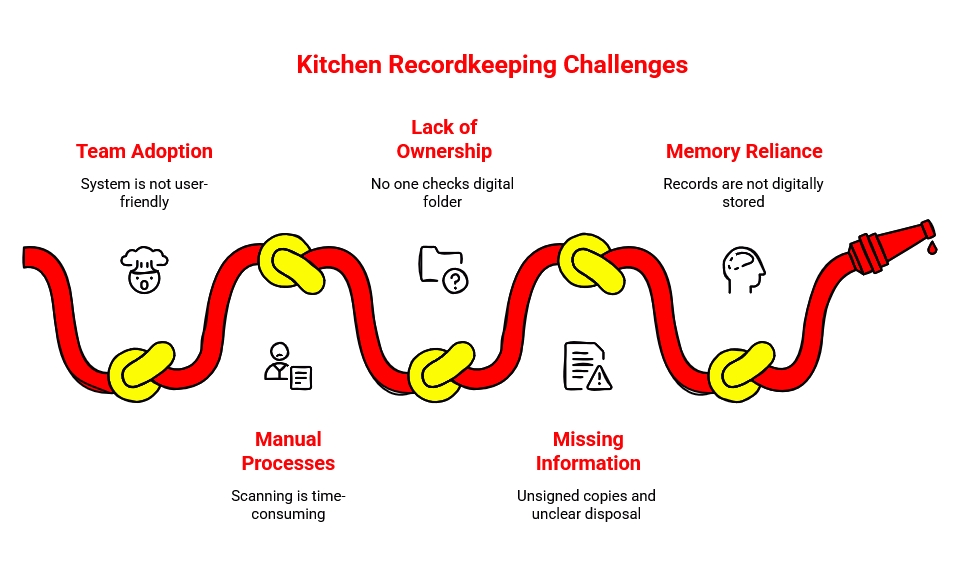
The best recordkeeping system is the one your team will actually use after a lunch rush.
Put the newest manifest at the front of the binder. Scan or photograph each manifest the same day it is received. Use a shared digital folder named by year. Assign one owner or manager to check the folder once a month.
That is enough for a practical first system.
Drane Ranger’s liquid waste compliance content emphasizes the full service cycle: assessment, removal, proper disposal, and documentation. That matters because good service history should not live only in one person’s memory. If your current records show missing manifests, unsigned copies, or unclear disposal information, schedule your next grease trap cleaning in Houston with documentation in mind.
FOG Manifest Readiness FAQs
Is an invoice the same as a FOG manifest?
No. Treat an invoice as proof of payment. Treat a manifest as documentation of waste handling.
How long should Houston restaurants keep grease trap manifests?
Houston Health Department materials state that generator and returned generator copies should be kept onsite for five years, and inspection document lists include yellow and white copies of waste manifests for the past five years. (Houston Consumer)
What should you check first on a manifest?
Check the date, generator details, transporter details, signatures, waste amount or type where listed, and receiving or disposal information.
What if you only have receipts from your pumper?
Treat that as a red flag. Ask for manifest copies, especially returned generator copies. Do not assume the receipt is enough.
Who is allowed to clean your interceptor in Houston?
Houston Health’s FAQ says an interceptor can be cleaned only by a waste transporter permitted with the Houston Health Department. (houstonhealth.org)
When should you call a professional?
Call when documents are missing, incomplete, unsigned, unclear, or no longer match the kitchen’s real service needs. Print the 5-point checklist first. Then review your current FOG manifest file before the next service visit.
If your paperwork is missing dates, signatures, returned copies, or disposal details, contact Drane Ranger or call 281-489-1765 to discuss compliant grease trap service documentation.
The goal is not perfect paperwork theater. The goal is a file your manager can open with confidence.
Disclaimer: This article is for general informational purposes only and is not legal advice. FOG, grease trap, and waste manifest requirements can vary by jurisdiction, business type, permit status, and inspection circumstances. Restaurant owners and managers should verify current requirements with the City of Houston, Houston Health Department, Houston Permitting Center, or a qualified compliance professional.
Our Editorial Process:
Our content is developed from a documented content strategy, reviewed against available brand materials, and checked against authoritative sources where regulatory or compliance claims are involved. We prioritize practical usefulness, clear explanations, local relevance, and evidence-supported guidance. When a claim depends on municipal rules, official program pages, or technical standards, writers should cite the relevant authority and avoid unsupported conclusions.
By: Drane Ranger Insights Team
Drane Ranger Vacuum Services has served the Greater Houston area since 1985, providing liquid waste management solutions including grease trap cleaning, grit trap cleaning, lint trap cleaning, septic services, lift station maintenance, vacuum truck services, and non-hazardous wastewater disposal support for local businesses and property owners.