
📌 Key Takeaways
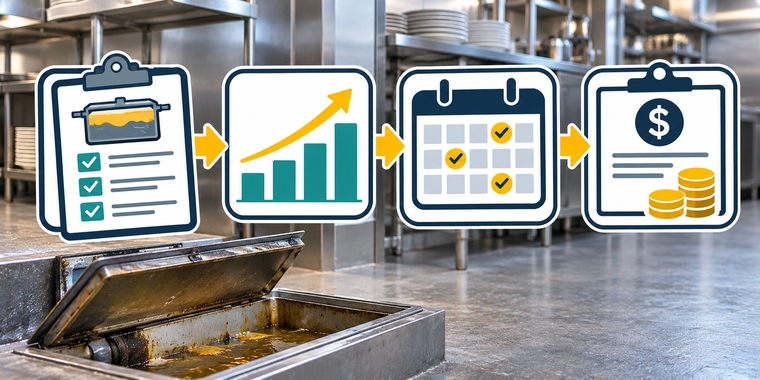
A reliable annual grease trap budget begins with a supported visit forecast, confirmed service costs, and documented assumptions that remain open to review.
- Kitchen Conditions Determine Frequency: Cleaning intervals depend on grease accumulation, kitchen activity, and system characteristics, alongside applicable requirements and documented provider recommendations.
- Historical Records Establish Baselines: Completed service records distinguish routine visits from unplanned work, helping managers assess whether previous cleaning patterns still reflect current operations.
- Service Scope Shapes Costs: Annual estimates combine expected visits with confirmed pricing for comparable work, accounting separately for documented variable charges or additional services.
- Drainage Symptoms Require Evaluation: Odors, gurgling, and slow drainage can indicate wastewater problems, but these symptoms alone do not establish that a trap is full.
- Operating Changes Warrant Review: Changes in food production, operating hours, menus, or service recommendations may justify reassessing the remaining visit forecast and maintenance allocation.
For restaurant owners, general managers, and finance-aware operators, comparing completed visits and invoices with the forecast provides a basis for investigating differences and updating future allocations.
An explainable maintenance budget connects the kitchen’s service needs with evidence that ownership can review.
~ ~ ~ ~ ~ ~ ~ ~ ~ ~ ~ ~ ~ ~ ~ ~ ~ ~
At 8:15 a.m., a restaurant manager reviews the annual maintenance budget. The printer hums beside a stack of grease trap cleaning invoices. The approved allocation looks familiar, but the service records reveal something unexpected: the kitchen needed more cleaning visits than the original budget anticipated.
The numbers worked last year. Why did the cleaning expenses change?
This scenario highlights a common budgeting trap for restaurant operators. An annual grease trap budget can look reasonable while relying on outdated assumptions about how frequently the kitchen requires service.
A reliable annual grease trap cleaning budget starts with the number of service visits the restaurant expects to need. Management should review historical cleaning records, assess current kitchen conditions, confirm appropriate service intervals and costs with the provider, and document the resulting allocation. The budget should then be reviewed when operating conditions change.
Annual grease trap budgeting comes down to four steps: estimating visit counts, allocating funds, tracking invoices, and adjusting when kitchen output shifts.
Think of it like preparing an annual staffing schedule. Before calculating labor expenses, a manager estimates the number of shifts the restaurant will need. Grease trap budgeting follows the same principle, except the units being forecast are maintenance visits.
With a documented cleaning forecast and known service costs, the manager can explain the proposed expenditure during an annual ownership review. More importantly, the restaurant has a basis for adjusting its maintenance plan as operating demands change.
Why a Fixed Annual Grease Trap Budget Can Fall Out of Sync With Kitchen Needs
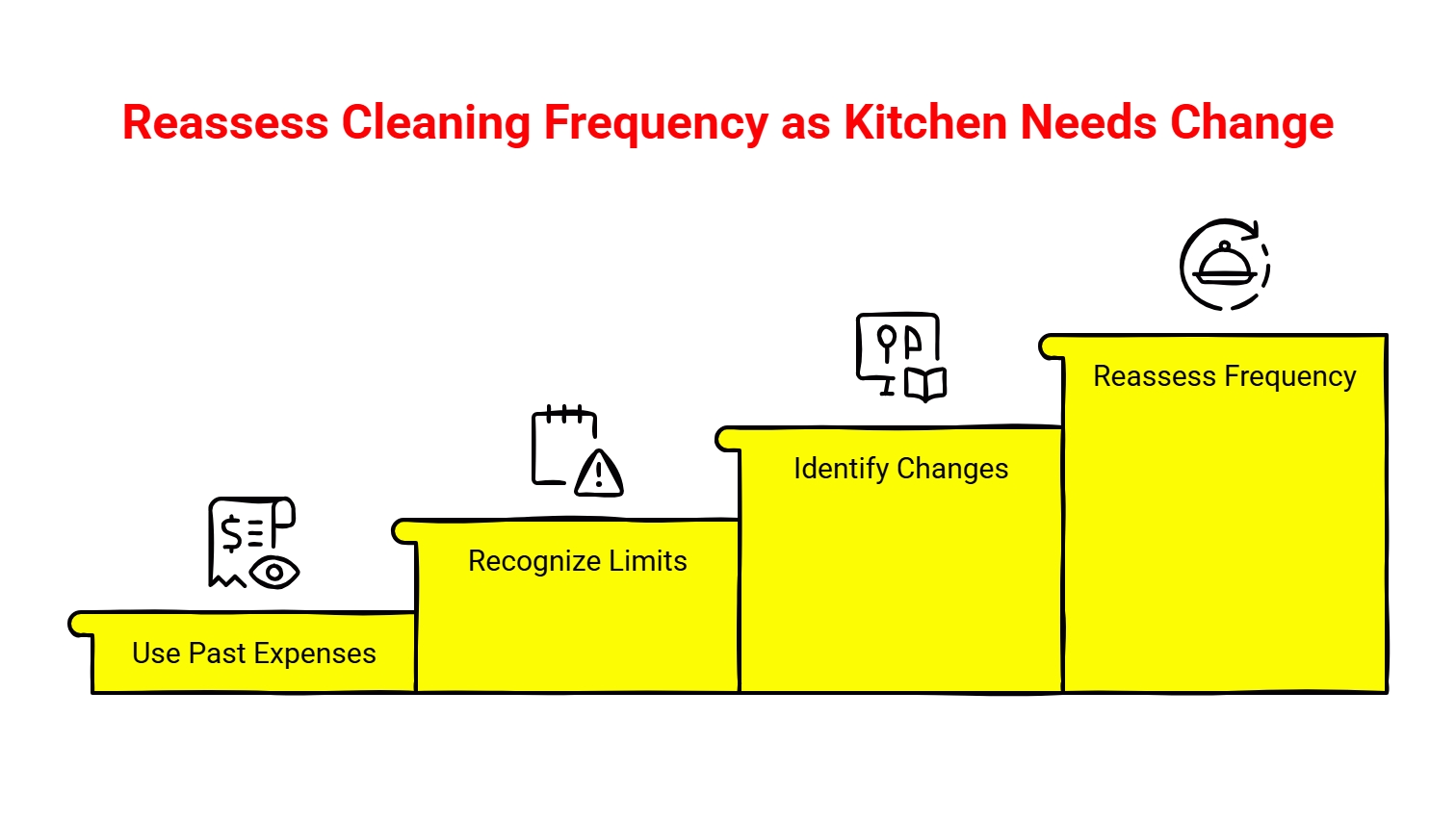
Many restaurants use the previous year’s expenses to prepare the next annual maintenance budget. This provides a practical starting point because historical invoices reflect actual spending.
However, previous expenditure does not necessarily represent future cleaning requirements.
A restaurant may extend its operating hours, introduce new menu items, expand catering operations, or increase kitchen production. These changes can affect the quantity of fats, oils, grease, and solids entering its wastewater system.
When kitchen activity changes, the cleaning frequency that previously worked may require reassessment.
The Problem With An Unchanged Cleaning Assumption
Consider a Houston casual-dining restaurant that built its maintenance budget around a steady lunch-and-dinner schedule.
The restaurant later expands dinner service. Food preparation increases, dishwashing activity intensifies, and the manager begins noticing recurring drainage concerns before scheduled cleaning visits.
The annual budget still reflects the previous service arrangement.
The difference between planned and actual cleaning requirements creates a budgeting problem. Additional maintenance expenses may need approval even though management already allocated money for recurring service.
This does not automatically mean the restaurant needs more frequent cleaning. The operating changes and drainage symptoms require evaluation before the schedule can be adjusted responsibly.
The lesson is that an inherited cleaning interval needs supporting evidence.
Why Minimum Service Intervals Do Not Tell The Whole Story
Regulatory requirements and operational cleaning needs serve different purposes.
Applicable regulations establish minimum obligations. Operational planning considers whether the restaurant’s actual grease accumulation and system conditions require more frequent attention.
Guidance from City of Houston Public Works on protecting wastewater systems and the Houston Health Department’s commercial grease trap regulations under Chapter 47, Article XI of the Houston Code of Ordinances provide official references for local grease management requirements. Under Houston’s commercial grease trap framework, food service establishments are generally required to have traps emptied at least every 90 days—or sooner if accumulation reaches the 25% threshold, unless a documented city variance applies—and must retain signed waste-hauler FOG manifests on-site for five years rather than relying solely on billing invoices during inspections. Restaurants should confirm which current requirements apply to their specific location and equipment.
Compliance with an applicable minimum interval does not establish that the same schedule will satisfy every kitchen’s operating needs.
A maintenance budget should therefore reflect both applicable requirements and documented, site-specific service recommendations.
The Real Budget Variable Is the Number of Cleaning Visits the Kitchen Needs
The relationship between cleaning frequency and annual maintenance expenditure is straightforward.
Grease trap cleaning frequency determines how many recurring service visits must be included in the annual maintenance budget.
Establishing that frequency requires examining the restaurant’s operating conditions.
Restaurant operating volume
Food preparation, cooking methods, and dishwashing practices influence the waste entering a commercial kitchen’s wastewater system.
An increase in restaurant activity may increase grease output, but the effect depends on what changes within the kitchen.
For example, adding a catering operation that prepares grease-intensive foods may affect the trap differently from increasing sales of products that generate relatively little grease.
Managers should examine meaningful operational changes instead of assuming that higher revenue automatically requires additional cleaning visits.
The Texas Commission on Environmental Quality’s guidance on reducing fats, oils, and grease in commercial kitchens provides practical context for understanding grease management in food service operations.
Grease and solids accumulation
Grease trap cleaning frequency should also reflect the accumulation of material within the system.
The amount of grease and settled solids collected between visits provides useful information about whether an existing schedule remains appropriate.
Under widely applied wastewater standards—including Houston’s 25% rule—a grease trap requires service once the combined layer of floating fats, oils, and grease (FOG) and settled solids reaches 25% of the unit’s total liquid depth. Beyond that threshold, the trap loses separation efficiency and risks discharging grease into municipal sewer lines, which is why high-volume kitchens often reach capacity within 30 to 60 days rather than lasting a full quarter.
A restaurant whose trap accumulates substantial material before the next scheduled appointment may need its cleaning frequency reassessed.
However, accumulation should be evaluated using actual service observations and appropriate professional guidance.
Odors, gurgling, or slow drainage can indicate a wastewater problem. They do not independently prove that the grease trap is full.
At 6:45 p.m., in another illustrative restaurant scenario, dishwashers are running while a manager notices unusually slow drainage.
The immediate responsibility is to document the condition and arrange an appropriate evaluation. Waiting for the next scheduled cleaning without investigating the issue may leave an active operational problem unresolved.
For a more detailed explanation of service timing, review how often a commercial grease trap should be cleaned in Houston.
Trap characteristics and access conditions
Grease traps vary in size, configuration, condition, and accessibility.
These characteristics can influence service requirements, including how equipment is accessed and what work is necessary during a cleaning visit.
System capacity and location also explain why two kitchens with similar menus can have very different visit math: a smaller-capacity indoor unit typically reaches the 25% accumulation threshold faster—often requiring service every 30 to 60 days in busy kitchens—whereas a larger outdoor grease trap holds greater waste volume and may run closer to a 90-day cycle while requiring more vacuum truck extraction and disposal capacity per visit.
A restaurant that modifies its wastewater system or changes access arrangements should confirm whether the original service scope remains appropriate.
Do not automatically assign additional costs to these changes. Ask the provider to explain whether they affect the cleaning arrangement or quotation.
Provider-defined service scope
The scope of a grease trap cleaning visit matters because a quoted price must correspond to identifiable work.
Management should confirm which traps are included, what services are covered, and how additional work is handled.
Drane Ranger describes its commercial grease trap cleaning services as suitable for businesses with recurring liquid waste management needs.
Its published information also explains that recurring service intervals are developed around waste volume, system type, and operating requirements.
This supports an important budgeting principle: service arrangements should reflect actual site conditions rather than relying exclusively on a uniform schedule.
Why Last Year’s Grease Trap Service Pattern Is Only a Starting Point
Historical cleaning records establish what happened during the previous planning period.
They can show when service was performed, what work was completed, and how much the restaurant spent.
They cannot independently establish whether the same pattern will remain appropriate.
Last year’s service history is evidence. It is not a permanent cleaning schedule.
A useful review begins by distinguishing completed scheduled visits from additional service requests.
For example, suppose a restaurant’s service log shows that an extra cleaning occurred after an unusual period of kitchen activity.
The manager should determine whether that operating change was temporary or represents the restaurant’s current workload.
If the increase in production is permanent, the cleaning schedule deserves reassessment. If the event was isolated, automatically adding another recurring visit may create an unsupported budget assumption.
The reason behind the additional work matters as much as the fact that it occurred.
What service records can establish
Available records may include:
- Service dates and intervals between visits.
- Recorded waste quantities and identified system issues.
- Disposal-facility information and service documentation.
- Provider recommendations about subsequent maintenance.
- Invoices showing the cost and scope of completed work.
Drane Ranger states that its service documentation includes service dates, waste quantities, disposal information, and identified system issues. Its published information also describes maintaining customer service histories and scheduling upcoming appointments.
The completeness of individual records can vary. Missing information should be identified rather than reconstructed through guesswork.
Service documentation also serves different purposes. Invoices support expenditure analysis, while waste transport records document aspects of waste handling and disposal. Neither document alone establishes that the restaurant’s cleaning frequency is appropriate.
An attributed customer testimonial from Harold R. describes being informed during a Drane Ranger service visit and receiving guidance about the next cleaning time.
That feedback illustrates the value of clear communication about future service. It does not demonstrate a particular financial saving or establish the appropriate schedule for another restaurant.
How to Build an Annual Grease Trap Visit Forecast From Existing Records
The goal is to convert historical service information into a documented forecast that reflects current kitchen conditions.
The following process establishes a practical sequence for restaurant owners, general managers, and finance-aware operators.
- Review prior service visits
Collect records for completed grease trap cleaning visits during the previous planning period.
Arrange them chronologically and distinguish routine appointments from unplanned work.
Check the records against invoices so the service history reflects completed activities rather than appointments that were merely scheduled.
- Compare historical visits with current kitchen activity
Review changes in operating hours, meal preparation, menu composition, and production volume.
Identify changes that occurred after the original service schedule was established.
Record the relevant operating conditions without automatically assigning additional cleaning visits.
- Examine provider notes and recommendations
Review service reports for observations about grease accumulation, equipment condition, and recommended cleaning intervals.
Compare the provider’s recommendations with the actual service pattern.
Where records are incomplete, identify the missing information.
- Identify site and service scope changes
Check whether equipment, access conditions, or cleaning requirements have changed.
Confirm whether the historical service arrangement covers the same work expected during the next planning period.
An unchanged visit count does not guarantee an unchanged scope of service.
- Confirm unresolved information with the provider
Ask the provider to review relevant operating changes and available cleaning records.
Confirm the recommended frequency, service scope, and current applicable charges.
Document the response so the forecast does not depend on an unverified verbal assumption.
- Estimate the expected annual cleaning visits
Use the supported service interval to identify the visits expected during the upcoming budget year.
Count the planned appointments within that period.
Where the recommended frequency has not been confirmed, record the provisional visit count as an assumption rather than presenting it as a verified requirement.
- Apply documented service costs
Calculate the expected recurring expense using confirmed quotations or approved service arrangements.
Check whether additional work, variable charges, or separate service categories require distinct calculations.
Do not substitute historical prices for current quotations without confirming their continued applicability.
- Document the allocation assumptions
Record the expected visit count, the evidence supporting it, the pricing basis, and the unresolved questions.
Assign responsibility for obtaining any outstanding confirmation.
The record should allow another manager or owner to understand how the annual allocation was established.
- Revisit the forecast when operating conditions change
Compare actual completed visits with the approved schedule throughout the year.
Review meaningful differences in service frequency, scope, or expenditure.
Adjust the remaining forecast when documented conditions support a change.
Service-Record Review Checklist for Annual Grease Trap Budgeting
Annual Grease Trap Budget Record Review
Use this checklist before approving the annual grease trap maintenance allocation. Each item should be supported by available documentation or identified for further confirmation.
- List every documented grease trap cleaning visit from the prior planning period.
- Record the interval between completed visits.
- Note provider recommendations about the next cleaning date.
- Compare prior restaurant activity with current operating volume.
- Identify changes in kitchen throughput or grease-producing activity.
- Document recurring drainage, odor, backup, or accumulation concerns that affected service timing.
- Confirm changes to trap characteristics, access conditions, or service scope.
- Review available waste quantities, disposal details, and identified system issues.
- Separate scheduled visits from unplanned work and record the reasons for additional service.
- Compare actual visits and expenses with the previous forecast.
- Distinguish documented provider-quoted costs from unverified assumptions.
- Identify missing service records, unclear invoices, and questions requiring provider confirmation.
- Establish the expected annual visit count and record the supporting assumptions.
- Assign responsibility for unresolved questions and establish a point for reviewing the budget again.
A completed review should identify the restaurant’s documented service history, the basis for its annual visit forecast, and the information that remains uncertain.
For restaurants operating several locations, complete the assessment separately for each kitchen before consolidating the maintenance budget.
Turn the Visit Forecast Into a Reviewable Maintenance Allocation
Once management has established the expected number of cleaning visits, the next task is converting that forecast into an annual operating expense.
For comparable visits with a confirmed cost per service, the basic planning relationship is:
Annual Allocation = Expected Visits × Documented Cost per Visit
This formula is a budgeting framework, not a guarantee of final expenditure.
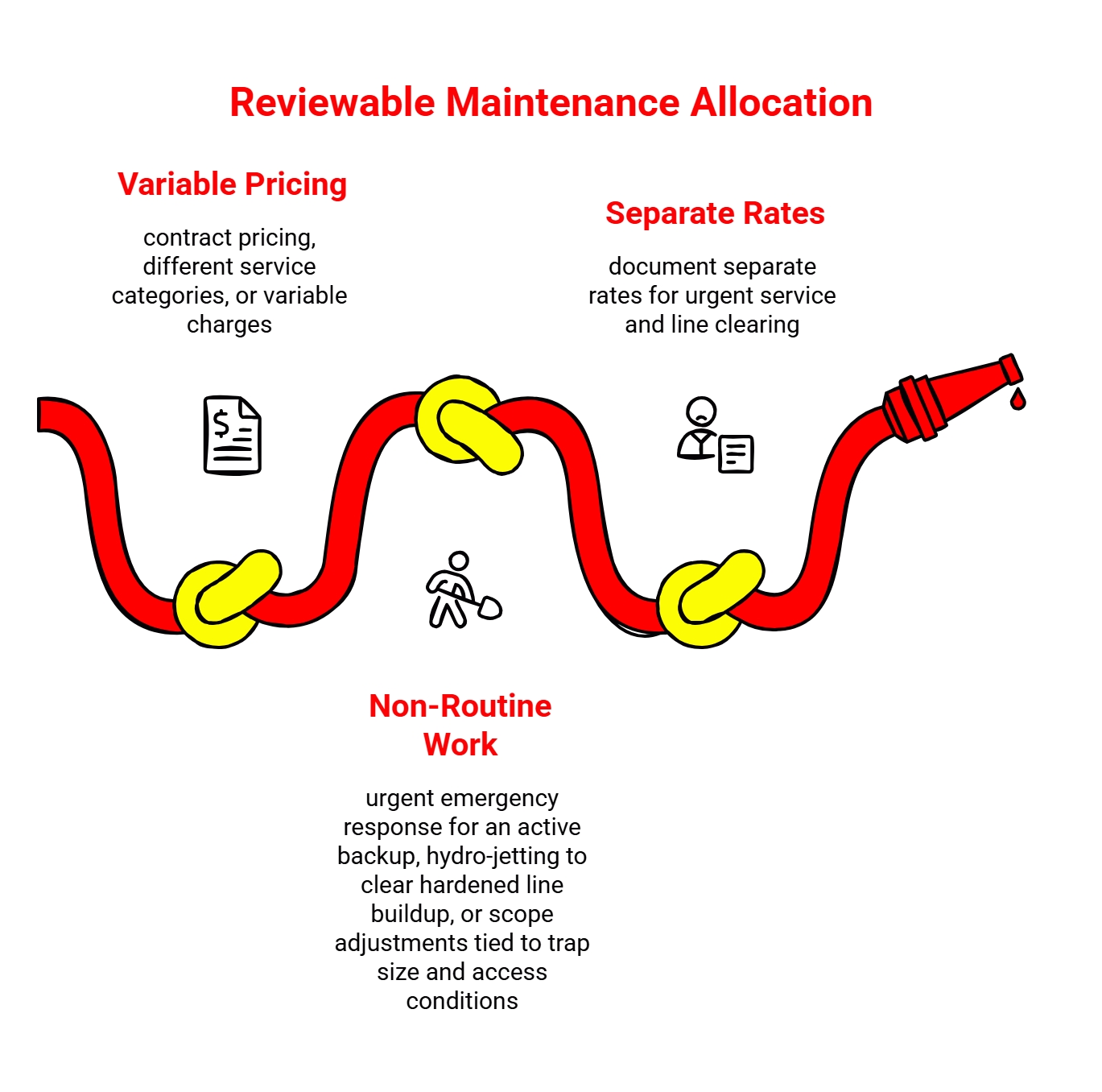
If the provider uses contract pricing, different service categories, or variable charges, the calculation should reflect those documented arrangements instead.
In practice, total annual spend often diverges from a base per-visit quote when non-routine work enters the picture—such as urgent emergency response for an active backup, hydro-jetting to clear hardened line buildup, or scope adjustments tied to trap size and access conditions. Rather than padding the worksheet with an arbitrary percentage, managers should ask their provider to document separate rates for urgent service and line clearing alongside the recurring pump-out quote.
Why The Lowest Individual Service Price May Not Produce The Lowest Annual Cost
A lower per-visit charge does not establish the total annual expenditure.
The restaurant must also know how many visits it reasonably expects to require and what each quoted service includes.
Two providers may quote different amounts because the scope of work differs. Alternatively, the same provider may charge differently for work outside an approved recurring arrangement.
Comparing individual prices without understanding those differences can produce an unreliable annual estimate.
A sound financial comparison therefore considers the expected visit count, documented service scope, and applicable pricing together.
Make the allocation defensible to ownership
A concise budget record should show how management reached its recommendation.
| Planning component | Evidence needed |
| Historical baseline | Completed visits and recorded expenditure |
| Current operating conditions | Documented changes in kitchen activity and system condition |
| Expected annual visits | Supported service schedule and provider recommendations |
| Cost basis | Current quotations or approved service arrangements |
| Outstanding questions | Unverified assumptions and responsible person |
| Future review | Date or operational event prompting reassessment |
This record distinguishes three levels of certainty.
Verified information includes completed service dates, recorded invoices, and documented provider recommendations. These establish what occurred and what has been communicated.
Planning assumptions include the expected number of future cleaning visits. They represent management’s forecast based on the available evidence.
Site-specific uncertainties include unresolved questions about future grease accumulation, changes to service scope, and charges not covered by an existing quotation. These require confirmation rather than unsupported estimates.
This distinction helps owners evaluate the proposed maintenance allocation without confusing historical facts with future expectations.
For general managers, the same record supports service coordination and operational accountability. Finance-aware operators can use it to compare forecast expenditure with actual expenses and investigate meaningful variances.
The objective is a budget that can be explained and updated.
When Restaurant Operations Change, Review the Grease Trap Budget Again
An annual grease trap maintenance budget should remain responsive to changes in restaurant operations.
Approval at the beginning of the year does not mean the underlying service assumptions should remain unchanged.
Review changes in kitchen volume
When food production, operating hours, or menu composition changes materially, compare the new conditions with those used to establish the existing service schedule.
The change may justify discussing cleaning frequency with the provider.
The appropriate adjustment depends on actual operating conditions and the system’s maintenance needs.
Investigate recurring operational symptoms
Recurring odors, drainage restrictions, or backup concerns should prompt an appropriate assessment.
These symptoms can have different causes. They should not automatically be attributed to an overdue grease trap cleaning.
Record what occurred, when it appeared, and whether the pattern has repeated since the previous service.
Use the findings to decide whether the cleaning schedule needs reassessment or whether another issue requires attention.
Reassess provider recommendations and service scope
A change in the recommended cleaning interval can affect the remaining annual visit forecast.
Similarly, altered access conditions or additional required work may affect the cost basis.
Confirm those changes before updating the budget.
Compare forecast expenditure with actual results
During a budget review, compare planned service visits with completed visits and approved expenditure with invoiced amounts.
Investigate the reasons for significant differences.
If additional visits are consistently required, determine whether the original frequency assumption needs revision.
If fewer visits occurred than planned, establish whether the difference reflects changing operating conditions, missed appointments, or another documented reason.
An annual maintenance allocation is more useful when management treats these differences as information for future planning.
A Better Annual Grease Trap Budget Is One You Can Explain
Return to the restaurant manager reviewing the budget worksheet beside the printer.
The original problem was not simply that expenses exceeded expectations. The restaurant had relied on a cleaning assumption that no longer adequately explained its maintenance requirements.
A documented approach changes that conversation.
Management can identify where the expected visit count came from, which operating conditions informed it, what service costs are confirmed, and which assumptions require further review.
That creates a stronger basis for discussing annual maintenance expenditure with ownership while maintaining attention to kitchen operations.
Before carrying the same allocation into another year, review recent cleaning records, compare actual visits with planned service, and assess whether current restaurant activity still supports the existing schedule.
For additional information about coordinating service intervals, review Houston restaurant grease trap maintenance schedules.
When site-specific frequency, service scope, or pricing remains uncertain, discuss the restaurant’s operating conditions and service history with Drane Ranger’s Houston grease trap cleaning team.
A defensible annual grease trap budget begins with the kitchen’s maintenance requirements, uses documented evidence to establish expected visits, and remains open to adjustment when conditions change.
Plan the visits around the kitchen’s needs. Build the budget around the evidence.
Our Editorial Process
This educational content is based on documented business information, generally established grease trap maintenance principles, and clearly identified illustrative scenarios. Site-specific cleaning recommendations, current regulatory requirements, and service quotations should be independently confirmed before operational or financial decisions are finalized.
About the Drane Ranger Insights Team
The Drane Ranger Insights Team develops practical educational information about grease trap cleaning, liquid waste management, and maintenance planning for Houston-area businesses.
This content is intended for general informational purposes. It does not replace professional evaluation of an individual restaurant’s wastewater system, applicable regulatory requirements, or documented service arrangements.